In this article 8 sections
You finally bought an EV, or you are about to, and suddenly electric vehicle charging stations feel like a second job. There are three charger types, more than a dozen public networks, two competing connector standards battling it out across the country, and per-kWh prices that swing wildly depending on where you plug in. The frustrating part is that the underlying logic is actually simple. Once you see it laid out clearly, the whole system clicks.
Figures cross-checked against EPA, NHTSA, IIHS and manufacturer sources. See our sourcing policy.
This guide covers exactly what you need to know: which charger level fits your daily life, which public networks to trust on the road, what you will realistically pay, and how to find a compatible station before your battery puts you in an awkward spot. The charging data here draws on DOE, EIA and network sources and on total cost of ownership analysis published at NextCarReview, an independent automotive platform that compares EV models and published DC fast-charging specs across networks.
For the full field of electric and hybrid models evaluated using these same charging cost frameworks, our best electric and hybrid cars 2026 guide shows how charging speed and network compatibility affect the total cost of ownership on every major model available today.
Electric vehicle charging stations: What Level 1, Level 2, and DC fast actually deliver
EV Charging Levels – Quick Technical Intelligence
Understanding the three charger tiers, what each one physically does and what you get in return, is the foundation for every decision that follows.
Level 1: slow and steady for light daily drivers
Level 1 uses a standard 120V household outlet. No special installation, no electrician, just a cable between your car and a regular wall socket. The tradeoff is speed: you get roughly 1 kW of power, which translates to only 2 to 5 miles of range per hour. A plug-in hybrid with a 12 to 20 kWh battery can recover overnight without issue, but a full battery-electric vehicle with a 60 to 80 kWh pack can take 40 to 50 hours to charge from near-empty.
Level 1 tends to work well as a primary charging setup when you consistently drive under 30 miles a day and have guaranteed overnight parking at home. Run the numbers for your situation: at 2 to 5 miles per hour, a typical overnight plug-in of 8 to 10 hours nets 16 to 50 miles of recovery. If your daily commute falls within that window, Level 1 is free and frictionless. For most other drivers, it is a backup option.
Level 2: the everyday workhorse
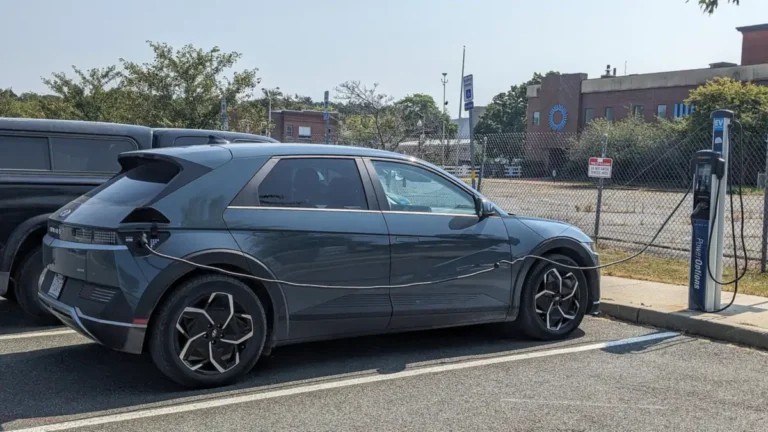
Level 2 runs on 240V, the same circuit type as a clothes dryer. It requires a dedicated circuit and typically a home EVSE unit, which is the wall-mounted charging hardware. Depending on the charger and your vehicle’s onboard AC acceptance rate, you get 7 to 19 kW of charging power, which adds 10 to 20 miles of range per hour. Most battery-electric vehicles fully recover in 4 to 10 hours overnight.
Level 2 is the standard for home installation, workplace charging, and most public stations. As of mid-2026, the DOE’s Alternative Fuels Data Center tracks more than 250,000 public charging ports at over 80,000 stations nationwide, and the bulk of that infrastructure is Level 2. This is the charger type most EV owners interact with most of the time.
DC fast charging: built for the road, not the driveway
DC fast chargers use direct current at 50 to 350 kW and bypass the vehicle’s onboard charger entirely to push power directly into the battery. That is how they add 180 to 240 miles of range per hour and reach roughly 80% state of charge in 20 to 60 minutes. The speed makes them essential for road trips and impractical for home installation.
One important caveat: frequent DC fast charging accelerates battery degradation over time. A Geotab fleet analysis of more than 22,700 EVs shows vehicles using high-power fast charging above 100 kW degraded at up to 3.0% per year, versus about 1.5% per year for vehicles using mostly AC charging. Over five years, that gap can mean 5 to 8 percentage points of lost capacity. For daily charging, stick to Level 2 at home whenever possible.
Our electric cars worse real world range guide shows exactly how EPA-rated range compares to real highway performance across the top EVs, which directly affects how many DC fast charging stops you will actually need on a long trip.
Choosing electric vehicle charging stations for home, work, and long trips
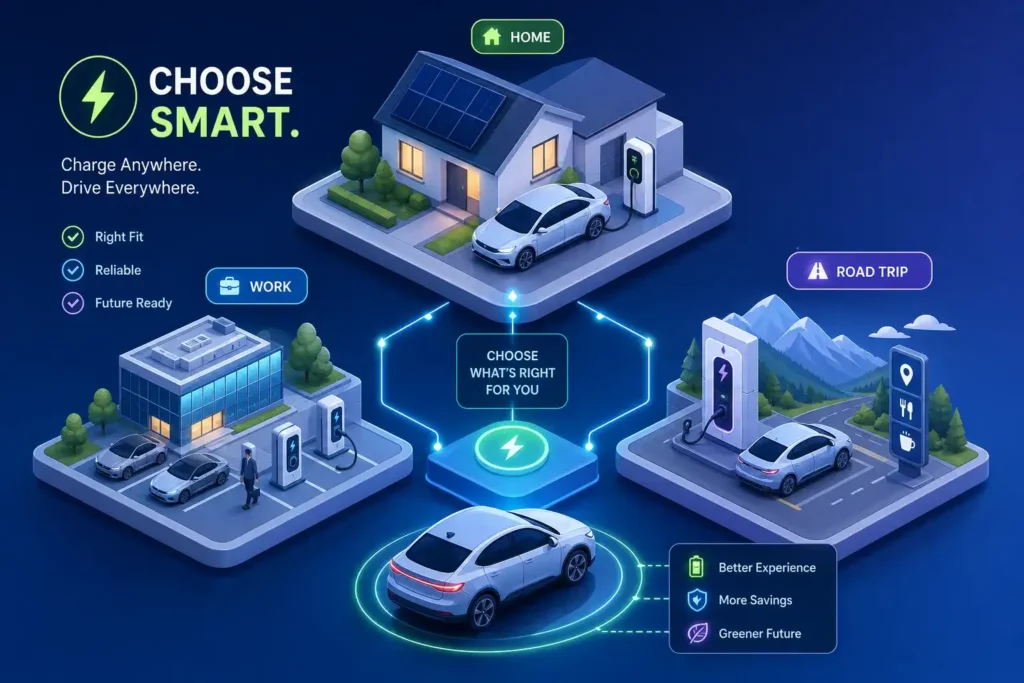
Knowing the specs is half the work. Now you apply them to your actual life.
At home: why most EV owners upgrade to Level 2
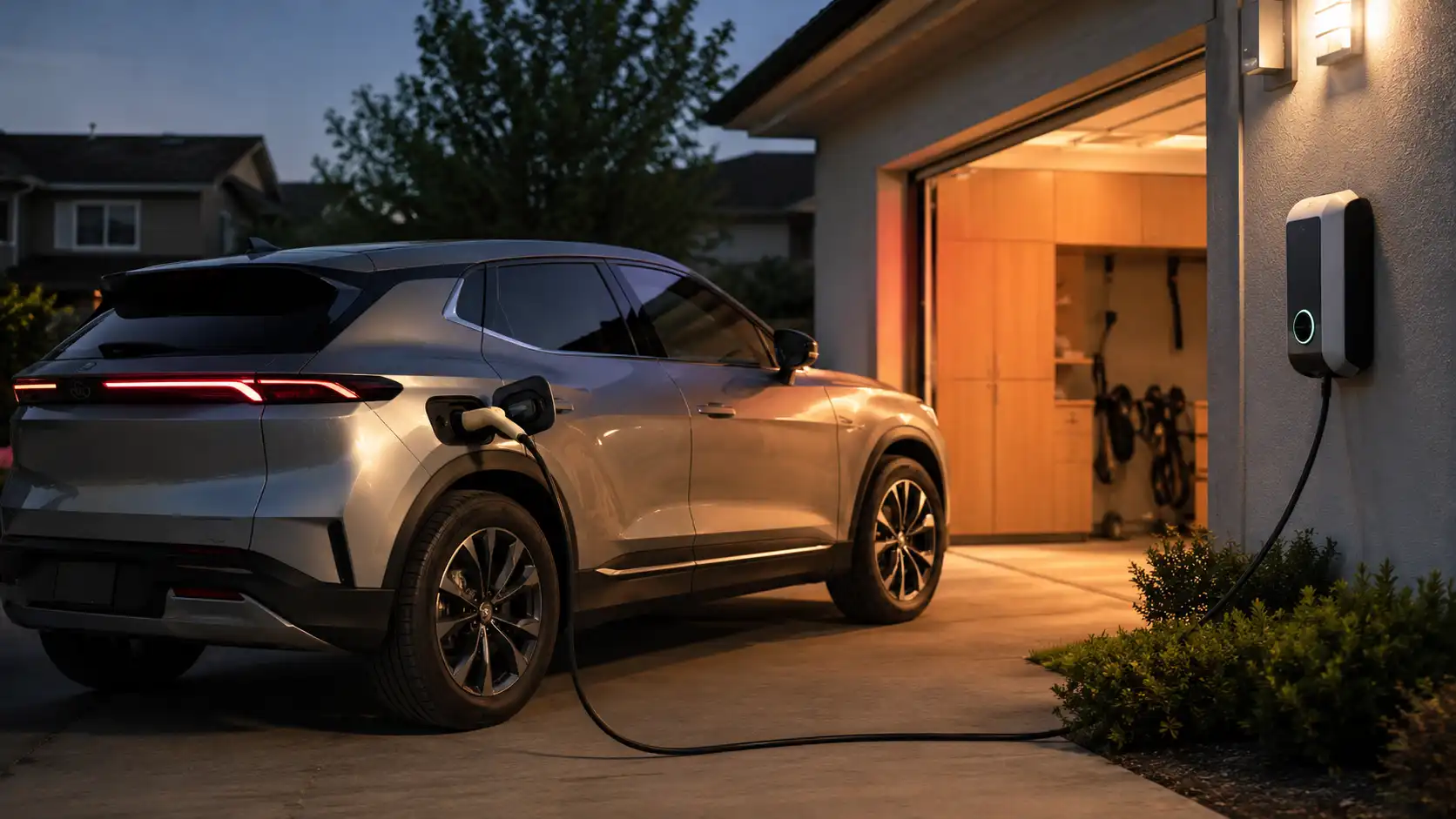
Level 1 is free to start, just plug in and go to bed. But at 2 to 5 miles per hour, a 60 kWh pack will not fully recover overnight if you arrive home with a depleted battery after a longer day. Consider a driver covering 40 miles daily: that is roughly 13 kWh of energy at typical EV efficiency. At 1 kW, Level 1 delivers about 8 to 10 kWh in an average overnight window, which falls short. Level 2 home installation typically runs $800 to $2,500 all-in, covering the EVSE unit, electrician labor, and permits. Given that home electricity averages about $0.17 to $0.18/kWh versus $0.45 to $0.60/kWh at public DC fast chargers, that upfront investment pays back relatively quickly for drivers who previously relied on public charging.
For anyone driving 40 or more miles daily, Level 2 at home is generally the most practical move, assuming home charging is available. It eliminates most public charging dependency and keeps your cost per mile as low as possible. Exact payback depends on your local electricity rate, vehicle efficiency, and how often you would otherwise use public fast charging.

At work: the underrated charging opportunity
Workplace Level 2 charging during an 8-hour shift adds 80 to 160 miles of range without any extra time commitment on your part. Your car charges while you work. Increasingly, employers offer this as a benefit. ChargePoint has a large commercial workplace footprint, particularly in major metro areas; Blink also supports workplace deployments across several states. If your employer provides free or discounted Level 2 at work, that perk can significantly reduce your annual public charging spend, for many drivers, enough to offset the bulk of what they would otherwise pay at public stations.

On road trips: DC fast charging is non-negotiable
Drive more than 150 to 200 miles from home and you are planning around DC fast charger locations. Level 2 is too slow for road trip stops. A 30-minute Level 2 session adds only 5 to 10 miles, which does not move the needle. Many DC fast chargers can add 60 to 120 miles in 20 to 30 minutes, often around 100 miles under ideal conditions, which aligns naturally with a restroom break or a quick meal. Plan your stops every 80 to 120 miles depending on your vehicle’s range, and always know your fallback if your primary station is occupied or offline.
Connector compatibility: NACS, CCS, and CHAdeMO decoded
Connector confusion trips up more new EV owners than any other part of the charging experience. Here is the 2026 landscape, clearly.
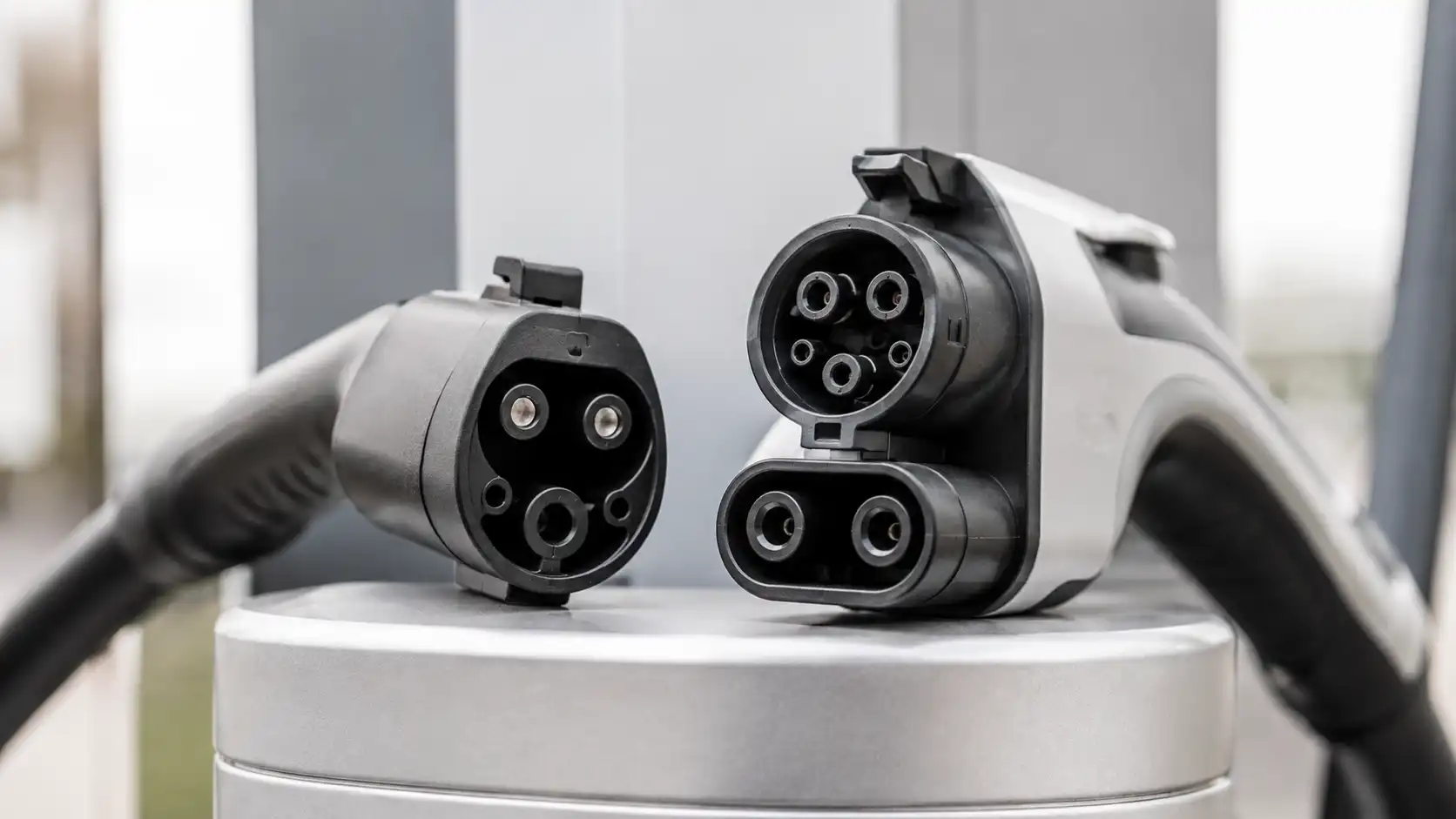
The NACS vs. CCS split and what it means for you
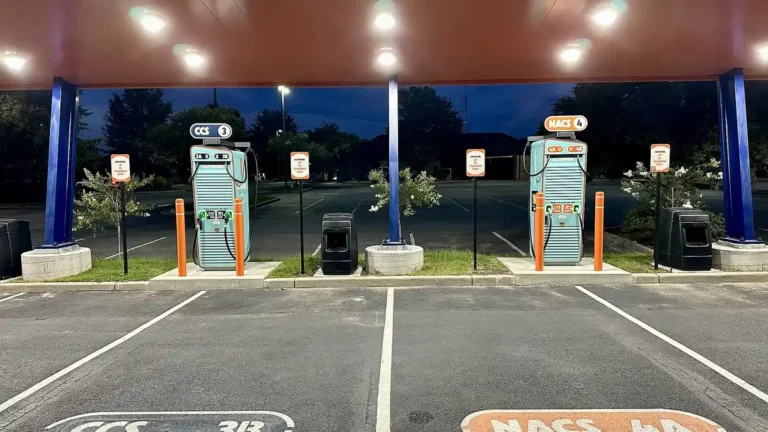
NACS (now standardized as SAE J3400) started as Tesla’s native connector and has become the dominant DC fast charging standard going forward. Several major automakers, including Rivian (2026 models), Hyundai, Kia and Nissan, now ship native NACS ports on newer models, GM starts with the 2027 Chevrolet Bolt, and others are following. CCS remains the connector on most non-Tesla EVs sold before the NACS transition. The practical impact is straightforward: which public fast chargers work with your car, and when do you need an adapter?
Which connector your EV uses and when you need an adapter
Tesla vehicles use NACS natively. All 2026 and newer Rivians come with NACS ports, as do the 2025 Hyundai Ioniq 5, the Kia EV6 and EV9, and the 2026 Nissan Leaf. Ford and most GM models still use CCS with an adapter, though GM’s 2027 Bolt has NACS. Check your specific model year. VW, BMW, and Mercedes continue to use CCS in North America. Older Nissan LEAFs (through 2025) use CHAdeMO for DC fast charging, a legacy standard with a shrinking network that creates real limitations for road trip planning.
The adapters worth knowing: CCS-to-NACS for Tesla owners who want to use non-Tesla fast chargers; J1772-to-NACS for older AC Level 2 stations; and a hardware adapter or Tesla app authentication for CCS-equipped vehicles accessing Superchargers. CHAdeMO is fading fast, and Nissan LEAF owners face a shrinking DC fast network. If you are shopping for a used LEAF, factor those limited long-trip fast-charging options into your decision.
Before buying any used EV, verify the native connector, confirm which adapters the manufacturer officially supports, and cross-reference compatibility with the charging networks most common in your region. This 10-minute check can save you significant frustration later.
Our 2026 Nissan Leaf range guide covers how the redesigned Leaf’s NACS port adoption changes the long-trip calculation significantly compared to the older CHAdeMO generation. And our 2025 Hyundai Kona Electric review covers Hyundai’s NACS transition timeline and how it affects day-to-day charging network access on that specific platform.
Major U.S. charging networks compared on coverage, cost, and uptime
The U.S. has roughly eight significant public charging networks, and they are not interchangeable. Coverage, pricing, and reliability vary enough to affect your daily life.
ChargePoint, Electrify America, and EVgo: the big three non-Tesla networks
ChargePoint is the largest non-Tesla network by station count, with strong presence in California, Massachusetts, and New York. Pricing is set by host operators and ranges from $0.20 to $0.65/kWh, which creates inconsistency but also occasional free sessions at employer or retail locations. Electrify America focuses on high-power DC fast charging along highway corridors at $0.48 to $0.56/kWh for non-members, it is built for road trips, not local errands. EVgo is DC fast-focused and concentrated in metro areas, typically $0.45 to $0.60/kWh, with membership plans that cut rates meaningfully for frequent users.
Blink has a mixed Level 2 and DC fast footprint concentrated in Florida, California, and Texas, with pricing from $0.39 to $0.69/kWh depending on charger level. Watch for per-minute billing at some Electrify America sites; at $0.03 to $0.10 per minute, vehicles with lower DC acceptance rates pay disproportionately more per kWh.
Tesla Supercharger: open to non-Tesla EVs now, but read the fine print
Supercharger pricing runs $0.25 to $0.50/kWh and varies by time of day and location. Non-Tesla access requires the Tesla app and either a native NACS port or a compatible CCS-to-NACS adapter. Not every Supercharger site has opened to non-Tesla vehicles, so check availability in the Tesla app before you plan a stop around one. The network’s reliability and station density make it a consistent benchmark in the industry, independent uptime comparisons and published testing regularly put it at or near the top for DC fast charging reliability.
Network uptime: why reliability matters more than price alone
A fast charger that is offline wastes your trip as badly as a slow one. Reliability varies by network, region and even by site, and published uptime claims are hard to compare. Those differences add up on road trips when you are planning stops around specific locations. Before arriving at any public DC fast charger, check PlugShare for community check-ins and real-time status reports. It is the most reliable signal for whether a specific stall is actually working today.
What public charging costs in 2026 and how to bring it down
Here is what you actually pay across charger levels and networks, and where the real savings come from.
Level 2 public charging runs $0.20 to $0.42/kWh for non-members, roughly $12 to $25 for a 60 kWh fill from near-empty. DC fast charging at most major networks lands at $0.45 to $0.60/kWh for non-members; a 20% to 80% charge on a 75 kWh pack runs about $19 to $29 at those rates before any session fees. Ultra-fast DC at 150 to 350 kW reaches $0.36 to $0.85/kWh, the most expensive per kWh, but justifiable when time is the constraint.
Compare all of that against home Level 2 at the U.S. average residential rate of about $0.17 to $0.18/kWh in 2025-2026. Based on those rates and typical EV efficiency of around 3 to 4 miles per kWh, a driver charging entirely at home pays roughly $500 to $900 per year for 12,000 to 15,000 miles. A driver relying mainly on public DC fast charging for the same mileage could spend $1,800 to $2,500. That gap is why NextCarReview builds charging cost scenarios into its EV total cost of ownership analysis, showing buyers the real 5-year cost difference between home-charging access and public-only scenarios before they commit to a purchase or lease.
Most major networks offer monthly membership plans that reduce per-kWh rates by 10 to 25%. For anyone relying on public charging two or more times per week, a membership can pay for itself quickly, in some cases within the first month, depending on your usage volume and the network’s membership fee. Run the math for your specific situation before defaulting to pay-as-you-go pricing.
For a full comparison of lease deals that factor in charging cost scenarios, our best lease deals guide covers how leasing structures interact with home-charging access to affect the real monthly cost of EV ownership.
How to find electric vehicle charging stations and plan before every drive
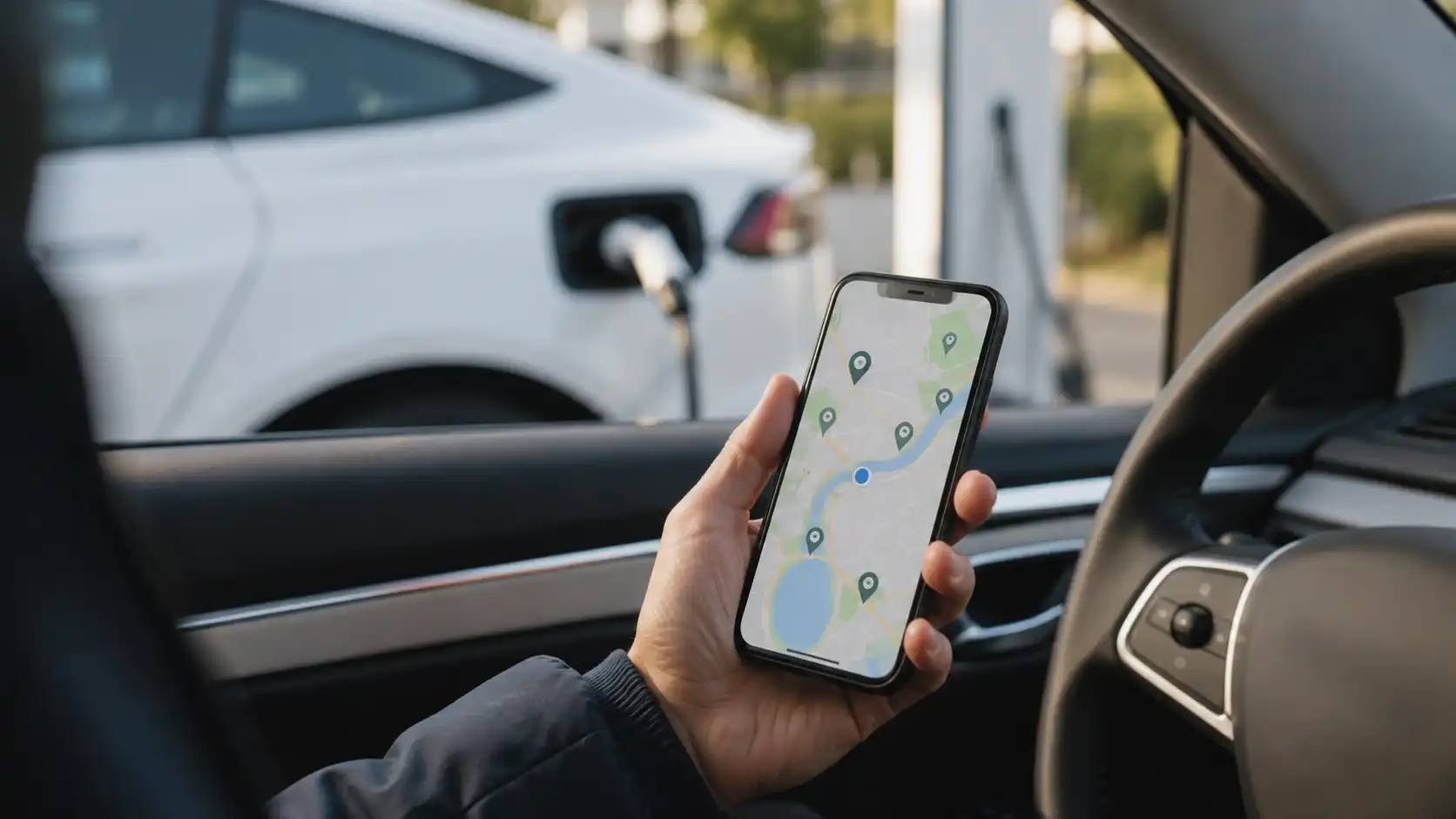
All the knowledge above is only useful if you can find a compatible, working charger when you need one. These are the tools that make it practical.
The DOE’s Alternative Fuels Data Center locator is the most complete national database, powering many other mapping tools, use it for unbiased coverage across all networks. PlugShare adds the layer the AFDC cannot: community check-ins and real-time status reports that tell you whether a specific station is actually functioning today, not just listed as operational.
Network-native apps from ChargePoint, EVgo, and Tesla are best for filtering by connector type, seeing live stall availability, and initiating payment without fumbling at the terminal. Google Maps and Apple Maps now include charging station filters with connector type selectors, useful for spontaneous stops when you are already navigating. Searching “EV chargers near me” in either app pulls up an EV charging map with real-time availability in most major metro areas. For road trip planning, map your route and identify DC fast stations every 80 to 120 miles based on your vehicle’s usable range, and always have a fallback option identified in case your primary stop is occupied or offline.
The most important habit to build: charge to 80% and drive. DC fast charging slows significantly above 80% state of charge, so stopping shorter and more frequently is often faster in real-world conditions than sitting at a charger waiting for the last 20%.
If you are choosing between two EV models with different DC acceptance rates, or comparing a native NACS vehicle against a CCS model that needs adapters, the vehicle’s onboard charger acceptance rate determines how fast it can actually use any Level 2 or DC fast station. The network’s advertised power ceiling does not matter if your car can only accept half of it. NextCarReview’s independent EV buying guides and spec breakdowns compare each model’s published charging specs, so you can evaluate the total cost of ownership before you sign anything.
For a practical model-by-model look at which EVs deliver the best real-world charging performance across these networks, our best electric cars under $40,000 in 2026 guide covers charging specs alongside range data for every strong affordable EV in the market right now.
Start with what you have access to at home and work
The core decision framework is straightforward. Identify what charger level you have access to at home and work first. If you have Level 2 at home, most of your charging costs drop to residential electricity rates and your road trip planning becomes the only real variable. If you are in an apartment without home charging, public network membership and employer charging access become your primary strategy, and the cost math shifts significantly.
Road trip charging works best when you match your connector type to the networks with the densest coverage along your routes. Check uptime via PlugShare before you commit to a stop, and plan your 80% charging window to keep stops short and predictable. Costs stay manageable when you charge mostly at home or use a network membership consistently.
Finding the right electric vehicle charging stations for your life is a one-time learning curve, one that makes every mile cheaper and less stressful going forward. Use this guide to evaluate the electric vehicle charging stations that fit your home setup, commute, and road trip needs, then cross-reference your specific model’s charging specs at NextCarReview before buying. The vehicle’s onboard charger acceptance rate determines how fast it can actually use any public station, regardless of what the network advertises on the sign out front.
Related guides: the electric vehicle hub and EV Range Cold Weather.
⚠️ Professional Notice:
All pricing, network coverage, and uptime figures in this article are based on DOE Alternative Fuels Data Center records, and publicly available network pricing as of mid-2026. Real charging costs vary by location, time of day, network membership status, and vehicle acceptance rate. Pricing structures and network availability change frequently. Always verify current rates and station availability in the relevant network app or PlugShare before planning a trip around a specific charging location.
Home installation cost estimates vary by geography, electrical panel condition, local permit requirements, and contractor rates. Total cost of ownership figures are estimates based on illustrative scenarios and will differ based on individual driving habits, local electricity rates, and vehicle efficiency. NextCarReview.com does not receive compensation from any charging network, hardware manufacturer, or utility program in exchange for rankings or editorial coverage.
Data Sources and Verification
- US Department of Energy Alternative Fuels Data Center – public charging station counts, 260,000-plus ports at 82,000-plus stations, 2026
- Geotab fleet analysis – DC fast charging degradation rate data, comparing high-power vs AC charging battery health outcomes
- ChargePoint, Electrify America, EVgo, and Blink – published pricing structures and network coverage data, mid-2026
- Tesla Supercharger network – non-Tesla access documentation and pricing, mid-2026
- Automaker NACS port information: Rivian, Hyundai, Nissan, GM
- US Energy Information Administration – average residential electricity rate data used in home charging cost scenarios
EV Charging Guide Series
- EV charging levels explained: Level 1 vs Level 2 vs DC fast
- How long it takes to charge an electric car
- The Section 30C EV charger tax credit in 2026
- Home vs public EV charging cost per mile
- How to install a Level 2 charger at home
- Best Level 2 home EV chargers compared
- EV charging for renters and apartment dwellers
- Tesla Supercharger vs Electrify America vs EVgo vs ChargePoint
- Best EV charging apps and cards

Morgan Reyes is the founder and editor-in-chief of NextCarReview, which Morgan launched in August 2024. A 2022 graduate of Columbia University, Morgan is based in New York and writes and edits the site’s reviews, comparisons and buying guides. Morgan does not road-test vehicles. Every article is built from published primary data: EPA FuelEconomy.gov ratings, NHTSA crash ratings, recalls and owner complaints, IIHS results, and manufacturer specifications and pricing, with each figure cited and checked before publication. Contact: admin@nextcarreview.com