In this article 8 sections
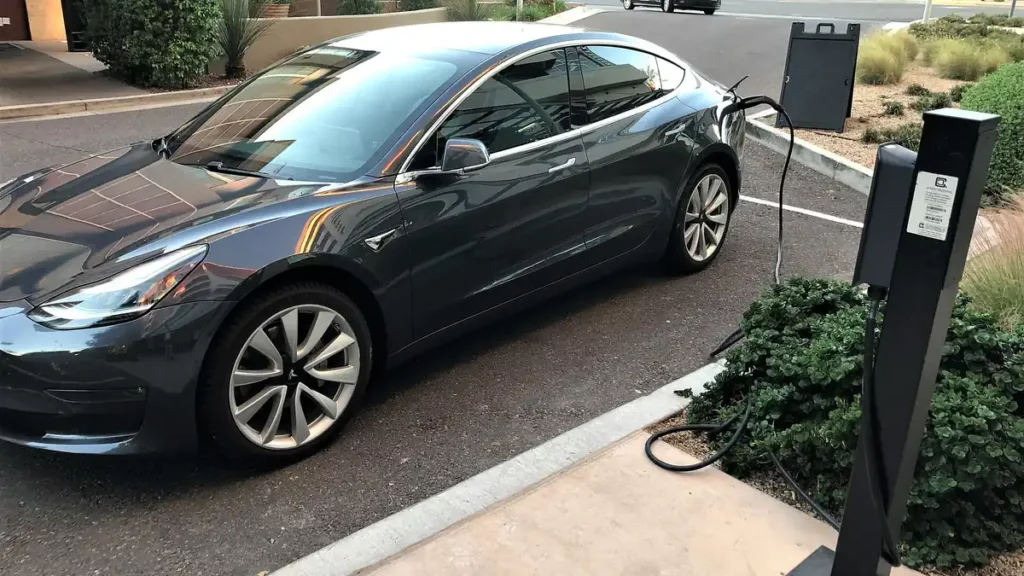
At the July 2026 U.S. average residential rate of 18.31 cents per kWh, charging an EV that uses 30 kWh per 100 miles costs about 5.5 cents per mile at home. Public Level 2 at $0.28/kWh works out to about 8.4 cents, and a Tesla Supercharger at the $0.60/kWh median price listed in federal station data is about 18 cents.
With regular gasoline at $4.465 a gallon (EIA, week of September 28, 2026) and the 27.2 mpg average for new vehicles, a gas car spends about 16.4 cents per mile. Home charging wins easily; relying on DC fast charging alone can cost as much as gas, or more.
Electricity and gasoline prices come from the U.S. Energy Information Administration; public charging prices come from network pricing pages and per-station data in the DOE AFDC Station Locator; efficiency figures come from EPA and fueleconomy.gov. NextCarReview does not test chargers or vehicles for this guide; see our sourcing policy.
“EVs are cheap to run” is true with one condition attached: where you charge. Plugging in at home overnight and pulling up to a highway fast charger are two very different bills. This comparison puts real, sourced prices side by side so you can see the gap per kWh, per charge, per mile and per month.
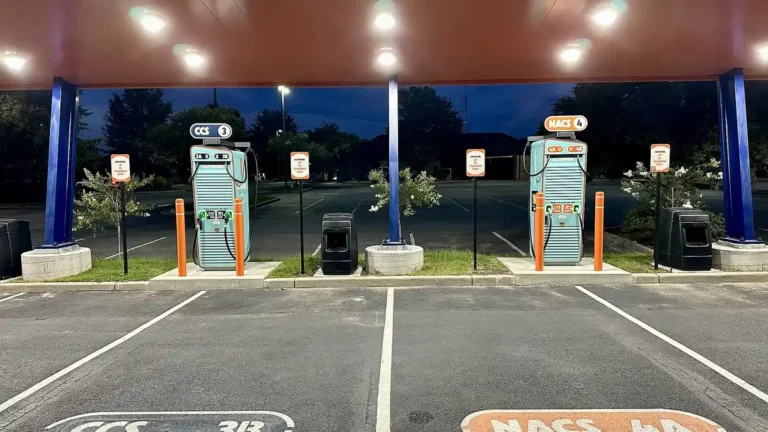
For background on charger types, see our guide to electric vehicle charging stations.
Cost Comparison Table
The table uses a 72 kWh battery as the example. For DC fast charging it shows a typical 10% to 80% session (about 50 kWh), since few drivers fast-charge to 100%.
| Where you charge | Price per kWh | Cost to add 72 kWh | Cost per mile (30 kWh/100 mi) |
|---|---|---|---|
| Home, U.S. average | 18.31¢ (EIA, July 2026) | About $13.18 | About 5.5¢ |
| Home, Louisiana | 12.72¢ | About $9.16 | About 3.8¢ |
| Home, Hawaii | 48.00¢ | About $34.56 | About 14.4¢ |
| Public Level 2 | $0.28 (EVgo, select locations) | About $20.16 | About 8.4¢ |
| DC fast (Tesla Supercharger) | $0.60 median of AFDC-listed sites | About $30.24 for 10% to 80% | About 18.0¢ |
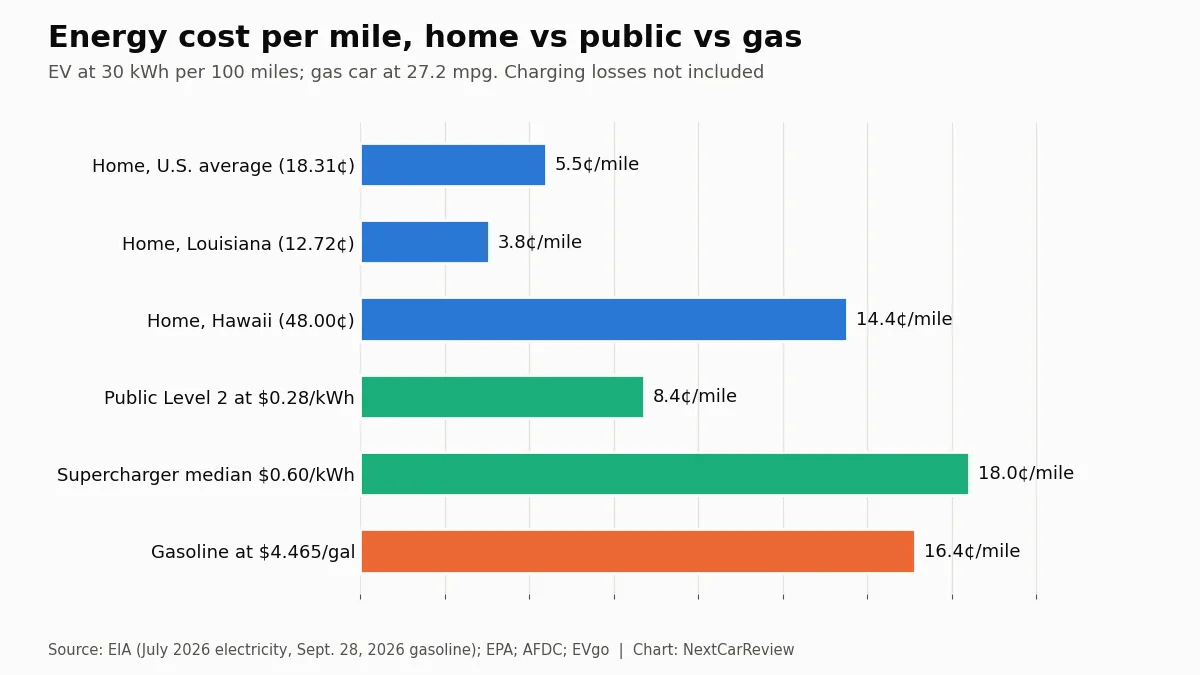
Per-mile figures use 30 kWh per 100 miles, which matches the EPA rating for the 2026 Hyundai Ioniq 5 RWD. More efficient cars do better: fueleconomy.gov lists the 2026 Tesla Model 3 Premium RWD at about 25 kWh per 100 miles, while the 2026 Chevrolet Equinox EV FWD uses about 31.
Why Home Charging Is Cheapest
Most EV owners already charge at home. The AFDC says most drivers charge overnight at home, and a DOE analysis of NREL modeling estimated that 64% of EV charging takes place at single-family homes on Level 1 and Level 2 equipment.
Residential electricity rates vs. commercial markup
At home you pay your utility’s residential rate and nothing else. A public station operator also has to pay for hardware, installation, maintenance and network software, and those costs are built into what drivers pay. That is why even the cheapest public options in this comparison sit above the national residential average.
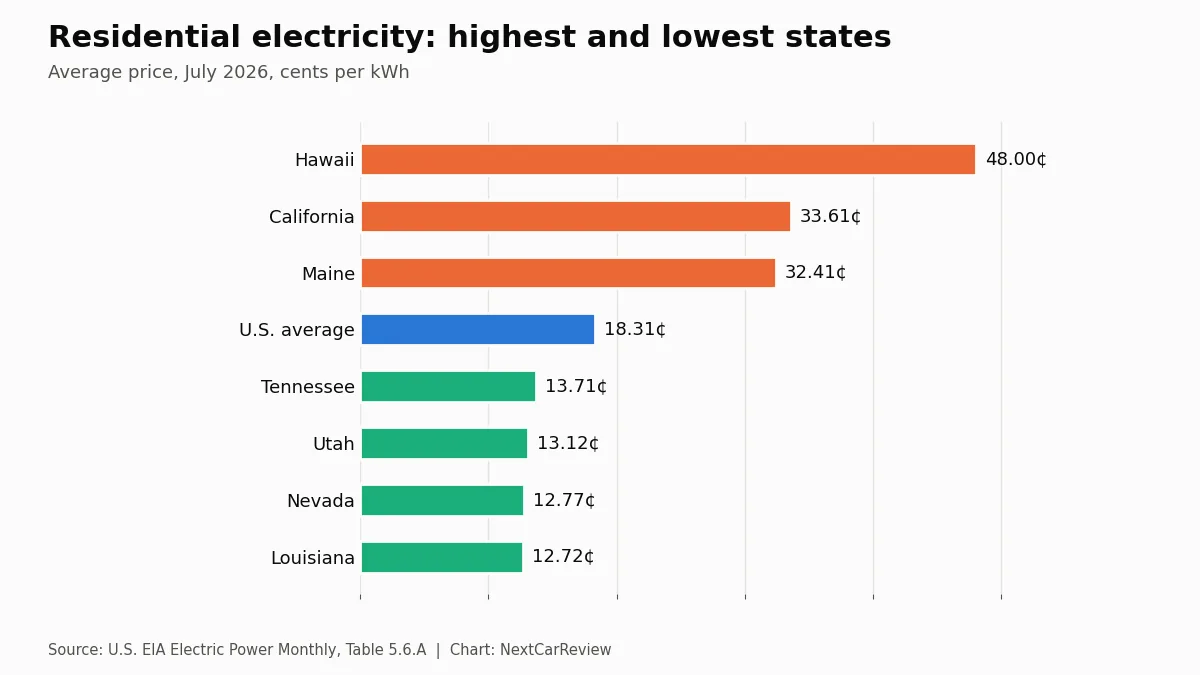
Your state matters more than almost anything else. In July 2026, EIA data put residential power at 48.00 cents per kWh in Hawaii, 33.61 in California and 32.41 in Maine, against 12.72 in Louisiana, 12.77 in Nevada and 13.12 in Utah.
Time-of-use and off-peak charging rates
Many utilities offer time-of-use or EV-specific rate plans that charge less overnight. If yours does, scheduling your charger to start after the peak window ends is one of the easiest savings available. Most smart home chargers and many EVs can set a start time. Check your utility’s rate options before you assume the average rate applies to you.
What Public Level 2 Charging Actually Costs
Public Level 2 pricing is the least consistent part of EV charging. ChargePoint, which accounts for 79,212 public Level 2 ports in DOE station data, explains that each station owner decides the price and can bill by the kWh, by the hour, with a flat fee, or with idle fees. Some workplace and retail stations are free; others cost more than fast charging per kWh once hourly fees are counted.
For a concrete number, EVgo lists Level 2 at $0.28 per kWh in select locations. Among ChargePoint stations that publish a per-kWh price in the DOE Station Locator, listed prices ranged from $0.12 to $0.70, though that is a small sample of 16 sites.
What DC Fast Charging Actually Costs (and Why It’s Priced Differently)
DC fast charging is the premium tier. Networks price it by location and plan rather than one national rate:
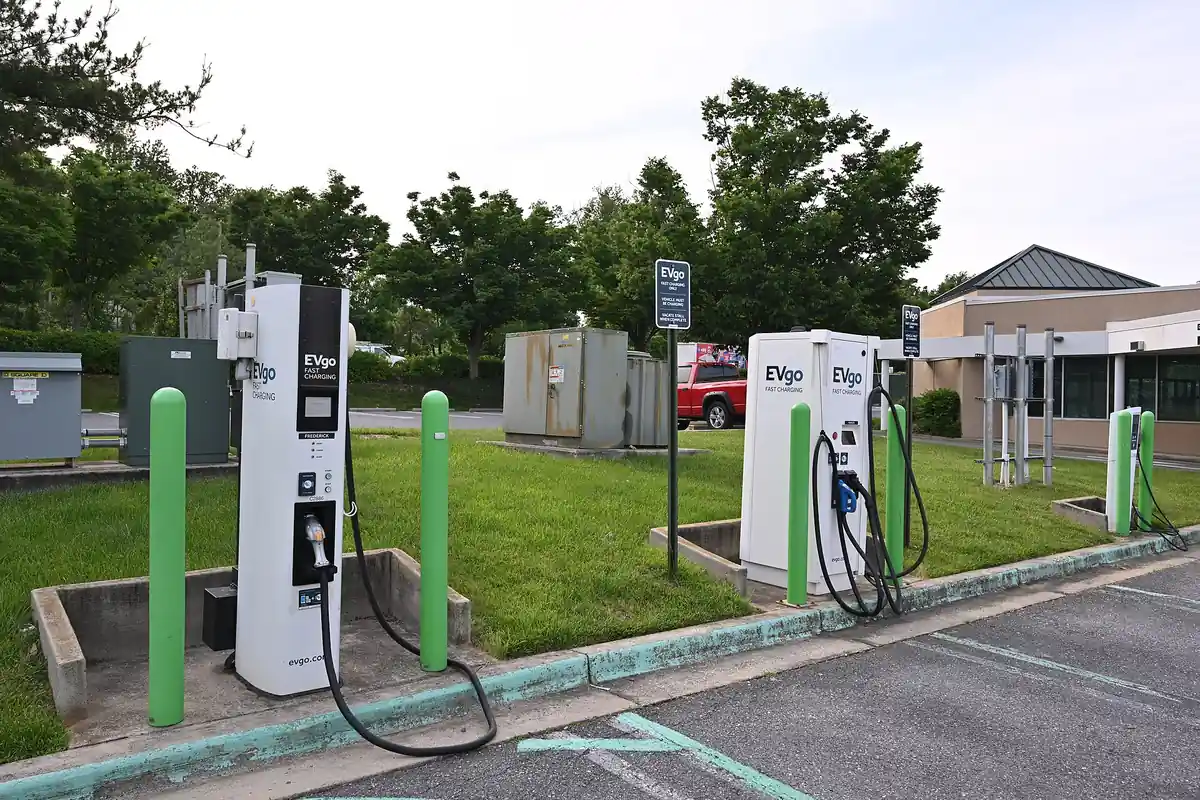
- Tesla Supercharger: prices vary by site and appear in the Tesla app. In AFDC data as of October 2, 2026, 161 Supercharger locations listed a per-kWh price, ranging from $0.37 to $0.98 with a median of $0.60.
- Electrify America: pricing depends on location, plan and energy delivered, and real-time prices show in the app or at the charger. Pass+ costs $7 a month and saves about 25%, according to the company. Idle fees of $0.40 per minute start ten minutes after a session ends.
- EVgo: rates vary by region and some markets use time-of-use pricing. Pay As You Go has no monthly fee but a $0.99 session fee; EVgo Plus is $6.99 a month and EVgo PlusMax $12.99 a month with no session fees. A $2.99 transaction fee applies to sessions started by credit card.
Our EV charging network comparison shows which networks charge the least for your region and car, and how coverage and reliability compare.
Is Charging an EV Cheaper Than Filling Up With Gas?
EIA reported regular gasoline at $4.465 a gallon nationally for the week of September 28, 2026, up sharply from a year earlier. EPA’s latest Automotive Trends Report puts the average new vehicle at a record 27.2 mpg for model year 2024.
Cost-per-mile comparison table
| Scenario | Cost per mile | Energy cost for 1,000 miles |
|---|---|---|
| EV, home charging at U.S. average rate | About 5.5¢ | About $55 |
| EV, public Level 2 at $0.28/kWh | About 8.4¢ | About $84 |
| EV, Supercharger at $0.60/kWh | About 18.0¢ | About $180 |
| Gas car, 27.2 mpg at $4.465/gal | About 16.4¢ | About $164 |
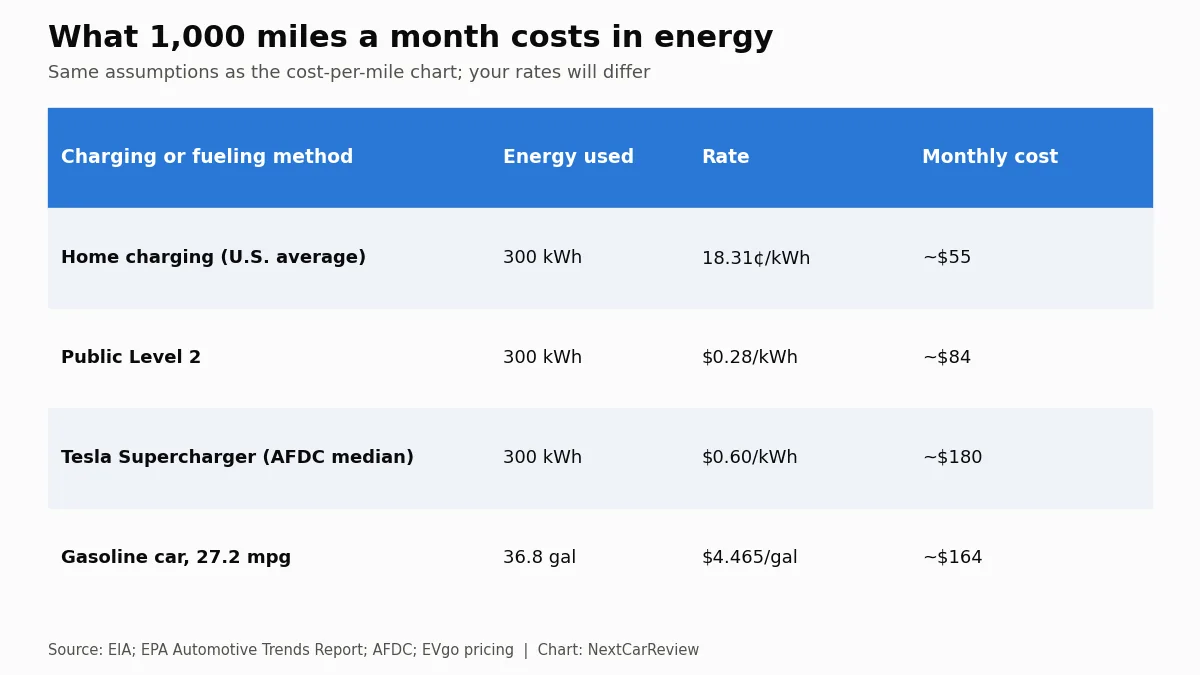
The pattern is clear. A home-charging EV driver spends about a third of what a gas driver spends on energy. A driver who can only use DC fast charging may spend about the same as gas, or a little more. That is why home or workplace charging access belongs in any EV purchase decision. If you are cross-shopping, see our list of the cheapest EVs to buy in 2026 and our full cost of ownership comparison of plug-in hybrids and EVs.
How to Minimize Your Charging Costs
- Charge at home whenever you can, and schedule sessions for off-peak hours if your utility offers time-of-use rates.
- Use free or low-cost workplace charging if your employer offers it.
- Do the membership math. At about 25% savings, Electrify America’s $7 Pass+ pays for itself once you spend roughly $28 a month there.
- Stop fast charging around 80%. Sessions slow sharply above that, and per-minute pricing or idle fees can add up.
- Unplug promptly to avoid idle fees.
- Check incentives. The federal EV charger tax credit ended for chargers placed in service after June 30, 2026, but some states and utilities still help with charger costs.
EV Charging Guide Series
Start with the main guide: choosing and using EV charging stations. More in this series:
- EV charging levels explained: Level 1 vs Level 2 vs DC fast
- How long it takes to charge an electric car
- The Section 30C EV charger tax credit in 2026
- How to install a Level 2 charger at home
- Best Level 2 home EV chargers compared
- EV charging for renters and apartment dwellers
- Tesla Supercharger vs Electrify America vs EVgo vs ChargePoint
- Best EV charging apps and cards
Frequently Asked Questions
How much does it cost to charge an EV at home?
Multiply the kWh you add by your electricity rate. At the EIA’s July 2026 U.S. average of 18.31 cents per kWh, adding 72 kWh costs about $13. Rates vary a lot by state, from 12.72 cents in Louisiana to 48 cents in Hawaii in July 2026.
Is public EV charging more expensive than home charging?
Usually, yes. EVgo lists Level 2 at $0.28 per kWh in select locations, and the Tesla Supercharger sites that list a price in the DOE Station Locator show a median of $0.60 per kWh. Both are well above the 18.31-cent U.S. average residential rate.
Is charging an EV cheaper than buying gas?
At home, by a wide margin. An EV using 30 kWh per 100 miles costs about 5.5 cents per mile at the average home rate, versus about 16.4 cents per mile for a 27.2 mpg gas car at $4.465 per gallon. On DC fast chargers priced around $0.60 per kWh, the EV costs about 18 cents per mile, roughly the same as gas or slightly more.
How much does it cost to charge a Tesla at a Supercharger?
Tesla sets prices by location and shows them in the Tesla app. In the DOE AFDC Station Locator, 161 Supercharger sites list a per-kWh price; those listings ranged from $0.37 to $0.98 per kWh with a median of $0.60 as of October 2, 2026.
Do charging memberships save money?
They can if you charge often. Electrify America says Pass+ members save about 25% for $7 a month. EVgo lists EVgo Plus at $6.99 a month (save up to 15%) and EVgo PlusMax at $12.99 a month (save up to 30%). If you charge publicly only a few times a year, pay-as-you-go is usually cheaper.
Why do DC fast chargers charge idle fees?
To keep stalls free. Electrify America, for example, charges a $0.40 per-minute idle fee if you stay plugged in more than ten minutes after your session ends.
⚠️ Professional Notice:
Cost figures are estimates built from EIA average prices, EPA and fueleconomy.gov efficiency data, and network or AFDC-listed prices as of late September and early October 2026. They exclude charging losses, taxes and session fees, so real costs will be somewhat higher. Public prices change frequently and vary by site and time of day. This page is scheduled for a quarterly price refresh.
NextCarReview does not receive compensation from any charging network or utility for this coverage.
Data Sources and Verification
- U.S. EIA Electric Power Monthly, Table 5.6.A: average residential price by state (July 2026)
- U.S. EIA Electric Power Monthly: end-use price update
- U.S. EIA Gasoline and Diesel Fuel Update (week of Sept. 28, 2026)
- EPA Automotive Trends Report highlights (model year 2024 average fuel economy)
- fueleconomy.gov: Find and compare EV efficiency (kWh per 100 miles)
- DOE AFDC Station Locator (station-level pricing data, Oct. 2, 2026)
- DOE Vehicle Technologies Office: FOTW #1335, home and Level 2 share of charging
- Electrify America pricing and plans
- Electrify America FAQ (idle fees)
- EVgo pricing plans
- ChargePoint: who sets charging prices
Figures were checked against the sources above in late September and early October 2026. Prices, laws and network data change; verify before you rely on them.

Morgan Reyes is the founder and editor-in-chief of NextCarReview, which Morgan launched in August 2024. A 2022 graduate of Columbia University, Morgan is based in New York and writes and edits the site’s reviews, comparisons and buying guides. Morgan does not road-test vehicles. Every article is built from published primary data: EPA FuelEconomy.gov ratings, NHTSA crash ratings, recalls and owner complaints, IIHS results, and manufacturer specifications and pricing, with each figure cited and checked before publication. Contact: admin@nextcarreview.com