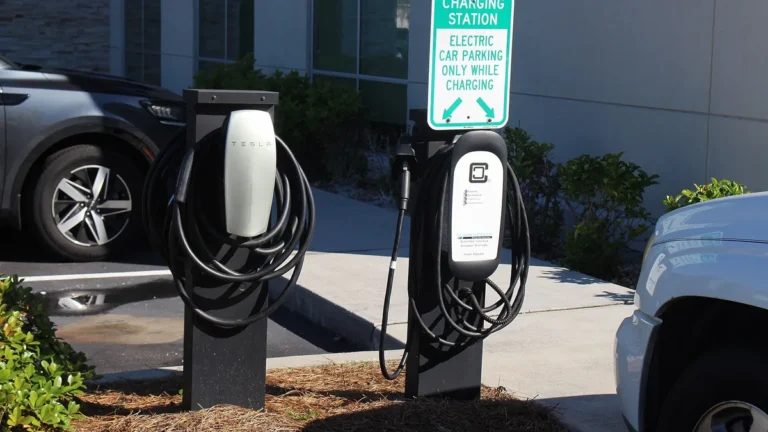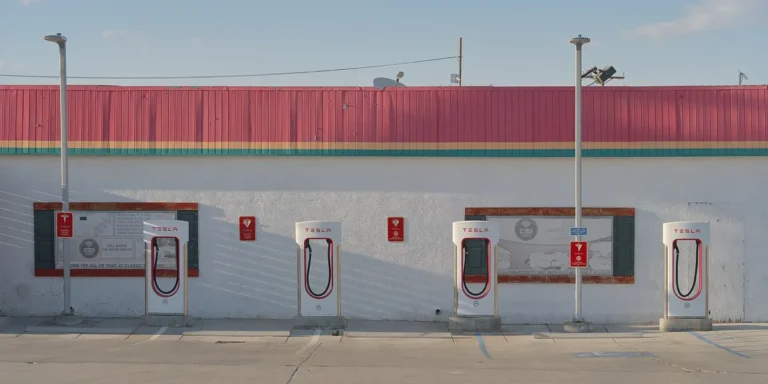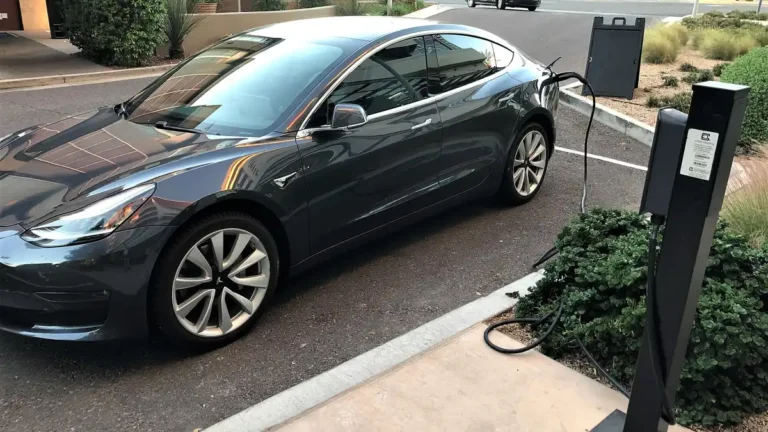
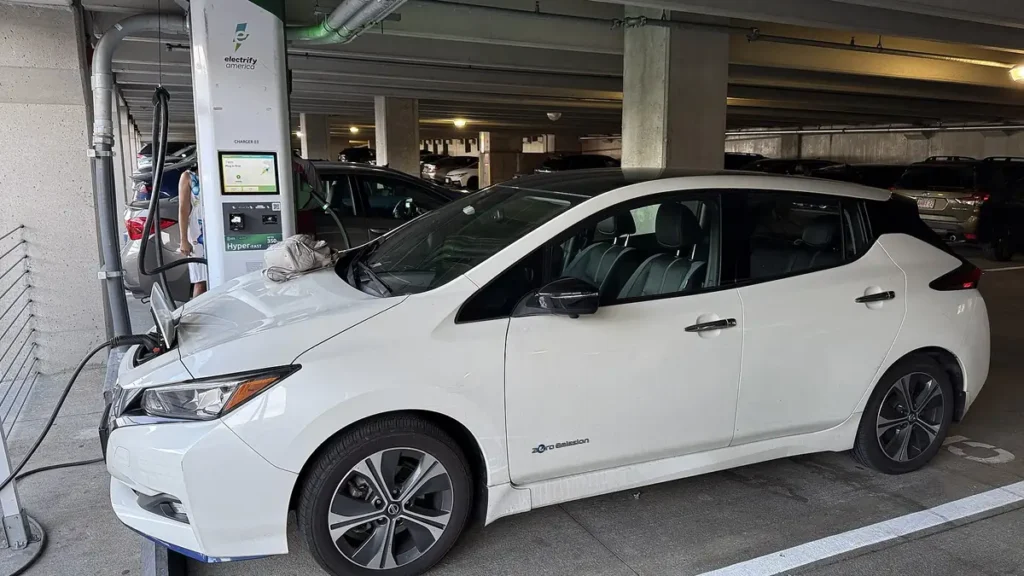
A typical EV takes days on Level 1, an overnight session on Level 2, and roughly 25 to 45 minutes from 10% to 80% on a DC fast charger, based on manufacturer figures for 2026 models.
Two numbers decide your time: battery size in kWh and the charging power your car can actually accept in kW. Divide the first by the second and you have a rough estimate of hours, before charging losses and the slowdown above 80%.
Charging times here come from manufacturer specification sheets (Hyundai, Toyota, Nissan, Chevrolet, Ford) and DOE charging-speed figures from the Alternative Fuels Data Center. Hour estimates marked as approximate are simple arithmetic from published ratings. NextCarReview does not test chargers or vehicles for this guide; see our sourcing policy.
“How long does it take to charge?” is the first question most people ask about EVs, and the honest answer is that it depends on two things: the size of the battery and how much power reaches it. This guide gives you the published numbers for real 2026 models, a simple way to estimate your own car’s time, and the factors that make a session run long.
If you are new to the terms, start with our explainer on Level 1, Level 2 and DC fast charging explained, then come back for the time math. For where to charge, see our main guide to electric vehicle charging stations.
Charging Time at a Glance
| Charger level | Typical speed (DOE) | Empty to full, typical BEV | 10% to 80% on DC fast |
|---|---|---|---|
| Level 1 (120V) | About 5 miles of range per hour | Days rather than hours for a 250- to 300-mile battery | Not applicable |
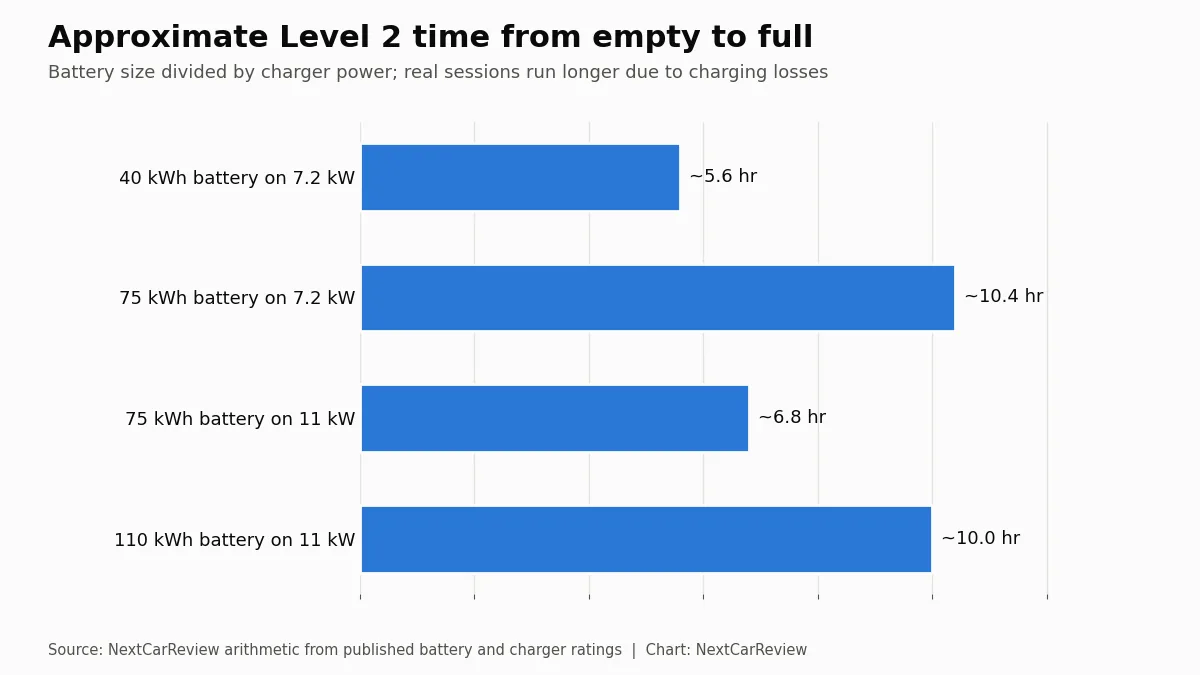
| Level 2 (240V) | About 25 miles of range per hour | Roughly 6.5 to 10.5 hours for the 2026 models below, depending on battery and onboard charger | Not applicable |
| DC fast | About 100 to 200+ miles per 30 minutes | Rarely used to 100% | About 24 to 42 minutes for the 2026 models below |
The Level 2 range comes from simple division using published battery sizes and onboard charger ratings (see the chart below). The DC fast range comes directly from manufacturer specification sheets.
The Two Numbers That Actually Determine Charging Time
Battery size (kWh)
Battery capacity is the size of the tank. Published 2026 figures include 74.7 kWh total capacity for the Toyota C-HR, 75 kWh for the Nissan Leaf, 85 kWh for the Chevrolet Equinox EV, 73 to 91 kWh usable for the Ford Mustang Mach-E, and 110.3 kWh for the Hyundai Ioniq 9. A bigger battery takes longer to fill at the same power but goes farther per charge.
Charger power output (kW)
Power is the size of the hose. On AC (Level 1 and Level 2), the limit is the lower of the charger’s output and your car’s onboard charger. The Leaf’s onboard charger is 7.2 kW; the C-HR, Mach-E and Ioniq 9 accept 11 kW. On DC fast charging, the limit is the station’s output and how much your battery will accept at its current state of charge.
Rule of thumb: battery kWh divided by charging kW gives approximate hours. A 75 kWh battery on 7.2 kW is about 10.4 hours from empty; on 11 kW, about 6.8 hours. Expect real sessions to run somewhat longer because some energy is lost as heat while charging.
Level 1 Charging Times (Overnight and Multi-Day)
The DOE estimates Level 1 at approximately 5 miles of range per hour, with 8 hours of 120V charging restoring about 40 miles for a mid-size EV. That makes Level 1 a “keep it topped up” tool. If you drive 30 miles a day and plug in every night, you will likely wake up with what you used. If you run the battery low, expect a full refill to take days, not hours.
Plug-in hybrids are the exception. Their batteries are much smaller, so Level 1 often refills them overnight.
Level 2 Charging Times (Full Overnight Charging)
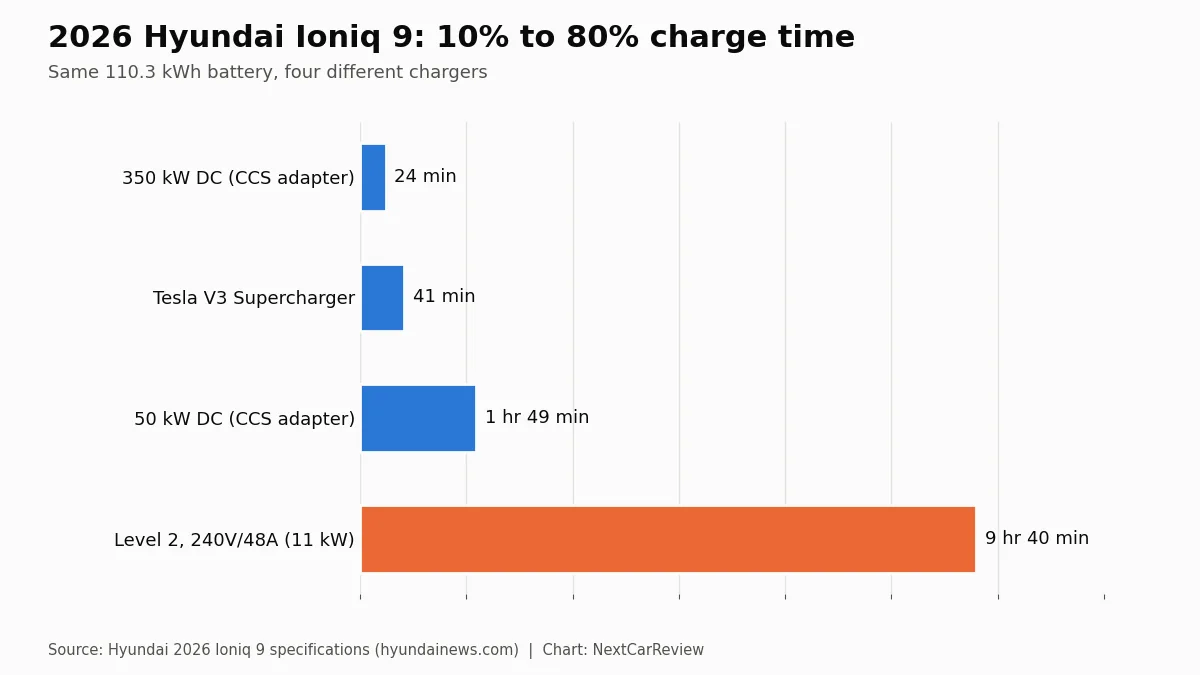
Level 2 is what most owners mean by “charging overnight.” Hyundai’s own figure for the 2026 Ioniq 9, one of the biggest batteries on sale, is 9 hours 40 minutes from 10% to 80% on a 240V, 48-amp (11 kW) charger. A smaller battery on the same charger finishes sooner.
Most drivers never charge from empty. If you use 40 miles of range a day and your car averages around 3 miles per kWh, you need roughly 13 kWh back, which a 7.2 kW charger restores in about two hours. That is why a home Level 2 charger rarely feels slow in daily life.
DC Fast Charging Times (Road Trip Math)
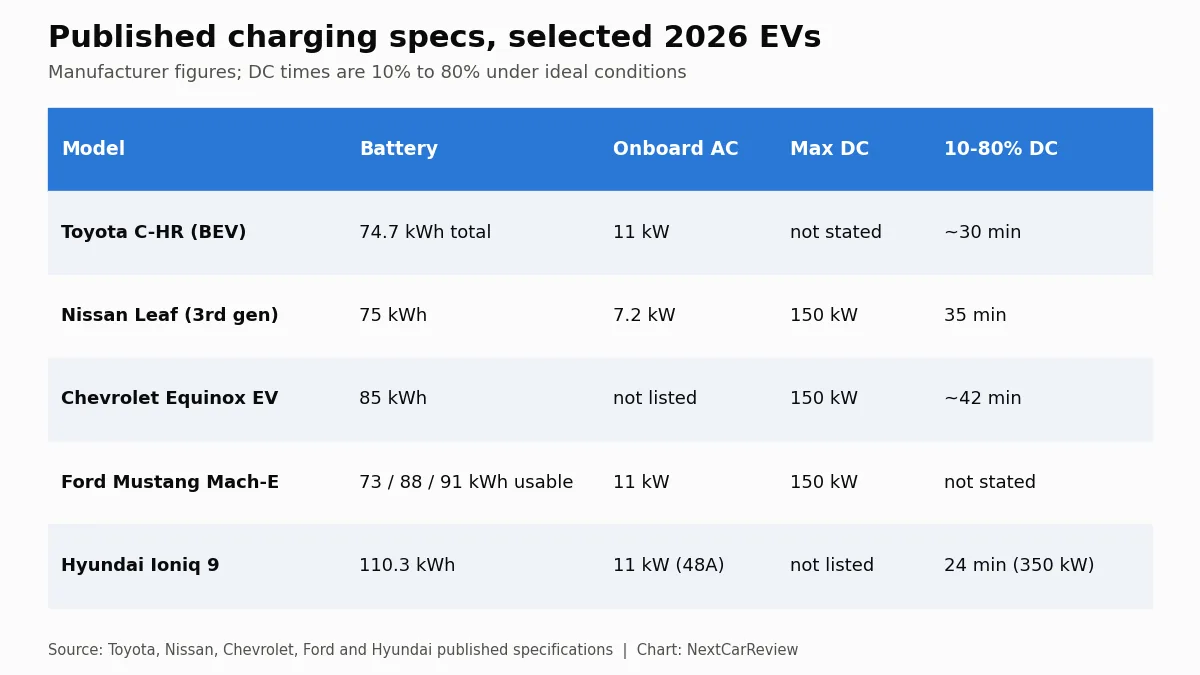
DC fast charging is where published times get specific. These are manufacturer figures for 10% to 80% under ideal conditions:
| 2026 model | Battery | Max DC (published) | 10% to 80% DC | Charge port |
|---|---|---|---|---|
| Hyundai Ioniq 9 | 110.3 kWh | Not listed | 24 min (350 kW, CCS adapter); 41 min (Tesla V3 Supercharger) | NACS |
| Toyota C-HR (BEV) | 74.7 kWh total | Not listed | About 30 min | NACS |
| Nissan Leaf | 75 kWh | 150 kW | 35 min | J1772 (AC) + NACS (DC) |
| Chevrolet Equinox EV | 85 kWh | 150 kW | About 42 min | CCS (NACS adapter offered) |
| Ford Mustang Mach-E | 73 / 88 / 91 kWh usable | Up to 150 kW | Not listed for 2026 | CCS (NACS adapter optional) |
Chevrolet frames it in miles too: up to 84 miles of range in 10 minutes for the front-drive Equinox EV, and up to 81 miles for all-wheel drive.
Station power matters as much as the car. Hyundai lists the Ioniq 9 at 24 minutes on a 350 kW charger but 1 hour 49 minutes on a 50 kW charger for the same 10% to 80% window. Before a trip, check the station’s rated output in the network app.
Why charging slows dramatically after 80%
Charging power depends on the battery’s state of charge, as fueleconomy.gov notes. As the battery fills, the car cuts power to protect the cells. That is why “80% in 30 minutes” does not mean “100% in 40 minutes.” On the road, stopping at roughly 80% and driving to the next charger is usually faster overall.
Real-World Examples by Vehicle
Compact and affordable EVs
The 2026 Toyota C-HR pairs a 74.7 kWh battery with an 11 kW onboard charger and a NACS port, and Toyota quotes about 30 minutes from 10% to 80% on DC fast charging with battery preconditioning. Its EPA range is 287 miles on 18-inch wheels. Our Toyota C-HR EV’s charging specs review covers how that plays out against rivals. The 2026 Nissan Leaf, with a 75 kWh battery and 7.2 kW onboard charger, is rated at up to 303 EPA miles on the S+ trim and 35 minutes for 10% to 80%.
Three-row and larger EVs
Bigger batteries take longer to fill at home but can still fast-charge quickly. The Ioniq 9’s 110.3 kWh pack supports 24-minute 10% to 80% sessions on a 350 kW charger, and the RWD model carries a 335-mile EPA rating. See our review of the Hyundai Ioniq 9’s 335-mile range and charging for the full picture.
What Slows Down Charging
- Cold weather. Idaho National Laboratory research found DC fast charging rates can deteriorate considerably in cold temperatures. fueleconomy.gov also reports that range can drop by about 41% in cold weather, with cabin heating responsible for about two-thirds of the extra energy used. Read more on how cold weather slows charging time.
- High state of charge. Above roughly 80%, power drops sharply on DC fast chargers.
- A lower-power station. A 50 kW charger caps your speed no matter what the car can accept.
- Your onboard charger. On Level 2, the car’s AC limit sets the ceiling.
- The wrong connector or adapter. Know which connector your EV uses before you pull in.
Preconditioning helps with the first problem. Toyota and Hyundai both list battery preconditioning on their 2026 models, which warms the pack on the way to a fast charger.
EV Charging Guide Series
Start with the main guide: choosing and using EV charging stations. More in this series:
Frequently Asked Questions
How long does it take to charge an electric car at home?
On a Level 2 home charger, most EVs refill overnight. For example, Hyundai lists 9 hours 40 minutes for the 2026 Ioniq 9’s large 110.3 kWh battery to go from 10% to 80% on a 240V, 48-amp (11 kW) charger. Smaller batteries take less time. On a regular 120V outlet, DOE estimates about 5 miles of range per hour, so a full charge can take days.
How long does it take to charge an EV to 80% on a DC fast charger?
Manufacturer figures for 2026 models range from about 24 minutes (Hyundai Ioniq 9 on a 350 kW charger) to roughly 30 minutes (Toyota C-HR), 35 minutes (Nissan Leaf) and about 42 minutes (Chevrolet Equinox EV), all from 10% to 80% under ideal conditions.
Why do automakers quote 10% to 80% instead of 0% to 100%?
Charging power falls as the battery fills, so the last 20% takes disproportionately long. fueleconomy.gov notes charge rate depends on the battery’s state of charge and temperature. The 10% to 80% window reflects the fastest, most useful part of a session.
Is there a simple EV charging time formula?
A rough estimate is battery capacity in kWh divided by charging power in kW. A 75 kWh battery on a 7.2 kW onboard charger works out to about 10.4 hours from empty. Real sessions take somewhat longer because some energy is lost as heat during charging.
Does a bigger home charger always charge faster?
Only up to your car’s onboard charger limit. If your EV accepts 7.2 kW AC, like the 2026 Nissan Leaf, a 48-amp wall unit will not charge it faster than a 32-amp unit that already supplies about 7.6 kW.
Does cold weather make EV charging slower?
Yes. Idaho National Laboratory research found DC fast charging rates can deteriorate considerably in cold temperatures. Many 2026 EVs, including the Toyota C-HR and Hyundai Ioniq 9, include battery preconditioning to warm the pack before fast charging.
⚠️ Professional Notice:
Charging times are manufacturer-published figures under ideal conditions, or arithmetic estimates clearly labeled as approximate. Real sessions vary with battery temperature, state of charge, charger output, software and vehicle trim. NextCarReview did not time these sessions.
Check your vehicle’s owner’s manual and the manufacturer’s current specifications for your exact model year and trim.
Data Sources and Verification
- Hyundai: 2026 Ioniq 9 specifications and features (charging times, battery)
- Toyota Pressroom: 2026 Toyota C-HR battery-electric announcement
- Nissan USA: 2026 Nissan Leaf press kit
- Chevrolet: Equinox EV specifications and charging
- Ford: 2026 Mustang Mach-E order guide
- DOE Alternative Fuels Data Center: charging levels and speeds
- fueleconomy.gov: Charging Your Plug-in Electric Vehicle
- fueleconomy.gov: Fuel economy in cold weather
- Idaho National Laboratory via OSTI: EV fast charging under cold temperatures (2018)
Figures were checked against the sources above in late September and early October 2026. Prices, laws and network data change; verify before you rely on them.

Morgan Reyes is the founder and editor-in-chief of NextCarReview, which Morgan launched in August 2024. A 2022 graduate of Columbia University, Morgan is based in New York and writes and edits the site’s reviews, comparisons and buying guides. Morgan does not road-test vehicles. Every article is built from published primary data: EPA FuelEconomy.gov ratings, NHTSA crash ratings, recalls and owner complaints, IIHS results, and manufacturer specifications and pricing, with each figure cited and checked before publication. Contact: admin@nextcarreview.com