
In this article 15 sections
Update, October 2026: The $7,500 federal clean vehicle tax credit (and the $4,000 used-EV credit) ended for vehicles acquired after September 30, 2025, under the One Big Beautiful Bill Act. No new EV bought today qualifies. Any older mention of the federal credit on this page is historical. Check your state’s rebates at AFDC.energy.gov and see the federal EV tax credit ended for details.
The best electric and hybrid cars 2026 list starts with the Chevrolet Bolt at $28,995 and the Nissan Leaf at $31,485 for affordable EVs. For hybrids, the Toyota Camry Hybrid is EPA-rated at up to 51 mpg combined and the Honda Civic Hybrid at 49 mpg. The $7,500 federal EV tax credit ended for vehicles acquired after September 30, 2025.
This guide covers full EVs, plug-in hybrids (PHEVs), and self-charging hybrids together across range, real-world cost, tax credit eligibility, IRS rules, charging cost vs gas, road trip range, and IIHS safety ratings. The right powertrain depends entirely on your driving situation. So getting it wrong is an expensive mistake that lasts five to seven years.
Figures cross-checked against EPA, NHTSA, IIHS and manufacturer sources. See our sourcing policy.
The $7,500 federal EV tax credit is gone for new purchases: it ended for vehicles acquired after September 30, 2025. Before it ended, the credit also had income limits, vehicle MSRP caps, and battery sourcing requirements.
This guide lays out every 2026 EV and hybrid worth buying, which ones genuinely qualify for that credit, and what your real 5-year cost looks like with and without it.
This guide covers full EVs, plug-in hybrids (PHEVs), and self-charging hybrids together, because the right choice depends almost entirely on your situation. The Toyota Camry Hybrid is EPA-rated at up to 51 mpg combined and starts at about $30,195 including destination. No charging cables. No IRS eligibility form.
So for a lot of buyers, that is the right answer in 2026. For others, the Chevrolet Equinox EV at $34,995 with 319 miles of EPA-rated range is strong value even without the federal credit. We help you figure out which camp you are in.
📌 2026 Electric & Hybrid Cars – Quick Market Intelligence
Verified Facts at a Glance
| Cheapest new EV (2026) | Chevrolet Bolt – $28,995 starting MSRP (confirm with dealer) |
| Best-value full EV | Chevrolet Equinox EV – 319 mi range, from $34,995 |
| Best hybrid mpg (2026) | Toyota Prius – 57 mpg EPA / Kia Niro FE – 53 mpg EPA / Camry Hybrid – up to 51 mpg EPA |
| Best commuter PHEV | Toyota Prius PHEV – 39-44 mi electric-only, 48-52 mpg combined |
| Fastest DC charging (affordable) | Hyundai Ioniq 5 – up to 350 kW, 10%-80% in ~20 minutes |
| Federal EV tax credit | Ended for vehicles acquired after Sept 30, 2025 – check state rebates at AFDC.energy.gov |
| Average new EV price (2025) | Well above mainstream gas cars – affordable options start at $28,995 |
| Top Safety Pick+ models | 2026 list: Toyota Camry, Toyota Prius, Hyundai Ioniq 5, Hyundai Sonata (see IIHS.org) |
| Analysis | Editorial Standard Verified ✔️ | Sources: EPA, IIHS, NHTSA, IRS |
How evaluation shows Every EV and Hybrid on This List
assessment shows every model across four criteria. Firstly, EPA-rated range or fuel economy sourced from FuelEconomy.gov. Secondly, starting MSRP from manufacturer press materials, subject to dealer confirmation.
Further, federal EV tax credit eligibility cross-checked against the IRS vehicle eligibility list at FuelEconomy.gov/tax. And safety data from NHTSA and the Insurance Institute for Highway Safety (IIHS).
We define “affordable” in this guide as a starting MSRP under $45,000 before any tax credit. That covers the majority of mainstream buyers in 2026. So we excluded models that exist only on paper or have unconfirmed U.S. availability.
All fuel economy figures are EPA ratings, so models can be compared on the same basis when you budget for a five-year ownership cost.
Self-charging hybrid MPG figures come from EPA combined ratings at FuelEconomy.gov. EV range figures are EPA-rated under standardized test conditions. Real-world highway range at sustained 70+ mph is typically 15-25% lower than the EPA number. We cover that gap in the Range and Charging section below.
The Best EVs and Hybrids for 2026 – Full Ranked Comparison
The table below covers 18 models across three powertrain types. Every figure is sourced to a primary reference. So all prices reflect starting MSRP as of March 2026. Confirm current pricing with your dealer before making any purchase decision.
| Model | Type | Starting MSRP | Range / MPG | Federal Credit | Best For |
|---|---|---|---|---|---|
| Chevrolet Bolt | Full EV | $28,995 | 262 mi EPA | None (ended 9/30/2025) | Budget EV buyer |
| Nissan Leaf Gen 3 | Full EV | $31,485 | 259-303 mi EPA | None | Quiet commuter |
| Toyota Camry Hybrid | Hybrid | ~$30,195 | 46-51 mpg EPA | None | Best mpg midsize |
| Kia Niro PHEV | PHEV | $28,435 | 33 mi EV / 48 mpg | None | Best value PHEV |
| Toyota Prius PHEV | PHEV | $34,970 | 39-44 mi EV / 48-52 mpg | None | Best commuter PHEV |
| Hyundai Kona Electric | Full EV | $34,470 | 200-261 mi EPA | None | Budget EV crossover |
| Toyota bZ | Full EV | $36,350 | 236-314 mi EPA | None | Family-friendly EV |
| Chevrolet Equinox EV | Full EV | $34,995 | 288-319 mi EPA | None (ended 9/30/2025) | Best overall value EV |
| Honda Civic Hybrid | Hybrid | ~$30,590 | 49 mpg EPA | None | Best small hybrid |
| Hyundai Ioniq 5 | Full EV | $36,600 | 245-318 mi EPA | None | Fast-charging priority |
| Toyota RAV4 PHEV | PHEV | ~$42,000 | ~50 mi EV (Toyota est.) | None | Best hybrid SUV |
| Kia Niro EV | Full EV | $41,195 | 253 mi EPA | None | Practical small EV |
| Tesla Model 3 | Full EV | $36,990 | 309-363 mi EPA | None (ended 9/30/2025) | Long-range priority |
| Hyundai Ioniq 6 | Full EV | $39,095 | 240-342 mi EPA | None | Aerodynamic range leader |
| Toyota C-HR | Full EV | $38,450 | 273-287 mi EPA | None | Standard AWD EV |
| Ford Mustang Mach-E | Full EV | $39,840 | 240-320 mi EPA | None (ended 9/30/2025) | Performance EV crossover |
| Hyundai Tucson PHEV | PHEV | $41,925 | 32 mi EV / 35 mpg | None | Family PHEV SUV |
| Subaru Solterra | Full EV | $39,945 | 278-288 mi EPA | None | Standard AWD, bad weather |
Source: EPA FuelEconomy.gov, OEM press materials (March 2026), IRS.gov. For a deeper look at models under $35,000, see our full guide to the cheapest electric cars under $35,000 in 2026, which covers the Bolt, Leaf, and Toyota bZ with full trim breakdowns. For a complete trim-by-trim range breakdown of the Nissan Leaf Gen 3, see our 2026 Nissan Leaf range analysis.
Full EV vs Plug-In Hybrid vs Self-Charging Hybrid – Which One Makes Sense for You?
This is the question every buyer should answer before they set a budget or build a shortlist. The right powertrain depends on three things: where you live, how you drive, and whether you have a reliable place to charge at home. Getting this wrong is an expensive mistake that lasts five to seven years.
Many Americans drive fewer than 40 miles on a typical day. That matters because most plug-in hybrids (PHEVs) offer between 30 and 50 miles of electric-only range. So a PHEV buyer who can plug in nightly could run largely on electricity during the week for routine commuting.
The Toyota Prius Plug-In Hybrid offers 39 to 44 miles of electric-only range and 48 to 52 mpg combined (EPA) when the battery runs out. For buyers with a garage or dedicated charging spot, the PHEV case is genuinely strong.
Choose a Full EV If You
Have reliable home charging (Level 2 preferred), drive a predictable daily route under 200 miles, want zero fuel costs on daily driving, and live near DC fast chargers for road trips. The Chevrolet Equinox EV and Tesla Model 3 are the strongest full EV cases under $40,000 for buyers who check all five of these boxes.
Choose a PHEV If You
Can plug in most nights but take frequent long trips, commute 30-50 miles daily, want to cut fuel costs without full EV commitment, or have only occasional access to charging. The Toyota Prius PHEV at 39-44 miles electric-only and the Toyota RAV4 PHEV at 50 miles electric-only are the strongest PHEV arguments in 2026 for buyers who match this profile.
Choose a Self-Charging Hybrid If You
Live in an apartment with no dedicated charging, drive long unpredictable routes regularly, want maximum simplicity of ownership, or travel frequently through areas with few chargers. The self-charging hybrid is the most overlooked option in 2026. A Toyota Camry Hybrid asks nothing of your home infrastructure, is EPA-rated at up to 51 mpg combined, and costs less than most of the EVs on this list.
If you are a renter in a city apartment without a dedicated parking spot, a full EV makes daily life noticeably harder unless you have reliable public charging nearby. That is not a criticism of EVs as a category. It is a practical ownership reality every buyer should factor in before signing.
To calculate whether a PHEV or full EV saves you more money over five years, see our plug-in hybrid vs full EV 5-year cost of ownership calculator, which accounts for your local electricity rates, gas prices, and federal credit eligibility.

PHEV vs Full EV vs Hybrid: Which Suits Which Buyer
Match the powertrain to the driver, not the trend. Suburban homeowners with Level 2 chargers and predictable commutes should pick a full EV like the Chevrolet Equinox EV. Buyers with mixed schedules, weekend trips, and overnight charging access should pick a PHEV like the Toyota Prius PHEV.
Apartment renters, rural drivers, and cold-weather buyers who cannot plug in reliably should pick a self-charging hybrid like the Toyota Camry Hybrid. Above all, your charging access decides this, not your wishlist.
Real-World Range and Charging in 2026 – What the EPA Number Does Not Tell You
Why EPA Range and Real-World Highway Range Are Not the Same Number
The EPA measures EV range under a standardized test cycle at roughly 75 degrees Fahrenheit, with a mix of city and highway driving. But when you are cruising on a U.S. highway at 70 to 75 mph, aerodynamic drag increases significantly compared to the test cycle.
Most drivers see real-world highway range that runs 15 to 25% below the EPA-rated figure. So a car rated at 300 miles EPA might deliver 230 to 255 miles at consistent highway speeds. That gap matters most on road trips. For a curated shortlist of affordable EVs that perform best on sustained highway runs, see our best affordable EVs for highway driving in 2026.
Cold Weather and EV Range – The Number No Sticker Shows You
This is the piece of information that never appears on a window sticker. AAA testing found that at 20°F with the cabin heater running, EV range fell by an average of 41%. The reason is twofold: lithium-ion battery chemistry becomes less efficient in cold conditions, and cabin heating draws heavily from the battery.
So if you live in Minnesota, Wisconsin, Michigan, Montana, or any region with sustained winter temperatures below 20°F, your planning range for an EV should be based on 60 to 75% of the EPA figure, not 100%.
Northern U.S. buyers: AAA testing found an average 41% range loss at 20°F with the heater on. A vehicle rated at 300 miles EPA could deliver under 200 miles in those conditions. Factor this into your model selection, especially for highway commutes or rural routes with limited charging access.
Hybrids and PHEVs are not affected in the same way because the gas engine supplements heating and maintains range.
This is one of the strongest arguments for a hybrid or PHEV in northern states. A hybrid also uses more fuel in the cold, but it can refuel in minutes anywhere, so winter range is far less of a planning problem than with a battery-only EV.
DC Fast Charging Speeds Compared – 800-Volt vs 400-Volt Explained
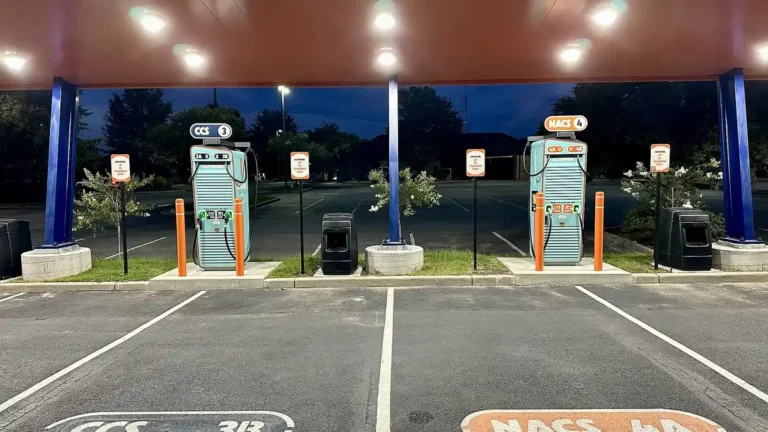
Not all fast charging is the same. The Hyundai Ioniq 5 and Ioniq 6 use an 800-volt electrical architecture, which means they can accept DC fast charging at up to 350 kilowatts when connected to a compatible charger. That translates to a 10% to 80% charge in roughly 18 to 20 minutes.
But most other mainstream EVs in this price range use a 400-volt architecture and top out at 100 to 150 kW, which takes 30 to 45 minutes for the same charge window. So the difference is significant on a long road trip where every charging stop adds time to your journey.
| Model | Architecture | Max DC Charge (kW) | 10%-80% Time | NACS Port |
|---|---|---|---|---|
| Hyundai Ioniq 5 | 800V | 350 kW | ~20 min | Yes (2025+) |
| Hyundai Ioniq 6 | 800V | 350 kW | ~18 min | No |
| Tesla Model 3 | 400V | 225 kW | ~25 min | Yes (native) |
| Chevrolet Equinox EV | 400V | 150 kW | ~30 min | No |
| Nissan Leaf Gen 3 | 400V | 150 kW | ~35 min | Yes (NACS) |
| Toyota bZ | 400V | 150 kW | ~30 min | Yes (NACS) |
| Ford Mustang Mach-E | 400V | 150 kW | ~38 min | No |
| Hyundai Kona Electric | 400V | 100 kW | ~43 min | No |
| Chevrolet Bolt | 400V | 150 kW | ~26 min | Yes (NACS) |
Source: OEM press materials, EPA FuelEconomy.gov. The NACS port (SAE J3400) provides access to Tesla’s Supercharger network, which passed 70,000 stalls worldwide in 2025. So the Nissan Leaf Gen 3, Toyota bZ, and Chevrolet Bolt all ship with NACS for 2026, meaningfully expanding road trip charging access for those models.
Best EV for Long Road Trips
Long-distance EV buyers should prioritize charging speed and aerodynamics, not just range. The Hyundai Ioniq 6 leads with up to 342 miles EPA and 800-volt fast charging that Hyundai rates at about 18 minutes for 10% to 80%.
Tesla Model 3 follows at 363 miles range with native Supercharger access. The Hyundai Ioniq 5 matches Ioniq 6 charging speed with more cargo room. So for cross-country travel, charging architecture matters as much as raw range numbers on the window sticker.
Charging Cost Comparison vs Gas Equivalent
Home Level 2 charging costs roughly $0.17 per kWh on average, based on U.S. Energy Information Administration residential electricity data. So a 300-mile EV charge runs about $15. The same distance in a 32-mpg gas car at $3.20 per gallon costs roughly $30.
That is roughly a 50% saving per fill. But public DC fast charging runs $0.40-$0.60 per kWh, which closes the gap to roughly $30-$40 per charge. Therefore, home charging access defines the real EV cost advantage for daily drivers.
| Energy Source | Rate | Cost per 300 Miles | Annual Cost (15K mi) |
|---|---|---|---|
| Home Level 2 charging | ~$0.17/kWh | ~$15 | ~$775 |
| Public DC fast charging | $0.40-$0.60/kWh | ~$30-$40 | ~$1,500-$2,000 |
| Gas (32 mpg sedan) | $3.20/gal | ~$30 | ~$1,500 |
| Gas (48 mpg hybrid) | $3.20/gal | ~$20 | ~$1,000 |
Source: U.S. Energy Information Administration (March 2026), EPA FuelEconomy.gov. Home charging rates vary widely by state; California is among the most expensive and states such as Washington and Louisiana are among the cheapest.
Financial Decisions – EV Tax Credits, True Cost, and What to Check Before You Buy
Did the $7,500 Federal EV Tax Credit End? Yes, on September 30, 2025
The federal clean vehicle credit under the Inflation Reduction Act ended for new and used EVs acquired after September 30, 2025, when the One Big Beautiful Bill Act took effect. That means no 2026 model in this guide qualifies for a federal purchase credit, regardless of income, MSRP, or where the battery was made.
The prices in this guide are therefore real out-the-door starting points, not “after credit” figures. Where savings still exist, they come from state rebates, utility programs, and manufacturer lease or finance offers. See our full explainer on the end of the federal EV credit and state EV incentives for 2026.
State rebates: several states still run EV rebate or tax-credit programs with income and price caps; search by ZIP at AFDC.energy.gov.
Manufacturer offers: lease cash and low-APR financing replaced much of the old federal discount; confirm current offers with the dealer.
Utility programs: many utilities offer home-charger rebates or off-peak EV charging rates.
Hybrid and EV Running Costs – What Five Years Actually Looks Like
The sticker price is only one part of the ownership picture. Over five years, the Toyota Camry Hybrid at 46 to 51 mpg (EPA) and an average national gas price of $3.20 per gallon costs roughly $4,700 to $5,200 in fuel for a driver covering 15,000 miles per year.
But an equivalent non-hybrid midsize sedan averaging 32 mpg costs approximately $7,500 in fuel over the same period. That is a difference of roughly $2,300 to $2,800, which partially offsets any MSRP gap between the hybrid and non-hybrid variant.
| Scenario | Vehicle | Fuel / Energy Cost (5yr) | Tax Credit Applied | Net 5-Year Advantage |
|---|---|---|---|---|
| Best hybrid – no charging | Toyota Camry Hybrid (46-51 mpg) | ~$4,700-$5,200 | None | $2,300-$2,800 vs non-hybrid |
| Best EV value | Chevrolet Equinox EV ($34,995) | ~$3,500-$4,000* | None (ended 9/30/2025) | Strongest TCO if home charging |
| Best commuter PHEV | Toyota Prius PHEV | ~$3,500-$4,500* | None | Depends on plug-in frequency |
| Baseline comparison | Non-hybrid midsize sedan (32 mpg) | ~$7,500 | None | Reference point |
*EV and PHEV fuel cost assumes home Level 2 charging at about $0.17/kWh; PHEV figure assumes roughly 70% of miles on electricity. Public charging costs are significantly higher. Source: U.S. Energy Information Administration average residential electricity rates, March 2026.
Toyota and Honda hybrid powertrains have a long track record, and reliability can matter as much as fuel cost over five years. Check NHTSA recalls and complaints for any model you are considering.
So when comparing a hybrid against a full EV at a similar price, factor in recall history and warranty coverage alongside fuel cost projections for a complete cost-of-ownership picture. Source: NHTSA recalls.

Best Hybrid for City Driving
City driving rewards hybrids more than highways, because regenerative braking captures energy at every stoplight. The Toyota Camry Hybrid LE is EPA-rated at 52 mpg city.
The Honda Civic Hybrid pairs 50 mpg city (EPA) with a tighter footprint that makes parking easier in urban garages. The Kia Niro FE is rated 53 mpg EPA combined and slips into compact city spaces. So city buyers should weigh dimensions and EPA city mpg over highway numbers and headline horsepower.
Safety Ratings and ADAS Technology – What to Look For in 2026
Safety ratings are not interchangeable between testing bodies. The Insurance Institute for Highway Safety (IIHS) and the National Highway Traffic Safety Administration (NHTSA) run different tests, use different crash scenarios, and issue different ratings.
So a model can earn a 5-star NHTSA rating and still not qualify for IIHS Top Safety Pick+ status. Both ratings matter, but they measure different things.
What the IIHS Top Safety Pick+ Designation Actually Requires
The IIHS Top Safety Pick+ designation requires strong performance across multiple crash modes, including the newer small overlap front and side barrier tests, acceptable or good headlights as standard, and acceptable or good pedestrian front crash prevention.
Award criteria apply to specific builds and equipment, so before buying any 2026 EV or hybrid, check the specific trim you plan to purchase against the IIHS database at IIHS.org, not just the model-level headline.
| Model | IIHS Status | AEB Standard (All Trims) | NHTSA Overall | Notable |
|---|---|---|---|---|
| Toyota Camry Hybrid | Top Safety Pick+ (2026) | Yes | 5-Star | 2026 IIHS TSP+ |
| Honda Civic Hybrid | Not on 2026 list (sedan) | Yes | 5-Star | Civic hatchback is a 2026 TSP |
| Hyundai Ioniq 6 | Top Safety Pick+ (2025 model) | Yes | 5-Star (2025) | Strong forward collision scores |
| Toyota bZ | 2025 bZ4X: TSP+ (built after Dec 2024) | Yes | Not yet rated (2026) | Verify 2026 status at IIHS.org |
| Subaru Solterra | Top Safety Pick+ (2025 model) | Yes | Not yet rated (2026) | EyeSight standard all trims |
| Hyundai Ioniq 5 | Top Safety Pick+ (2026) | Yes | Not yet rated (2026) | Verify trim-level ADAS at IIHS.org |
| Chevrolet Equinox EV | Not on 2025/2026 list | Yes | 5-Star | Strong value for safety content |
| Toyota RAV4 PHEV | Not on 2026 list | Yes | Not yet rated (2026) | Toyota Safety Sense standard |
| Kia Niro EV | Not on 2026 list | Yes | Not yet rated (2026) | Driver assistance standard all trims |
Source: IIHS 2025 and 2026 Top Safety Pick lists, NHTSA.gov. Ratings checked October 2026. Verify at IIHS.org before purchase as ratings can change between model year updates. For a full breakdown of how driver assistance systems compare across models in this price range, see our complete ranking of the best ADAS and self-driving features in cars under $50,000 for 2026.
Head-to-Head Comparisons – Two Matchups Worth Knowing
Toyota Camry Hybrid vs Honda Civic Hybrid – Best Efficient Car You Can Buy in 2026
These two cars sit near the top of the non-EV efficiency category in 2026. The Toyota Camry Hybrid is EPA-rated at up to 51 mpg combined and seats five adults in genuine midsize comfort. The Honda Civic Hybrid packages 200 horsepower and 49 mpg combined (EPA) into a smaller car.
So if you need the extra space of a midsize sedan, the Camry Hybrid wins. But if you want a more engaging driving experience in a smaller footprint, the Civic Hybrid is hard to beat at its price point. For the complete EPA mpg comparison with trim-by-trim breakdowns, see our Toyota Camry Hybrid vs Honda Civic Hybrid comparison for 2026.
Hyundai Kona Electric vs Kia Niro EV – Which Budget EV Crossover Wins
The Hyundai Kona Electric starts at $34,470 with a choice between a 200-mile base battery or a 261-mile extended battery with a 201-hp electric motor. The Kia Niro EV starts at $41,195 with 253 miles of EPA range and 126 MPGe in city driving. The Kona Electric has the lower entry price and the more flexible trim structure.
But the Niro EV has a more refined interior at the top of its range. Both use 100 kW DC fast charging, which puts them in the “adequate but not fast” category for road trips. The full verdict is in our Hyundai Kona Electric vs Kia Niro EV comparison for 2026.
Best budget EV: Chevrolet Bolt at $28,995.
Best overall EV value: Chevrolet Equinox EV at $34,995 with 319-mile range.
Best hybrid for fuel economy: Toyota Camry Hybrid at up to 51 mpg EPA, no charging required (the Prius reaches 57 mpg).
Best small hybrid: Honda Civic Hybrid at 49 mpg EPA and 200 hp.
Best commuter PHEV: Toyota Prius PHEV with 39-44 miles electric-only and 48-52 mpg combined.
Best for cold-weather states: Toyota Camry Hybrid or RAV4 PHEV — quick refueling makes winter range less of a concern.
Fastest charging EV under $45K: Hyundai Ioniq 5 at 350 kW, 10%-80% in ~20 minutes.
Final Word: Match the Powertrain to Your Life, Not the Trend
To sum up, the best electric and hybrid cars 2026 list only works when you match the powertrain to your real driving situation. So map your home charging access, your daily mileage, your local climate, and your IRS eligibility before you set a budget. The right car for a Minneapolis renter is not the right car for a San Diego homeowner with solar panels.
Ready to choose? Bookmark this guide, run two quotes per shortlisted model, and check state incentives at AFDC.energy.gov before signing anything. The right EV or hybrid is the one that still makes financial sense in year five.
Frequently Asked Questions
What is the most fuel-efficient hybrid car you can buy in 2026?
Is a plug-in hybrid or a full electric car better for a daily commuter in 2026?
What is the difference between a hybrid and a plug-in hybrid?
What is the longest range affordable EV under $40,000 in 2026?
How much does cold weather reduce electric car range?
What is 800-volt EV charging and why does it matter?
Do any 2026 EVs qualify for the $7,500 federal tax credit?
What is the cheapest new electric car you can buy in 2026?
Which electric and hybrid cars have the best safety ratings in 2026?
Does automatic emergency braking come standard on all 2026 EVs and hybrids?
Related guides: our electric vehicle hub and The Complete Guide to the 2026 Acura RSX EV: Release Date, Specs, a….
⚠️ Professional Notice:
All MSRP figures in this article are based on manufacturer press materials as of March 2026 and are subject to change. Confirm current pricing and availability with your local dealer before making any purchase decision. EPA fuel economy and range figures are produced under standardized test conditions.
Real-world results will vary based on driving habits, weather, load, and road conditions. The $7,500 federal EV tax credit ended for vehicles acquired after September 30, 2025.
For remaining state and utility incentives, search by ZIP at AFDC.energy.gov and consult a qualified tax professional for advice specific to your situation.
Safety ratings referenced in this article were current as of March 2026. Check IIHS.org and NHTSA.gov for the most current ratings before purchase. NextCarReview.com does not receive compensation from any manufacturer in exchange for rankings or editorial coverage.
Data Sources and Verification
- FuelEconomy.gov – EPA fuel economy ratings for all hybrid and EV models
- FuelEconomy.gov/tax – Federal EV tax credit eligibility and qualifying vehicle list
- IIHS.org – Top Safety Pick and Top Safety Pick+ ratings, crash test results
- NHTSA.gov/ratings – 5-Star Safety Ratings, New Car Assessment Program data
- IIHS 2026 Top Safety Pick list – current award status
- IRS.gov – Clean Vehicle Credit guidance – Income limits, MSRP caps, eligibility requirements
- OEM press materials – Nissan, Toyota, Honda, Hyundai, Kia, Chevrolet, Ford (March 2026)
- AAA Electric Vehicle Range Testing – Cold weather range reduction data
- EIA Electric Power Monthly – Residential electricity prices
- SAE International – SAE J3400 NACS charging standard documentation
- U.S. Energy Information Administration – Residential electricity rates (March 2026)

Morgan Reyes is the founder and editor-in-chief of NextCarReview, which Morgan launched in August 2024. A 2022 graduate of Columbia University, Morgan is based in New York and writes and edits the site’s reviews, comparisons and buying guides. Morgan does not road-test vehicles. Every article is built from published primary data: EPA FuelEconomy.gov ratings, NHTSA crash ratings, recalls and owner complaints, IIHS results, and manufacturer specifications and pricing, with each figure cited and checked before publication. Contact: admin@nextcarreview.com