
In this article 11 sections
Update, October 2026: The $7,500 federal clean vehicle tax credit (and the $4,000 used-EV credit) ended for vehicles acquired after September 30, 2025, under the One Big Beautiful Bill Act. No new EV bought today qualifies. Any older mention of the federal credit on this page is historical. Check your state’s rebates at AFDC.energy.gov and see the federal EV tax credit ended for details.
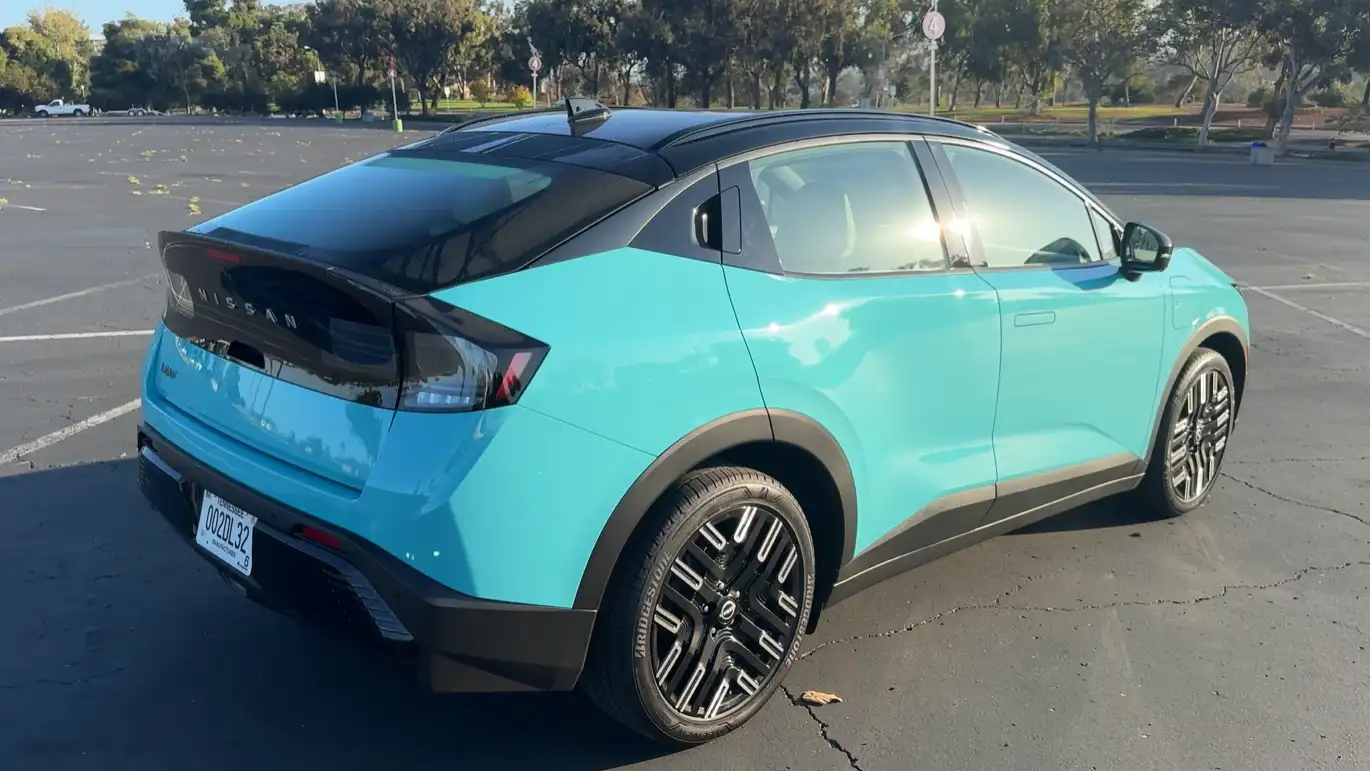
The 2026 Nissan Leaf is now a crossover EV. It gets up to 303 EPA miles on a 75 kWh battery. The EPA splits that into 325 miles of city range and 276 miles of highway range on the S+ trim. NACS charging is standard on every trim, opening access to over 20,000 Tesla Superchargers, per Nissan. Starting at $29,990 MSRP ($31,565 with the $1,575 destination charge), the S+ has the lowest starting MSRP of any new EV on sale in the US, according to Nissan.
This guide covers real-world range, cold weather loss, NACS charging, all trims, pricing, and how the 2026 Leaf stacks up against the Chevy Bolt EV, Toyota bZ4X, and Hyundai Kona EV.
Figures cross-checked against EPA, NHTSA, IIHS and manufacturer sources. See our sourcing policy.
The 2026 Nissan Leaf is now a crossover EV. It gets up to 303 EPA miles on a 75 kWh battery. The EPA also publishes separate city and highway range figures, which give a better picture of interstate driving. This guide covers real-world range, cold weather loss, NACS charging, all trims, pricing, and how it stacks up against the competition.
📌 2026 Nissan Leaf – Quick Market Intelligence
Verified Facts at a Glance
| Best range trim | S+ — 303 miles EPA | 75 kWh battery | 214 hp front-wheel drive |
| EPA highway range | EPA highway range: S+ 276 miles | SV+ 268 miles | Platinum+ 240 miles |
| Cold weather range loss | EPA data: about 12% at 20°F without cabin heat, up to about 41% with the heater |
| Summer heat range loss | AC use cuts range; EPA says the effect is larger for EVs than gas cars |
| Starting MSRP | $29,990 (S+) | $34,230 (SV+) | $38,990 (Platinum+), plus $1,575 destination |
| Federal EV tax credit | None (ended for vehicles acquired after Sept 30, 2025) |
| Charging port | NACS standard all trims — 20,000+ Tesla Superchargers accessible (Nissan) |
| DC fast charge speed | Up to 150 kW — 10% to 80% in ~35 minutes (Nissan) |
| Level 2 home charge | About 12 hours at 240V (Nissan) |
| Key new features | Crossover body, dual 12.3″ screens (14.3″ on SV+ and Platinum+), ProPilot assist, active liquid battery cooling |
| analysis | Editorial Standard Verified ✔️ | sources: EPA FuelEconomy.gov, Nissan OEM, IRS.gov |
Nissan Leaf range by trim (2026, EPA):
| 2026 Leaf trim | Combined range | City range | Highway range | Starting MSRP |
|---|---|---|---|---|
| S+ | 303 miles | 325 miles | 276 miles | $29,990 |
| SV+ | 288 miles | 305 miles | 268 miles | $34,230 |
| Platinum+ | 259 miles | 275 miles | 240 miles | $38,990 |
All three use the same 75 kWh battery and 214-hp motor; prices exclude the $1,575 destination charge. For comparison, the previous-generation 2025 Leaf hatchback was EPA-rated at 149 miles, or 212 miles for the Leaf SV with the larger battery (FuelEconomy.gov), so the 2026 model adds roughly 90 miles or more.
America’s Most Affordable 300-Mile EV Is Here — And It’s the 2026 Leaf
Not long ago, 200 miles felt like a big deal for an electric car. Now Nissan has raised the bar. The 2026 Nissan Leaf range hits 303 EPA miles, and it starts at $29,990 before destination. That is a serious number for any EV buyer on a budget.
But here’s the thing EPA estimates are not the whole story. The real question is how it holds up on a US interstate. So this guide looks at the EPA’s separate highway range figures and official cold weather data. That is worth reading before you spend a dollar.
, Nissan completely rebuilt this car from scratch for 2026. It’s no longer a small hatchback. It’s now a small crossover SUV with a fresh body, a bigger battery, and the NACS charging port built right in. That means access to Tesla’s Supercharger network.
For an affordable 300-mile EV in the USA, that’s a major step forward. For broader context on how the 2026 Leaf fits into the wider affordable EV market, see our best electric and hybrid cars 2026 guide.
What’s New for 2026: The Leaf Is Now a Crossover EV With More Range
The old Leaf was a hatchback. The 2026 version is a crossover. Nissan made that shift on purpose, because crossover SUVs are what Americans actually buy.
Under the hood, it gets a 75 kWh battery and a 214 hp front-wheel-drive motor. That’s a big jump from the outgoing model. , the interior now features dual 12.3-inch screens on the S+ (14.3-inch on SV+ and Platinum+), one for the driver and one for the infotainment system – so it finally feels like a modern vehicle.
ProPilot assist is also on board on every trim. It is a hands-on driver assist that helps with steering, speed and braking on the highway. , the NACS port is now standard on every trim. That single change opens up over 20,000 Tesla Superchargers, per Nissan, the largest fast-charging network in the country.
In short, this is not just an update. It is a full rebuild and the numbers back that up.
2026 Nissan Leaf Real-World Highway Range at 70 MPH
The EPA rates the S+ trim at 303 miles. But that combined number blends city and highway lab cycles. The EPA also lists highway-only range, and those numbers are pretty solid.
On the EPA highway cycle, the S+ is rated at 276 miles, the SV+ at 268 miles and the Platinum+ at 240 miles. City range is higher, at 325, 305 and 275 miles.
Sustained 70 mph or faster driving usually uses more energy than the EPA highway cycle. So real-world performance varies depending on how and where you drive.
For the S+ with its 303-mile EPA rating, treat the 276-mile highway figure as a good-weather ceiling and plan a little below it at 70 mph. That’s still strong for this price point.

How Summer Heat Affects the 2026 Nissan Leaf Range
Extreme heat also cuts into range, though not as badly as cold. The EPA notes that air conditioning can have a larger effect on EVs, on a percentage basis, than on gas cars. So expect less than the full 303 miles on very hot days with the AC running.
However, the 2026 Leaf’s active battery cooling system which the old Leaf lacked helps manage heat much better. As a result, it should handle summer heat better than the previous generation. That’s a meaningful upgrade for drivers in the southern US.
Meanwhile, parking in shade and pre-cooling the cabin while still plugged in both help protect your range on hot days. These are simple habits that make a real difference.
Cold Weather 2026 Nissan Leaf Range Loss — What to Expect
Cold weather is where EVs take the hardest hit. The 2026 Nissan Leaf range is no exception. EPA data on fueleconomy.gov shows that at 20°F, EV range is about 12% lower without the cabin heater and can drop about 41% with it. For the S+, that is a span of roughly 180 to 265 miles in very cold weather.
However, preconditioning helps a lot. If you warm the battery while still plugged in, you can recover a solid chunk of that lost range. Nissan’s scheduling feature lets you set a departure time, so it’s worth using every single winter morning.
Also, heated seats and a heated steering wheel use far less battery power than blasting the full cabin heater. Use those first. They draw a fraction of the energy and keep you just as comfortable on a cold commute.
And unlike the old hatchback, the 2026 Nissan Leaf crossover EV body style gives you more interior space to heat efficiently, which helps reduce the overall energy load on brutal winter days.
At 20°F, EPA data shows EV range can drop by about 12% without cabin heat and up to about 41% with it, so the 2026 Nissan Leaf S+ could see roughly 180 to 265 miles. Use Nissan’s departure scheduling feature to precondition the battery while still plugged in this recovers meaningful range before you leave home.
Heated seats and steering wheel use significantly less battery energy than cabin heating. The 2026 model’s active liquid battery thermal management is a clear upgrade over the previous generation, but plan charge stops accordingly on winter road trips.
2026 Nissan Leaf Price, Trims & 75 kWh Battery Efficiency Breakdown
There are three main trims. Each uses the same 75 kWh battery, but the EPA miles differ based on wheel size and weight. Here’s how they line up side by side:
| Trim | Starting Price | EPA range | Horsepower | Key Features |
|---|---|---|---|---|
| S+ | $29,990 | 303 miles | 214 hp | NACS, dual 12.3″ screens, ProPilot assist, 18″ steel wheels |
| SV+ | $34,230 | 288 miles | 214 hp | All S+ features + heated front seats, 18″ alloy wheels, dual 14.3″ screens, 6 speakers |
| Platinum+ | $38,990 | 259 miles | 214 hp | All SV+ features + 19″ wheels, 10-speaker Bose audio, dimming panoramic roof, heated rear seats and steering wheel |
Source: Nissan USA specs and pricing; prices are MSRP before the $1,575 destination charge. Confirm current trim pricing with your local Nissan dealer before purchase.
The S+ gives you the best 2026 Nissan Leaf range at 303 miles. Meanwhile, the Platinum+ trades some of that range for bigger wheels and premium comfort. So if maximizing range is your top goal, the S+ is the clear choice.
What is the Nissan Leaf S+? It is the entry trim of the 2026 Leaf and, at $29,990, the one with the longest range (303 miles), helped by its lighter 18-inch steel wheels. It still gets NACS charging, dual 12.3-inch screens and ProPilot Assist. For the full look at the new crossover body, cabin and trims, see our 2026 Nissan Leaf crossover review; for the outgoing hatchback, our 2025 Nissan Leaf guide.
Note that the $7,500 federal EV tax credit ended on September 30, 2025, so budget with the full MSRP. Even so, $29,990 MSRP ($31,565 with destination) for 303 EPA miles is strong value for a 300-mile EV.
2026 Nissan Leaf NACS Supercharger Access — A Big Deal for Affordable EVs
Before 2026, the Leaf used the CHAdeMO fast-charging port. That network was shrinking fast and becoming harder to rely on. So Nissan made the right call by switching fully to NACS.
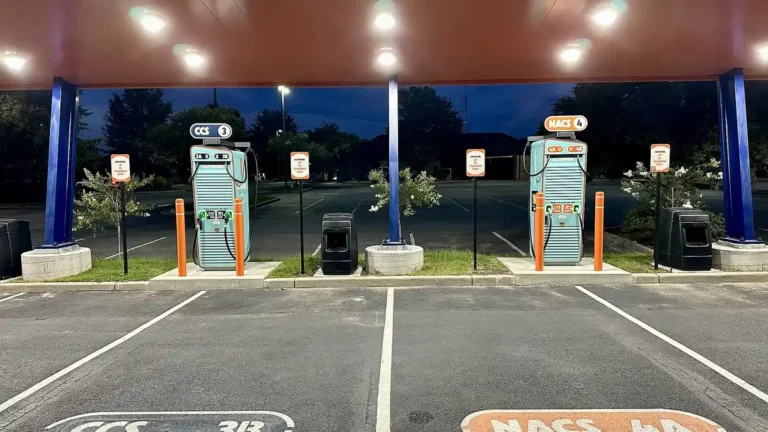
With NACS on board, owners can pull into compatible Tesla Supercharger stations without an adapter. That’s the largest fast-charging network in the US. It changes road trips completely. No more hunting for a working CHAdeMO charger in rural areas.
The 2026 Leaf supports up to 150 kW DC fast charging. Nissan quotes 10% to 80% in roughly 35 minutes. That’s a very usable stop on a long drive.
, charging speed tapers as the battery fills and in cold weather, so real stops can run longer. At home on a level 2 charger, Nissan quotes about 12 hours at 240V for a full charge, which fits an overnight stop.
NACS is standard on all three 2026 Leaf trims. This gives owners direct access to Tesla’s Supercharger network, over 20,000 Superchargers per Nissan, without an adapter. The 2026 Leaf’s 150 kW DC fast charging speed delivers a 10%–80% charge in approximately 35 minutes, per Nissan.
Level 2 home charging completes a full charge in about 12 hours at 240V. The switch from CHAdeMO to NACS is one of the most significant practical improvements in this generation, particularly for long-distance driving reliability.
Reliability & 5-Year Ownership Costs of the 2026 Nissan Leaf
Nissan’s previous Leaf had real battery degradation problems, especially in hot states like Arizona and Texas. The 2026 model adds active liquid battery cooling, which the old Leaf never had. That’s a major fix, and it should protect your battery capacity over time.
Long-term reliability data on the 2026 platform is still building up, since it’s a brand-new architecture. Check NHTSA for any recalls on the new model before you buy.
On five-year ownership costs, EVs generally win over gas cars. The Leaf skips oil changes, spark plugs, and transmission fluid services. As a result, maintenance costs should be lower than for a comparable gas crossover, though the exact savings depend on your local electricity and gas prices.
2026 Nissan Leaf Pros, Cons & Who Should Buy It
✅ Pros
- 303 EPA miles on the S+ – more than its closest low-priced rivals
- NACS Supercharger access to the biggest US charging network
- Affordable starting price of $29,990 MSRP
- ProPilot assist standard for hands-on highway driving help
- Active liquid battery cooling – a huge upgrade from the old Leaf
- Dual 12.3-inch screens (14.3-inch on upper trims) give it a genuinely modern feel
❌ Cons
- Platinum+ drops to 259 miles with 19″ wheels – range trade-off for luxury
- Cold weather range loss of up to about 41% at 20°F with the heater on (EPA data)
- FWD only – no AWD option for winter driving
- New platform means long-term reliability is still unproven
- 150 kW max charging speed trails some newer competitors
Who Should Buy the 2026 Nissan Leaf?
This car is built for budget-conscious drivers who want real EV range without paying Tesla or Hyundai prices. If you commute 80–100 miles daily and want highway-capable range with full Supercharger access, the S+ is a very smart buy.
However, if you drive in extreme cold regularly or need AWD for winter roads, you may want to look at the Kona EV or the Toyota bZ4X with its available AWD option instead. It’s a great EV, but no AWD is a real limitation for some buyers. For a full comparison of every affordable EV and hybrid available in 2026, see our best electric and hybrid cars 2026 guide, or browse the full best new cars to watch in 2026 pillar guide for broader buying options across all categories.
2026 Nissan Leaf Range vs Bolt EV vs Toyota bZ4X vs Hyundai Kona EV
How does this crossover EV stack up against its closest rivals? Here’s a clear side-by-side comparison:
| Model | Starting Price | EPA range | Fast Charge Port | AWD option |
|---|---|---|---|---|
| 2026 Nissan Leaf S+ | $29,990 | 303 miles | NACS | No |
| 2027 Chevy Bolt | ~$28,995 incl. destination | 262 miles | NACS | No |
| 2025 Toyota bZ4X | ~$37,070 | 252 miles | CCS | Yes |
| 2025 Hyundai Kona EV SEL | ~$36,975 | 261 miles | CCS | No |
Source: OEM pricing, EPA FuelEconomy.gov. The Bolt EV ended after 2023; the new 2027 Bolt is the current model. Confirm current pricing with your dealer before purchase.
The Leaf S+ wins on range in this group by a clear margin. The 2027 Bolt costs about the same with destination but gives up 41 miles. The bZ4X offers AWD but costs about $7,000 more. Meanwhile, the 2025 Kona EV and bZ4X still use CCS, not NACS, so they need an adapter at Superchargers. So for overall value and range, the 2026 Nissan Leaf leads this affordable EV segment.
To be direct, the 2026 Nissan Leaf range stands out. A 303-mile EPA rating for under $32,000 with destination, plus NACS charging, is rare at this price point. But Nissan delivered it.
The 2026 Nissan Leaf highway range is solid, with a 276-mile EPA highway rating on the S+. Cold weather range loss is real, but that’s true for every EV on the market. What’s different here is the NACS port and the active battery cooling two things the old Leaf never had. Together, they make a much more confident ownership experience.
, the crossover body, dual screens, ProPilot assist, and improved thermal management make this feel like a genuinely modern car. It’s not a rebadged old Leaf. It’s a new product that earns its place at the top of the affordable 300 mile EV USA.
If you want real range, a real charging network, and a real price this Nissan Leaf 303 miles review says it all: the 2026 Leaf S+ deserves the top spot on your shortlist.
Frequently Asked Questions About the 2026 Nissan Leaf Range
What is the 2026 Nissan Leaf range at 70 mph on the highway?
How much range does the 2026 Nissan Leaf lose in cold weather?
Does the 2026 Nissan Leaf have NACS for Tesla Supercharger access?
What battery size does the 2026 Nissan Leaf use?
Which 2026 Leaf trim gets the longest range?
How fast does the 2026 Nissan Leaf charge at a fast charger?
Is the 2026 Nissan Leaf a crossover or a hatchback?
Does the 2026 Nissan Leaf qualify for the federal EV tax credit?
How does the 2026 Nissan Leaf range compare to the Chevy Bolt EV?
Does the 2026 Nissan Leaf have AWD?
What is ProPilot assist on the 2026 Leaf?
Is the 2026 Nissan Leaf good for long road trips?
How much range did the old Nissan Leaf have?
Which 2026 Nissan Leaf trim has the most range?
Related guides: browse all EV guides and How Long Do EV Batteries Last? Real Lifespan Data, Warranties, Repl….
⚠️ professional Notice:
All MSRP figures are based on Nissan USA pricing and are subject to change. Confirm current pricing and availability with your local Nissan dealer before making any purchase decision. All range figures are sourced from EPA ratings on FuelEconomy.gov, including EPA city and highway range splits.
Figures are for informational purposes only. Actual range varies with driving style, speed, weather, terrain, and road conditions. The federal EV tax credit ended for vehicles acquired after September 30, 2025; check state incentives before purchase.
Long-term reliability data on the 2026 Leaf platform is still limited as this is a new architecture. NextCarReview.com does not receive compensation from any manufacturer in exchange for rankings or editorial coverage.
Data Sources and Verification
- FuelEconomy.gov – EPA range ratings for the 2026 Nissan Leaf S+, SV+, and Platinum+ trims
- FuelEconomy.gov cold weather data – EV range loss at 20°F
- Nissan USA newsroom – 2026 Leaf pricing, destination charge and Supercharger access
- IRS.gov – federal EV tax credit eligibility and inflation Reduction Act requirements
- FuelEconomy.gov/Tax – EV tax credit eligibility verification tool
- Nissan USA specs and trims – trim levels, powertrain specs, battery size, charging specifications, ProPilot assist details
- FuelEconomy.gov 2027 Chevrolet Bolt – rival EPA range
- NHTSA.gov/ratings – safety ratings reference for 2026 model verification

Morgan Reyes is the founder and editor-in-chief of NextCarReview, which Morgan launched in August 2024. A 2022 graduate of Columbia University, Morgan is based in New York and writes and edits the site’s reviews, comparisons and buying guides. Morgan does not road-test vehicles. Every article is built from published primary data: EPA FuelEconomy.gov ratings, NHTSA crash ratings, recalls and owner complaints, IIHS results, and manufacturer specifications and pricing, with each figure cited and checked before publication. Contact: admin@nextcarreview.com