In this article 11 sections
The 2026 Hyundai Ioniq 9 is the flagship EV Hyundai has been building toward for years. It is big, it is loaded, and it targets the Kia EV9 and Rivian R1S at once. We cover every spec, every trim, the real-world range, the 800-volt charging advantage, the cabin, and the price. So read this before you test-drive anything else in its class.
Figures cross-checked against EPA, NHTSA, IIHS and manufacturer sources. See our sourcing policy.
Hyundai’s EV ambition finally gets its biggest shape. The 2026 Hyundai Ioniq 9 is a three-row electric SUV that seats up to seven and packs the brand’s best technology into one vehicle. For Hyundai, this is the one that had to be great.
The 2026 Ioniq 9 has real strengths and a few honest trade-offs. Both deserve your attention before you write a deposit check.
Above all, this car targets busy families who want a premium EV experience without crossing into luxury-brand territory. The Ioniq 9 sits in a meaningful space: more affordable than a Lucid Gravity, more electric than a hybrid Palisade, and more refined than many older three-row options.
We will walk through the design, powertrain, range, charging, interior, cargo, safety, and pricing. By the end of this guide, you will know exactly where the Ioniq 9 earns its praise and where it asks for patience. So let us get into it.

2026 Hyundai Ioniq 9 at a Glance
2026 Hyundai Ioniq 9 – Quick Market Intelligence
The 2026 ioniq 9 specs tell a straightforward story. Big battery. Real range. 800-volt speed. Seven seats. So the numbers back the premium pitch from the start.
Key Specs Table
| Spec | 2026 Hyundai Ioniq 9 |
|---|---|
| Starting MSRP | $58,955 (incl. destination) |
| Battery | 110.3 kWh usable |
| EPA Range (RWD) | Up to 335 miles |
| EPA Range (AWD) | 320 miles (311 Performance) |
| Peak DC Fast Charging | 350 kW (800-volt) |
| 10 to 80% Charge Time | Around 24 minutes |
| Power (AWD) | 303 hp (422 hp Performance) |
| Torque (AWD Performance) | 516 lb-ft |
| Towing Capacity | 3,500 lbs RWD / 5,000 lbs AWD |
| Seating | 6 or 7 |
| Charge Port | NACS |
Who the Ioniq 9 Is Built For
Best three row electric suv 2026 searches tend to land families and long-distance commuters. The Ioniq 9 chases both. It offers more refinement than a Rivian R1S but fewer off-road credentials. It undercuts the Lucid Gravity on price but gives up some peak range. So it finds a strong middle ground for buyers who want a clean, practical, premium EV for everyday family life.
To see how Hyundai’s EV lineup branches from here, our 2025 Hyundai Kona Electric review covers the entry point of Hyundai’s electric family. And our 2026 Hyundai Santa Fe review shows the five-seat hybrid SUV alternative if seven seats feel like too much for your needs.
Design and Exterior
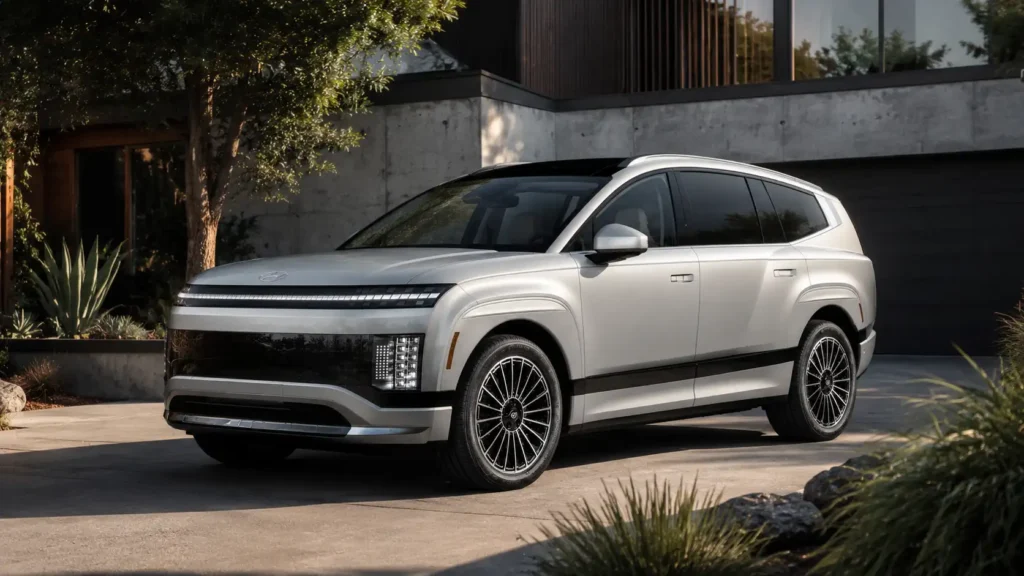
Hyundai ioniq 9 design leans on the same parametric language as the Ioniq 5 and 6. But everything scales up for family duties.
Exterior Styling
The front face is wide and calm, with pixel lighting and a clean grille closure that signals EV intent without being theatrical. The flanks stay smooth with a long roofline that prioritizes headroom in all three rows over a sporty silhouette. At the rear, full-width lighting connects everything neatly. So the look reads premium and purposeful without trying to be bold for its own sake.
The wheelbase is generous, which helps rear legroom substantially. And the body sits high enough to load groceries easily without requiring a step-up stool.

Aerodynamics and Efficiency
Hyundai sweated the drag coefficient carefully on the Ioniq 9. So flush door handles, aerodynamic alloy wheels, and an active air shutter system all work together to minimize drag. As a result, the range numbers hold up better at highway speeds than many rivals in this class.
Powertrain and Performance
The 2026 ioniq 9 performance story splits cleanly across two setups. So pick your priority: range or pace.
Single-Motor RWD
The single rear-motor setup makes around 215 hp and returns the longest range, up to 335 miles EPA. So it is the clear choice for families who prioritize efficiency over speed and do not need all-weather AWD grip. The rear-drive layout feels balanced and light in daily driving.
Dual-Motor AWD
The dual-motor AWD version adds a front motor and lifts output to 303 hp, while the AWD Performance trims make 422 hp and 516 lb-ft. So it is genuinely quick for a full-size SUV. AWD range drops to 320 miles, or 311 for the Performance, still strong for the class. In addition, the front motor provides instant grip in rain, snow, and slippery conditions.
Towing
Hyundai ioniq 9 towing capacity lands at 3,500 lbs for RWD and 5,000 lbs for AWD models. So it handles a camper, a boat, or a cargo trailer. However, heavier trailers belong to diesel trucks. Towing on this car, as with any EV, also reduces range noticeably. So plan your charging stops carefully when pulling a load.
Range and Charging
The 2026 ioniq 9 range and charging combination is one of the strongest arguments in its favor. Hyundai built the Ioniq 9 on an 800-volt architecture. So charging is genuinely fast, not just fast compared to slow competitors.
800-Volt Architecture and DC Fast Charging
An 800-volt system allows the Ioniq 9 to accept up to 350 kW at compatible stations. So the 10 to 80 percent charge completes in around 24 minutes under ideal conditions. That is real road-trip mathematics. You stop for lunch, and the car is ready to go before your food arrives.
Real-World Range at Highway Speed
EPA range is a lab figure. On the gentler EPA highway cycle, the RWD model rates 296 miles, and steady 75 mph cruising will cut that further. That is still excellent for a vehicle this size. In cold weather, DOE data shows EV range can fall by up to about 41% at 20°F with the heater running. So range anxiety is manageable but not irrelevant, especially in winter regions.
NACS Port and Network Access
The Ioniq 9 ships with a native NACS port. So Hyundai Ioniq 9 NACS charging works at Tesla Supercharger stalls without any adapter. Combined with the Hyundai Electrify America partnership, the network access situation has genuinely improved for Hyundai EV buyers this year.
Interior, Comfort, and Cabin
The Hyundai Ioniq 9 interior is where this car makes the strongest impression in its price range. Hyundai clearly spent its development budget where buyers actually spend their time.

First and Second Row Experience

The front seats on higher trims include a relaxation mode that reclines nearly flat while charging. So long charging stops become rest stops. Heated and ventilated seats come standard on most trims, and the adjustments feel precise and well-damped.
Second-row captain’s chairs in the six-seat configuration slide and recline extensively. So rear passengers feel genuinely hosted rather than merely accommodated.

Third Row Honesty
The third row fits children and shorter adults with real comfort. Tall adults will find it tight after long distances, as with nearly every three-row vehicle on the market. However, the headroom is better than most thanks to the tall roofline. And the low step-in height makes loading small children far easier than in lower SUVs.
Cabin Materials and Fit
Higher trims use a mix of sustainable materials and soft-touch surfaces that feel premium without being ostentatious. The dashboard design is wide and uncluttered. And the floating center console creates a calm, airy feel in the front row. So the overall impression is that Hyundai has closed the quality gap to European rivals meaningfully.
Infotainment and Technology
A 12-inch touchscreen pairs with a 12-inch driver display and a heads-up display on higher trims. Wireless Apple CarPlay, Android Auto, and the Hyundai-native navigation run simultaneously without interference. The system responds quickly and routes charging stops intelligently. Over-the-air updates keep the software current.
Cargo Space


The Ioniq 9 delivers meaningful cargo space in all three configurations. Behind the third row, you get enough room for a stroller and a bag without folding any seats. Fold the third row and you can fit a full weekend trip. Fold everything flat and the space opens up for furniture runs. A front trunk adds a small but useful compartment for charging cables and valuables.
Safety
Hyundai standard safety 2026 across the Ioniq range is comprehensive. The Ioniq 9 carries this forward with a comprehensive suite as standard equipment.
Standard Safety Features
Every Ioniq 9 includes forward collision avoidance with pedestrian and cyclist detection, lane keeping assist, blind-spot collision warning, rear cross-traffic collision avoidance, and highway driving assist. So the base car is not bare on safety. Higher trims add remote parking assist and a surround-view monitor.
Crash Test Ratings
Full IIHS and NHTSA results for the 2026 model year were still pending at the time of this guide. Hyundai’s recent EV models have scored well in both programs. So we expect strong results, but always verify the latest published ratings before purchase.
Pricing and Trims
Hyundai ioniq 9 price starts at $58,955 including destination for the rear-wheel drive S and climbs to about $75,000 for the AWD Performance Calligraphy. So the range is wide, and each step adds meaningful equipment.
Trim Walk
The base S trim brings the full safety suite, the 110.3 kWh battery, and NACS charging. The SE and SEL add AWD and more equipment. The Performance Limited and Calligraphy top the range with 422 hp and the most features. AWD comes standard from the SE upward.
How It Compares to Rivals
Against the Kia EV9, the Ioniq 9 offers similar powertrains and more interior refinement at a slightly higher price. Against the Rivian R1S, it wins on cabin quality and city usability but loses on off-road capability and towing. Against the Tesla Model X, it wins on charging speed and loses on software ecosystem maturity.
For more on Hyundai’s performance EV direction, our Hyundai Ioniq 6 N release date, price, and specs guide shows where the performance branch of this platform is heading.
Verdict
The 2026 Hyundai Ioniq 9 is one of the strongest three-row EVs under $80,000 in the American market. It charges quickly, it seats seven with genuine comfort, and it looks the part without resorting to gimmicks. The range is excellent for a vehicle of this size, and the cabin quality has genuinely closed the gap to European rivals.
Its honest shortcomings are limited towing compared to a truck-based rival and a third row that works best for children or shorter adults. However, neither of those is unusual for this class.
So if your family needs a three-row electric SUV and you want a premium experience without crossing into exotic pricing, the Ioniq 9 deserves a test drive. Check local stock before you book one.
Related guides: our EV and hybrid guide and 2024 Genesis Electrified G80.
Frequently Asked Questions About the 2026 Hyundai Ioniq 9
What is the range of the 2026 Ioniq 9?
How fast does the Ioniq 9 charge?
Does the Ioniq 9 have a Tesla charging port?
How much does the 2026 Ioniq 9 cost?
How many seats does the Ioniq 9 have?
Can the Ioniq 9 tow a trailer?
⚠️ Professional Notice:
Pricing and specifications come from Hyundai-announced figures reported by CarBuzz, and range figures from the EPA. Real transaction prices vary by trim, dealer, geographic region, and available incentives. Confirm current pricing with your local dealer before any purchase decision. EPA range and real-world range figures vary based on driving style, temperature, speed, and vehicle load.
IIHS and NHTSA crash test results for the 2026 model year were pending at publication. Verify the latest published safety ratings before purchase. Charging times reflect ideal conditions at compatible 350 kW stations and may vary. NextCarReview.com does not receive compensation from any manufacturer, dealer, or charging network in exchange for rankings or editorial coverage.
Data Sources and Verification
- Hyundai Motor Company official press materials and technical documentation – 2026 Ioniq 9 specifications, pricing, and charging data
- EPA range ratings – US Environmental Protection Agency 2026 model year EV range data
- NACS charging standard documentation – SAE International and Tesla North American Charging Standard specifications
- IIHS and NHTSA safety rating records – Insurance Institute for Highway Safety and National Highway Traffic Safety Administration
- CarBuzz: 2026 Ioniq 9 pricing, power and towing; EPA: 2026 Ioniq 9 RWD

Morgan Reyes is the founder and editor-in-chief of NextCarReview, which Morgan launched in August 2024. A 2022 graduate of Columbia University, Morgan is based in New York and writes and edits the site’s reviews, comparisons and buying guides. Morgan does not road-test vehicles. Every article is built from published primary data: EPA FuelEconomy.gov ratings, NHTSA crash ratings, recalls and owner complaints, IIHS results, and manufacturer specifications and pricing, with each figure cited and checked before publication. Contact: admin@nextcarreview.com