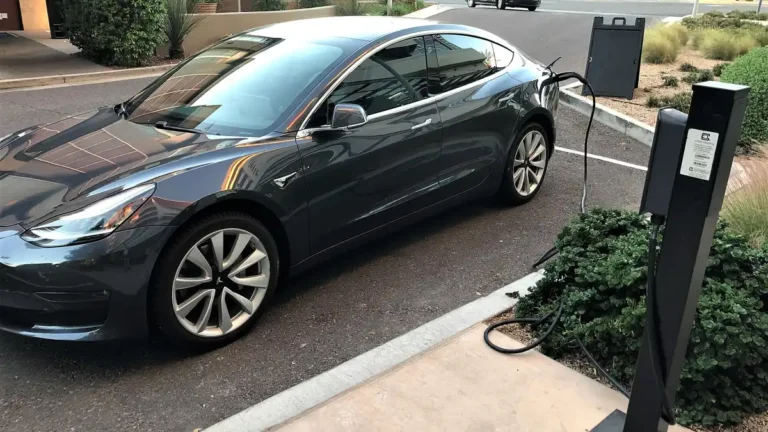
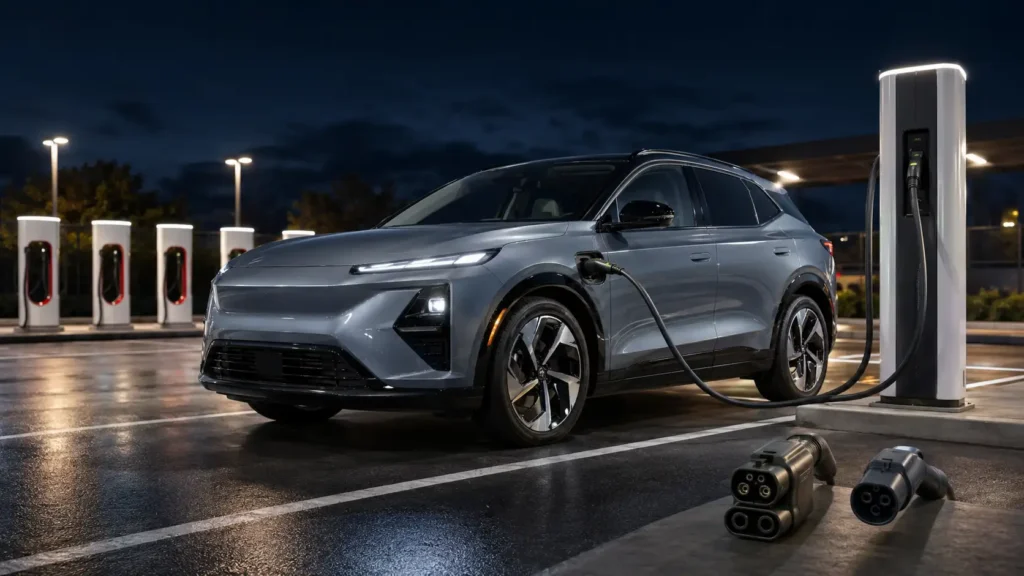
NACS vs CCS is the plug question every 2026 EV shopper asks first. We break down both plug standards in plain words. You will learn which EVs use NACS, when you need an adapter, and where to charge. So read this before you buy.
Figures cross-checked against EPA, NHTSA, IIHS and manufacturer sources. See our sourcing policy.
NACS vs CCS sounds like alphabet soup. You just bought an EV. Now you want to plug in and drive.
But the plug names get messy. And the adapters get worse. So let us keep this simple.
Here is the short story. Your EV uses one of two main plugs. So one is NACS, and the other is CCS. And in 2026, that small detail shapes how you charge on the road.
Most drivers only care about one thing. Can my EV use a Tesla Supercharger today? That is a fair question, and we will answer it head on. We will also show you exactly which plug your car has.
First, we explain both plugs in plain words. Second, we show you when an adapter steps in. After that, we cover the new 2026 cars and their charging speed. Most importantly, you will know what works before your next trip.
No jargon. No sales pitch. Just clear answers about the north american charging standard and the older system it slowly replaced. So grab your keys, and let’s plug in.
If you are still choosing your EV, our best electric and hybrid cars 2026 guide flags the charging port on every top model in the market so you can shortlist by plug type before you step into a showroom.
NACS vs CCS: What’s the Difference?
NACS vs CCS – Quick Technical Intelligence
NACS vs CCS comes down to the shape of the plug and the network behind it. Both are ev charging connector types. Both push power into your battery. But they were built by different camps, and that split caused years of confusion. So let us pull them apart, one at a time.
What NACS Is (J3400)
NACS stands for the North American Charging Standard. Engineers also call it the j3400 connector. Tesla built it, and it is small, light, and easy to grip.
Now it is an open standard. That means any brand can use it. So the NACS port shows up on more new cars every month. And it slides right into a Tesla Supercharger with no fuss.
What CCS Is
CCS means the Combined Charging System. It is the older plug on most non-Tesla EVs sold before this shift. The connector is bigger, and it uses two extra pins for DC fast charging.
CCS still works great at many stations. But it does not fit a Tesla Supercharger on its own. So a CCS to NACS adapter often bridges that gap.
Why the Industry Switched
The industry switched for one simple reason. The north american charging standard won on size and access. Tesla opened its network, and its plug was already on millions of Teslas. As a result, automaker after automaker signed on.
Drivers wanted one plug and one huge ev fast charging network. So the market picked NACS. And by 2026, that choice looks locked in.
Can Your EV Use a Tesla Supercharger?

Can my EV use a Tesla Supercharger? In many cases, yes, and that news makes road trips much easier. But the real answer depends on your plug and your car’s software.
So let us split every EV into two simple groups.
EVs With Native NACS Ports
Which EVs use NACS straight from the factory? A growing list does in 2026. Rivian, Hyundai, Kia, Nissan, and others now ship cars with a built-in NACS port.
These cars just roll up and plug in. There is no adapter and no extra step. So Tesla supercharger access feels as smooth as filling a gas tank.
Rivian ships native NACS across its full 2026 lineup. Our Rivian R2 Launch Edition guide covers how the NACS port works alongside the Rivian Adventure Network on the newest model in the family. For Ford’s move to NACS, our Ford Maverick 2026 Hybrid review gives real-world context on Ford’s charging ecosystem for buyers comparing plug options across the brand’s lineup.
EVs That Need an Adapter
A CCS to NACS adapter is the fix for millions of older EVs. If your car still has a CCS port, this small part lets you tap the Supercharger network. You clip it on, then charge as normal.
Most brands now sell or give away a NACS adapter for their CCS cars. So check your brand’s app or dealer first. And keep the adapter in your trunk for peace of mind.
Adapters Explained

A NACS adapter is a short connector that joins two plug types. It sounds technical, but the idea is simple. One end matches your car, and the other matches the charger.
So the right adapter turns a mismatch into a working charge.
NACS vs CCS Adapters Explained
NACS vs CCS adapters come in two directions, and mixing them up is a common trap. A CCS car needs a CCS to NACS adapter to reach a Supercharger. A NACS car needs a NACS-to-CCS adapter to use an older CCS station.
So think about your car first, then the charger. That order keeps it clear every single time.
Where to Get the Right Adapter
You can get the right adapter from your car maker in most cases. Ford, as one example, offered a complimentary ford NACS adapter to eligible Mustang Mach-E and F-150 Lightning owners in 2024. Other brands offer their own version through apps or dealers.
Buy from trusted sources only. Cheap knockoffs can overheat or simply fail. So spend a little more, and charge with confidence.
What Changes for New 2026 EVs
The Tesla supercharger adapter 2026 story is shifting fast, and mostly in your favor. Fewer new cars need an adapter at all now. More arrive with the plug built right in.
So the messy adapter era is fading. And that is great news for anyone shopping today.
Native NACS Rollout by Brand
Native NACS rollout by brand tells the real story. It is the clearest sign of where things are headed. Most big car makers now build the port into their 2026 models. So the table below shows where key brands stand this year.
| Brand | 2026 Charging Port | Supercharger Access |
|---|---|---|
| Tesla | Native NACS | Full |
| Ford | Moving to NACS; CCS models use adapter | Yes, with adapter |
| GM | Native NACS from 2027 Chevy Bolt | Yes |
| Rivian | Native NACS | Full |
| Hyundai | Native NACS on Ioniq 5, rolling out | Yes |
| Kia | Native NACS on EV6 and EV9 | Yes |
| Nissan | Native NACS on 2026 Leaf | Yes |
| Older CCS EVs | CCS port | With an adapter |
Source: automaker announcements. This list keeps growing. So always confirm the exact plug on the trim you want.
For Hyundai’s NACS rollout in practice, our 2025 Hyundai Kona Electric review covers how the brand’s charging network access works in real daily ownership. For Nissan’s updated setup, our 2026 Nissan Leaf range guide explains how the new NACS port on the redesigned Leaf changes the road trip equation compared to the older CCS generation.
Charging Speed and Compatibility Caveats
Charging speed is where NACS vs CCS trips people up the most. The plug shape does not set your top speed. Your car and the charger do.
So a NACS plug is not magically faster than CCS. Both handle DC fast charging just fine.
Not All Superchargers Support All EVs Yet
Not every Supercharger works with every EV just yet. Some older Tesla sites still expect a Tesla-only setup. Others need a quick software update on the car’s side.
So Tesla supercharger access is wide but not total in 2026. Meanwhile, new V4 stalls close most of these gaps. And they add longer cables and higher speeds for all brands.
Above all, check the Tesla app before you rely on a site. It shows which stalls are open to your car. So a ten-second check saves a cold, stranded wait.
Bottom Line for 2026 EV Shoppers
Here is the bottom line, and it is good news. The whole plug debate is finally settling down. NACS won, so most new cars just work at Superchargers.
Interoperability between brands is better now than ever. If you buy new, you likely get a native NACS port. If you drive a CCS car, one adapter fixes almost everything.
To sum up, NACS vs CCS no longer has to stress you out. Match your plug, grab the right adapter if you need one, and the whole Supercharger network opens up for you. So the days of plug anxiety are fading fast.
Ready for the next step? Read our full EV charging guide and our 2026 EV buying guide. So you can pick the right car and charge it with total confidence. And when you are ready, we will help you compare the top models side by side.
For the full picture on how real-world range compares across the EVs you are considering, our electric cars worse real world range guide is the next essential read. Because once you have solved the plug question, knowing how far your car actually travels on a full charge is the last piece before you buy. And our best electric cars under $40,000 in 2026 narrows the shopping list to the models with the strongest charging access and the most competitive price points right now.
Related guides: other model vs model matchups and 2026 Honda Prelude vs Toyota GR86.
FAQs: Your EV and Tesla Superchargers
What is the difference between NACS and CCS?
Can my CCS EV use a Tesla Supercharger?
Which 2026 EVs have a native NACS port?
Do I need an adapter?
Is NACS faster than CCS?
Are all Superchargers open to non-Teslas?
⚠️ Professional Notice:
Charging network access, adapter availability, and native NACS port rollout timelines in this article are based on aggregated market data and manufacturer announcements as of August 2026. EV charging standards, network access policies, and adapter programs change frequently. Always confirm the exact charging port on your specific trim and model year with the manufacturer or dealer before purchase. Verify Tesla Supercharger site compatibility for your vehicle using the Tesla app before relying on any specific charging location.
Adapter performance and compatibility vary by manufacturer and supplier. Always use adapters supplied or approved by your vehicle manufacturer. NextCarReview.com does not receive compensation from any charging network, adapter manufacturer, or automaker in exchange for rankings or editorial coverage.
Data Sources and Verification
- SAE International – J3400 NACS connector standard documentation and certification, 2023 to 2026
- Tesla Supercharger network documentation – non-Tesla vehicle access rollout, V4 stall specifications, and Tesla app compatibility data, August 2026
- OEM charging port announcements: Ford, GM, Hyundai, Kia, Nissan and Rivian
- CharIN (Charging Interface Initiative) – CCS connector standard documentation
- US Department of Energy – Alternative Fuels Data Center EV charging infrastructure data

Morgan Reyes is the founder and editor-in-chief of NextCarReview, which Morgan launched in August 2024. A 2022 graduate of Columbia University, Morgan is based in New York and writes and edits the site’s reviews, comparisons and buying guides. Morgan does not road-test vehicles. Every article is built from published primary data: EPA FuelEconomy.gov ratings, NHTSA crash ratings, recalls and owner complaints, IIHS results, and manufacturer specifications and pricing, with each figure cited and checked before publication. Contact: admin@nextcarreview.com