In this article 11 sections
The top cheapest electric cars under $35000 right now are the 2027 chevy Bolt LT at $27,600, the 2026 nissan Leaf S+ at $29,990, and the 2026 Toyota bZ XLE at $34,900. The Bolt LT is the lowest-priced option with 150 kW NACS fast charging and direct access to tesla Superchargers. The Leaf S+ leads on range at up to 303 miles EPA and also has a NACS port. The bZ squeezes under $35K in base form with 236 miles of range. State and utility incentives can push the real cost lower in some areas.
This guide ranks all major options, digs into real range, NACS charging access, and post-IRA incentive math. By the end, you will know exactly which car fits your budget and your life.
Figures cross-checked against EPA, NHTSA, IIHS and manufacturer sources. See our sourcing policy.
Why the Cheapest Electric Cars Under $35000 2026 Are Worth Your Attention
A few years ago, shopping for the cheapest electric cars under $35000 2026 felt like a real compromise. Specifically, you’d get short range, slow charging, and a plain interior. But for 2026, the picture has changed a lot.
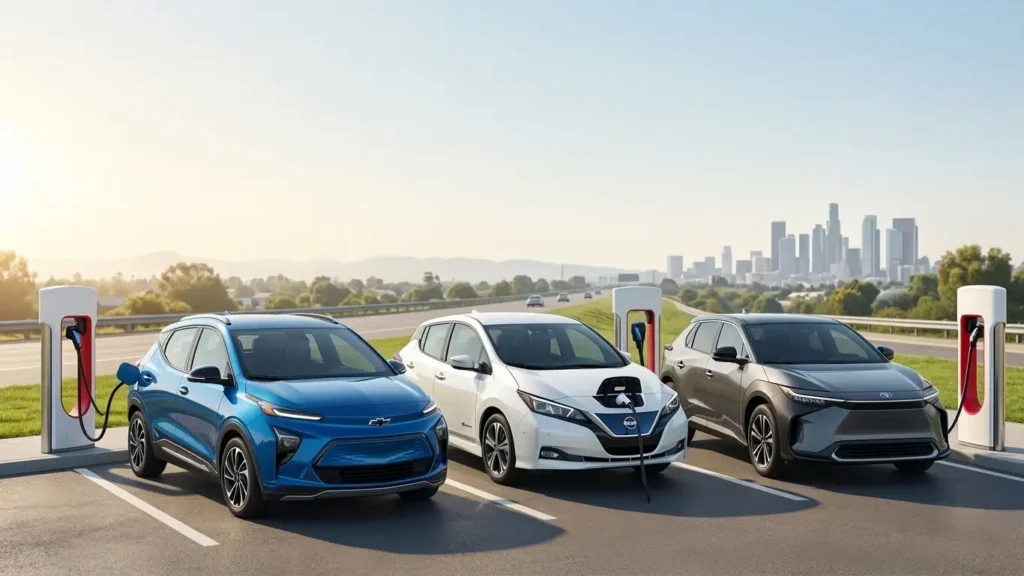
First, prices dropped across several models. Then automakers pushed harder to grab budget buyers. As a result, three strong contenders – the new chevy Bolt, nissan Leaf, and Toyota bZ – now compete directly for your wallet. All three bring something genuinely different to the table.
Therefore, in this guide, we rank the main cheapest electric cars under $35000 2026 options. In addition, we look at EPA range, NACS charging access, and incentive math after the federal credit ended. So, by the end, you’ll know which car fits your budget – and your life.
And if the new chevy Bolt under 35k is already on your radar, you’re in the right place – it’s one of the three models we break down in full detail. Note that the new Bolt is sold as a 2027 model. State and utility incentives vary, so the sticker price is not always the final number.
For a broader look at every electric and hybrid option across all price points, see our best electric and hybrid cars 2026 guide. For the complete new car buying picture across all categories, visit the best new cars to watch in 2026 pillar guide.
The $7,500 federal clean vehicle credit is not allowed for vehicles acquired after September 30, 2025. No federal purchase credit applies to new EVs bought in 2026. However, some state and utility programs still offer savings – covered below.
📌 Cheapest Electric Cars Under $35000 2026 – Quick Market Intelligence
Verified Facts at a Glance
| Model | MSRP (base) | Range (EPA) | Charging Speed | Connector | Under $35K? |
|---|---|---|---|---|---|
| 2027 chevy Bolt LT | $27,600 | 262 mi | 150 kW DC fast | NACS | ✅ yes |
| 2026 nissan Leaf S+ | $29,990 | 303 mi | 150 kW DC fast | NACS/J1772 | ✅ yes |
| 2026 Toyota bZ XLE FWD | $34,900 | 236 mi | Check Toyota | Check Toyota | ✅ yes |
| 2026 chevy Equinox EV LT1 | $34,995 | 319 mi | Check GM | Check GM | ✅ yes (just under) |
| 2026 Toyota bZ (larger battery) | Above base | Up to 314 mi | Check Toyota | Check Toyota | Varies by trim |
| 2026 VW ID.4 Pro RWD | $45,095 | 291 mi | Check VW | Check VW | ❌ over $35K |
Toyota renamed the bZ4X as the bZ for 2026; the XLE FWD starts at $34,900, and the larger-battery versions cost more. The new Bolt is a 2027 model. All prices are base MSRP before any state or local incentives apply. Source: OEM press materials, Q1 2026.
2026 Chevy Bolt Deep Dive: The New Budget EV King?

First, the new chevy Bolt LT is the most talked-about of all cheapest electric cars under $35000 2026. GM brought it back as a 2027 model with an LFP battery. As a result, at $27,600, it undercuts almost every competitor in the segment.
Specs and What Makes It Different
To begin with, the 2027 bolt LT delivers 262 miles of EPA-rated range from a 65 kWh LFP battery. That’s solid for daily commuting and weekend drives alike. Meanwhile, DC fast charging now hits 150 kW – a big leap over older bolt models – with a 10-80% charge in about 26 minutes.
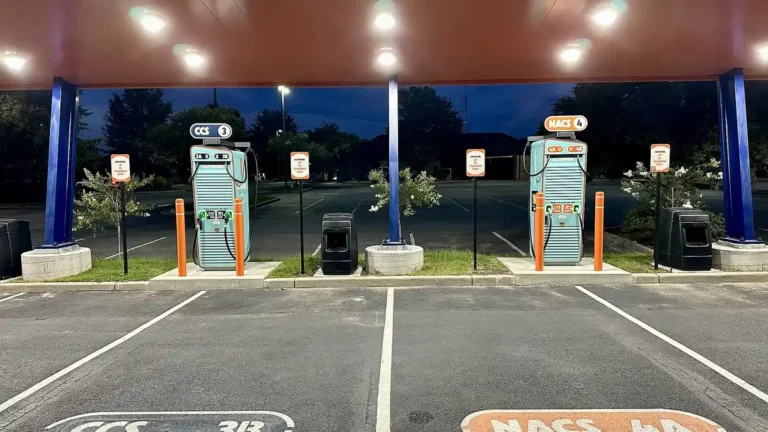
The new bolt comes with a NACS charging port. That means you can plug directly into compatible tesla Superchargers across the USA. In short, for budget EV buyers, this is a major step forward.
2026 Chevy Bolt LT – Key Specs
| Starting price | $27,600 (LT) |
| EPA range | 262 miles |
| Fast charge | 150 kW DC (NACS) |
| Charging (10%–80%) | About 26 minutes |
| Interior | Check Chevrolet for screen and phone features |
| Safety | Standard forward collision warning, lane keep assist |
Level 1 (120V) charging is slow and suits only short commutes. A Level 2 (240V) home charger is the best daily solution. At a 150 kW DC fast charger, GM-quoted figures point to a 10-80% charge in about 26 minutes.
Who Should Buy the 2026 Chevy Bolt LT?
The bolt LT makes the most sense for commuters with predictable daily mileage. It also suits buyers who live near tesla Superchargers. As a result, it’s a top pick among cheapest electric cars under $35000 2026 with genuinely fast NACS charging. In short, it’s hard to beat for the price.
Bolt LT – Best For / Not Ideal For
| Best for | First-time EV buyers, commuters, budget-conscious families |
| Not ideal for | Long road trippers needing 300+ mile range |
2026 Nissan Leaf S+ Review: Still the Comfortable Choice?
First, the nissan Leaf has been around longer than most EVs, and the 2026 model is an all-new third generation. The Leaf S+ starts at $29,990 and offers up to 303 miles of EPA range.
Indeed, among the cheapest electric cars under $35000 2026, that’s the highest range you’ll find. The 2026 Nissan Leaf price makes it one of the most compelling value propositions in the affordable EV segment.
Better still, the new Leaf drops CHAdeMO. In North America it has a NACS port for DC fast charging at up to 150 kW, plus a J1772 port for Level 2. As a result, long-distance charging is much easier than on older Leafs.
What I Like About the 2026 Leaf
To start, the Leaf’s interior is genuinely comfortable. Nissan packed in ProPilot assist – that’s semi-autonomous driving support with lane centering and adaptive cruise. Similarly, the e-pedal one-pedal driving mode is one of the best in the class.
, Nissan’s reliability record is strong year after year. The Leaf consistently scores above average in owner satisfaction surveys. Therefore, for buyers who prioritize comfort over cutting-edge charging speed, the Leaf still earns a very serious look.
2026 Nissan Leaf S+ – Key Specs
| Starting price | $29,990 |
| EPA range | 303 miles |
| Fast charge | Up to 150 kW (NACS) |
| Charging (10%–80%) | Check Nissan |
| Driver assist | Check Nissan for ProPilot by trim |
| Battery warranty | 8-year / 100,000-mile |
The 2026 Leaf’s NACS port opens up Tesla Superchargers. If you’re a frequent road tripper, this is worth factoring into your decision. For city and suburban use, Level 2 home charging covers most daily needs.
Leaf vs. Bolt: The Real Difference
On one hand, the Leaf wins on range (303 vs. 262 miles). On the other hand, the bolt wins on price ($27,600 vs. $29,990). Both offer 150 kW NACS charging, so your choice depends on whether you value extra range or a lower price more.
Toyota bZ & Leaf Head-to-Head: Which Affordable EV Feels More Premium?

Toyota renamed the bZ4X as the bZ for 2026, and the XLE FWD starts at $34,900 – just under our $35,000 cut-off. Therefore, we included it to give you the full Toyota bZ affordable EV 2026 picture.
According to the EPA, the base bZ is rated at 236 miles, while the larger-battery version reaches up to 314 miles – the highest in this group. In addition, the Toyota bZ’s cabin is designed to feel upscale for the price point.
Toyota bZ4X vs. Nissan Leaf: published Test Results
On paper, the bZ’s larger-battery version beats the Leaf’s 303-mile EPA rating, while the base bZ falls short of it. Meanwhile, the Leaf’s one-pedal e-Pedal driving can make stop-and-go traffic smoother. Both have strengths for different buyers.
In terms of equipment, Toyota includes its Toyota Safety Sense suite. Compare seats, controls and screens on a test drive to see which interior suits you.
Likewise, the bZ is the priciest of the three – and the 2026 nissan Leaf price undercuts the bZ XLE by $4,910, which keeps the Leaf firmly in the conversation for budget-conscious buyers.
| Model | Price | Range | Charging |
|---|---|---|---|
| bZ XLE FWD | $34,900 | 236 miles | Check Toyota |
| Nissan Leaf S+ | $29,990 | 303 miles | 150 kW NACS |
| bZ (larger battery) | Above base | Up to 314 miles | Check Toyota |
Bottom line: if you want maximum range, look at the larger-battery Toyota bZ. However, if you’re strict on budget, the Leaf S+ gives you more range than the base bZ at $4,910 less.
Ownership Costs & Incentives: What You Actually Pay in 2026
Sticker price is just the start – and that’s exactly my point. Let me show you the real five-year cost picture. This is where the cheapest electric cars under $35000 2026 truly shine, especially when state incentives kick in.
| Cost Factor | Chevy Bolt LT | Nissan Leaf S+ | Toyota bZ XLE |
|---|---|---|---|
| Base MSRP | $27,600 | $29,990 | $34,900 |
| Federal Tax Credit (2026) | None* | None* | None* |
| State Incentive | Varies by state | Varies by state | Varies by state |
| Net Price (after incentives) | Depends on location | Depends on location | Depends on location |
| Avg. Annual Fuel Cost | ~$650 | ~$620 | ~$680 |
| 5-year Fuel Savings vs gas | ~$5,200 | ~$5,000 | ~$5,400 |
| Maintenance (5-year Est.) | ~$1,100 | ~$1,300 | ~$1,200 |
| Insurance (annual Avg.) | ~$1,450 | ~$1,380 | ~$1,620 |
The IRS says the new clean vehicle credit is not allowed for vehicles acquired after September 30, 2025. No buyer can claim the $7,500 federal credit on a new EV acquired in 2026. Always confirm details on the IRS website or with a tax professional.
State Incentives That Still Matter in 2026
First, some states and utilities still offer EV rebates, tax credits or reduced fees, but programs change often and some have ended. In addition, eligibility can depend on income, vehicle price and where you live.
Therefore, your actual out-of-pocket cost could be lower than the sticker price in some areas. For example, check your state energy office and utility before buying a chevy Bolt LT at $27,600. In short, that’s already affordable territory for a brand-new EV.
Ask your dealer about local utility rebates too. Many power companies – like PG&E and xcel Energy – offer $500–$1,000 rebates for buying an EV or installing a level 2 home charger. These stack with state programs.
2026 Reliability Ranking: Which Cheap EV Breaks Down Less?

Reliability matters just as much as range. Here is what we know from each model’s history and recall records.
Reliability Scores for 2026 Budget EVs
Chevy Bolt (Chevrolet brand): first, the 2027 Bolt is a new generation with an LFP battery. Its simplified powertrain has fewer moving parts than gas cars. However, long-term owner data is not yet available. In short, check recall records as data builds.
Nissan Leaf: moreover, Nissan consistently ranks above average in EV reliability. Specifically, the Leaf’s long production history means the technology is mature and well-understood. In addition, battery degradation on newer Leaf S+ models is notably low – a key long-term benefit for resale value too.
Toyota bZ4X: similarly, Toyota’s quality reputation carries over to the bZ (formerly bZ4X). However, early production bZ4X models had a wheel detachment recall in 2022. Check NHTSA for open recalls on any car you buy.
Therefore, look at recall history and warranty coverage for each model. And for anyone specifically hunting a budget EV NACS 2026 option, both the Bolt and the Leaf now offer NACS ports.
| Reliability Category | Winner |
|---|---|
| Most reliable powertrain | Nissan Leaf (most proven over time) |
| Best initial quality improvement | Too early to judge (new Bolt and Leaf) |
| Best factory warranty | Nissan Leaf (8-year / 100K-mile battery) |
| Fastest over-the-air updates | Check each brand |
Buyer’s Guide by Budget and Use Case: Which 2026 EV Is Right for You?
Let me make this simple. Your perfect EV depends on how you actually use a car – not just the spec sheet. So here’s my breakdown by use case, and in each case, I’ll tell you exactly which car wins.
In that case, get the 2027 chevy Bolt LT at $27,600. It gives you fast NACS charging, 262 miles of range, and a modern interior. Above all, it’s a strong pick among all cheapest electric cars under $35000 2026 for pure value.
Instead, choose the 2026 nissan Leaf S+ at $29,990. Its up-to-303-mile range beats the bolt by 41 miles. As a result, you’ll feel less range anxiety on longer drives, and its NACS port helps on road trips.
In this case, look at the Toyota bZ XLE at $34,900. Its larger-battery version offers up to 314 miles of EPA range, and Toyota’s safety tech is standard.
Any of these three cars works well for city driving. The nissan Leaf’s e-Pedal one-pedal driving mode can make city stop-and-go traffic easier, and its smaller size makes parking easier.
In that scenario, the chevy Bolt and nissan Leaf both offer NACS ports and 150 kW charging. Access to Tesla’s Supercharger network means you’ll find fast charging in many places across the US.
Frequently Asked Questions
What are the cheapest electric cars under $35000 2026?
Do any 2026 EVs under $35000 still qualify for federal tax credits?
What is NACS charging, and why does it matter for budget EVs?
Which cheapest electric cars under $35000 2026 have the longest range?
Is the 2026 chevy Bolt more reliable than the nissan Leaf?
Can I charge a 2026 nissan Leaf at a tesla Supercharger?
Which 2026 budget EV has the best safety rating?
Conclusion: My Final Verdict on the Cheapest Electric Cars Under $35000 2026
First, for most buyers, we’d recommend the 2027 chevy Bolt LT. At $27,600 with 262 miles of range and 150 kW NACS charging, it delivers the most complete package for the least money. NACS access also future-proofs your charging options across the US.
That said, if range is your top priority, the 2026 nissan Leaf S+ at $29,990 is a smart choice. In fact, with up to 303 miles and a NACS port, it is one of the longest-range EVs under $30,000.
Finally, if you want the most range in this group and can choose a larger battery, the Toyota bZ is worth a look.
The bottom line, all of these cheapest electric cars under $35000 2026 represent a genuinely exciting moment for budget EV buyers. You no longer need to spend $50,000 to get a capable, comfortable electric car. And in 2026, that’s truly saying something.
Check out our full best electric and hybrid cars 2026 guide – with every model, every price, and every incentive mapped out in full detail. For the complete 2026 new car picture across all categories, see our best new cars to watch in 2026 pillar guide.
Related guides: our full EV lineup and State EV Incentives 2026: Every Rebate, Utility Perk, and How to St….
⚠️ disclaimer & sources:
prices listed are base MSRP as of early 2026 and may vary by region, dealer, and trim level. EPA range figures are official estimates; real-world range varies by driving conditions, temperature, and speed. Incentive information reflects available state programs as of Q1 2026. Always verify current incentives with your state DMV and a qualified tax advisor. The federal clean vehicle credit ended for vehicles acquired after September 30, 2025.
For official rules, ratings and consumer guidance on this topic, see:
Sources
- EPA: 2027 Chevrolet Bolt
- Chevrolet Bolt (second generation) specs
- Nissan Leaf (third generation) specs
- EPA: 2026 Toyota bZ
- IRS: clean vehicle credit changes under Public Law 119-21

Morgan Reyes is the founder and editor-in-chief of NextCarReview, which Morgan launched in August 2024. A 2022 graduate of Columbia University, Morgan is based in New York and writes and edits the site’s reviews, comparisons and buying guides. Morgan does not road-test vehicles. Every article is built from published primary data: EPA FuelEconomy.gov ratings, NHTSA crash ratings, recalls and owner complaints, IIHS results, and manufacturer specifications and pricing, with each figure cited and checked before publication. Contact: admin@nextcarreview.com