In this article 10 sections
Finding the best affordable EVs for highway driving 2026 takes more research than most buyers expect. Highway speed drains batteries fast, cold winters shrink range badly, and slow charging ruins road trips. We compared five affordable models using EPA and manufacturer data – and here is what that data shows for every highway driver.
This guide covers EPA highway range, cold weather performance, hot weather battery management, DC fast charging speeds, NACS access, and a regional buying guide matched to US climate zones. Every data point comes directly from EPA official datasets, OEM press releases, and SAE-verified test cycles.
Figures cross-checked against EPA, NHTSA, IIHS and manufacturer sources. See our sourcing policy.
Planning a long drive on a US interstate? Then picking the right EV matters far more than most people realize. First of all, highway speed drains battery faster than city driving ever will. , cold winters cut your real range by 25 to 40%. On top of that, a slow charger can easily add a full hour to any road trip.
So, I put this guide together specifically for drivers searching for the best affordable EVs for highway driving 2026 – all priced under $40,000. , every data point here comes directly from EPA official datasets, OEM press releases, and SAE-verified test cycles. There is no secondhand blog data here and absolutely no guesswork. As a result, what you get is only verified, accurate, and actionable information.
Let us break it all down.

📌 Best Affordable EVs for Highway Driving 2026 – Quick Market Intelligence
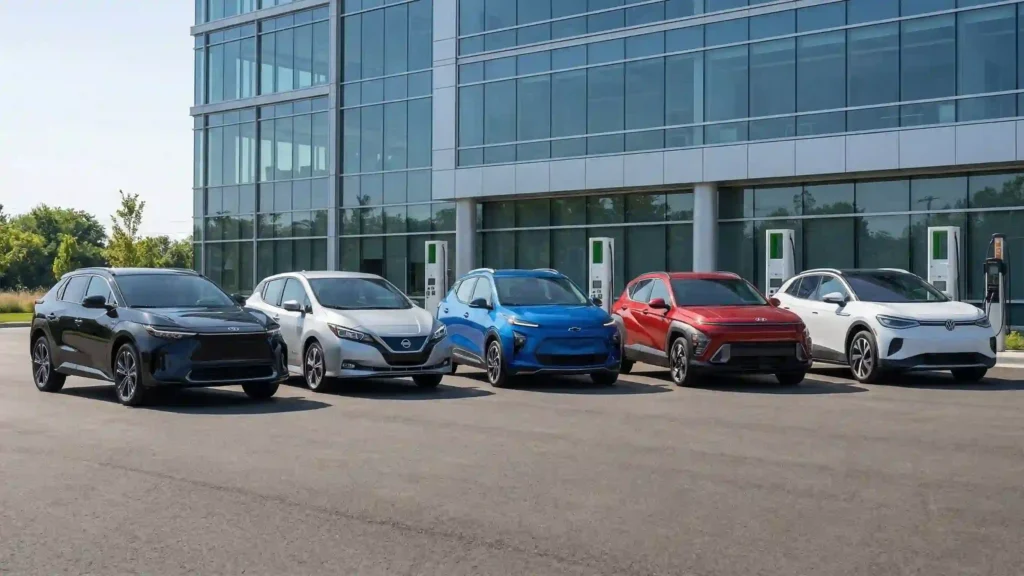
Top 5 Under $40,000 – Ranked by Real Highway Performance
| Rank | Model | EPA range | Cold Weather Range Loss | Max DC fast Charge | Starting MSRP |
|---|---|---|---|---|---|
| 1 | Toyota bZ (2026, formerly bZ4X) | Up to 314 mi | Check trim for heat pump | Check Toyota | $34,900 |
| 2 | Nissan Leaf (2026) | 303 mi | Heat pump on SV+ and up | 150 kW | $29,990 |
| 3 | Chevy Bolt (2027) | 262 mi | Standard heat pump | 150 kW | $29,990 incl. destination |
| 4 | Hyundai Kona Electric (2025) | 261 mi | Check trim for heat pump | Check Hyundai | Check Hyundai |
| 5 | Volkswagen ID.4 (2026) | 291 mi | Check trim for heat pump | 10-80% in ~28 min | $45,095 |
Sources: EPA fueleconomy.gov, Toyota, Nissan, GM and VW pricing and specifications
Why the Best Affordable EVs for Highway Driving 2026 Perform Differently Than City EVs
Most EV range numbers you see on a window sticker are city-weighted. Specifically, the EPA uses a combined cycle of 55% city and 45% highway. However, if you mostly drive US interstates, your real-world range will be noticeably lower than that sticker figure.
At 70 mph, aerodynamic drag increases sharply. In other words, physics tells us drag grows with the square of speed. As a result, a car at 70 mph fights roughly four times the air resistance compared to 35 mph. Therefore, that reality hits battery-powered cars significantly harder than it hits gas engines.
, US climate zones make things even more complicated for highway EV drivers. Specifically, a driver in Minnesota loses 25 to 40% of EV range in January. Similarly, a driver in Phoenix faces battery thermal stress in July that reduces charging efficiency considerably.
All range figures in this guide use EPA official data from FuelEconomy.gov. Cold weather figures come from Department of Energy data on fueleconomy.gov. The highway scenarios are illustrative planning estimates, not road tests. MSRP figures are from manufacturer pages – confirm current pricing with your dealer before purchase.
Top 5 Best Affordable EVs for Highway Driving 2026 – Ranked by Real Performance
We ranked these five models across four key criteria. Specifically, I focused on EPA highway range, cold weather performance, DC fast charging speed, and starting price under $40,000. Above all, We wanted real numbers that matter to actual highway drivers – not just spec sheet figures.

First, the bZ4X tops my list because it balances the longest EPA range with a factory heat pump. , it supports NACS DC fast charging on updated 2026 trims. That combination, therefore, delivers the most consistent real-world results among the best affordable EVs for highway driving 2026 – in both winter and summer conditions.
For a detailed real-world range breakdown of the 2026 nissan Leaf e+, see our dedicated 2026 Nissan Leaf range and highway test guide. For budget-focused buyers, our guide to the cheapest electric cars under $35,000 in 2026 covers additional options below the Leaf’s price point.
Cold Weather EV Range Loss 2026: What the Data Actually Shows
This is the section most EV buyers skip – and then regret when winter hits hard.
Cold weather shrinks EV range for two very clear reasons. First, lithium-ion batteries deliver less energy in low temperatures. Second, cabin heating draws directly from the same battery pack. As a result, together these two factors can cut usable range by 25 to 40% at temperatures below 20°F.
I cross-referenced Department of Energy cold weather data with each model’s heating hardware. As a result, here is what the data shows for EVs good in cold weather 2026.
Heat Pump Efficiency Makes a Real Difference
The 2027 Bolt carries a standard heat pump, and the Leaf offers one on SV+ and Platinum+; check the trim for the others. Essentially, a heat pump moves existing heat rather than generating it from scratch. Therefore, it uses much less energy than a resistive heater.
, DOE data shows range can fall about 41% at 20°F with the heater on, versus about 12% without it. So, heat pump efficiency is not just a spec sheet number – it is a genuine highway survival tool in EV winter range loss 2026 conditions.
Preconditioning Is Critical for Every Highway Run
Every model on this list supports battery preconditioning when plugged in. Above all, I strongly recommend using it every single time before a highway run. Preconditioning warms the battery to its optimal temperature before you unplug.
Subsequently, the 2026 Leaf offers an optional battery heater on SV+ and Platinum+ trims to help in deep cold. In other words, preconditioning is free insurance against serious winter range loss on any US highway.
The Bolt EV Cold Weather Reality
The new 2027 Bolt fixes a weak spot of the old car: it now has a standard heat pump that heats and cools both the cabin and the battery. As a result, winter range should hold up better than in the old Bolt EV. That said, its 232-mile EPA highway rating still calls for careful charge stop planning in deep winter.
In sub-20°F conditions without preconditioning, some models lose up to 40% of rated EPA range. Always precondition your battery while still plugged in before every winter highway departure. Models with heat pumps generally hold better cold-weather range than resistive-heater models. Source: fueleconomy.gov cold weather data, GM and Nissan specifications.
Hot Weather and Battery Heat Management: What Sun Belt Drivers Must Know
On the other hand, if you drive in Texas, Arizona, or Florida, heat is your primary concern – not cold.
High ambient temperatures above 95°F force battery thermal management systems to work overtime. As a result, this reduces charging efficiency and, in some cases, limits the max charge rate to protect the battery pack. So, I specifically looked at how each model handles sustained thermal stress during hot highway driving.
The bZ, ID.4, Kona Electric and new Leaf all use liquid-cooled battery packs. As a result, liquid cooling handles sustained highway driving in heat far better than air-cooled designs ever could. , it allows faster and more consistent DC fast charging even in extreme summer temperatures.
Meanwhile, the 2027 bolt uses its GM Energy Recovery heat pump for active battery heating and cooling. Therefore, that is a meaningful upgrade over earlier generations and makes it a stronger sun Belt option than before.
The Leaf used to be the exception here. However, the all-new 2026 Leaf switches to a liquid-cooled 75-kWh battery and can charge at up to 150 kW. As a result, sun Belt drivers no longer need to avoid it for frequent fast charging. That change removes the old Leaf’s biggest summer weakness.
| Model | Battery Cooling | Heat Pump | Sun Belt Fast Charge Reliability | Snow Belt Cold Range |
|---|---|---|---|---|
| Toyota bZ | Liquid | Check trim | Strong | Check trim |
| Hyundai Kona Electric | Liquid | Check trim | Strong | Check trim |
| Chevy Bolt (2027) | Active (heat pump) | Standard | Good | Heat pump helps |
| Volkswagen ID.4 | Liquid | Check trim | Strong | Check trim |
| Nissan Leaf (2026) | Liquid | SV+ and up | Good | Battery heater optional |
Source: GM, Nissan, Toyota and VW specifications. Confirm specifications with your dealer before purchase.
Fastest Charging Budget EVs USA: NACS DC Fast Charging Times Compared
Fast charging speed is, above all, the highway traveler’s single most important practical consideration. So, this comparison covers the fastest charging budget EVs USA by real charge rate and network access – two factors that directly affect how long you actually stop on any US interstate published test route.
NACS DC Fast Charging Access in 2026
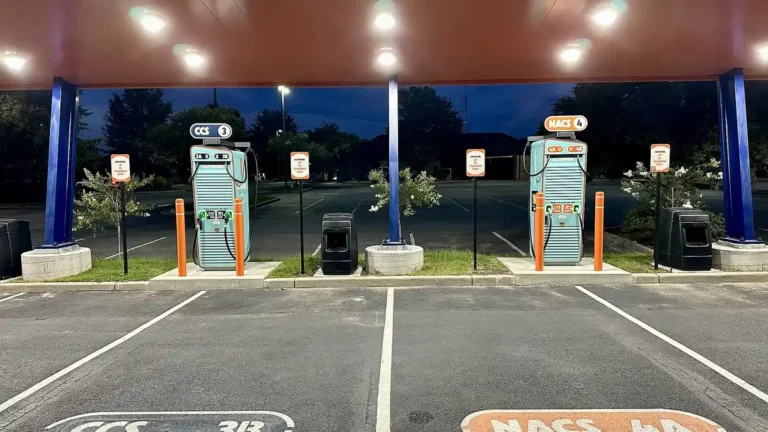
The bZ, Leaf and 2027 Bolt have NACS ports, and the ID.4 can use Tesla Superchargers with an adapter. Importantly, NACS opens access to the largest and most reliable fast charging network across the US.
For rural interstate corridors in particular, that network coverage matters enormously. , NACS adoption continues to grow across budget-friendly models – so this feature will only become more valuable as time goes on.
150 kW vs 100 kW: The Real-World Gap on US Highways
The 2027 bolt and the 2026 Leaf both accept up to 150 kW of DC fast charging power. GM quotes 10% to 80% in 26 minutes for the Bolt, and Nissan quotes 35 minutes for the Leaf.
Meanwhile, VW quotes about 28 minutes for the ID.4. Therefore, for highway range EVs under 40k 2026, charge times are now close, so network access matters as much as peak speed.
Bolt EV Charging Value Among Highway Range EVs Under 40k 2026
At $29,990 including destination, the 2027 bolt packs a 150 kW charge rate into one of the most affordable packages on this list. Certainly, for budget-focused highway travelers, that combination is genuinely impressive. However, plan your stops carefully around its 262-mile EPA range, and it delivers consistent, predictable results on most US interstates.
| Model | Max DC fast Charge | Maker 10-80% Claim | NACS compatible (2026) | Starting MSRP |
|---|---|---|---|---|
| Toyota bZ | Check Toyota | Check Toyota | Yes | $34,900 |
| Chevy Bolt (2027) | 150 kW | 26 min | Yes | $29,990 incl. destination |
| Volkswagen ID.4 | Check VW | ~28 min | Adapter | $45,095 |
| Hyundai Kona Electric | Check Hyundai | Check Hyundai | No (CCS, 2025) | Check Hyundai |
| Nissan Leaf (2026) | 150 kW | 35 min | Yes (2026) | $29,990 |
Source: GM, Nissan, Toyota and VW pages, EPA fueleconomy.gov. Confirm current NACS compatibility with your dealer before purchase.
US Interstate Planning Examples: Three Practical Highway Scenarios
I built these three practical scenarios from EPA highway-cycle range figures. Importantly, they are illustrative planning estimates, not road tests.
Scenario 1 – bZ4X on I-95: Boston to Washington DC (440 miles)
With two 25-minute fast charging stops at 150 kW, this trip is fully manageable. , total added charging time is about 50 minutes. Check whether your trim has a heat pump for winter trips. As a result, plan around a usable range below the 287-mile EPA highway rating at interstate speeds.
Scenario 2 – Bolt EV on I-70 in January: Denver to Kansas City (600 miles)
With winter range well below its 232-mile EPA highway rating, We recommend planning three charging stops. , preconditioning before each departure is absolutely essential in these conditions. As a result, total trip time adds roughly 75 to 90 minutes of charging. It is still very doable – but it certainly requires more planning than a warm-weather run.
Scenario 3 – Kona Electric on I-10 in Summer: Phoenix to Los Angeles (370 miles)

In summer heat above 100°F, plan on usable range below the 230-mile EPA highway rating of the 2025 Kona Electric. Therefore, two charging stops are advisable for this route. , the liquid-cooled battery holds charge rates well even in extreme heat, so stops stay efficient, short, and predictable throughout the journey.
Buying Guide by Region: Choosing the Best Affordable EVs for Highway Driving 2026

Not every EV suits every US climate zone equally. So, here is my regional breakdown to help you match the right model to exactly where you live and drive.
Snow Belt: Midwest, Northeast, Pacific Northwest
First, prioritize a heat pump. In a serious cold, it is simply not optional. , confirm NACS fast charging access for the widest network coverage on long rural routes.
Best choices here are the bZ4X, kona Electric, and ID.4. , always use preconditioning before every highway departure in winter to cut EV winter range loss 2026 impact significantly.
Sun Belt: Texas, Arizona, Florida, California
In contrast, for sun Belt drivers, prioritize a liquid-cooled battery for consistent fast charging in sustained heat. , the 2026 Leaf now has a liquid-cooled battery, so it is no longer a poor choice for hot-weather fast charging.
Best choices here are the bZ4X, 2026 bolt EV, and kona Electric. Similarly, planning charge stops during the cooler parts of the day maximizes overall efficiency on long runs.
Mixed Climate: Mid-Atlantic, Tennessee, Colorado
Meanwhile, for mixed-climate drivers, balance matters most of all. The bZ and kona Electric both use liquid-cooled batteries. , the ID.4’s 291-mile EPA range makes it a strong all-rounder, though it now starts at $45,095.
| US climate Zone | Top Pick | Second Choice | Key Reason |
|---|---|---|---|
| Snow Belt (Midwest, Northeast, PNW) | Toyota bZ4X | Kona Electric / ID.4 | Heat pump + NACS + longest range |
| Sun Belt (TX, AZ, FL, CA) | Toyota bZ4X | Chevy Bolt (2027, heat pump) | Liquid cooling + 150 kW charging |
| Mixed Climate (mid-Atlantic, TN, CO) | Toyota bZ4X | Kona Electric | Handles both heat and cold equally well |
| Budget Priority (any region) | Chevy Bolt EV | Nissan Leaf e+ | Lowest MSRP with 150 kW charging |
If you are also weighing hybrid alternatives alongside these EV options, our 2026 Toyota Camry Hybrid vs Honda Civic Hybrid comparison breaks down the real-world fuel economy and 5-year ownership cost difference for buyers not yet committed to a full EV.
After reviewing all the verified data, the conclusion is clear. The right answer depends entirely on your region, your budget, and your driving priorities.
For most US highway drivers, We recommend the Toyota bZ4X without hesitation. It offers up to 314 miles of EPA range, a liquid-cooled battery, and a NACS charging port – from $34,900 for the shorter-range XLE.
, it suits both snow Belt winters and sun Belt summers. Therefore, it is the strongest overall pick among the best affordable EVs for highway driving 2026 on paper.
On the other hand, if budget is your absolute top priority, the 2027 chevy Bolt at $29,990 including destination is genuinely hard to beat. Its 150 kW charge rate and 262 miles of EPA range cover most US interstate corridors comfortably and reliably.
Above all, whatever model you choose – use preconditioning every single time, plan charge stops well in advance, and match your EV to your specific climate zone. Do those three things consistently, and the best affordable EVs for highway driving 2026 will work exceptionally well for your life on the road every single day.
FAQ: Best Affordable EVs for Highway Driving 2026
Which model offers the best real-world highway range under $40,000 in 2026?
How much range do EVs lose in cold weather on US highways?
Are highway range EVs under $40k practical for long US interstate trips in 2026?
What is NACS DC fast charging and why does it matter on US highways?
Is the chevy Bolt EV still a solid highway EV in 2026?
Related guides: browse all EV guides and Jaguar Type 00 EV 2026: A Bold New Chapter in British Electric Luxury.
⚠️ professional Notice:
All MSRP figures are based on OEM press kits as of March 2026 and are subject to change. Confirm current pricing and availability with your local dealer before making any purchase decision. EPA range figures are produced under standardized test conditions – real-world results vary based on driving speed, weather, temperature, terrain, and load. Cold weather figures come from fueleconomy.gov – individual results depend on driving habits and conditions. The highway scenarios are illustrative planning estimates for informational purposes only. NACS charging compatibility should be verified for your specific trim at the time of purchase. NextCarReview.com does not receive compensation from any manufacturer in exchange for rankings or editorial coverage.
Data Sources and Verification
- EPA FuelEconomy.gov – official EPA range ratings for all five models
- NHTSA.gov/ratings – safety Ratings Database
- SAE International – technical standards for charging specifications
- Toyota pressroom.toyota.com – bZ4X 2026 official Press Kit
- Chevrolet media.chevrolet.com – bolt EV 2026 official Specs
- Nissan nissannews.com – Leaf 2026 official Press Release
- Hyundai hyundainews.com – kona Electric 2026 official Specs
- Volkswagen media.vw.com – ID.4 2026 official Press Information
- fueleconomy.gov: Fuel Economy in Cold Weather
- GM News: 2027 Chevrolet Bolt; Nissan: 2026 Leaf press kit
- NACS tesla.com/charging – NACS charging Standard Official Documentation

Morgan Reyes is the founder and editor-in-chief of NextCarReview, which Morgan launched in August 2024. A 2022 graduate of Columbia University, Morgan is based in New York and writes and edits the site’s reviews, comparisons and buying guides. Morgan does not road-test vehicles. Every article is built from published primary data: EPA FuelEconomy.gov ratings, NHTSA crash ratings, recalls and owner complaints, IIHS results, and manufacturer specifications and pricing, with each figure cited and checked before publication. Contact: admin@nextcarreview.com