In this article 11 sections
A P0430 code points to weak catalyst performance on Bank 2 of your engine. We break down what triggers it, the symptoms you feel, and the real 2026 repair costs. So you will learn how to test the fault yourself first. That way, you can skip paying for a converter you might not even need.
Figures cross-checked against EPA, NHTSA, IIHS and manufacturer sources. See our sourcing policy.
Your scanner just flashed a P0430 code, and your stomach probably dropped a little. It is the Bank 2 sibling of the far more famous P0420. So if you already know P0420, you know half the story. But here is the good news. This fault does not always mean an expensive new converter.
Many drivers panic and rush to swap parts. As a result, they spend hundreds on repairs they never needed. Sensors, small exhaust leaks, and old spark plugs are all known triggers for this exact warning. So before you hand over your card, let us walk through it together.
This guide covers the meaning, the symptoms, and the honest 2026 repair costs. And we will show you how to test the problem in your own driveway. Above all, we want you to walk into the shop knowing what is wrong. That single bit of knowledge can save you a small fortune.
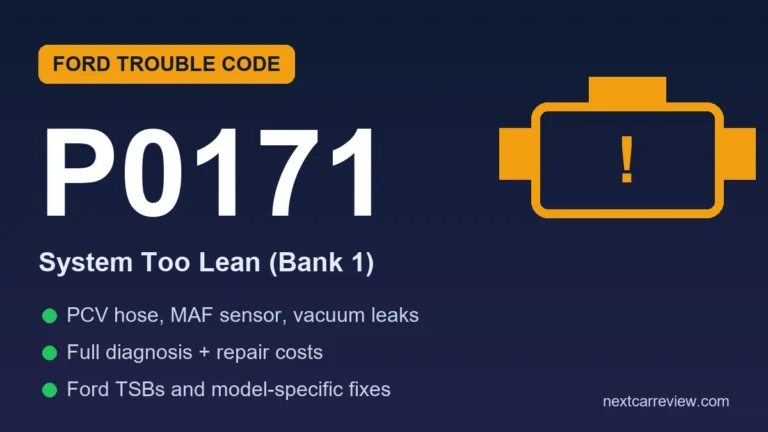
If your scan also returned a random misfire code alongside P0430, our P0300 code guide covers the cheapest-first misfire diagnosis step by step. And if you are reading a lean bank code alongside P0430, our P0171 code guide walks through the vacuum leak and fuel delivery diagnosis that frequently accompanies a catalyst efficiency fault.
What Does P0430 Mean?
P0430 Code – Quick Diagnostic Intelligence
What does P0430 mean in plain English? So your car runs a self-check on the exhaust after each drive. And the onboard diagnostics system watches how well the converter cleans your fumes. But when Bank 2 falls short, the computer stores this trouble code. As a result, your check engine light flicks on.
Catalyst Efficiency Below Threshold (Bank 2)
The official name reads “catalyst efficiency below threshold Bank 2.” That is to say, the converter on that side no longer cleans well enough. To clarify, your car compares two oxygen readings, one before the cat and one after. So when both readings look too similar, the converter is losing its punch. And the onboard diagnostics logs the fault right away.
P0430 vs P0420: Which Side Is Which
The P0430 vs P0420 question confuses almost everyone at first. But the answer is simple. So P0420 covers Bank 1, the side with cylinder number one. However, P0430 covers Bank 2, the opposite side. In short, same problem, different bank. To sum up, both codes point at a tired converter, just on different sides.
Symptoms of a P0430 Code
The P0430 code symptoms often start small and easy to miss. So many drivers ignore the early signs for weeks. But the clues add up fast. And catching them early keeps your repair bill low.
Check Engine Light
The check engine light is almost always the first hint. So it may glow steady rather than flash. But do not brush it off. A dash light almost never fixes itself.
Reduced Fuel Economy
A weak converter drags down your mileage. So you might notice more stops at the pump. And your throttle can feel a touch lazy. In the same vein, cold starts may run rougher than before.
Failed Emissions Test
Here is the big one. In areas with OBD-based emissions testing, an active P0430 with the check engine light on will usually fail the test. So the tailpipe may push out more pollution than allowed. And an emissions failure can stop you from renewing your tags. Rules vary by state, so check your local program.
Common Causes of P0430
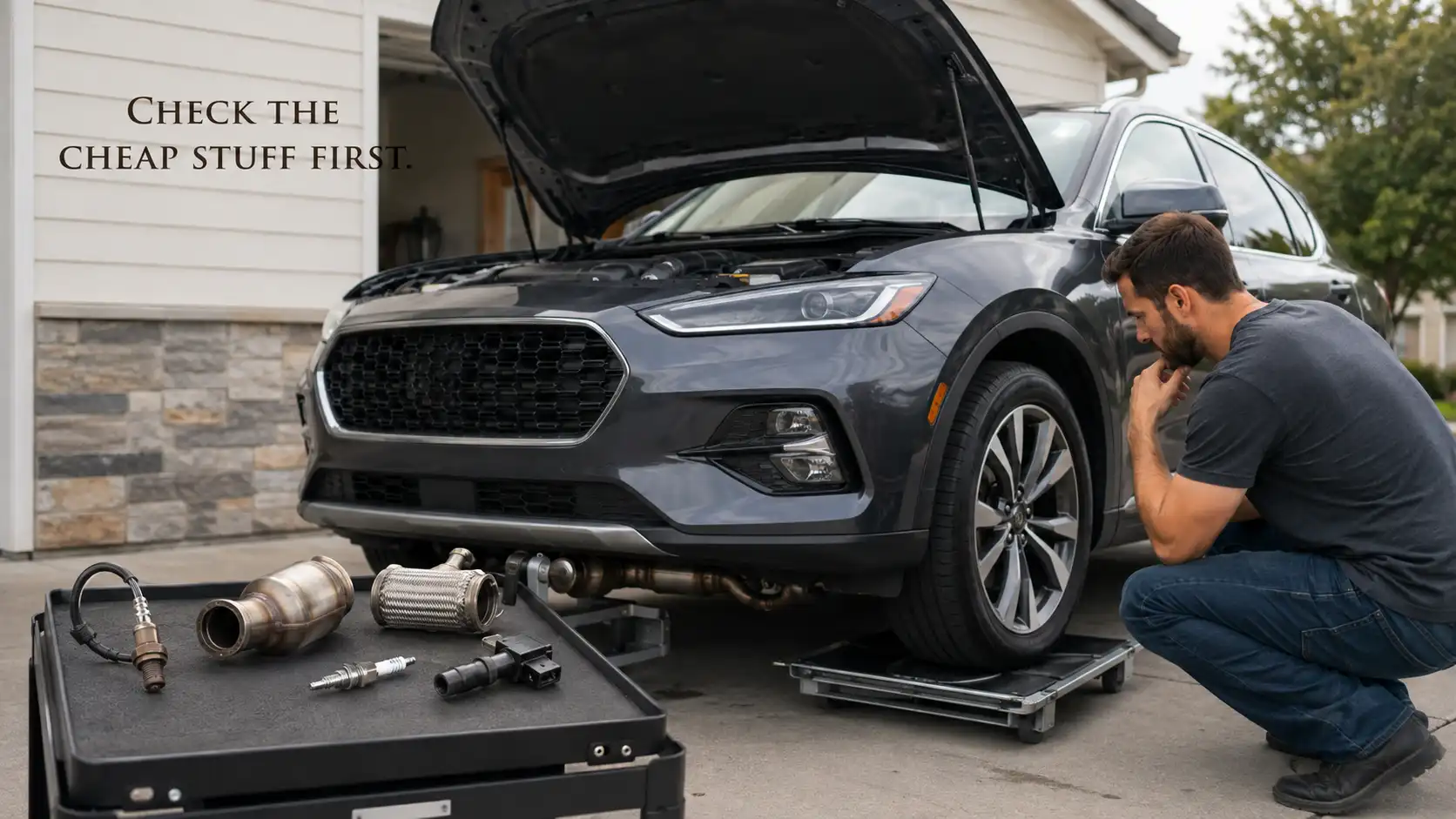
The common causes range from cheap to costly. So we always test the small stuff first. And that habit can save real money. Below are the usual suspects.
Failing Catalytic Converter
A worn P0430 catalytic converter is the most common root. So the internal coating breaks down over years of heat. But high mileage speeds this up. As a result, the cat simply cannot scrub the exhaust anymore.
Faulty Downstream O2 Sensor
Sometimes the converter is fine. So the real villain is a lazy P0430 oxygen sensor. However, this sensor sits after the cat and reports bad data. To clarify, a faulty sensor can fake a converter failure. And swapping it costs a fraction of a new cat.
Exhaust Leak Before the Cat
A small crack in the exhaust system fools the whole check. So fresh air sneaks in and skews the oxygen reading. But this fix is often cheap. And a good shop can weld or clamp it in an hour.
Misfire Damaging the Cat
A steady misfire dumps raw fuel into the exhaust. So that fuel burns inside the converter and melts it. As a result, one ignored misfire can wreck a healthy cat. Certainly, worn plugs and coils deserve a quick check.
How to Diagnose P0430 Yourself
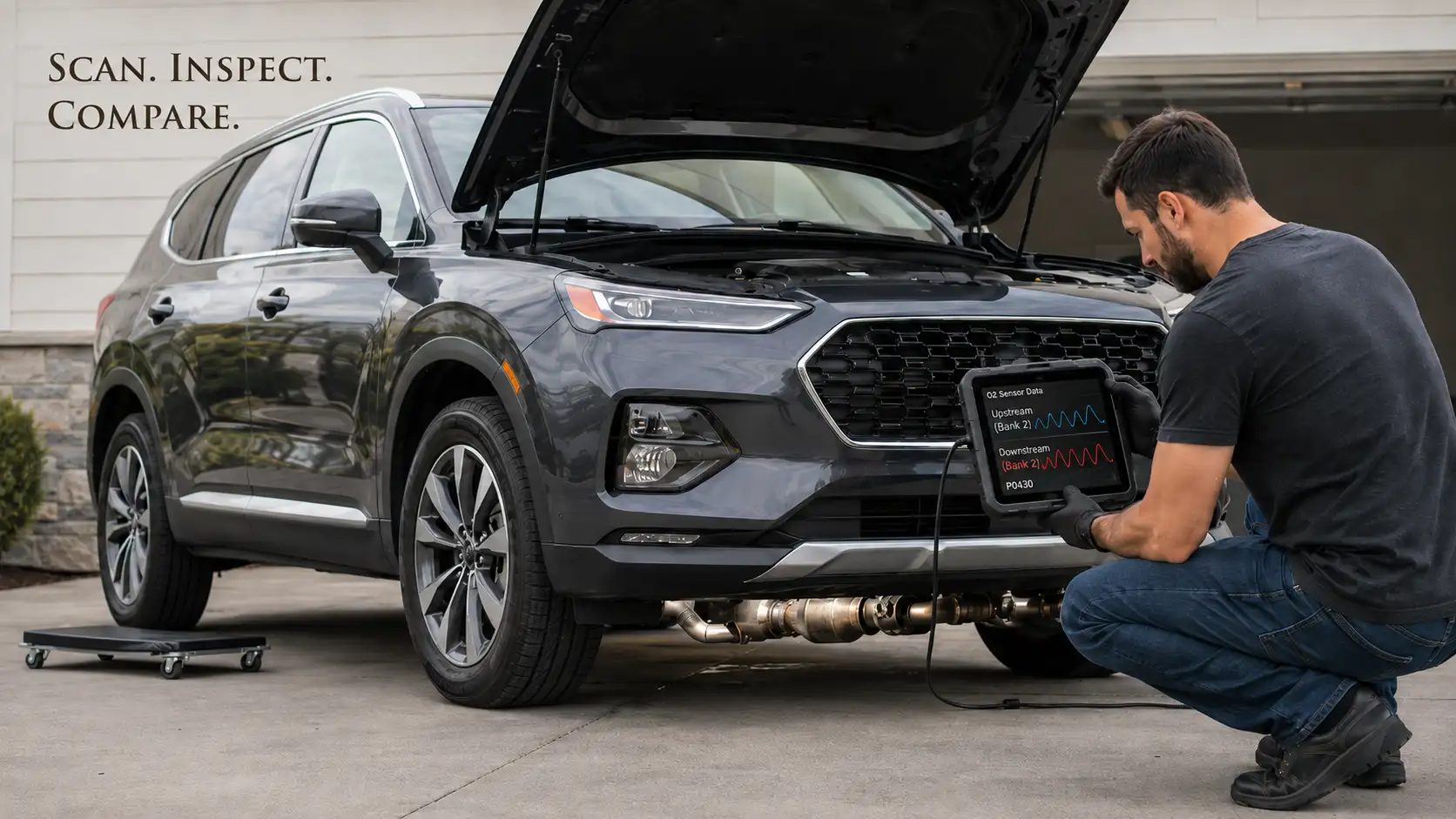
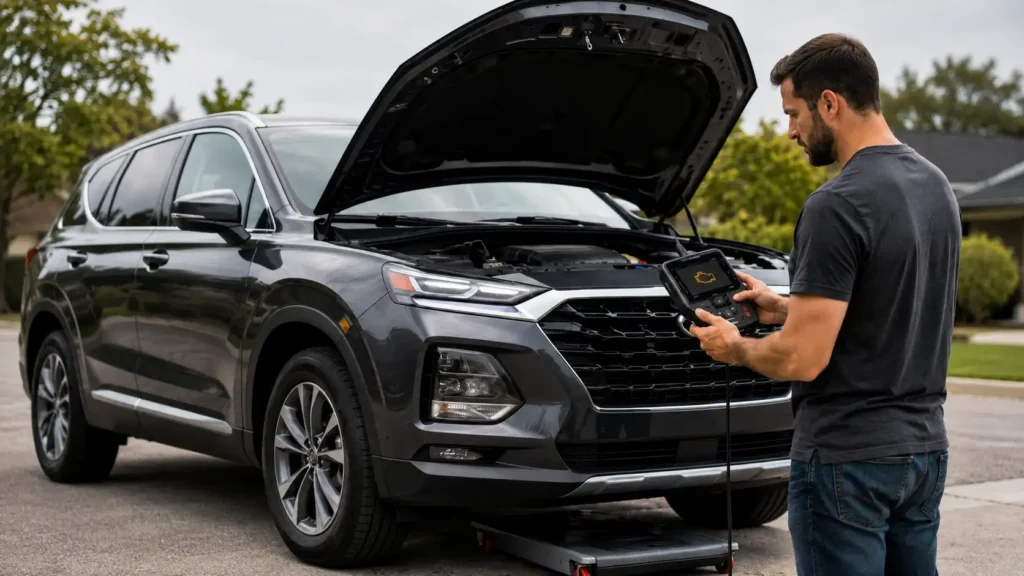
You can narrow this down at home with a cheap scan tool. So follow these steps in order. And do not skip ahead. The right P0430 code fix depends on finding the true cause first.
Scan for Other Codes First
Plug in your scanner and read every stored code. So a misfire or lean code changes everything. But if those show up, fix them first. As a result, the cat code may clear on its own.
Inspect for Exhaust Leaks
Next, look and listen under the car with the engine cold. So a soft ticking near the manifold hints at a leak. And a smoke test makes tiny cracks obvious. Meanwhile, check the clamps and gaskets for rust.
Compare Upstream/Downstream O2 Data
Now watch your live sensor data on the scanner. So the upstream sensor should swing up and down quickly. However, the downstream one should stay fairly flat and steady. But when both swing alike, the converter is likely done.
How Much Does It Cost to Fix P0430?
The P0430 repair cost swings widely, and that scares people. So the final bill depends entirely on the true cause. But a sensor job stays cheap. However, a converter job hits hard. Below is a 2026 estimate range, not a quote.
| Repair | Typical Cost Range (2026) | When You Need It |
|---|---|---|
| Downstream O2 sensor | $150 to $400 | Bad sensor data, cat still healthy |
| Exhaust leak repair | $120 to $350 | Cracks or leaks before the cat |
| Spark plugs and coils | $200 to $500 | Misfire damaging the converter |
| Catalytic converter (OEM) | $800 to $2,500 | Cat coating worn out on Bank 2 |
Source: 2026 US shop rate averages and retail parts pricing. Costs vary by vehicle, region, and shop type.
O2 Sensor ($150 to $400)
Start here because it is the cheapest path. So parts run modest and labor stays quick. And many drivers clear the code with this alone. In short, always rule out the sensor before the cat.
Catalytic Converter ($800 to $2,500)
The catalytic converter replacement cost is the painful part. So OEM parts cost more. But cheaper parts save cash up front. But low-cost cats may not last as long, and some states (such as California) require CARB-approved replacement converters. As a result, quality parts are usually the safer choice.
Vehicle-Specific Notes
Some brands throw this code more than others. So a few patterns help you plan ahead. And knowing your make narrows the search fast.
P0430 on Toyota
A P0430 Toyota case often traces back to age, not damage. So high-mileage V6 models lead the pack. Age is often the real cause. But many converters last a long time when misfires are fixed promptly. However, once they age out, only a new cat truly fixes it.
For full Toyota engine and ownership context, our 2026 Toyota C-HR EV review covers the known service intervals and high-mileage maintenance patterns across the Toyota lineup. And our Toyota Camry engine mount guide covers the powertrain service patterns most relevant to high-mileage Toyota owners tracking down exhaust and catalyst faults.
P0430 on Honda and Nissan
A P0430 Honda fault frequently follows a neglected misfire. So worn plugs cook the converter over time. But a P0430 Nissan often starts with a tired sensor. Similarly, both brands respond well to early sensor checks.
For full Honda engine and ownership context, our 2024 Honda CR-V engine noise guide covers the ignition and exhaust service patterns most relevant to this code. And our 2025 Honda Civic Hybrid review covers the newer generation for Honda owners tracking down catalyst and sensor faults. For Nissan, our DTC P1148 guide and the P1148 Nissan code fix guide cover the air-fuel ratio sensor diagnosis that frequently appears alongside catalyst codes on Nissan vehicles.
Can You Drive With P0430?
Yes, you can usually keep driving, at least for a while. So the car will not strand you tomorrow. But that freedom comes with a cost. And the risk grows the longer you wait.
A P0430 Code Is Short-Term Safe, Long-Term Costly
Short term, the engine still runs and moves you around. So a week or two rarely hurts. However, a dying cat can clog and choke the engine. So a small delay can turn into a big bill.
How to Prevent P0430 From Coming Back
Prevention beats repair every single time. So fix misfires the moment they appear. And keep up with plugs, coils, and oxygen sensors. In addition, use good fuel and avoid short cold trips when you can. Meanwhile, treat any check engine light as an early warning, not background noise. That habit alone keeps your exhaust system healthy for years.
The Bottom Line
Your P0430 code is a warning, not a death sentence for your wallet. So test the cheap parts first, then decide. But never ignore an emissions failure or a nagging misfire. Above all, walk into the shop informed and ready.
Want to keep learning? Read our full P0420 guide next, then browse our library of DTC repair walkthroughs. And bookmark NextCarReview before your next dash light surprises you.
Related guides: our trouble code guides by make and U0100 Code.
Frequently Asked Questions About the P0430 Code
What does code P0430 mean?
What is the difference between P0420 and P0430?
Can I drive with a P0430 code?
How much does it cost to fix P0430?
Will an O2 sensor fix P0430?
Does P0430 only appear on V6 or V8 engines?
⚠️ Professional Notice:
All repair cost figures in this article are based on 2026 US shop rate averages and retail parts pricing aggregated from published industry sources. Real costs vary by vehicle make, model year, engine type, geographic region, parts brand, and whether work is performed at a dealership, independent shop, or at home. Always obtain multiple quotes before authorizing any repair.
Diagnostic steps and specifications outlined in this guide are general procedures and may not apply to every vehicle make or model. If the P0430 code is accompanied by a flashing check engine light, stop driving immediately and have the vehicle towed or inspected by a certified technician. Continued driving with active catalyst faults risks further exhaust system damage. Consult your vehicle’s factory service manual for model-specific diagnostic procedures. NextCarReview.com does not receive compensation from any parts manufacturer, retailer, or repair chain in exchange for rankings or editorial coverage.
Data Sources and Verification
- OBD-II DTC definitions – Society of Automotive Engineers (SAE) J2012 standard P0430 catalyst system efficiency below threshold Bank 2 documentation
- OEM diagnostic procedures – Toyota, Honda, Nissan, and multi-brand factory service manual diagnostic steps for P0430, multiple model years
- 2026 US parts pricing – aggregated pricing across major US parts retailers, August 2026
- Labor rate data – 2026 US independent shop and dealership labor rate benchmarks
- EPA: Vehicle emissions inspection and maintenance (I/M) programs

Morgan Reyes is the founder and editor-in-chief of NextCarReview, which Morgan launched in August 2024. A 2022 graduate of Columbia University, Morgan is based in New York and writes and edits the site’s reviews, comparisons and buying guides. Morgan does not road-test vehicles. Every article is built from published primary data: EPA FuelEconomy.gov ratings, NHTSA crash ratings, recalls and owner complaints, IIHS results, and manufacturer specifications and pricing, with each figure cited and checked before publication. Contact: admin@nextcarreview.com