In this article 11 sections
A P0420 code means your catalyst system runs below its efficiency threshold on Bank 1. So we break down what triggers it, the symptoms to watch, smart do-it-yourself diagnosis, and real 2026 repair costs. And we help you fix the right part, skip a needless converter bill, and pass your next emissions test with confidence.
Figures cross-checked against EPA, NHTSA, IIHS and manufacturer sources. See our sourcing policy.
A P0420 code is one of the most common trouble codes we see, and it almost always shows up at the worst moment. Your check engine light pops on, and the screen reads P0420. So now what? First, take a breath. Certainly this code rarely means an emergency. But it does need attention before it costs you more.
Many drivers panic and assume a $1,500 catalytic converter is the only answer. But that is not always true. So the real cause could be a cheap sensor or a small exhaust leak. As a result, smart diagnosis saves real money. And we will show you how the code works and how to fix it the right way. To clarify, our goal is simple. So we want you to repair the actual problem, not throw parts at the car.
P0420 code at a glance:
- What it means: “Catalyst System Efficiency Below Threshold (Bank 1)”: the downstream oxygen sensor shows the catalytic converter on the cylinder-1 side is no longer cleaning exhaust well enough.
- Is it serious? Usually not an emergency with a steady check engine light, but you will fail an OBD emissions test until it is fixed.
- Most common causes: a worn catalytic converter, a faulty downstream O2 sensor, an exhaust leak ahead of the converter, or misfires that damaged it.
- Typical repair cost: about $150 to $400 for an O2 sensor, or $800 to $2,500 for a catalytic converter.
- First step: scan for other codes (especially misfire codes) and check for exhaust leaks before buying a converter.
What Does P0420 Mean?
P0420 Code – Quick Diagnostic Intelligence
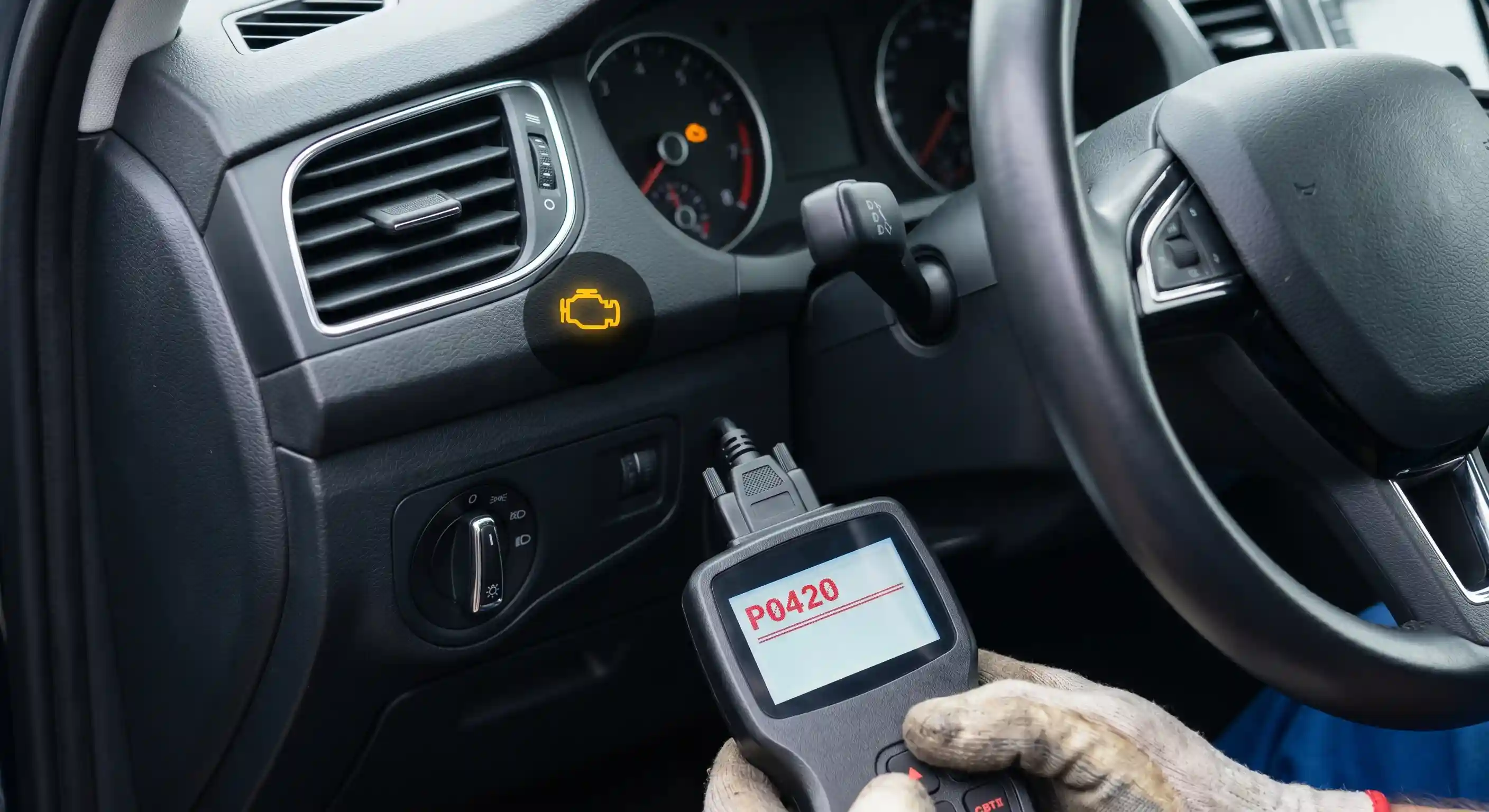
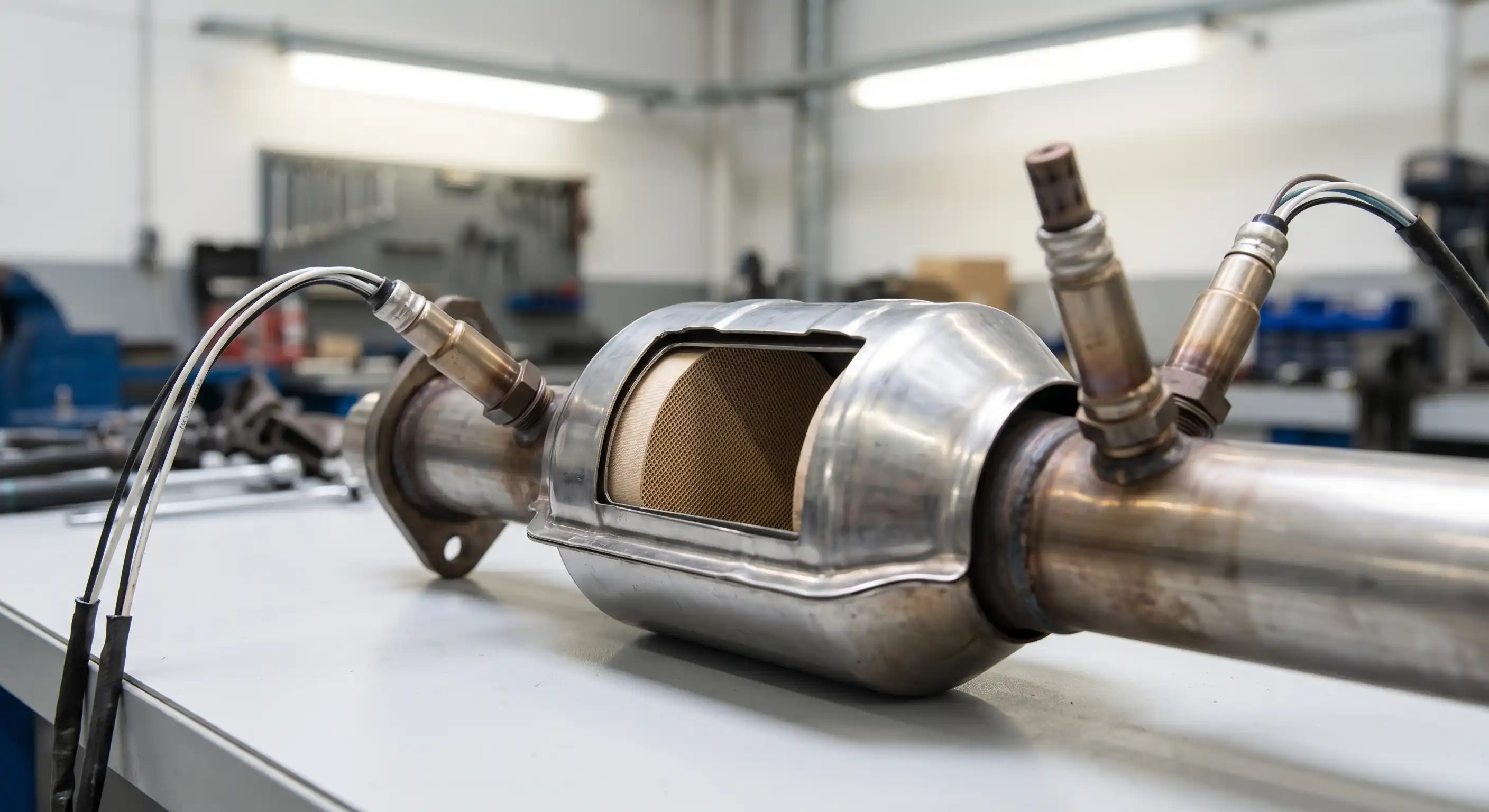
So what does p0420 mean in plain words? Above all, it points to your catalytic converter and the sensors around it. The car thinks the converter no longer cleans exhaust gases well enough. But the details matter. So let us break them down.
Catalyst System Efficiency Below Threshold (Bank 1)
The official text reads “catalyst system efficiency below threshold.” So that phrase describes a converter that has lost its cleaning power. And p0420 bank 1 simply marks the engine side with cylinder number one. So the fault sits on that side of the exhaust system. To clarify, the catalytic converter efficiency below threshold reading is the heart of this code.
On a V6 or V8, the same fault on the other side of the engine sets P0430 (Bank 2) instead. See our P0430 code guide if that is the code you have, or if both are stored together.
How the ECU Detects It
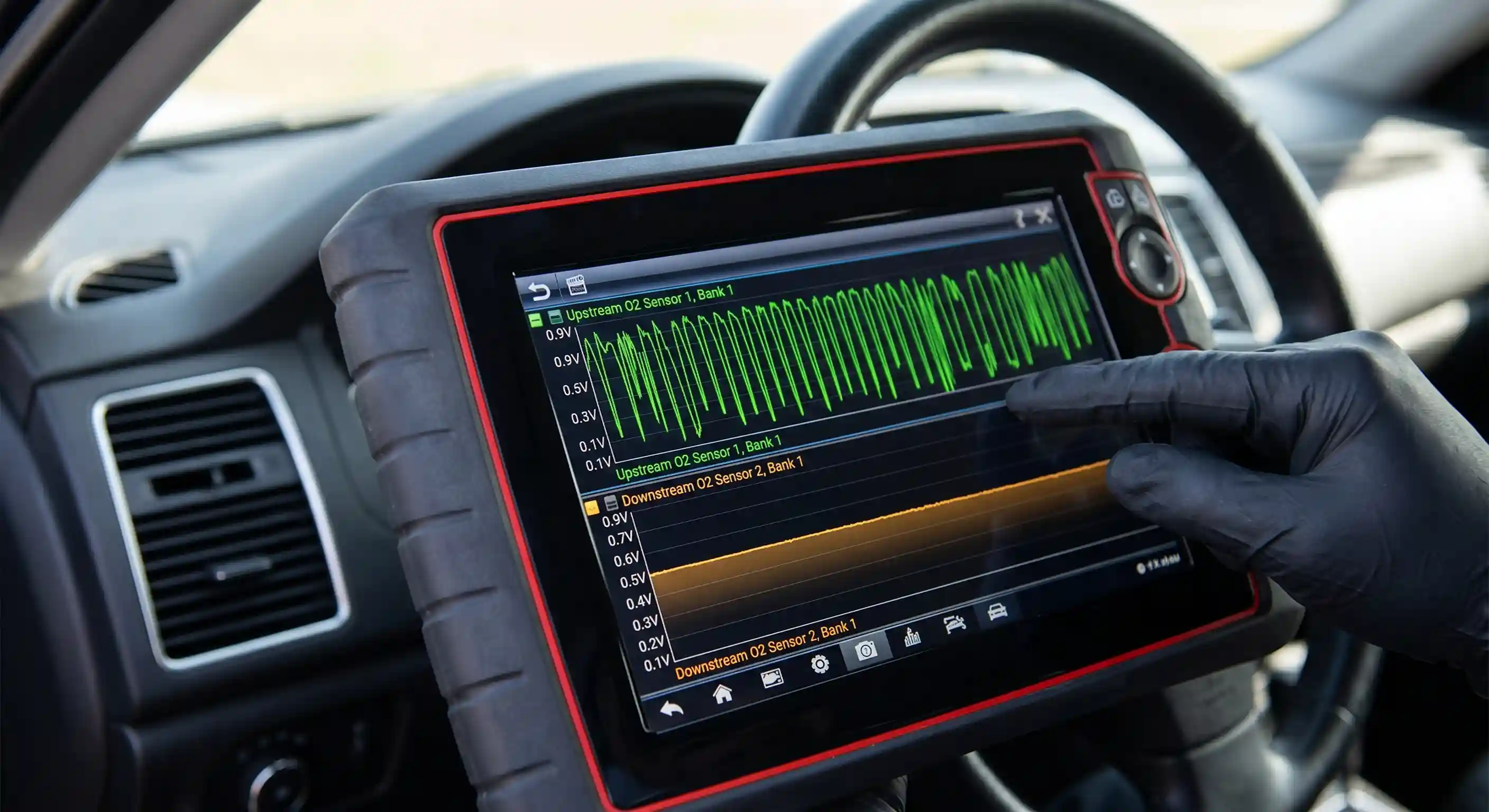
Your car runs onboard diagnostics every time you drive. And two oxygen sensors watch the converter, one upstream and one downstream. During normal driving, the rear sensor should read steady. But when both sensors swing alike, the computer sees weak conversion. So the p0420 catalyst efficiency check compares those two signals. As a result, the OBD-II diagnostic system stores the code and lights the dash.
Symptoms of a P0420 Code
The p0420 code symptoms often feel mild at first. So many drivers notice nothing beyond a warning light. Still, a few signs point straight to this fault. So watch for these clues.
Check Engine Light
The check engine light is the first and clearest sign. But it may glow steady rather than flash. So you have time. Still, do not ignore it.
Reduced Fuel Economy
A tired converter can drag down your mileage. So you might fill up more often. Meanwhile, the engine may feel slightly lazy on hills.
Rotten Egg Smell from Exhaust
A failing converter sometimes gives off a sulfur smell. And that rotten egg odor comes from sulfur compounds (hydrogen sulfide) in the exhaust. However, not every car with a P0420 code smells this way.
Failed Emissions Test
Here is the big one. So a p0420 won’t pass emissions in most regions. And the code itself triggers an emissions failure during testing. So in states with OBD emissions testing, you may not be able to renew your registration until you fix it.
Common Causes of P0420
Several issues can set this code. So we list them from most to least common. And that way you check the likely suspects first.
Failing Catalytic Converter
Age and miles wear out the converter. Most units last 100,000 miles or more. Federal law requires automakers to cover the catalytic converter against defects for 8 years or 80,000 miles, so check your warranty first on a newer car. After that, the internal coating can break down.
Faulty Downstream O2 Sensor
A bad p0420 oxygen sensor can fake a converter problem. So the rear sensor reports false data. As a result, the computer blames the cat by mistake.
Exhaust Leak Before the Cat
A small leak in the exhaust system lets fresh air sneak in. And that extra oxygen confuses the sensors. So the readings drift and the code returns.
Engine Misfire Damaging the Cat
A misfire dumps raw fuel into the converter. And that fuel burns inside and melts the core. So over time, the damage becomes permanent.
If your scan also shows P0300 or a cylinder-specific misfire code, fix that first; our P0300 code guide covers misfire diagnosis.
Bad Fuel or Oil Contamination
Cheap fuel or burning oil can coat the converter. And the coating blocks its work. However, this cause stays fairly rare.
How to Diagnose P0420 Yourself
You can narrow the cause at home with basic tools. So grab a scanner and a flashlight. To clarify, this process saves you from guessing.
If you are also dealing with a lean fault alongside this code, our P0171 code guide walks through that diagnosis in the same step-by-step format. And for Nissan-specific sensor faults, our P1148 Nissan code fix guide covers that fault in full detail.
Step 1: Scan for Other Codes First
Firstly, read every stored code. And a misfire or sensor code changes the plan. So fix those faults before you judge the converter.
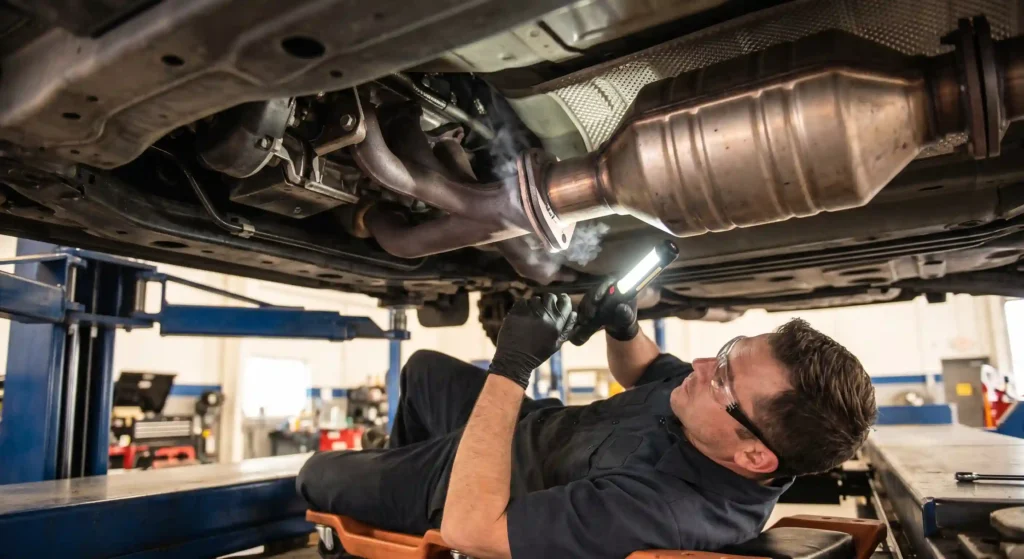
Step 2: Inspect for Exhaust Leaks
Look and listen along the pipes. So a ticking sound near the manifold hints at a leak. After that, seal any gap you find.
Step 3: Test Upstream and Downstream O2 Sensors
Check both sensors with a meter or live data. But a lazy sensor responds slowly. So swap it before you spend on a cat.
Step 4: Live Data Comparison
Watch both sensor graphs while the engine runs. And a healthy rear sensor stays mostly flat. But a copycat pattern points to a weak converter.
How Much Does It Cost to Fix P0420?
The p0420 repair cost swings widely. So the final bill depends on the true cause. And we share fresh 2026 numbers below.
O2 Sensor Replacement ($150-$400)
A sensor swap is the cheapest path. So parts and labor stay modest. And this fix appeals to budget-minded drivers.
Catalytic Converter Replacement ($800-$2,500)
A new cat costs far more. So the catalytic converter replacement cost rises with vehicle size and metal prices. As a result, this repair hurts the wallet most.
Aftermarket vs OEM Catalytic Converter
Aftermarket cats cost less up front. But some are not legal in strict states: in California, an aftermarket converter must carry a CARB Executive Order number approved for your vehicle. So weigh price against long-term peace of mind.
| Likely Cause | How to Confirm | Typical 2026 Fix | Cost Range (2026) |
|---|---|---|---|
| Faulty downstream O2 sensor | Slow or flat live data; sensor code | Replace downstream sensor | $150 to $400 |
| Exhaust leak before the cat | Tick or hiss; smoke test | Reseal or replace gasket/pipe | $100 to $350 |
| Engine misfire | Misfire codes; rough idle | Plugs, coils, misfire repair | $120 to $500 |
| Aftermarket catalytic converter | Copycat sensor pattern; high miles | Aftermarket cat install | $400 to $1,200 |
| OEM catalytic converter | Confirmed after sensor and leak ruled out | OEM cat install | $900 to $2,500 |
Vehicle-Specific Notes
This code behaves a little differently across brands. So we cover three popular models. Likewise, the same logic applies to most cars.
P0420 on Honda Accord
On a p0420 honda accord case, follow the same order: rule out the downstream sensor and leaks, then check Honda service bulletins for your model year. However, high-mile cars may still need a cat.
P0420 on Toyota Camry
On a p0420 toyota camry, check for open emissions warranty coverage and Toyota service bulletins first. Toyota cats last long, yet they do wear out. So check the sensor first, then plan for the cat.
P0420 on Nissan Altima
On a p0420 Nissan Altima, an exhaust leak or a tired cat are common suspects, and Nissan service bulletins are worth checking. So inspect the gaskets first. After that, test the downstream sensor.
Can You Drive With a P0420 Code?
Short answer, yes, for a while. But that freedom comes with limits. So plan your repair soon.
Short-Term Safe, Long-Term Costly
The car still drives fine in most cases. Still, a clogged cat can choke the engine later. As a result, delay only makes the bill grow.
Emissions Test Reality
You will not slide past inspection with this code. So the emissions failure stays on record until repair. So fix it before your renewal date.
How to Prevent P0420 From Coming Back
Good habits keep the code away. So fix misfires fast and use quality fuel. In addition, replace spark plugs on schedule. Most importantly, treat small exhaust leaks early. So your converter lasts far longer, and the code stays off your dash.
Conclusion
A P0420 code is annoying, but it is not the end of your car. So start with smart diagnosis, not panic. And check the sensors, hunt for leaks, and read the live data. So that order saves you cash. A proper p0420 code fix targets the real fault, not just the converter.
So we hope this guide gives you confidence at the shop or in your own driveway. And for more help, read our other DTC code guides. The right p0420 code fix is closer than you think.
Frequently Asked Questions About the P0420 Code
What does code P0420 mean?
Can I drive with a P0420 code?
How much does it cost to fix a P0420 code?
Will an O2 sensor replacement fix P0420?
Does seafoam or fuel cleaner fix P0420?
Will P0420 clear on its own?
Is a catalytic converter covered by warranty for P0420?
What is the difference between P0420 and P0430?
Related guides: our trouble code reference hub and P0441 Code Toyota.
⚠️ Professional Notice:
All 2026 repair cost figures in this article are based on US parts pricing aggregation and labor rate data compiled from published industry sources as of June 2026. Real costs vary by vehicle make, model year, geographic region, and whether work is performed at a dealership, independent shop, or at home. Obtain multiple quotes before authorizing any repair.
Emissions test outcomes vary by state and local jurisdiction. Some regions may accept aftermarket catalytic converters while others require OEM-equivalent parts for compliance. Confirm your local rules before purchasing a replacement converter. Diagnostic steps outlined in this guide are general procedures and may not apply to every vehicle configuration. Always consult your vehicle’s factory service manual before performing repairs. NextCarReview.com does not receive compensation from any parts manufacturer, retailer, or repair chain in exchange for rankings or editorial coverage.
Data Sources and Verification
- OBD-II DTC definitions – Society of Automotive Engineers (SAE) J2012 standard fault code database
- 2026 US parts pricing – aggregated pricing across major US parts retailers, June 2026
- Labor rate data – 2026 US independent shop and dealership labor rate benchmarks
- Vehicle-specific technical service bulletins – Honda, Toyota, and Nissan factory TSB records for P0420 fault codes
- Emissions test compliance rules – US Environmental Protection Agency (EPA) and state-level emissions program documentation
- California Air Resources Board – aftermarket catalytic converter rules
- EPA: federal emissions warranty (8 years/80,000 miles for catalytic converters)
- Federal 8-year/80,000-mile catalytic converter warranty explained
- NHTSA – recalls and manufacturer communications by VIN
- Catalytic converter diagnostic procedures – OEM factory service manual references, multiple makes and model years

Morgan Reyes is the founder and editor-in-chief of NextCarReview, which Morgan launched in August 2024. A 2022 graduate of Columbia University, Morgan is based in New York and writes and edits the site’s reviews, comparisons and buying guides. Morgan does not road-test vehicles. Every article is built from published primary data: EPA FuelEconomy.gov ratings, NHTSA crash ratings, recalls and owner complaints, IIHS results, and manufacturer specifications and pricing, with each figure cited and checked before publication. Contact: admin@nextcarreview.com