
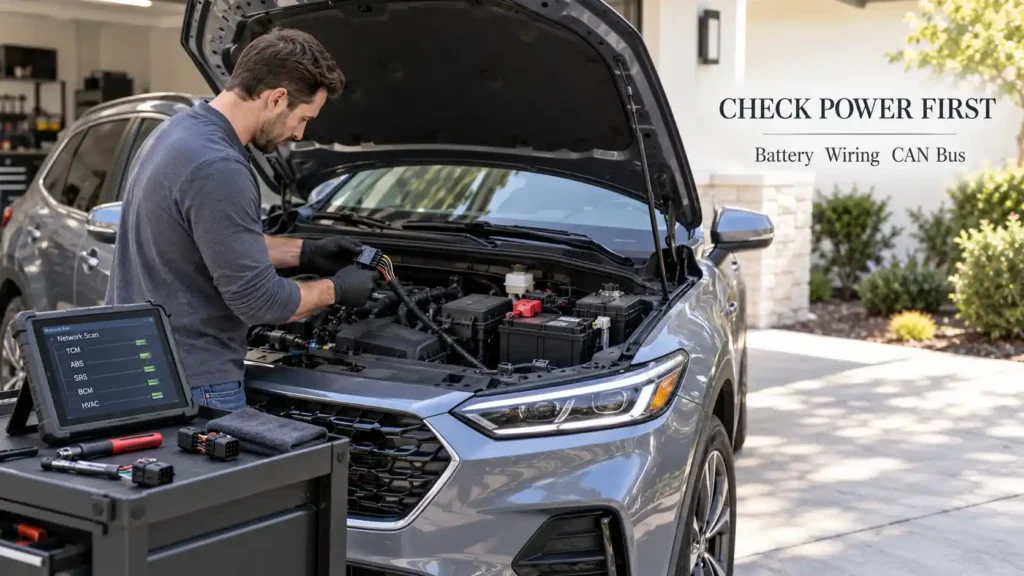
In this article 11 sections
The U0100 diagnostic trouble code indicates a communication breakdown between a vehicle’s modules and the engine or powertrain control module along the CAN bus network. Symptoms often include multiple dashboard warning lights, erratic gauges, limp mode, or a complete no-start condition.
Diagnosing the issue involves checking battery voltage, inspecting ground connections and wiring harnesses, and scanning all modules for companion codes. Repair costs vary depending on the root cause, ranging from inexpensive battery and wiring fixes to higher costs if the module requires full replacement and programming.
Wiring repairs, such as replacing a corroded connector or a chafed wire, typically run $150 to $400 including labor, while a full PCM replacement with reprogramming can reach $600 to $1,800, so scanning for companion codes first helps narrow down which repair path applies before paying for parts that may not be the actual cause.
A U0100 code points to a communication breakdown between a vehicle’s modules and the engine or powertrain control module. It often comes from wiring faults, a weak battery, or CAN bus trouble rather than a single broken part. This guide walks through the causes, symptoms, diagnosis steps, and realistic repair costs tied to this code.
Figures cross-checked against EPA, NHTSA, IIHS and manufacturer sources. See our sourcing policy.
The U0100 code shows up when a module stops talking to the engine or powertrain control module. Unlike most trouble codes, this one rarely points to a single failed part. So we treat it as a network problem first and a parts problem second. Swapping a PCM before checking power, grounds and wiring can mean paying for the wrong fix.
This trouble code trips because something interrupts the CAN bus, the shared wiring network that lets every module in a modern car talk to every other module. When that link breaks, even for a moment, the system logs a fault. As a result, this fault often comes bundled with several other codes at once, which can make the dashboard look far worse than the actual problem.
Below, we break down what triggers this code, how to read the symptoms correctly, and what a proper fix tends to cost, all using the same onboard diagnostics standards every modern shop relies on.
What Does U0100 Mean?
U0100 Code – Quick Diagnostic Intelligence
At its core, this is a communication code, not a mechanical one. The vehicle’s diagnostic system expects a steady stream of data from the ECM or PCM. When that stream drops out, the U0100 code gets stored.
Lost Communication With ECM/PCM
The engine control module (ECM) and powertrain control module (PCM) act as the brain of the vehicle. Nearly every other module, from the transmission control unit to the body control module, depends on data from that brain. So when a receiving module reports lost communication with ECM/PCM, it means the messages it expects simply stopped arriving.
This does not always mean the ECM or PCM has failed. Above all, it means the message never got through, which could happen for several different reasons along the wiring path.
How the CAN Bus Works
Most vehicles built after the early 2000s use a Controller Area Network, or CAN bus, to move data between modules. Picture it as a shared telephone line where every module can speak and listen at the same time. A can bus communication fault happens when that line gets damaged, shorted, or overloaded with electrical noise.
Two wires, usually labeled CAN High and CAN Low, carry this traffic. If either wire gets pinched, corroded, or disconnected, the whole conversation between modules can fall apart. That single wiring issue is often the real story behind this fault.
Symptoms of a U0100 Code
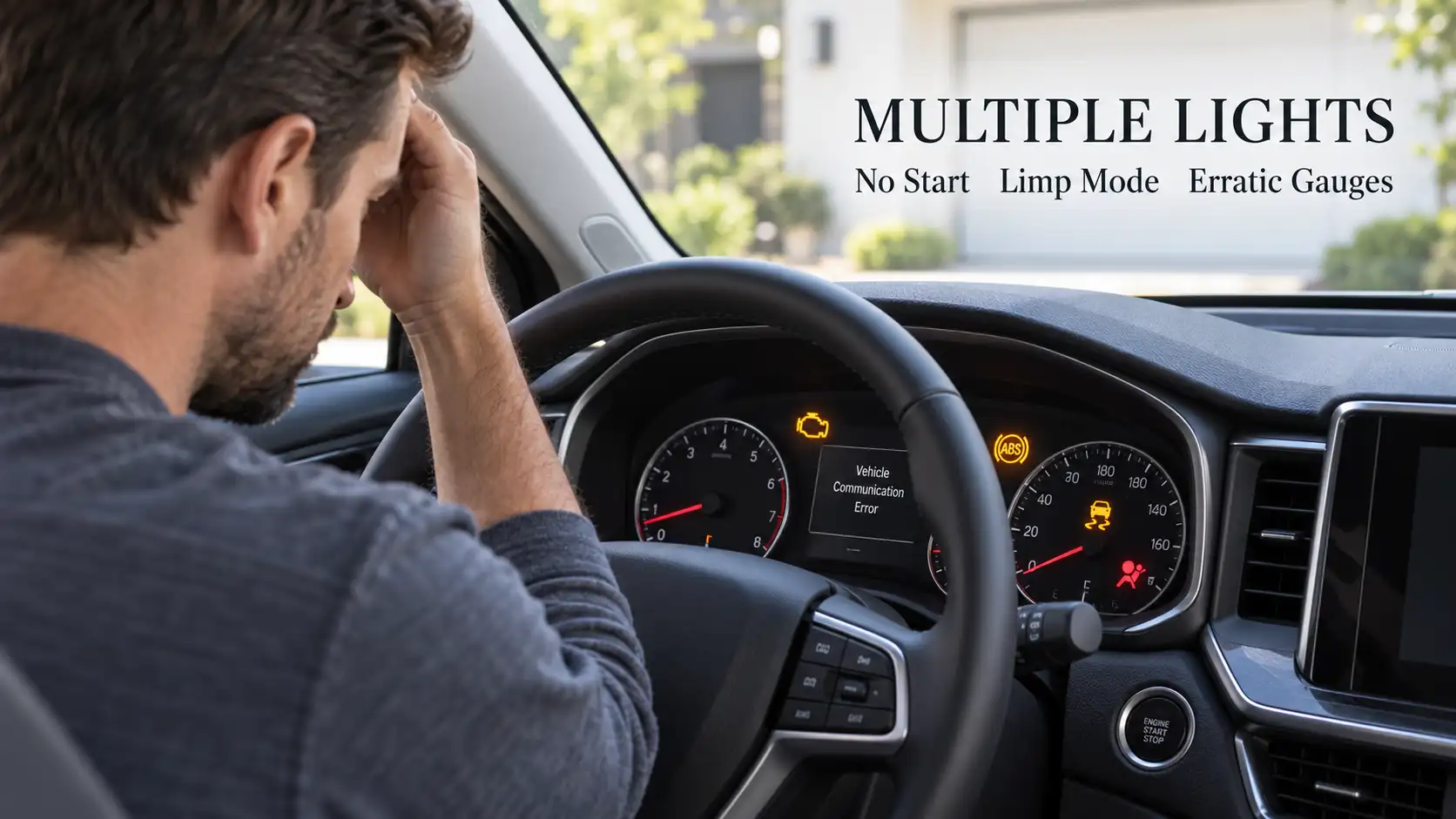
The warning signs vary quite a bit from vehicle to vehicle. Still, a few patterns show up again and again in real-world cases.
Multiple Warning Lights
Because so many systems rely on the same data stream, this fault rarely travels alone. Drivers often notice the check engine light alongside ABS, traction control, and airbag warning lights all firing together. That cluster of lights is actually a helpful clue, since it points toward a shared communication fault rather than several unrelated failures.
No-Start or Limp Mode
In more serious cases, the vehicle may crank but refuse to start. Meanwhile, if the engine does start, it might drop into limp mode, which limits power and RPM to protect the drivetrain. This happens because the transmission or other modules cannot safely operate without steady data from the PCM.
Erratic Gauges
Some drivers report gauges that jump, freeze, or drop to zero without warning. The speedometer, tachometer, or fuel gauge might behave strangely for a few seconds and then return to normal. Likewise, radio displays and climate controls can flicker or reset on their own.
Common Causes of U0100
Diagnosing this code means working through a short list of usual suspects rather than guessing.
Wiring and Connector Faults
U0100 wiring issues sit at the top of the list for a reason. Rodent damage, corroded pins, and connectors that were not fully seated after previous repair work are all common causes. A single frayed wire near the firewall or under the dash can be enough to trigger this code.
CAN Bus Issues
Beyond simple wiring damage, the bus itself can develop problems such as a short between the CAN High and CAN Low wires. Aftermarket accessories, poorly installed alarms, or stereo upgrades sometimes tap into the wrong wires and disrupt the network. In the same vein, a damaged module still connected to the bus can drag down communication for everything else on the line.
Failing PCM/ECM
Occasionally, the control module itself is the actual cause. Internal component failure, water intrusion, or a damaged circuit board inside the PCM can stop it from sending or receiving data properly. This cause shows up less often than wiring faults, but it does happen, especially on higher-mileage vehicles.
Low Battery Voltage
A weak or failing battery can starve the modules of the steady voltage they need to communicate reliably. Low voltage causes some modules to reset or drop offline mid-conversation, which the system reads as lost communication. This is one of the cheapest causes to rule out, so it should always be checked early.
How to Diagnose U0100
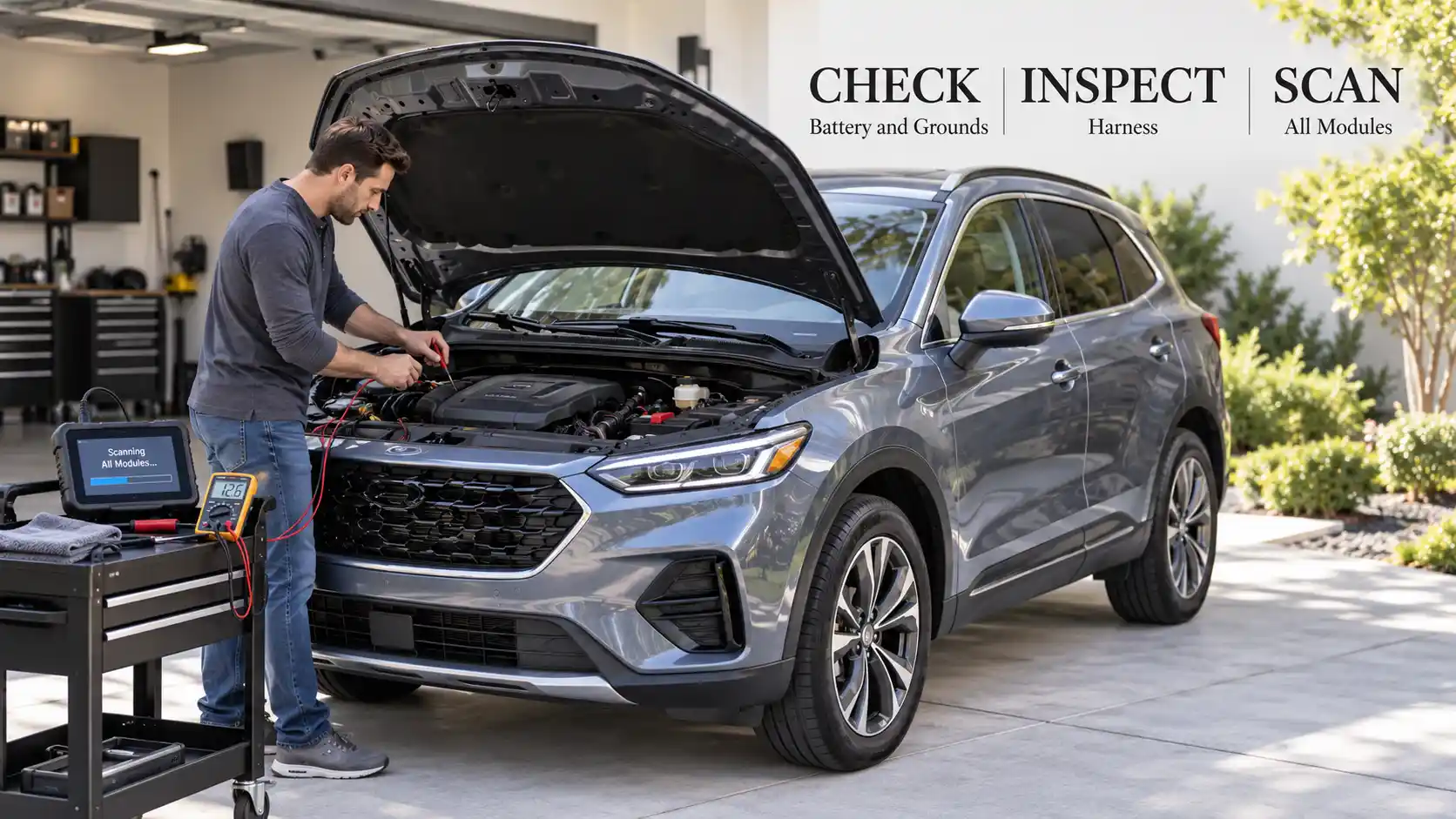
A methodical approach saves both time and money here.
Check Battery and Grounds
Testing battery voltage and cleaning ground connections should happen first, before anything else gets pulled apart. A load test on the battery, along with a visual check of ground straps near the engine and chassis, catches a surprising number of cases. This step alone resolves the issue often enough that it deserves top priority.
Inspect Connectors and Harness
After that, a visual inspection of the wiring harness, especially near the PCM, firewall grommets, and any spots exposed to road debris, is worth the time. Wiggle testing the harness while watching a scan tool for dropped communication can pinpoint an intermittent fault quickly. Corrosion, chafing, and loose pins are the most common finds during this step.
Scan All Modules for Companion Codes
Finally, scanning every module rather than just the engine system reveals the full picture. Companion codes often point directly to which module lost contact and when. This information narrows the search area considerably and prevents unnecessary parts replacement.
If your scan turns up a separate misfire code alongside U0100, our P0300 code guide covers the random cylinder misfire diagnosis in full. And if a cooling system code appears in the same scan, our P0128 code guide covers the thermostat and sensor diagnosis that sometimes shows up alongside a communication fault on the same vehicle.
How Much Does It Cost to Fix U0100?
Repair costs vary widely because the underlying cause varies so much.
Wiring Repairs (Varies)
Simple wiring repairs, such as replacing a corroded connector or repairing a chafed wire, typically run between $150 and $400 including labor. More extensive harness damage, especially from rodents, can push costs toward $600 or more depending on how much wiring needs replacement.
PCM Replacement and Programming
When the control module itself needs replacement, the u0100 repair cost climbs significantly. A new or remanufactured PCM generally costs between $400 and $1,200, and programming to match the vehicle typically adds another $150 to $300. Altogether, a full PCM replacement and programming job often lands between $600 and $1,800.
| Repair Type | Typical Cost Range | Notes |
|---|---|---|
| Battery/ground cleanup | $50–$150 | Cheapest fix; always check first |
| Connector or wire repair | $150–$400 | Most common actual fix |
| Rodent-damaged harness | $400–$800 | Cost rises with harness length affected |
| PCM/ECM replacement | $400–$1,200 | Parts cost only |
| PCM programming | $150–$300 | Required after replacement |
| Full PCM job (parts + programming) | $600–$1,800 | Least common but most expensive path |
Source: 2026 US shop rate averages and retail parts pricing. Costs vary by vehicle make, model year, and region.
Vehicle-Specific Notes
Certain brands show recurring patterns worth knowing about ahead of time.
U0100 on Ford/Chevy/Dodge
The u0100 ford cases often trace back to corroded connectors near the engine harness or a weak battery ground. On the other hand, u0100 chevy reports frequently point to the body control module losing its connection to the bus, particularly on older trucks and SUVs. Meanwhile, u0100 dodge cases commonly involve the totally integrated power module (TIPM), which has a known history of connector and internal faults on several model years. It’s worth checking NHTSA’s recall database by VIN, since some of these module faults have been addressed through official safety recalls rather than out-of-pocket repairs.
For Ford-specific context on harness and connector patterns, our 2024 Ford Ranger XLT review covers known service intervals relevant to engine harness longevity. For Dodge and Jeep TIPM history, our 2023 Jeep Grand Cherokee review and our early review of the 2025 Jeep Grand Cherokee cover the Stellantis platform where this module has a documented history.
Can You Drive With a U0100 Code?
Often No — Limp Mode or No-Start
Driving with this code active is usually not a good idea. Since so many safety systems depend on steady module communication, the vehicle may enter limp mode, lose power steering assist, or refuse to start altogether. Above all, if warning lights for ABS or airbags appear alongside the check engine light, a tow to a shop is the safer choice over continued driving.
How to Prevent U0100
A few habits go a long way toward avoiding this code in the future. Keeping the battery and terminals clean, addressing corrosion early, and having aftermarket wiring work done by someone familiar with CAN bus systems all reduce the odds of a repeat issue. Rodent deterrent measures also help on vehicles that sit outside or in garages with pest activity.
Conclusion
The U0100 code looks intimidating on a scan tool report, but it almost always traces back to a wiring fault, a weak battery, or a genuine CAN bus problem rather than a mystery failure. Working through battery checks, wiring inspection, and a full module scan in that order keeps repair costs down and avoids unnecessary part swaps. For deeper troubleshooting, our electrical diagnostics guide and full DTC code library cover related network and wiring codes in more detail.
Our DTC P1148 guide and our P0455 code guide cover two more common trouble codes worth knowing if your scan tool ever returns more than one fault at the same time.
Related guides: more check engine codes explained and P0011 Code.
Frequently Asked Questions About the U0100 Code
What does code U0100 mean?
Can I drive with this code active?
What causes U0100?
How much does it cost to fix U0100?
Is U0100 a serious code?
Can a weak battery cause U0100?
⚠️ Professional Notice:
All repair cost figures in this article are based on 2026 US shop rate averages and retail parts pricing aggregated from published industry sources. Real costs vary by vehicle make, model year, geographic region, parts brand, and whether work is performed at a dealership, independent shop, or at home. Always obtain multiple quotes before authorizing any repair.
Diagnostic steps and specifications outlined in this guide are general procedures and may not apply to every vehicle make or model. Consult your vehicle’s factory service manual for model-specific diagnostic procedures. If warning lights for ABS or airbags appear alongside the check engine light, or if the vehicle enters limp mode or fails to start, have the vehicle towed or inspected by a certified technician rather than continuing to drive. Always check the NHTSA recall database by VIN before authorizing a paid repair, since some module faults are covered under manufacturer safety recalls. NextCarReview.com does not receive compensation from any parts manufacturer, retailer, or repair chain in exchange for rankings or editorial coverage.
Data Sources and Verification
- OBD-II DTC definitions – Society of Automotive Engineers (SAE) J1930 and J2012 standard U0100 lost communication with ECM/PCM documentation
- OEM diagnostic procedures – Ford, GM, and Stellantis factory service manual CAN bus and module communication diagnostic steps, multiple model years
- NHTSA recall database – vehicle safety recall records searchable by VIN, referenced for TIPM and module-related recalls
- 2026 US parts pricing – aggregated pricing across major US parts retailers, September 2026
- Labor rate data – 2026 US independent shop and dealership labor rate benchmarks
- FuelEconomy.gov: keeping your vehicle in shape (check engine light guidance)

Morgan Reyes is the founder and editor-in-chief of NextCarReview, which Morgan launched in August 2024. A 2022 graduate of Columbia University, Morgan is based in New York and writes and edits the site’s reviews, comparisons and buying guides. Morgan does not road-test vehicles. Every article is built from published primary data: EPA FuelEconomy.gov ratings, NHTSA crash ratings, recalls and owner complaints, IIHS results, and manufacturer specifications and pricing, with each figure cited and checked before publication. Contact: admin@nextcarreview.com


