In this article 11 sections
A P0300 code means your engine is misfiring at random across two or more cylinders. This guide breaks down the symptoms, the cheapest-first causes, and simple do-it-yourself tests. We also cover real 2026 repair costs, plus Honda and Ford quirks, and when a flashing light means you must stop right away.
Figures cross-checked against EPA, NHTSA, IIHS and manufacturer sources. See our sourcing policy.
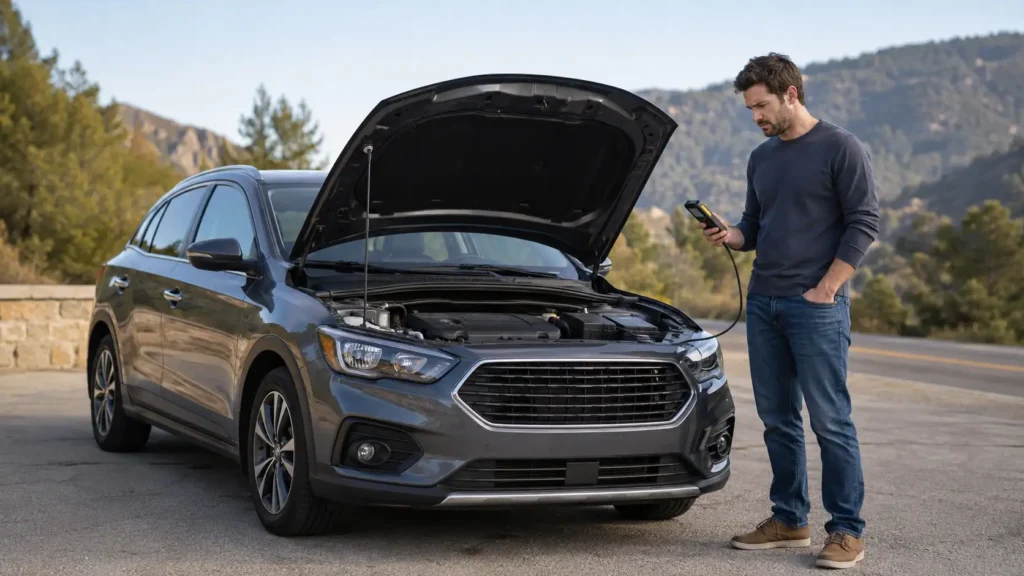
Your check engine light pops on, so you grab a scanner, and it reads a P0300 code. The engine feels rough. It shakes a little at a stop, and the ride feels off. First, take a breath. This is one of the most common engine trouble codes. So you are not alone, and the fix is often cheap.
In short, it is a P0300 random misfire code. That means the engine is not burning fuel right in more than one cylinder. But here is the good part. There is a clear, logical path to fix it, and we always start with the cheapest parts first.
We will walk you through what the code means, the symptoms, and the top causes. Then, we will show you how to test it yourself. After that, we cover real repair costs and brand quirks. So by the end, you will know exactly what to do next.
If your scan also returned a Nissan-specific fuel control fault alongside the misfire code, our P1148 Nissan code fix guide covers the air-fuel ratio sensor diagnosis step by step. And if you are reading a lean bank code alongside P0300, our P0171 code guide walks through the vacuum leak and fuel delivery diagnosis that frequently accompanies a random misfire.
What Does P0300 Mean?
P0300 Code – Quick Diagnostic Intelligence
So what does P0300 mean in plain words? It tells you the engine computer caught misfires, but not in one single spot. Instead, they jump around the engine. That random pattern is the whole clue. This code points to the whole engine, not one cylinder. Meanwhile, a code like P0301 points to cylinder one alone. So the P0300 is a wider warning.
Random/Multiple Cylinder Misfire
A random cylinder misfire means the fuel fails to burn in two or more cylinders. Sometimes it hops from one to the next. Because of that, the engine loses smooth power. So the ride feels shaky, and the motor sounds rough.
How the ECU Logs a P0300 Code
Your car watches crankshaft speed on every single spin. When combustion fails, that spin slows for a split second. As a result, the computer logs a misfire. Then, once the misfires cross a set limit, it stores the code and lights the dash.
Symptoms of a P0300 Code

The P0300 code symptoms are easy to feel once you know them. Most drivers notice more than one at the same time. So here is exactly what to watch for.
Rough Idle and Shaking
First, the engine shakes while you sit at a stop. The idle jumps up and down. Also, the steering wheel may buzz in your hands. So a smooth car that suddenly trembles is a big red flag.
Hesitation and Power Loss
Next, you press the gas, but the car lags. It may stumble before it pulls away. Likewise, hills feel much harder than before. This engine misfire steals both your speed and your pep.
Flashing Check Engine Light
A steady check engine light is one thing. But a flashing one is a true alarm. It means raw fuel is dumping into the exhaust right now. So you should stop soon and shut the engine off.
Poor Fuel Economy
Finally, your gas budget takes a hit. Bad combustion wastes fuel on every mile you drive. As a result, you fill up far more often. Many drivers spot this clue before anything else.
Common Causes (Cheapest First)
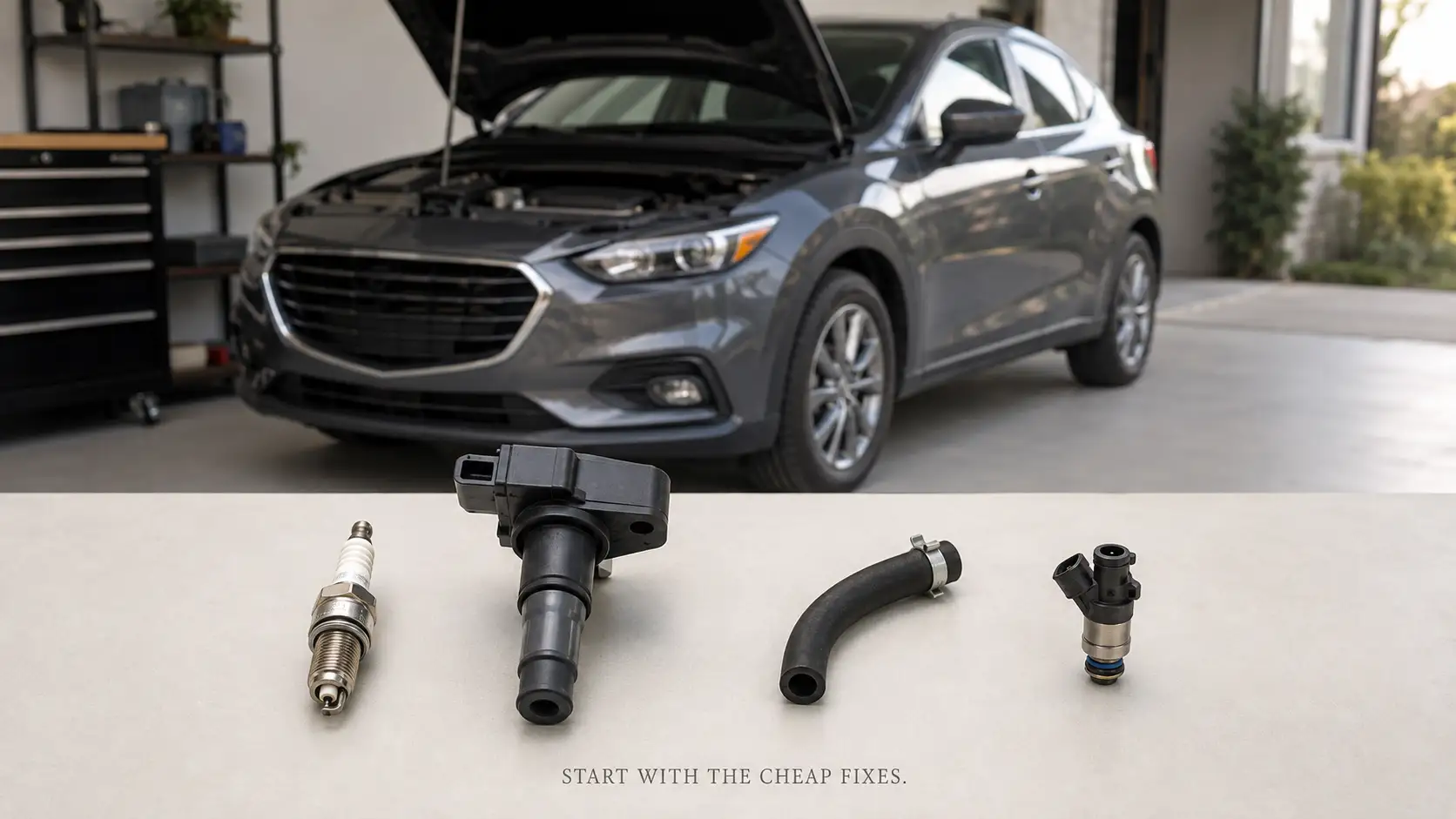
Good news. The top causes are cheap and easy to fix. We always start with the low-cost parts first. So you rarely pay for big repairs right away. Below are the usual suspects, listed cheapest first.
Worn Spark Plugs
Old p0300 spark plugs are among the most common causes. A worn plug cannot make a strong spark. So the fuel never fully burns. Swapping plugs is cheap, and it fixes many cases fast.
Failing Ignition Coils
A weak p0300 ignition coil sits next on the list. The ignition system feeds high voltage to each plug. When a coil fades, the spark drops out at random. That matches the random misfire pattern well, and coils are simple to swap.
Vacuum Leak
A p0300 vacuum leak lets extra air sneak into the engine. That air upsets the fuel mix in several cylinders at once. So the idle turns rough and lean. Cracked hoses and old gaskets are the most common leak spots.
Fuel Delivery Issues
A clogged p0300 fuel injector or a weak pump can starve the engine. When fuel runs short, misfires spread across cylinders. Also, a dirty filter can choke the flow. So the fuel side always deserves a close look.
Low Compression
Low compression is the priciest cause on this list. Worn rings or bad valves let pressure escape. Without enough squeeze, the fuel mix will not fire. Still, this one is rare, so save it for last.
How to Diagnose P0300 Yourself
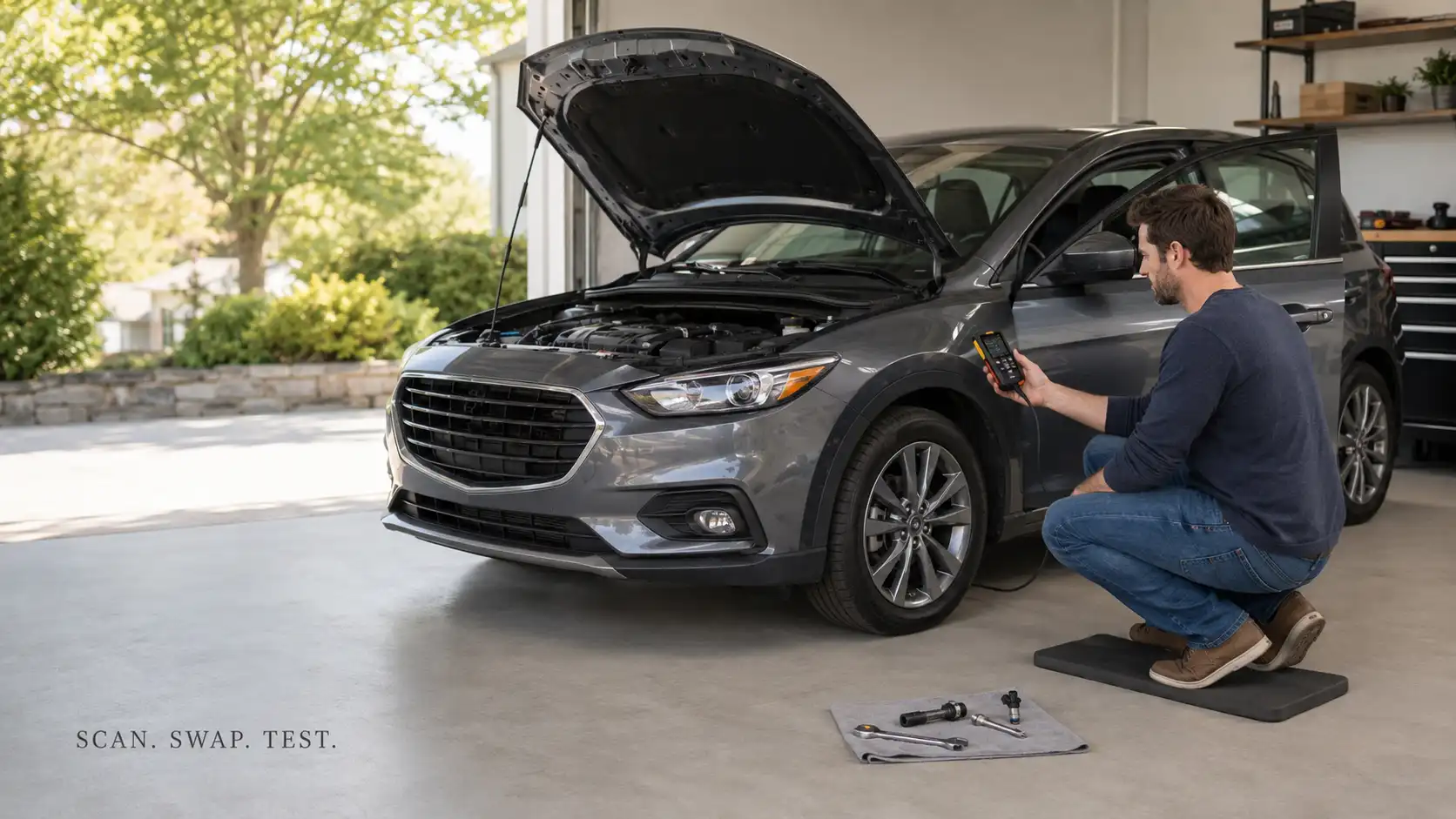
Good engine misfire diagnosis follows a clear order. We go cheapest and easiest first. So you spend less money and learn more. Grab a scanner, then start right here.
Scan for Companion Codes
First, plug an OBD-II diagnostic scanner into the port under the dash. Read every code, not only the P0300. A cylinder code like P0301 points you to one spot. So companion codes save you real time.
Swap-Test Coils and Plugs
Next, move one coil to a different cylinder. Clear the code, then drive a bit. If the misfire follows that coil, you found the fault. Likewise, this swap trick works great with plugs too.
Check Fuel Trims and Compression
After that, watch the fuel trims on a live scanner. High numbers hint at a vacuum leak. Then, if the parts test fine, run a compression check. That final step rules out deeper engine wear.
How Much Does It Cost to Fix P0300?
The p0300 repair cost depends on the true cause. Cheap parts fix most cars. But deep engine work costs a lot more. So here is a quick 2026 price guide.
| Repair | Parts + Labor (2026) | How Common |
|---|---|---|
| Spark plug set | $60 to $250 | Very common |
| Ignition coil(s) | $150 to $400 | Common |
| Vacuum leak or hose | $100 to $350 | Common |
| Fuel injector | $250 to $600 | Less common |
| Compression or engine work | $1,000 and up | Rare |
Source: 2026 US shop rate averages and retail parts pricing. Costs vary by vehicle, region, and shop type.
Plugs and Coils ($100 to $400)
Most drivers land right here. A fresh set of plugs and one coil often clears the code. So the total bill stays low. This is why we always test these cheap parts first.
Injector or Compression Repairs
Sometimes the bill climbs higher. A bad injector or low compression means more parts and more labor. Still, these cases are less common. So do not fear the worst before you actually test.
Vehicle-Specific Notes
Every brand has its own weak spots. So the same code can point in different ways. Below are two common examples.
P0300 on Honda
A p0300 honda case often traces back to plugs and coils. High miles wear both parts down. Also, oil in the spark plug wells can kill a coil fast. So check those wells during any service.
For full Honda engine and ownership context, our 2017 Honda Civic full review covers the known service intervals and high-mileage maintenance patterns that keep the ignition system healthy on one of Honda’s most popular engines. And our 2025 Honda Civic Hybrid review covers the newer generation for owners of more recent Civics tracking down the same coil and plug issues.
P0300 on Ford
A p0300 ford case often points to coil-on-plug packs. Worn packs misfire under hard load. Meanwhile, a small vacuum leak can trigger it too. So scan live data first, then buy parts.
For Ford-specific engine context, our 2024 Ford Ranger XLT review covers the EcoBoost powertrain, where coil-on-plug misfires under load are a known pattern to check, along with general service recommendations.
Can You Drive With a P0300 Code?
Short answer: maybe, but stay very careful. A steady light with light shaking is low risk for a short trip. But a hard, heavy misfire is a whole different story. So judge it by the dash light.
Why a Flashing Light Means Stop
A flashing light means active, heavy misfires right now. Raw fuel then floods the catalytic converter. That heat can melt it fast, and the repair is very costly. So pull over, park safe, and get help.
How to Prevent P0300 From Coming Back
Prevention is cheap and simple. First, change your plugs on schedule. Second, use good fuel, and clean the injectors now and then. Also, fix small vacuum leaks early.
For a lasting p0300 code fix, keep up with basic tune-ups. So regular care beats big repair bills every single time. In short, a little upkeep saves you a lot of stress.
Conclusion
A P0300 code sounds scary, but it rarely is that bad. Most of the time, cheap plugs or one coil solve the whole thing. So start small, test in order, and save your cash.
Ready to fix it? Grab a scanner, follow our cheapest-first steps, and get your engine smooth again today. For more help, read our related DTC code guides, and check our full guide on the flashing check engine light.
Our DTC P1148 guide covers the Nissan-specific air-fuel ratio sensor fault that often shows up alongside misfire codes on high-mileage Nissan vehicles. And our P1148 Nissan code fix guide gives the hands-on repair procedure with exact sensor locations and live data readings for Nissan owners navigating both codes at the same time.
Frequently Asked Questions About the P0300 Code
What does code P0300 mean?
Can I drive with a P0300 code?
How much does it cost to fix P0300?
Will new spark plugs fix P0300?
Is P0300 serious?
What is the difference between P0300 and P0301?
Related guides: trouble code guides by make and Master DIY Car Care: How to Change Oil in Your Car.
⚠️ Professional Notice:
All repair cost figures in this article are based on 2026 US shop rate averages and retail parts pricing aggregated from published industry sources. Real costs vary by vehicle make, model year, engine type, geographic region, parts brand, and whether work is performed at a dealership, independent shop, or at home. Always obtain multiple quotes before authorizing any repair.
Diagnostic steps and specifications outlined in this guide are general procedures and may not apply to every vehicle make or model. If the P0300 code is accompanied by a flashing check engine light, stop driving immediately and have the vehicle towed or inspected by a certified technician. Continued driving with active heavy misfires risks catalytic converter damage. Consult your vehicle’s factory service manual for model-specific diagnostic procedures. NextCarReview.com does not receive compensation from any parts manufacturer, retailer, or repair chain in exchange for rankings or editorial coverage.
Data Sources and Verification
- OBD-II DTC definitions – Society of Automotive Engineers (SAE) J2012 standard P0300 multiple cylinder misfire documentation
- OEM diagnostic procedures – Honda, Ford, and multi-brand factory service manual diagnostic steps for P0300, multiple model years
- 2026 US parts pricing – aggregated pricing across major US parts retailers, August 2026
- Labor rate data – 2026 US independent shop and dealership labor rate benchmarks
- EPA: Vehicle emissions inspection and maintenance (I/M) programs

Morgan Reyes is the founder and editor-in-chief of NextCarReview, which Morgan launched in August 2024. A 2022 graduate of Columbia University, Morgan is based in New York and writes and edits the site’s reviews, comparisons and buying guides. Morgan does not road-test vehicles. Every article is built from published primary data: EPA FuelEconomy.gov ratings, NHTSA crash ratings, recalls and owner complaints, IIHS results, and manufacturer specifications and pricing, with each figure cited and checked before publication. Contact: admin@nextcarreview.com