In this article 8 sections
The best 4×4 SUV for most US buyers in 2026 is the Toyota 4Runner. It starts at $41,570 with a body-on-frame chassis, part-time 4WD, and 6,000 pounds of towing capacity when properly equipped. For off-road purists, the jeep Wrangler Rubicon at approximately $49,740 adds locking front and rear axles and a disconnecting sway bar. The Toyota Land Cruiser at $57,200 brings Toyota’s i-force Max hybrid powertrain, full-time 4WD, and locking center and rear differentials as standard.
This guide covers all four buyer decisions: the Toyota 4Runner 2026 US review, the toyota Land Cruiser hybrid review, the best 4×4 under $60,000, and the ford Bronco vs jeep Wrangler off-road comparison. Every data point comes from EPA FuelEconomy.gov, IIHS.org, NHTSA.gov, and OEM press materials verified March 2026.
Figures cross-checked against EPA, NHTSA, IIHS and manufacturer sources. See our sourcing policy.
The Toyota Land Cruiser is back in the US market with a hybrid powertrain and a starting price of $57,200. It delivers 23 mpg combined and ships with locking center and rear differentials as standard equipment. However, the Toyota 4Runner starts at $41,570 with a body-on-frame chassis and the same 6,000-pound towing capacity. That $15,630 price gap is the most important question in the 4×4 SUV class right now.
, most 4×4 buying guides skip the comparison that buyers actually search for: ford Bronco vs jeep Wrangler, in a direct data table. , none of the major guides currently publish IIHS safety ratings alongside off-road capability data. As a result, this guide does both. It covers the full buyer spectrum, from trail-capable options under $45,000 to the best hardware for serious off-road use.
📌 Best 4×4 SUVs 2026 – Quick Market Intelligence
Verified Facts at a Glance
| Model | Starting MSRP | Ground Clearance | Towing Capacity | 4WD system | IIHS status |
|---|---|---|---|---|---|
| Jeep Wrangler | ~$38,030 | 10.8 in (rubicon) | 3,500 lb | Part-time 4WD | Verify IIHS.org |
| Toyota 4Runner | $41,570 | 9.1 in (TRD off Road) | 6,000 lb | Part-time or full-time 4WD | No 2026 award |
| Ford Bronco | $40,495 | 11.6 in (sasquatch) | 3,500 lb | Part-time 4WD | Verify IIHS.org |
| Toyota Land Cruiser | $57,200 | 8.7 in | 6,000 lb | Full-time 4WD | No 2026 award |
| Lexus GX 550 | ~$67,000 | 8.6 in (9.8 Overtrail) | 9,096 lb | Full-time 4WD | Verify IIHS.org |
| Jeep Wagoneer | ~$62,000 | ~8.5 in | 10,000 lb | 4WD (Quadra-Trac) | Verify IIHS.org |
Sources: OEM press materials, EPA FuelEconomy.gov, IIHS.org, March 2026. Ground clearance figures from OEM specifications. Towing represents maximum when properly equipped. Confirm current pricing with your local dealer before purchase.
Toyota 4Runner 2026 – US Trails and Highways Review
The 2026 Toyota 4Runner starts at $41,570 with a body-on-frame chassis, part-time 4WD, and 6,000 pounds of towing capacity when properly equipped. Because it rides on a truck-based platform, it offers the structural rigidity and ground clearance that serious off-road driving demands. At the same time, the 4Runner’s updated cabin and technology feel noticeably more refined than earlier generations, making it easier to live with on daily commutes.
Toyota Safety Sense (TSS) comes standard across all 4Runner trim levels. TSS includes automatic emergency braking with pedestrian detection, lane departure warning, and adaptive cruise control. As a result, even the base SR5 buyer gets a comprehensive safety package without paying for a higher trim. That is not true of every body-on-frame 4×4 in this price range.
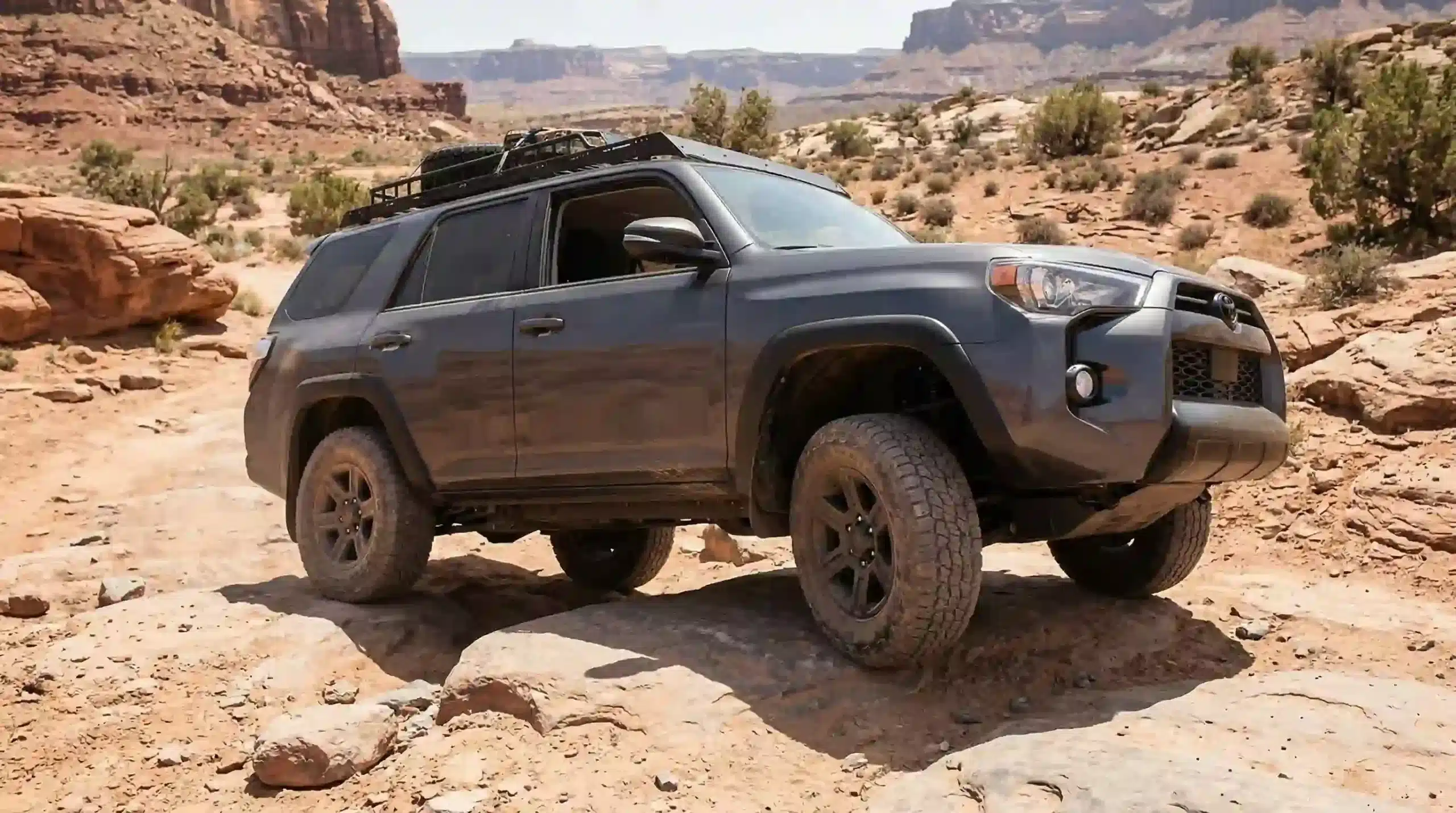
Toyota 4Runner 2026 Trim Levels – Which One to Buy
| Trim | Starting MSRP | Key Off-road Hardware | Ground Clearance |
|---|---|---|---|
| SR5 | $41,570 | RWD or part-time 4WD, TSS 3.0 standard | 8.1 in |
| TRD Sport | $48,050 | Sport-tuned suspension, 20-inch wheels | 8.8 in |
| TRD off Road | $49,990 | Multi-terrain select, crawl control, locking rear diff | 9.1 in |
| Trailhunter | $67,700 | Old Man Emu shocks, ARB roof rack, i-FORCE MAX hybrid standard | 10.1 in |
| Limited | See Toyota pricing | Available full-time 4WD (hybrid), premium interior | 8.8 in |
| 4Runner hybrid (i-FORCE MAX) | Varies by grade | 326 hp, 465 lb-ft, 23 mpg combined | Varies by grade |
Source: Toyota OEM press materials, EPA FuelEconomy.gov, March 2026. Confirm current trim pricing with your local Toyota dealer before purchase.
Toyota 4Runner Off-Road Hardware – What the TRD Off Road Delivers
The TRD off Road trim is the sweet spot for most buyers. It adds a locking rear differential, which prevents the rear wheels from spinning independently when one loses traction. In practical terms, this means the 4Runner pushes forward on loose rock or mud where most crossovers would stop. , the multi-terrain select system offers dedicated drive modes for mud, sand, loose rock, and rock. Each mode adjusts throttle response and traction control to match the surface.
Crawl control, which is also standard on the TRD off Road, functions like cruise control for off-road use. It holds a set low speed over obstacles without the driver modulating the throttle or brake. For buyers in Colorado, wyoming, montana, or alaska who regularly drive rough forest roads, this combination of hardware is meaningful.
, the trailhunter trim adds old Man Emu shocks, an ARB roof rack and an onboard air compressor, which makes it the most expedition-ready 4Runner available from the factory.
Toyota 4Runner Hybrid 2026 – Is the Extra Cost Worth It?
The 4Runner hybrid starts at $54,285 and delivers 23 mpg combined per EPA ratings. For comparison, the base 4Runner gas model is EPA-rated at 19 mpg city and 25 mpg highway. That works out to 21 mpg combined for the 4WD gas model. At 15,000 miles per year and $3.20 per gallon (EIA national average), the 23-mpg hybrid saves approximately $200 annually in fuel.
Over five years, that produces roughly $1,000 in fuel savings, far less than the price premium for the i-FORCE MAX. However, the hybrid also delivers stronger low-end torque, which improves trail performance in specific conditions. For high-mileage buyers who also off-road regularly, the math improves further at higher annual mileage.
Toyota Land Cruiser 2026 – New Hybrid Version Reviewed
The 2026 toyota Land Cruiser starts at $57,200 with Toyota’s i-force Max hybrid powertrain, standard full-time four-wheel drive, and locking center and rear differentials included on every trim. That is a genuinely impressive hardware package at this price point.
Note that the Land Cruiser is not on the IIHS 2026 Top Safety Pick list, so check its individual crash-test results at IIHS.org.
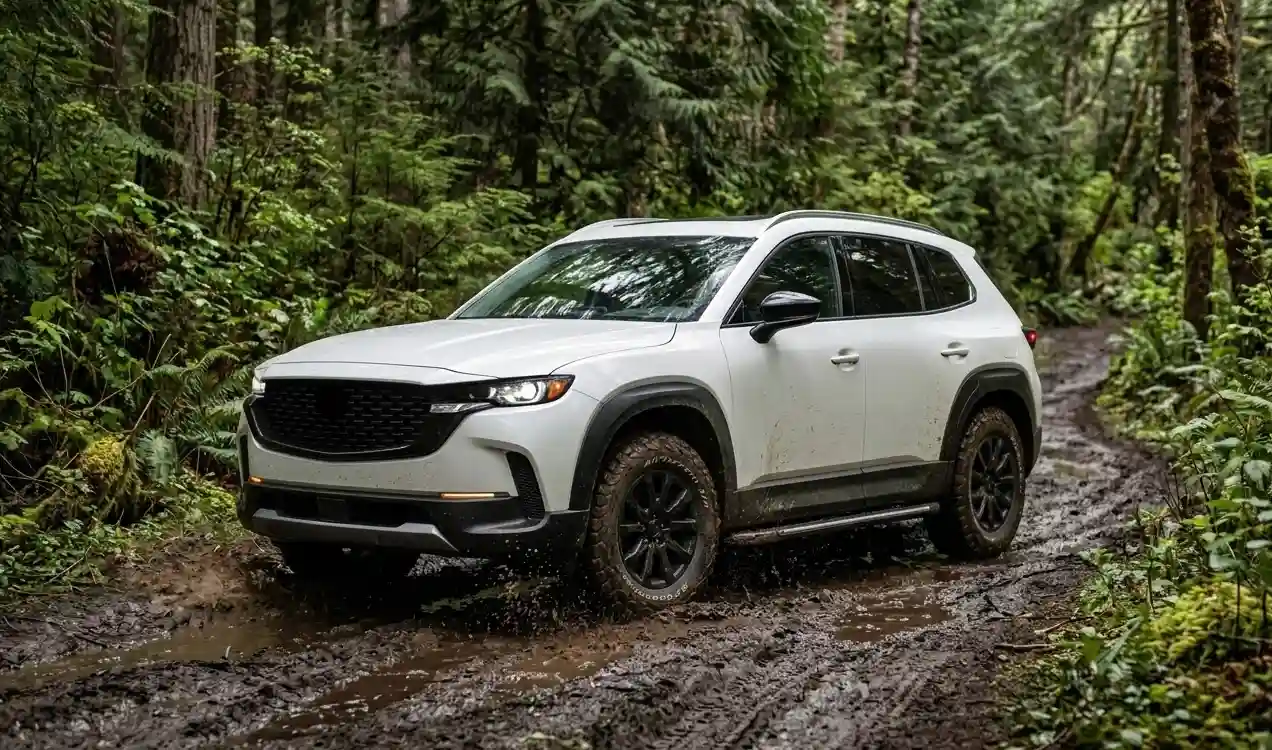
Land Cruiser i-Force Max Hybrid – What It Actually Means
Toyota’s i-force Max hybrid system pairs a turbocharged 2.4-liter four-cylinder engine with an integrated electric motor. Together, they deliver strong low-end torque, which is particularly valuable for off-road driving. In contrast to the old V8 land Cruiser, the i-force Max produces more usable power from lower RPMs.
This means the land Cruiser climbs steep grades and crawls over obstacles with less drama than before. , the electric motor contributes smoothly during low-speed maneuvers, where a traditional engine often surges unpredictably.
Because of this hybrid setup, the land Cruiser delivers 22 mpg city and 25 mpg highway per EPA ratings. The previous V8 generation managed approximately 13 mpg city and 17 mpg highway. That improvement is significant. At 15,000 miles per year and $3.20 per gallon, the i-force Max saves approximately $1,340 annually compared to the old V8’s 14 mpg combined. Source: EPA FuelEconomy.gov, EIA national average, March 2026.
Toyota Land Cruiser vs Toyota 4Runner – Which Toyota 4×4 to Buy
| Metric | Toyota Land Cruiser | Toyota 4Runner TRD off Road |
|---|---|---|
| Starting MSRP | $57,200 | $49,990 |
| Powertrain | I-force Max hybrid | 2.4L turbo gas |
| EPA combined MPG | 23 mpg | 21 mpg |
| Annual Fuel Cost (15K mi) | ~$2,087 | ~$2,286 |
| 4WD system | Full-time 4WD | Part-time 4WD |
| Locking Differentials | Center and rear (standard) | Rear only (TRD off Road) |
| Towing Capacity | 6,000 lb | 6,000 lb |
| Ground Clearance | 8.7 in | 9.1 in (TRD off Road) |
| IIHS status | No 2026 award | No 2026 award |
| Safety Suite | TSS standard all trims | TSS standard all trims |
Source: Toyota OEM press materials, EPA FuelEconomy.gov, IIHS.org, EIA $3.20/gal, March 2026.
The Land Cruiser wins on drivetrain sophistication, full-time 4WD, and its locking center and rear differentials. However, the 4Runner TRD off Road offers more ground clearance at 9.1 inches versus 8.7 inches for the land Cruiser. For buyers who prioritize maximum wheel articulation on technical trails, that extra 0.4 inches matters.
On the other hand, for buyers who want a hybrid powertrain, standard center and rear lockers, and Toyota’s full safety suite in one package, the land Cruiser is the stronger choice despite its roughly $7,200 price premium.
Best 4×4 Under $60,000 in 2026
Below $60,000, four genuinely capable 4×4 SUVs are available. Each offers real off-road hardware, not just all-wheel drive with a “off-road mode” badge. However, they differ significantly in ground clearance, towing capacity, 4WD system type, and daily drivability. Understanding those differences helps narrow the choice quickly.
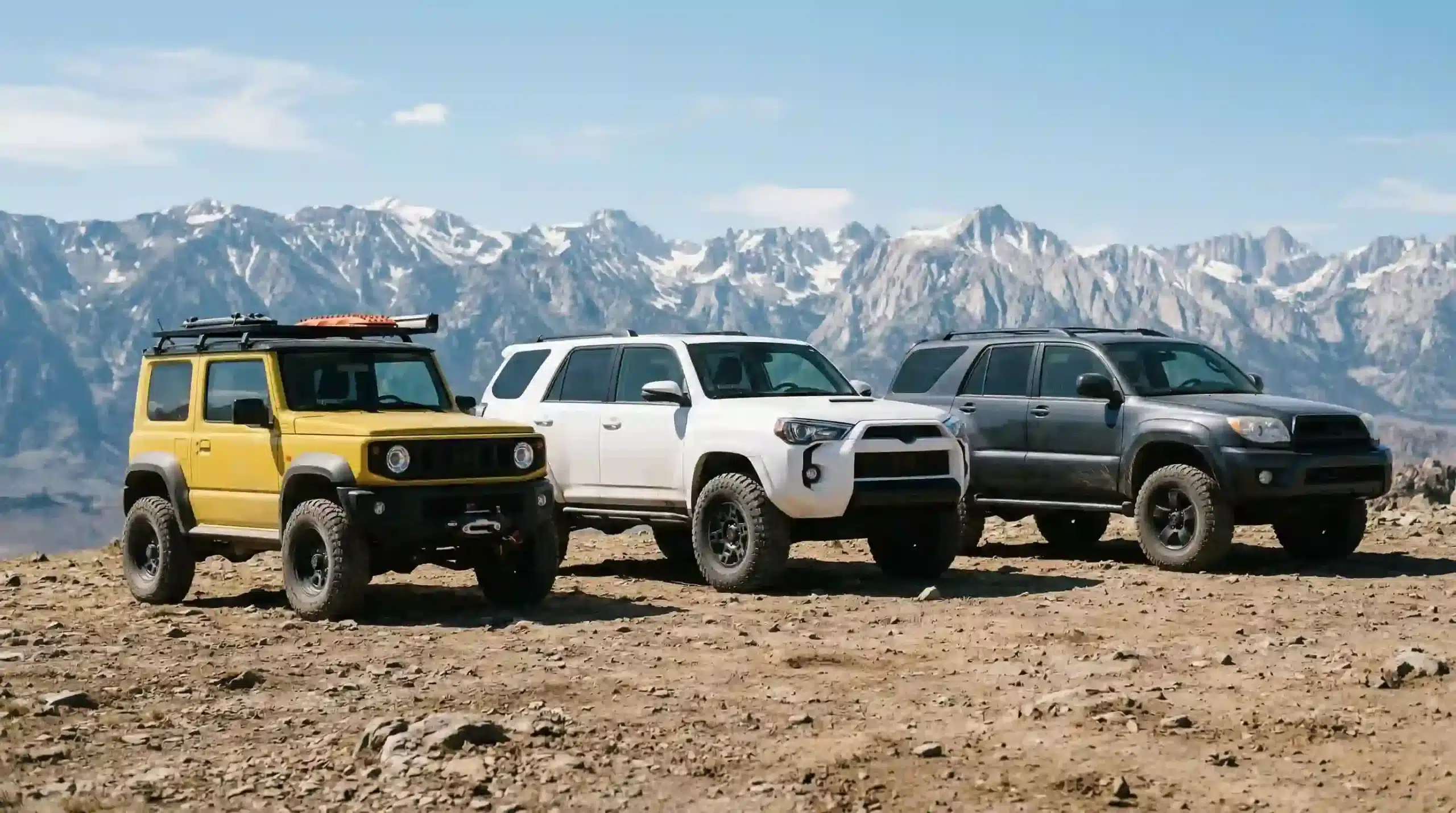
Ground Clearance and Towing – What Each Model Delivers
| Model | MSRP | Ground Clearance | Towing | 4WD system | EPA combined |
|---|---|---|---|---|---|
| Jeep Wrangler Rubicon | ~$49,740 | 10.8 in | 3,500 lb | Part-time 4WD + lockers | ~20 mpg |
| Ford Bronco Sasquatch | ~$48,955 | 11.6 in | 3,500 lb | Part-time 4WD + lockers | ~18 mpg |
| Toyota 4Runner TRD off Road | $49,990 | 9.1 in | 6,000 lb | Part-time 4WD + rear locker | 21 mpg |
| Toyota Land Cruiser | $57,200 | 8.7 in | 6,000 lb | Full-time 4WD + center/rear lockers | 23 mpg |
Source: OEM press materials, EPA FuelEconomy.gov, March 2026. Ground clearance figures from OEM specifications. Towing represents maximum when properly equipped.
Which 4WD System Do You Actually Need?
Part-time 4WD is engaged by the driver when conditions require it. On dry pavement, it remains in two-wheel drive, which preserves fuel economy and reduces drivetrain wear. This system suits buyers who go off-road on weekends but commute on pavement during the week. The Jeep Wrangler, ford Bronco, and Toyota 4Runner all use this approach.
Full-time 4WD, as used by the toyota Land Cruiser, distributes power to all four wheels continuously. As a result, it provides constant traction without requiring the driver to engage a system manually. This suits buyers who frequently encounter unpredictable surfaces, such as mountain roads, early-season snow, or loose gravel. However, full-time 4WD typically delivers slightly lower highway fuel economy than part-time systems. For buyers in Colorado, montana, wyoming, or alaska, that trade-off is often worthwhile.
Best 4×4 Under $60,000 – Ranked by Capability
For maximum off-road hardware per dollar, the jeep Wrangler Rubicon 4-door at approximately $49,740 is one of the most capable choices under $50,000. Its locking front and rear axles and disconnecting sway bar are standard rubicon equipment, not optional upgrades. However, the wrangler’s towing capacity of 3,500 pounds is the lowest in this group.
For buyers who need to tow a trailer or boat alongside trail capability, the Toyota 4Runner TRD off Road at $49,990 provides 6,000 pounds of towing and a locking rear differential. For buyers who want the most ground clearance, the ford Bronco Sasquatch at 11.6 inches leads this group entirely.
Ford Bronco vs Jeep Wrangler 2026 – Off-Road Comparison
This is the comparison that drives more searches than any other in the 4×4 class. Both the ford Bronco and jeep Wrangler are body-on-frame SUVs with dedicated off-road hardware, standard 4WD, and available locking differentials. However, they take distinctly different approaches to the same goal, and understanding those differences matters before choosing.
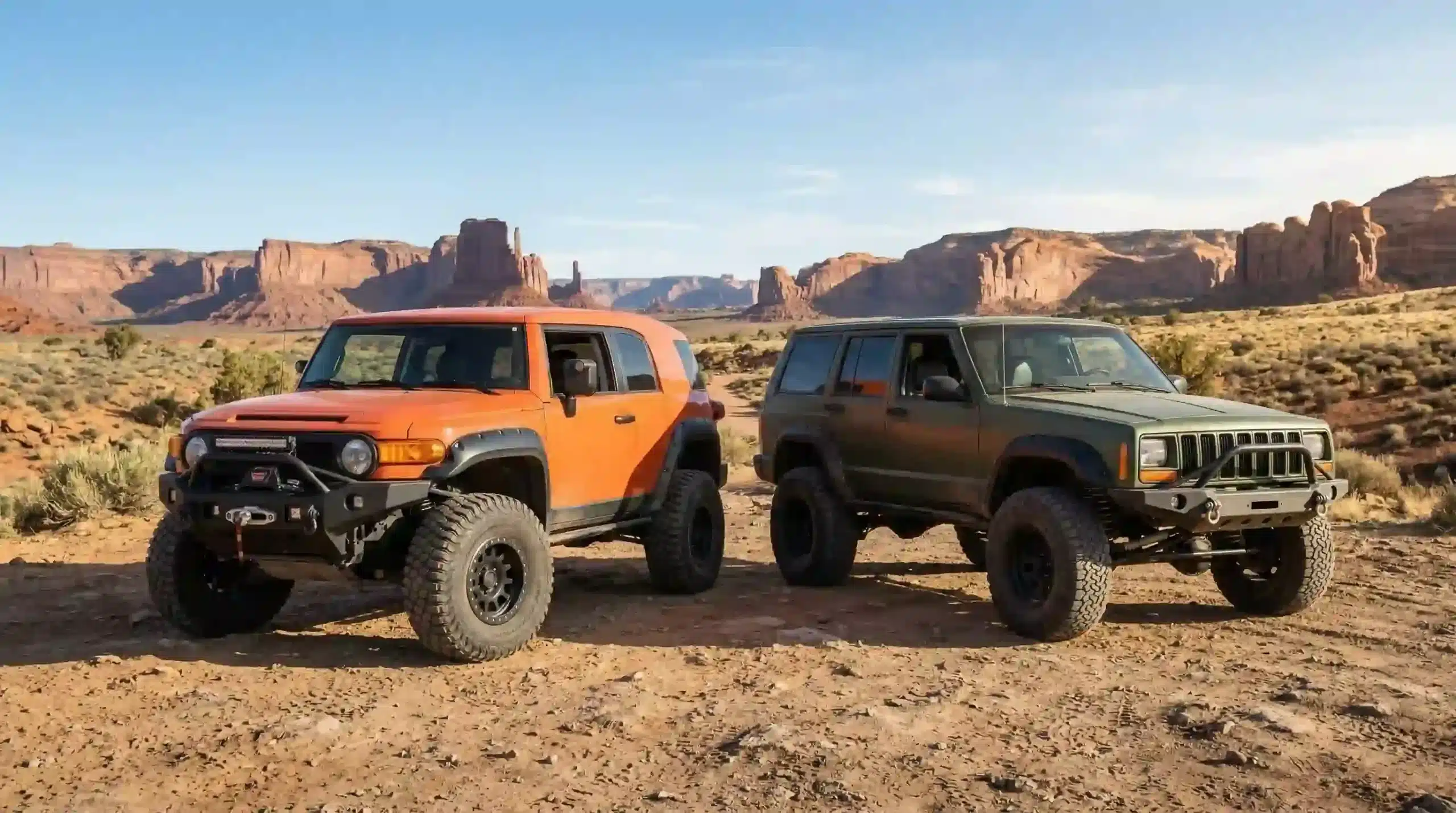
Off-Road Hardware Head to Head – Sasquatch vs Rubicon
| Metric | Ford Bronco Sasquatch | Jeep Wrangler Rubicon |
|---|---|---|
| Starting MSRP (this trim) | ~$48,955 | ~$49,740 |
| Ground Clearance | 11.6 in | 10.8 in |
| Locking Differentials | Front and rear | Front and rear |
| Disconnecting Anti-roll Bar | Yes (standard sasquatch) | Yes (standard rubicon) |
| Skid Plates | Yes | Yes |
| All-terrain Tires | 35-inch (sasquatch) | 33-inch (standard rubicon) |
| Towing Capacity | 3,500 lb | 3,500 lb |
| EPA combined MPG | ~18 mpg | ~20 mpg |
| Manual Option | Yes (7-speed with crawler) | Yes (6-speed) |
| Removable Doors | Yes | Yes |
Source: Ford and jeep OEM press materials, EPA FuelEconomy.gov, March 2026. Sasquatch ground clearance per Ford press specifications.
Daily Drivability – Which One Is Easier to Live With?
The Ford Bronco is generally regarded as more refined on pavement than the wrangler. Its body stiffness and noise suppression are meaningfully better, which reduces road noise and improves straight-line stability at highway speeds. For buyers who drive 30 or more miles each way to work, that refinement advantage matters on every commute.
In contrast, the jeep Wrangler prioritizes off-road purity over on-road polish. Its removable doors, fold-down windshield, and available soft top create an open-air experience that the bronco cannot match. However, these features also mean the wrangler is noticeably louder at highway speeds.
For buyers in states like utah, Arizona, nevada, and new Mexico where open-air trail driving is the primary use case, that trade-off is often welcome. For buyers who use their 4×4 primarily as a daily driver with occasional trail use, the bronco’s better on-road manners make it the more practical daily choice.
Price and Value – Bronco or Wrangler for the Money?
At comparable off-road hardware levels, a wrangler Rubicon 4-door and a two-door bronco with the Sasquatch package cost about the same. For that money difference, the bronco provides 0.8 inches more ground clearance and 35-inch tires versus the rubicon’s standard 33-inch fitment. The Bronco therefore clears taller obstacles by default, without aftermarket upgrades.
However, the wrangler’s larger global service network and aftermarket parts availability give it a long-term ownership advantage. In remote areas of Colorado, montana, or alaska, finding a jeep dealer is generally easier than finding a Ford dealer with full bronco off-road expertise.
4×4 SUV Safety Ratings 2026 – IIHS and NHTSA
Safety ratings are important for 4×4 SUV buyers, even though performance vehicles are often assumed to prioritize capability over safety scores. In practice, IIHS top Safety Pick+ status directly affects your insurance premium. Vehicles with this rating generally attract lower comprehensive and collision premiums from most major US insurers. , automatic emergency braking on a 4×4 SUV is useful on both trails and public roads.
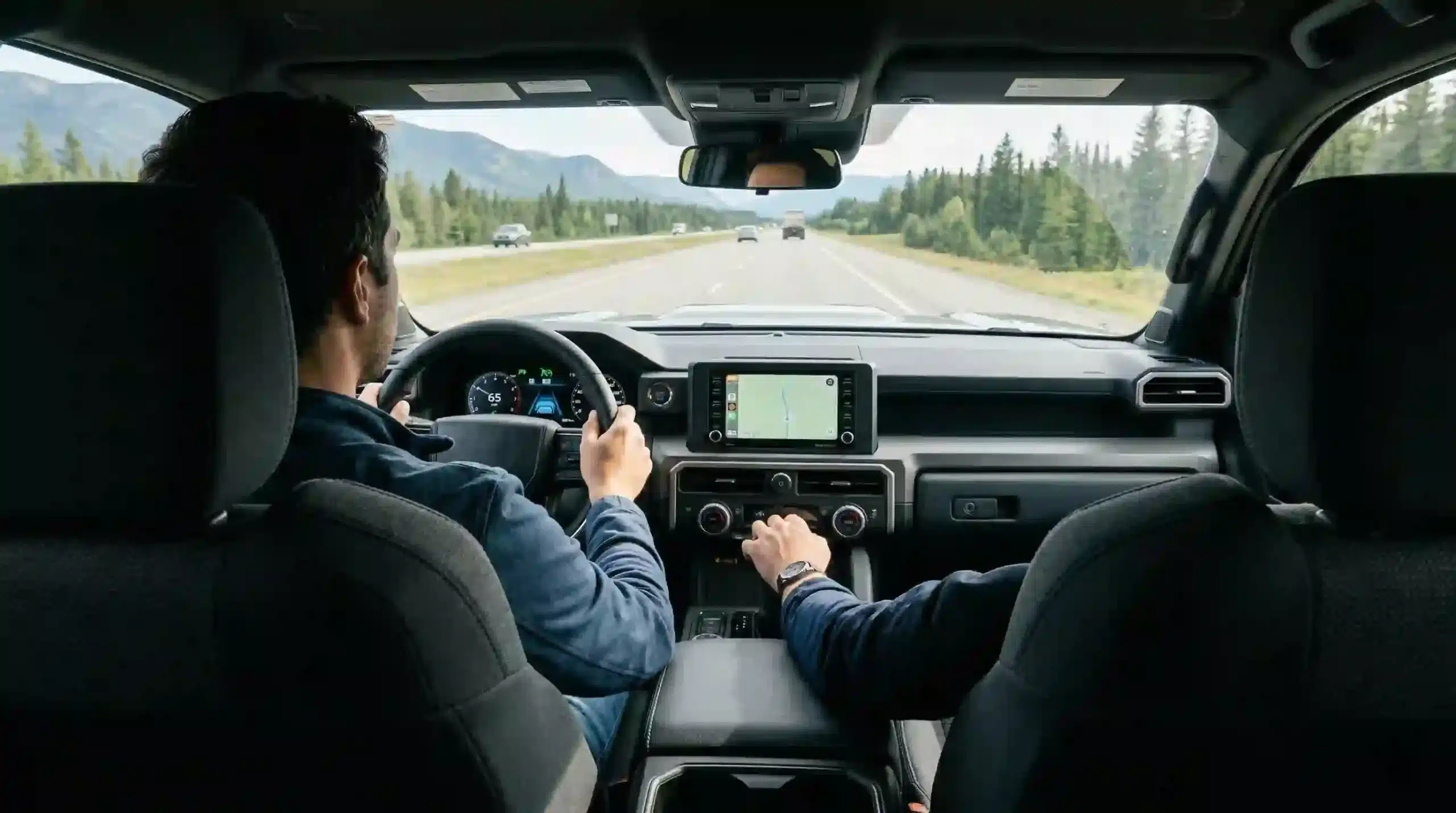
IIHS Safety Status and AEB by 4×4 Model
| Model | IIHS status | AEB standard All Trims | Safety Suite |
|---|---|---|---|
| Toyota 4Runner | No 2026 award | Yes | Toyota Safety Sense (TSS) |
| Toyota Land Cruiser | No 2026 award | Yes | Toyota Safety Sense (TSS) |
| Ford Bronco | Verify IIHS.org | Verify by trim | Ford Co-Pilot360 |
| Jeep Wrangler | Verify IIHS.org | Verify by trim | Jeep Active Safety suite |
| Lexus GX 550 | Verify IIHS.org | Yes | Lexus Safety System+ |
| Jeep Wagoneer | Verify IIHS.org | Yes | Jeep Active Safety suite |
Source: IIHS.org, OEM press materials, March 2026. Always verify current ratings at IIHS.org for your specific trim before purchase, as ratings can change between model year updates.
How 4×4 SUV Safety Ratings Affect Insurance Premiums
IIHS top Safety Pick+ status influences insurance rates from most major US insurers. None of the 4×4 SUVs in this guide made the IIHS 2026 Top Safety Pick list, so compare individual crash-test results at IIHS.org. The Toyota 4Runner and land Cruiser do include TSS standard across all trims.
In contrast, the jeep Wrangler and ford Bronco have historically received mixed IIHS outcomes due to their body-on-frame architecture and open-air design. Always verify their current ratings at IIHS.org before purchase, as results vary by model year.
, body-on-frame 4×4 SUVs are typically classified as light trucks by US insurers. As a result, they generally carry higher base insurance rates than equivalent unibody crossovers at the same MSRP. This insurance classification difference is worth factoring into your five-year total cost comparison.
IIHS ratings change when IIHS revises its crash test protocols. Always confirm the rating for your specific trim at IIHS.org and NHTSA ratings at NHTSA.gov/ratings before finalizing your purchase. AEB standard equipment should also be verified at the trim level you intend to buy, not just the model in general.
For buyers also considering hybrid or plug-in SUVs with off-road capability, our best electric and hybrid cars 2026 guide covers the full powertrain comparison with five-year cost projections. For buyers interested in efficient hybrid sedans as daily drivers alongside a 4×4 SUV, our best hybrid sedans 2026 guide ranks models by fuel economy and technology. For buyers comparing 4×4 SUVs against more mainstream SUVs at a similar price, our best SUVs 2026 guide covers the Toyota RAV4 hybrid and honda Passport in the same data framework. For buyers seeking practical wagon alternatives with similar cargo flexibility, our best wagons 2026 guide covers the subaru Outback and toyota Corolla Cross Hybrid. For buyers interested in compact hatchback alternatives, our best hatchback cars 2026 guide ranks models by cargo space and fuel economy. For buyers considering smaller city-friendly vehicles, our best small city cars 2026 guide provides comprehensive comparisons. For a full overview of every category, see the best new cars to watch in 2026 pillar guide.
Best 4×4 SUV for most US buyers: Toyota 4Runner from $41,570. Body-on-frame, 6,000 lb towing, TSS 3.0 standard all trims, proven long-term durability.
Best 4×4 for maximum off-road capability under $50,000: jeep Wrangler Rubicon from ~$49,740. Locking front and rear axles, disconnecting sway bar, 10.8 inches of ground clearance, most off-road hardware per dollar.
Best 4×4 for ground clearance under $55,000: ford Bronco Sasquatch from ~$48,955. 11.6 inches ground clearance, locking diffs, 35-inch tires standard, most refined on-pavement driving in this group.
Best hybrid 4×4: toyota Land Cruiser from $57,200. I-force Max hybrid, 23 mpg combined, full-time 4WD, locking center and rear differentials standard.
Best luxury 4×4: Lexus GX 550 from ~$67,000. Body-on-frame, 9,096 lb towing, premium cabin, body-on-frame durability with Lexus refinement.
Frequently Asked Questions – Best 4×4 SUVs 2026
What is the best 4×4 SUV in 2026?
Is the ford Bronco or jeep Wrangler better for off-roading?
What is the best 4×4 SUV under $60,000 in 2026?
Is the toyota Land Cruiser hybrid worth it in 2026?
Is the Toyota 4Runner or land Cruiser better value in 2026?
What does low-range gearing do in a 4×4 SUV?
What is the difference between a locking differential and an open differential?
Which 4×4 SUV has the best IIHS safety rating in 2026?
Which 4×4 SUV has the best resale value in 2026?
What is the best 4×4 SUV for rock crawling in 2026?
Related guides: browse all SUV guides and Mazda CX-5 Carbon Edition: Ultimate 2023-2025 Comparison.
⚠️ professional Notice:
all MSRP figures are based on manufacturer press materials as of March 2026 and are subject to change. Confirm current pricing and availability with your local dealer before making any purchase decision. EPA fuel economy figures are produced under standardized test conditions. Real-world results vary based on driving habits, terrain, load, and conditions.
Towing capacity figures represent maximum when properly equipped per OEM specifications. Ground clearance figures are from OEM press materials and may vary by trim and tire configuration. Fuel cost calculations use the U.S. Energy Information Administration national average gas price of $3.20/gallon and 15,000 annual miles as stated baseline assumptions. Safety ratings were current as of March 2026.
Always verify at IIHS.org and NHTSA.gov before purchase. AEB standard equipment should be confirmed at the trim level you intend to buy. NextCarReview.com does not receive compensation from any manufacturer in exchange for rankings or editorial coverage.
Data Sources and Verification
- FuelEconomy.gov – EPA fuel economy ratings for all 4×4 SUV models evaluated in this article
- Toyota: 2026 4Runner pricing and specifications
- KBB: 2026 Land Cruiser pricing
- IIHS: 2026 Top Safety Pick winners
- Edmunds: 2026 Ford Bronco pricing
- Lexus: 2026 GX
- IIHS.org – top Safety Pick and top Safety Pick+ ratings, AEB standard equipment by trim
- NHTSA.gov/ratings – 5-star Safety Ratings, new Car Assessment Program data
- U.S. Energy Information Administration (EIA) – national average gasoline price baseline ($3.20/gal) used in all fuel cost calculations
- OEM manufacturer Press Materials (March 2026) – Toyota, Ford, jeep, Lexus: MSRP, powertrain specs, ground clearance, towing capacity, standard equipment by trim
- RepairPal.com – annual repair cost estimates and reliability ratings referenced for long-term ownership context
- ConsumerReports.org – reliability scores and owner satisfaction data referenced for long-term ownership context

Morgan Reyes is the founder and editor-in-chief of NextCarReview, which Morgan launched in August 2024. A 2022 graduate of Columbia University, Morgan is based in New York and writes and edits the site’s reviews, comparisons and buying guides. Morgan does not road-test vehicles. Every article is built from published primary data: EPA FuelEconomy.gov ratings, NHTSA crash ratings, recalls and owner complaints, IIHS results, and manufacturer specifications and pricing, with each figure cited and checked before publication. Contact: admin@nextcarreview.com