In this article 9 sections
The best wagon for most US buyers in 2026 is the Subaru Outback. It starts at $34,995 with standard symmetrical all-wheel drive, Subaru EyeSight on every trim, and 31 mpg on the highway per EPA ratings. For buyers who want hybrid efficiency, the Toyota Corolla Cross Hybrid at $29,795 delivers 42 mpg combined. It is also the most fuel-efficient model in this guide. For premium buyers, the Volvo V60 Cross Country at $53,595 adds Scandinavian refinement and a quiet highway cabin.
Figures cross-checked against EPA, NHTSA, IIHS and manufacturer sources. See our sourcing policy.
The Subaru Outback starts at $34,995. It includes standard all-wheel drive, Subaru EyeSight driver assistance on every trim, and strong highway fuel economy. However, most wagon buying guides skip it entirely. Instead, they list five cars that start above $70,000. For most US families, that is not a useful comparison.
This guide covers the full range of wagons available in 2026. Specifically, it runs from the Toyota Corolla Cross Hybrid at $29,795 up to the Mercedes-Benz E-Class All-Terrain Wagon at $79,650. , it includes the cargo space data, IIHS safety ratings, and annual fuel cost comparisons in one place. As a result, you will have everything needed to make a real decision before visiting a dealer.
📌 Best Wagons 2026 – Quick Market Intelligence
Verified Facts at a Glance
| Model | Starting MSRP | EPA MPG combined | Cargo (seats up) | AWD | IIHS status |
|---|---|---|---|---|---|
| Toyota Corolla Cross Hybrid | $29,795 | 42 mpg | ~21.5 cu ft | Yes (standard) | Top Safety Pick (2025) |
| Subaru Outback | $34,995 | 27 mpg | 34.6 cu ft | Yes (standard) | Top Safety Pick+ |
| Subaru Outback XT | $44,365 | 24 mpg | 34.6 cu ft | Yes (standard) | Top Safety Pick+ |
| Volvo V60 Cross Country | $53,595 | 26 mpg | ~25.7 cu ft | Yes (standard) | Not on 2026 list |
| Audi A6 allroad | $74,395 | 24 mpg | ~19.4 cu ft | Yes (quattro) | Not on 2026 list |
| Mercedes E-Class Wagon | $79,650 | 25 mpg | ~33 cu ft | Yes (4MATIC) | Not on 2026 list |
Sources: EPA FuelEconomy.gov, IIHS.org, OEM press materials, March 2026. Cargo figures are approximate from OEM specifications. Confirm current pricing with your local dealer before purchase.
Subaru Outback 2026 – Full US Review
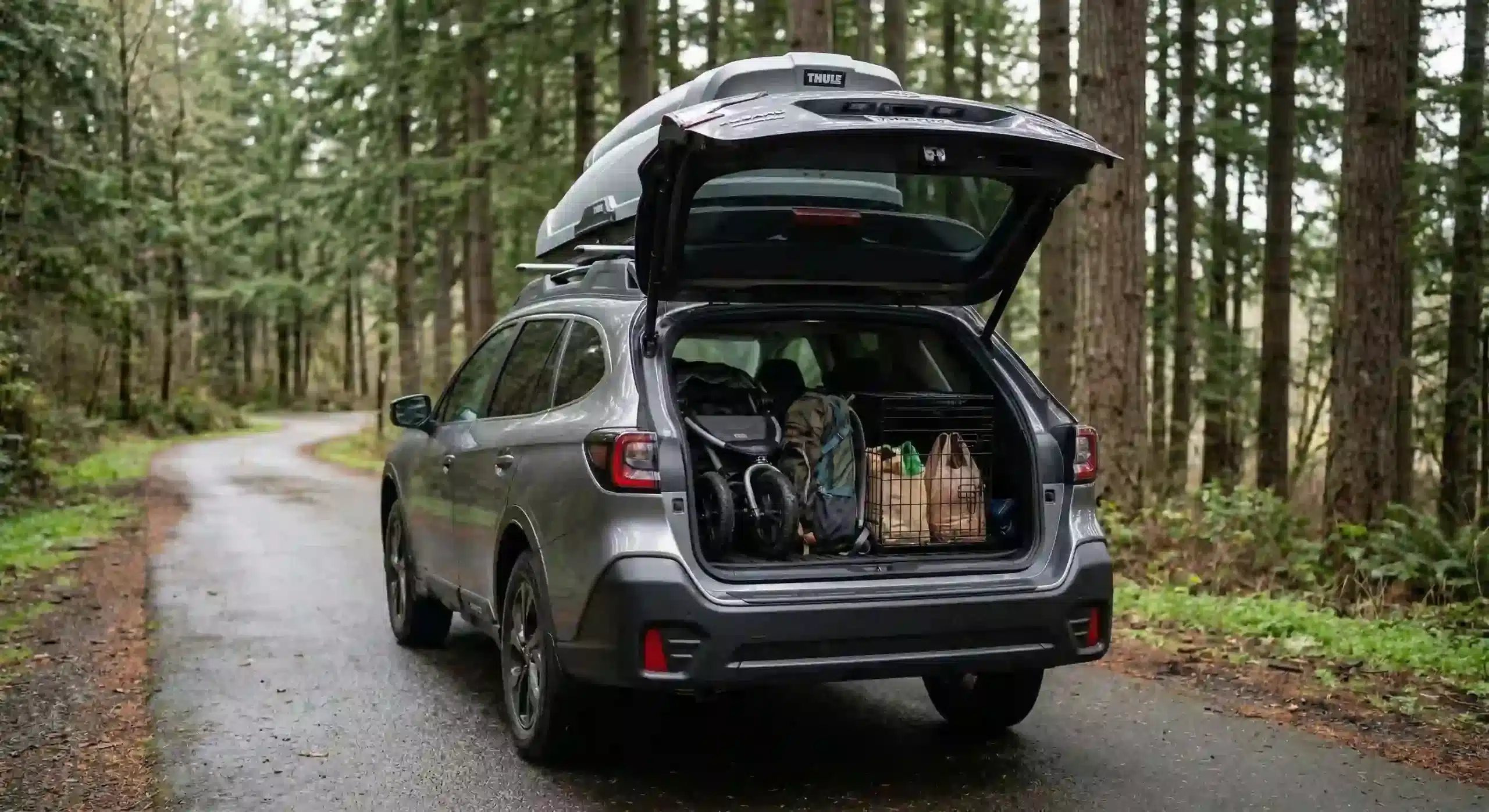
The 2026 Subaru Outback is one of the most practical and affordable wagon-style vehicles in the US market; Subaru now calls it an SUV. It starts at $34,995 and includes Subaru’s symmetrical all-wheel drive as standard on every trim level. Because of this, every Outback buyer gets genuine AWD capability without paying an optional upgrade fee. That is a meaningful advantage over most rivals in its price range.
, the Outback offers 34.6 cubic feet of cargo space behind the rear seats. With the rear seats folded, it grows substantially; check Subaru specifications for the exact figure. For comparison, most compact SUVs in the same price range offer between 25 and 30 cubic feet behind the rear seats. As a result, the Outback delivers more usable load space than many of the SUVs it competes against.
Subaru Outback 2026 Trim Levels and MSRP
| Trim | Starting MSRP | Engine | EPA combined | Key Feature |
|---|---|---|---|---|
| Premium | $34,995 | 2.5L BOXER 180 hp | 27 mpg | EyeSight standard, 8.7-inch ground clearance |
| Limited | $41,715 | 2.5L BOXER 180 hp | 27 mpg | Upgraded interior and tech |
| Touring | $45,395 | 2.5L BOXER 180 hp | 27 mpg | Top non-turbo trim |
| Limited XT | $44,365 | 2.4L turbo BOXER 260 hp | 24 mpg | Turbo power |
| Wilderness | $44,995 | 2.4L turbo BOXER 260 hp | 23 mpg | 9.5-inch ground clearance, off-road focus |
| Touring XT | $47,995 | 2.4L turbo BOXER 260 hp | 24 mpg | Top trim, NAPPA leather, harman Kardon audio |
Source: Subaru US Media Center (MSRP excludes $1,450 destination), EPA FuelEconomy.gov. Confirm current pricing with your local Subaru dealer before purchase.
Subaru Outback Engine Options – Base vs Turbo XT
The base Outback uses Subaru’s 2.5-liter naturally aspirated BOXER four-cylinder engine producing 180 horsepower. This engine is calm, predictable, and well-suited for daily use. , its flat-opposed cylinder layout keeps the engine’s center of gravity low, which contributes to the Outback’s planted feel through corners.
In contrast, the XT trims use a 2.4-liter turbocharged BOXER four-cylinder producing 260 horsepower. For buyers who regularly tow or drive with a full load of passengers and luggage, the XT’s extra power is a genuine benefit. However, it comes at a fuel cost. The XT delivers 24 mpg combined per EPA, compared to 27 mpg for the base engine. Over 15,000 miles per year at $3.20 per gallon (EIA national average), that difference adds approximately $222 in annual fuel costs.
Subaru EyeSight – What Every Trim Includes
Subaru EyeSight is Subaru’s driver assistance suite. It includes automatic emergency braking with pedestrian detection, lane departure warning, lane keep assist, and adaptive cruise control. Importantly, EyeSight comes standard across every Outback trim, including the base model. For buyers who want comprehensive safety technology without paying for a higher trim, this is a significant advantage.
Because EyeSight is standard across the entire lineup, IIHS safety ratings apply equally to all trims. The 2026 Outback earned an IIHS Top Safety Pick+ award. That said, always verify current ratings at IIHS.org for the specific model year before purchase, as ratings can change between updates. Source: IIHS.org, Subaru OEM press materials, March 2026.
Best Wagon for Long Road Trips on US Highways 2026
A good road trip wagon needs three things. First, it needs enough cargo space to carry real luggage without folding the rear seats. Second, it needs strong highway fuel economy to keep fuel stops infrequent. Third, it needs a composed and quiet ride that does not exhaust the driver over a 400-mile day. No compact SUV in the $35,000 to $55,000 range matches all three as well as the wagons in this section.
Cargo Space Comparison – Which Wagon Carries the Most
| Model | Cargo (seats Up) | Cargo (seats Down) | Load Floor |
|---|---|---|---|
| Subaru Outback | 34.6 cu ft | See Subaru specs | Low wagon-style |
| Mercedes E-Class Wagon | ~33 cu ft | ~65 cu ft | Low sedan-derived |
| Volvo V60 Cross Country | ~25.7 cu ft | ~43.5 cu ft | Slightly raised |
| Toyota Corolla Cross Hybrid | ~21.5 cu ft | ~42 cu ft | Low crossover |
| Audi A6 allroad | ~19.4 cu ft | ~48.9 cu ft | Standard wagon |
Source: OEM press materials, March 2026. Figures are approximate. Verify with your dealer before purchase, as configurations vary by trim.
Highway Fuel Economy – Annual Fuel Cost at 15,000 Miles
For long road trips, highway fuel economy matters more than city ratings. Therefore, the table below uses EPA highway figures to calculate annual fuel cost at 15,000 miles per year and the EIA national average of $3.20 per gallon.
| Model | EPA highway MPG | Annual Fuel Cost (15K mi) | Starting MSRP |
|---|---|---|---|
| Toyota Corolla Cross Hybrid | 39 mpg | ~$1,231 | $29,795 |
| Subaru Outback (base) | 31 mpg | ~$1,548 | $34,995 |
| Volvo V60 Cross Country | 31 mpg | ~$1,548 | $53,595 |
| Mercedes E-Class Wagon | 31 mpg | ~$1,548 | $79,650 |
| Audi A6 allroad | 30 mpg | ~$1,600 | $74,395 |
| Subaru Outback XT | 29 mpg | ~$1,655 | $44,365 |
Source: EPA FuelEconomy.gov, EIA $3.20/gal national average, OEM press materials, March 2026. Actual fuel costs vary based on local gas prices and real-world driving conditions.
Ride Comfort and Driver Fatigue on Long Hauls
Ride comfort on long trips is where wagons genuinely separate themselves from compact SUVs. Because wagons sit lower to the ground, their center of gravity is also lower. This produces a planted and confident feel at highway speeds, with less body roll on sweeping curves. For a driver covering 400 miles, that stability reduces fatigue meaningfully.
Among the models in this guide, the Volvo V60 Cross Country is often praised for its comfort on long highway runs. Its suspension absorbs road imperfections quietly, and its Scandinavian-tuned seats support excellent lumbar posture. Similarly, the Subaru Outback delivers a calm and composed ride over varied surfaces, which is why it remains popular for US buyers who regularly drive long distances in mixed weather conditions. For buyers with a premium budget, the Audi A6 allroad adds hushed road manners and a refined interior that makes 500-mile days feel manageable.
Toyota Corolla Cross Hybrid 2026 – Space and Mileage as a Wagon Alternative
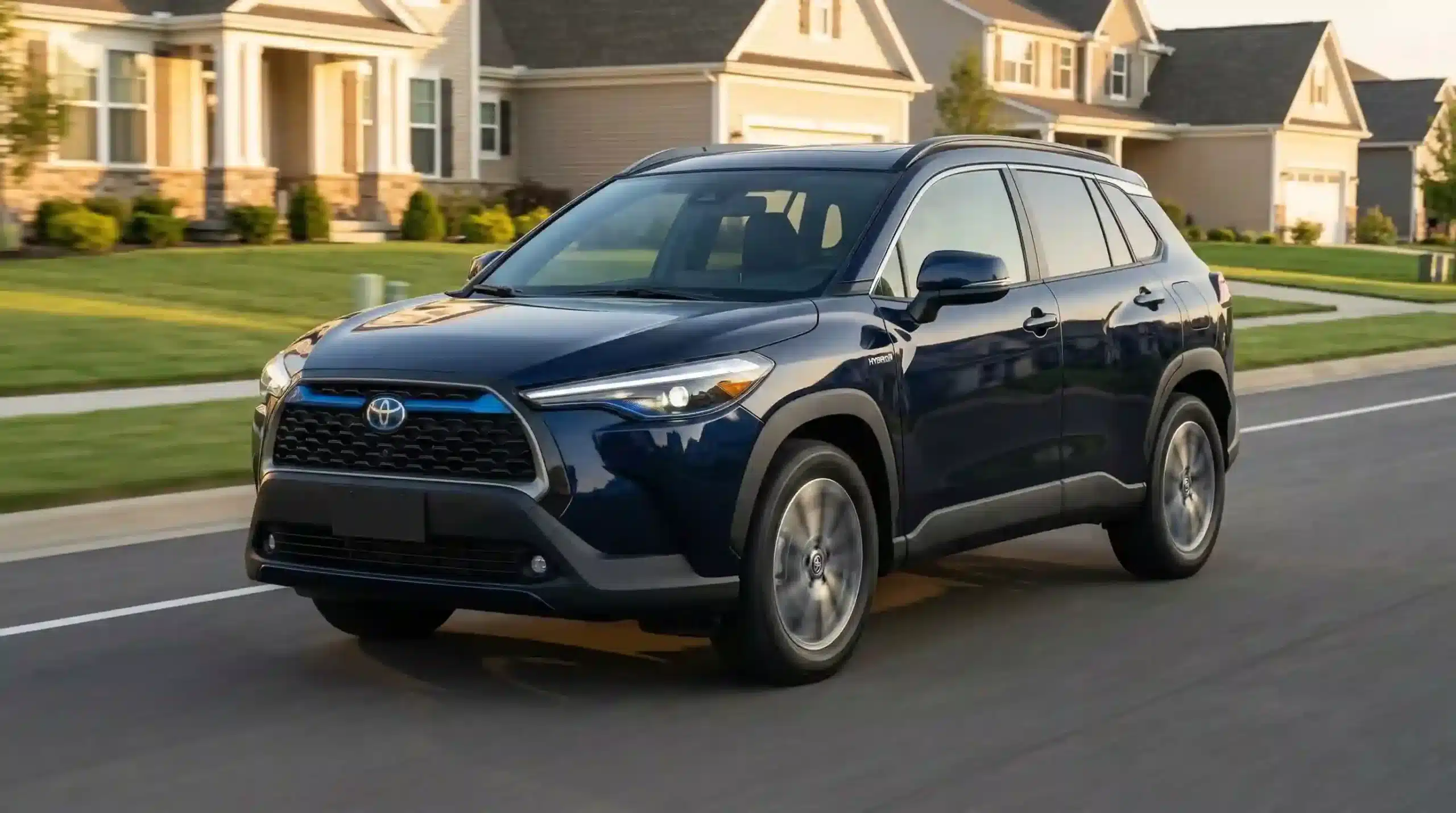
The 2026 Toyota Corolla Cross Hybrid starts at $29,795. It delivers 42 mpg combined per EPA ratings, which makes it the most fuel-efficient model in this guide. , Toyota Safety Sense (TSS) comes standard across all trim levels. TSS includes automatic emergency braking, lane departure warning, and adaptive cruise control. As a result, even the base buyer gets a complete safety package at no extra cost.
However, the Corolla Cross Hybrid is not a traditional long-roof wagon. It sits slightly higher than a conventional station wagon, giving it more of a raised crossover stance. That said, its practical cargo area, hybrid efficiency, and low starting price make it the strongest wagon alternative for buyers who prioritize running costs above all else.
Corolla Cross Hybrid Cargo Space and Daily Practicality
The Corolla Cross Hybrid offers approximately 21.5 cubic feet of cargo space behind the rear seats. With the rear seats folded, that figure grows to approximately 42 cubic feet. For comparison, the Subaru Outback offers 34.6 cubic feet with seats up, which is roughly about 60 percent more. For this reason, the Outback is the stronger choice for buyers who regularly carry large items or travel with several passengers and luggage at the same time.
On the other hand, the Corolla Cross Hybrid costs several thousand dollars less at base than the Outback. For buyers whose primary use is commuting and occasional family travel, that price difference is significant. , Toyota’s reliability reputation and nationwide dealer network reduce long-term ownership risk, especially for first-time buyers.
Toyota Corolla Cross Hybrid vs Subaru Outback – Direct Comparison
| Metric | Toyota Corolla Cross Hybrid | Subaru Outback |
|---|---|---|
| Starting MSRP | $29,795 | $34,995 |
| EPA combined MPG | 42 mpg | 27 mpg |
| EPA highway MPG | 39 mpg | 31 mpg |
| Annual Fuel Cost (15K mi) | ~$1,231 | ~$1,548 |
| 5-year Fuel Savings vs Outback | ~$1,585 ahead | Baseline |
| Cargo Space (seats up) | ~21.5 cu ft | 34.6 cu ft |
| All-wheel Drive | Standard (electric rear motor) | Standard (symmetrical AWD) |
| Safety Suite Standard | Toyota Safety Sense (all trims) | Subaru EyeSight (all trims) |
| IIHS status | Top Safety Pick (2025) | Top Safety Pick+ (2026) |
| Price Advantage | Several thousand dollars cheaper | about 60% more cargo volume |
Source: EPA FuelEconomy.gov, IIHS.org, OEM press materials, EIA $3.20/gal national average, March 2026.
Annual Fuel Savings – Why the Hybrid Math Works
At 15,000 miles per year and $3.20 per gallon, the Corolla Cross Hybrid costs approximately $1,231 in fuel annually. In contrast, the base Outback costs approximately $1,548. That produces an annual saving of roughly $317 in the Corolla Cross Hybrid’s favor. Over five years, the total saving reaches approximately $1,585.
On purchase price, the Corolla Cross Hybrid also starts several thousand dollars below the Outback. For this reason, the Corolla Cross Hybrid buyer benefits from both a lower upfront cost and lower ongoing running costs. For buyers who commute daily and drive more than 15,000 miles per year, the hybrid advantage grows further. Conversely, for buyers who regularly carry cargo or tow light loads, the Outback’s larger 34.6 cubic feet of rear space justifies its higher price.
Best Premium Wagons 2026 – Volvo, Audi and Mercedes Compared
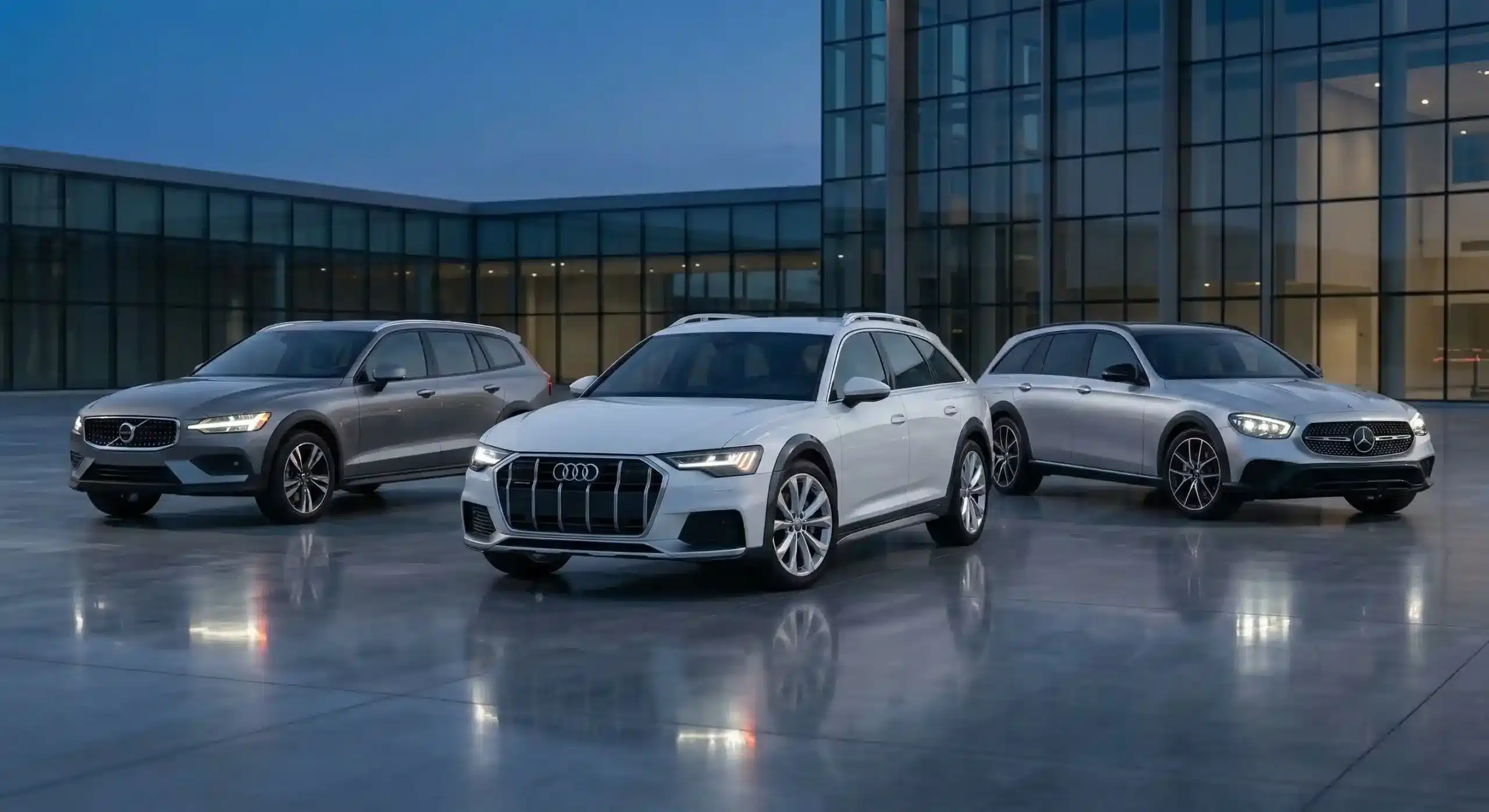
For buyers with a budget between $53,000 and $85,000, three premium wagons deserve serious attention. Each offers standard AWD, a refined highway ride, and genuine cargo flexibility that most SUVs at the same price cannot match. However, they suit different buyers, so understanding the key differences matters before committing.
Volvo V60 Cross Country – Best Premium Wagon Under $60,000
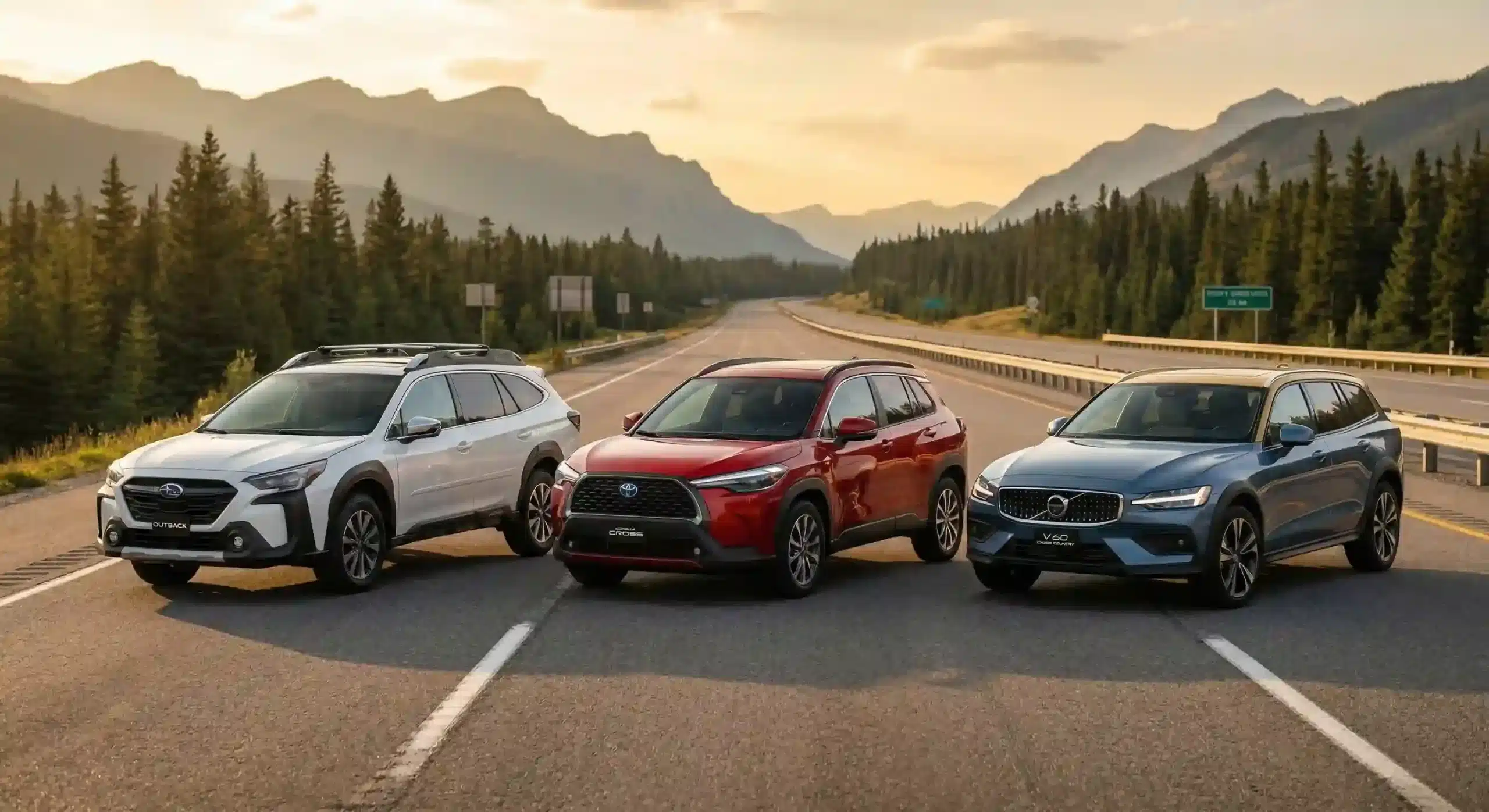
The 2026 Volvo V60 Cross Country starts at $53,595. Its turbocharged 2.0-liter four-cylinder produces 247 horsepower and 258 pound-feet of torque. AWD is standard across all trims. , it delivers 26 mpg combined per EPA ratings, which is the best fuel economy figure among the three premium models covered here.
In terms of character, the V60 Cross Country is the most approachable of the three. Its Scandinavian-designed cabin feels calm and thoughtfully considered. , its raised ride height compared to a standard V60 adds real-world confidence on gravel roads, light snow, and rough suburban surfaces. For buyers who want a premium wagon without the formality of a german brand, the Volvo is the natural choice.
Audi A6 Allroad – Best Luxury Wagon for Long-Distance Comfort
The 2026 Audi A6 allroad starts at $74,395 with quattro all-wheel drive standard and a 335-horsepower turbocharged V6. Its road manners are exceptionally composed over long distances. On broken pavement and extended highway sections, it feels settled in a way that genuinely separates it from smaller wagons. As a result, the A6 allroad suits buyers who regularly cover 300 to 500 miles in a single day.
However, it is also the most expensive of the three premium options at this price tier. Its 24 mpg combined per EPA ratings is acceptable but not outstanding. For buyers who prioritize driving refinement and long-distance composure above all else, the A6 allroad delivers an experience that justifies the premium.
Mercedes E-Class Wagon – Top-Rated Station Wagon in 2026
The 2026 Mercedes-Benz E-Class All-Terrain Wagon starts at $79,650. It produces 375 horsepower from a turbocharged 3.0-liter inline-six with mild-hybrid assistance. According to Mercedes OEM press materials, its 0-60 mph time is 4.6 seconds, which is genuinely quick for a family hauler.
In addition to its performance, the E-Class Wagon offers approximately 33 cubic feet of cargo space behind the rear seats. That is among the largest in this guide, just behind the 2026 Outback. For families who need both performance and maximum cargo capacity, it is therefore the most complete wagon available in 2026. The main trade-off is cost: it starts $43,205 more than the Subaru Outback.
Wagon vs SUV 2026 – Which One Should You Buy?
Most buyers searching for wagons are also considering SUVs. That is a perfectly sensible comparison. However, the two types are genuinely different in ways that a specification sheet does not fully capture. Understanding those differences makes the choice much clearer.
Load Floor Height – Why Wagons Win for Heavy Cargo
Wagons sit closer to the ground than SUVs. Because of this, their load floor is lower, which makes lifting heavy items in and out significantly easier. For buyers who regularly load groceries, sports equipment, pet crates, or luggage, this practical difference matters on every single trip. In contrast, most SUVs require lifting items to a higher load floor, which is harder on the body and more awkward with large boxes.
, wagons with rear seats folded typically produce a flat load floor. This makes sliding long items forward easy and efficient. Many compact SUVs, on the other hand, have a step in the floor where the rear seats meet the cargo area. As a result, long items like flat-pack furniture or bicycles fit more easily in a wagon.
Total Cost of Ownership – Wagons vs Compact SUVs
| Factor | Wagon Advantage | SUV advantage |
|---|---|---|
| Fuel economy | Typically 2-4 mpg better (lower aerodynamic drag) | Comparable in hybrid form |
| Starting price | Often $2,000-$5,000 less at same specification | More model options at lower prices |
| Insurance premiums | Generally lower (passenger car classification) | Higher for AWD SUVs in most states |
| Resale value | Subaru Outback holds value strongly | Toyota RAV4 and others lead overall |
| Load floor | Lower, easier for heavy loading | Higher, more vertical cargo height |
| Driving feel | More car-like, less body roll at speed | Higher seating, better road visibility |
For buyers who want to compare wagons against the best compact SUVs at a similar price, our best SUVs 2026 guide covers the Toyota RAV4 hybrid and Subaru Forester in the same data framework used here, so you can compare both body styles side by side.
Which Buyer Should Choose a Wagon?
A wagon makes the most sense for buyers who drive long highway distances regularly, load heavy or awkward cargo frequently, and want a lower starting price than an equivalent SUV. For example, buyers in northern states like vermont, Colorado, Minnesota, and oregon who want genuine AWD traction will find the Subaru Outback delivers that at $34,995, which is several thousand less than most comparable AWD SUVs.
On the other hand, SUVs make more sense for buyers who want the highest seating position, need maximum vertical cargo height, or prefer the wider model selection and trim variety that the SUV segment offers. Neither choice is wrong. However, buyers who test-drive a wagon often find that the driving feel and load practicality surprise them in a positive way.
Wagon Safety Ratings 2026 – IIHS and NHTSA
Safety ratings play an important role in any wagon purchase decision. They reflect crash protection performance and can influence your insurance premium. IIHS Top Safety Pick+ is the highest rating from the insurance Institute for highway Safety (IIHS). It reflects strong results in updated frontal, side impact, and pedestrian detection tests.
IIHS Safety Status and AEB by Model
| Model | IIHS status | AEB standard All Trims | Safety Suite |
|---|---|---|---|
| Subaru Outback | Top Safety Pick+ | Yes | Subaru EyeSight |
| Toyota Corolla Cross Hybrid | Top Safety Pick (2025) | Yes | Toyota Safety Sense (TSS) |
| Volvo V60 Cross Country | Not on 2026 list | Yes | Volvo IntelliSafe suite |
| Audi A6 allroad | Not on 2026 list | Yes | Audi Pre-sense suite |
| Mercedes E-Class Wagon | Not on 2026 list | Yes | Mercedes-Benz driver assistance |
Source: IIHS.org, OEM press materials, March 2026. Always verify current ratings at IIHS.org for your specific trim before purchase, as ratings update when IIHS revises its test protocols.
How Safety Ratings Affect Your Insurance Premium
Insurers weigh many factors, and crash-test results can be one of them. For this reason, both the Subaru Outback and Toyota Corolla Cross Hybrid represent strong insurance value. The Outback is a 2026 IIHS Top Safety Pick+ and the Corolla Cross earned a 2025 Top Safety Pick; both include AEB standard across every trim.
, wagons are classified as passenger cars rather than light trucks by most US insurers. As a result, they often attract lower base rates than equivalent SUVs at the same MSRP and safety rating level. Over a three-year policy period, that classification advantage adds up meaningfully. Always get insurance quotes for your shortlisted models before signing a purchase agreement.
IIHS ratings can change when IIHS revises its testing methods. Always confirm the rating for your specific trim at IIHS.org and NHTSA ratings at NHTSA.gov/ratings before finalizing your purchase. AEB standard equipment should also be confirmed at the trim level you intend to buy, not just for the model in general.
For buyers also considering hybrid or electric wagon alternatives, our best electric and hybrid cars 2026 guide covers plug-in and full EV options with five-year cost projections. For compact car alternatives to the Corolla Cross Hybrid, our best small city cars 2026 guide covers the Toyota Corolla and Honda Civic with the same data framework. For buyers interested in practical hatchback alternatives with similar cargo flexibility, our best hatchback cars 2026 guide ranks models by cargo space, fuel economy, and safety ratings. For a full overview of every new car category, see the best new cars to watch in 2026 pillar guide.
Best wagon for US families overall: Subaru Outback from $34,995. Standard AWD, 34.6 cu ft cargo, EyeSight on every trim, IIHS Top Safety Pick+, proven reliability.
Best wagon for fuel efficiency: Toyota Corolla Cross Hybrid from $29,795. 42 mpg combined, TSS standard all trims, IIHS Top Safety Pick (2025), lowest starting price in this guide.
Best premium wagon under $60,000: Volvo V60 Cross Country from $53,595. Standard AWD, 26 mpg combined, Scandinavian refinement, a comfortable highway cruiser.
Best luxury wagon for long-distance driving: Audi A6 allroad from $74,395. Quattro AWD, 335 hp, 24 mpg combined, exceptional composure over long highway routes.
Best wagon overall regardless of budget: Mercedes-Benz E-Class All-Terrain Wagon from $79,650. 375 hp, approximately 33 cu ft cargo, one of the most complete wagons in the 2026 US market.
Frequently Asked Questions – Best Wagons 2026
What is the best wagon in 2026?
Is the Subaru Outback a wagon or an SUV in 2026?
What is the best wagon under $40,000 in 2026?
Which wagon has the most cargo space in 2026?
Is a wagon better than an SUV for a family in 2026?
What is the best wagon for long US highway trips in 2026?
What is the difference between the Toyota Corolla Cross Hybrid and Subaru Outback?
Which wagon has the best IIHS safety rating in 2026?
Does the Subaru Outback have good fuel economy?
Is the Toyota Corolla Cross Hybrid a good wagon alternative?
Which station wagons are sold in the US for 2026?
Does this list apply to wagons in Europe or the UK?
Related guides: explore sedan reviews and 10 Sports Cars of 2025 You Need to Know: Performance Meets Next-Gen….
⚠️ professional Notice:
all MSRP figures are based on manufacturer press materials as of March 2026 and are subject to change. Confirm current pricing and availability with your local dealer before making any purchase decision. EPA fuel economy figures are produced under standardized test conditions. Real-world resu the Subaru Outback lts vary based on driving habits, weather, load, and road conditions. Fuel cost calculations use the U.S. Energy Information Administration national average gas price of $3.20/gallon and 15,000 annual miles as stated baseline assumptions. Cargo space figures are approximate from OEM press materials and may vary by trim level. Safety ratings were current as of March 2026. Check IIHS.org and NHTSA.gov for the most current ratings before purchase. AEB standard equipment should be confirmed at your specific trim level. NextCarReview.com does not receive compensation from any manufacturer in exchange for rankings or editorial coverage.
Data Sources and Verification
- FuelEconomy.gov – EPA fuel economy ratings for all wagon and wagon-alternative models evaluated in this article
- IIHS.org – Top Safety Pick and Top Safety Pick+ ratings, AEB standard equipment verification by trim
- NHTSA.gov/ratings – 5-star Safety Ratings, new Car Assessment Program data
- U.S. Energy Information Administration (EIA) – national average gasoline price baseline ($3.20/gal) used in all fuel cost calculations
- OEM manufacturer Press Materials (March 2026) – Subaru, Toyota, Volvo, Audi, Mercedes-Benz: MSRP, powertrain specs, cargo volume, standard equipment by trim
- RepairPal.com – annual repair cost estimates and reliability ratings referenced for long-term ownership context
- ConsumerReports.org – reliability scores and owner satisfaction data referenced for brand-level context

Morgan Reyes is the founder and editor-in-chief of NextCarReview, which Morgan launched in August 2024. A 2022 graduate of Columbia University, Morgan is based in New York and writes and edits the site’s reviews, comparisons and buying guides. Morgan does not road-test vehicles. Every article is built from published primary data: EPA FuelEconomy.gov ratings, NHTSA crash ratings, recalls and owner complaints, IIHS results, and manufacturer specifications and pricing, with each figure cited and checked before publication. Contact: admin@nextcarreview.com