In this article 11 sections
A P0420 code on a Nissan is one of the most common reasons an Altima, Sentra or Rogue fails a state emissions test. The code itself is generic, but the history behind it is not: Nissan has a 2003 safety recall tied to pre-catalyst damage on 2.5-liter cars, an emissions campaign that lists P0420 for certain Sentras, and an Infiniti bulletin that replaces catalysts outright. This guide pulls those records together.
Quick answer: P0420 on a Nissan means the Bank 1 catalytic converter is below its efficiency threshold (Infiniti bulletin ITB13-053a calls it Three Way Catalyst Function). A steady light is usually safe to drive on briefly; a flashing one is not. Check oxygen sensors, misfires and exhaust leaks first. The fix ranges from a sensor or ECM update to a new converter, which federal law covers for 8 years or 80,000 miles.
If you want the general background on the code first, our P0420 code guide covers how the catalyst monitor works on any car, and our P0430 code guide explains the Bank 2 version that V6 and V8 Nissans can also set. The rest of this page focuses only on what is specific to Nissan.
What P0420 Means on a Nissan
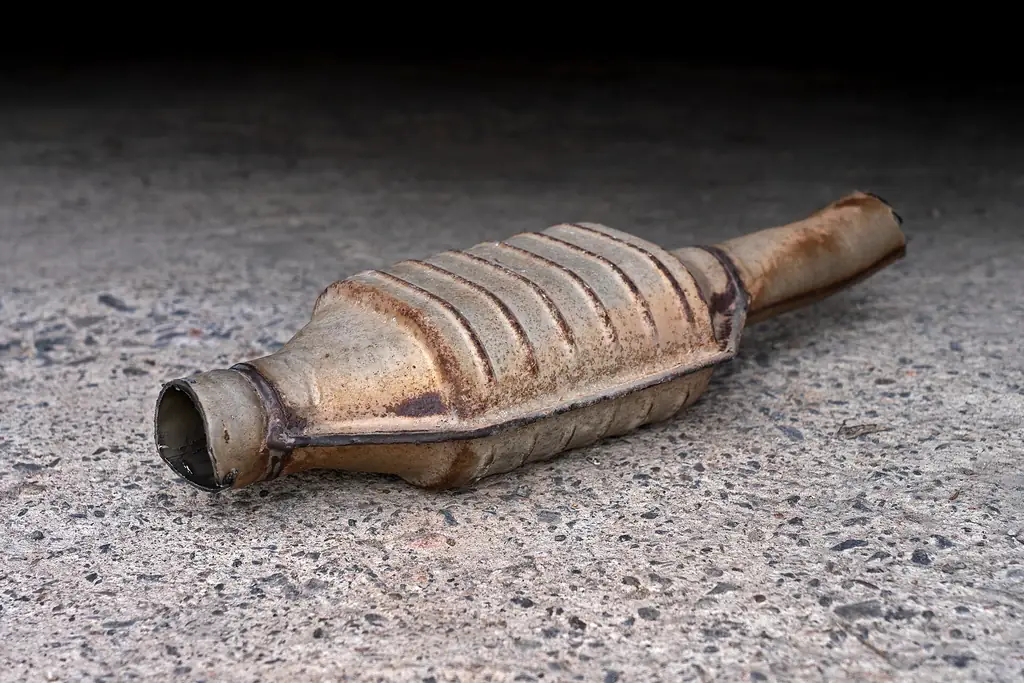
P0420 is a standard OBD-II code for catalyst system efficiency below threshold on Bank 1. Nissan’s Infiniti division describes it as “Three Way Catalyst Function” in bulletin ITB13-053a, which pairs P0420 with Bank 1 and P0430 with Bank 2. In plain terms, the engine computer compares the oxygen readings in front of and behind the converter, and when the rear reading starts to mirror the front one, it concludes the catalyst is no longer storing and converting enough oxygen.
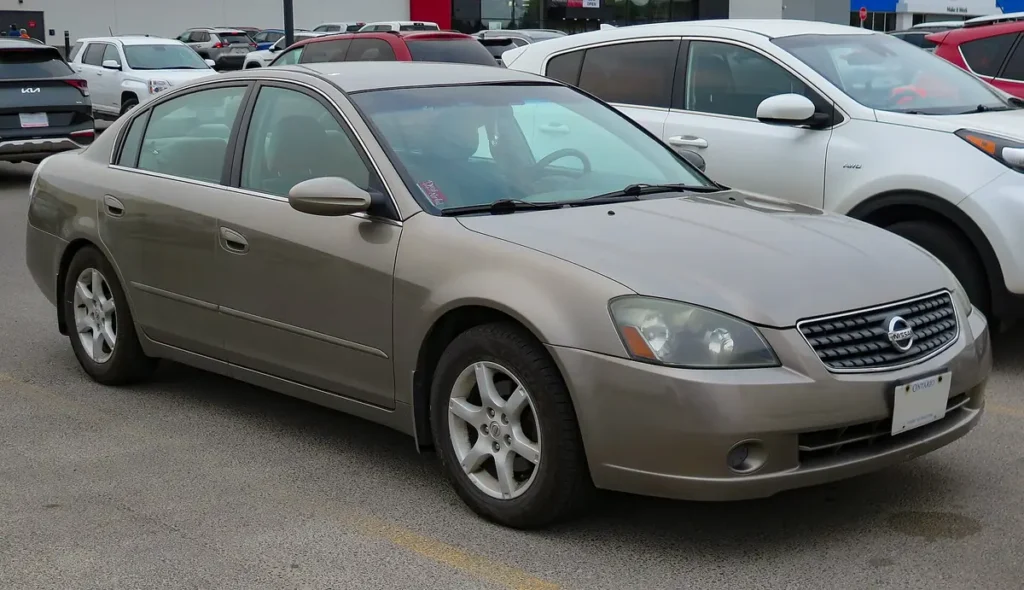
Bank 1 is the side of the engine that contains cylinder number one. On the four-cylinder engines in most Altimas, Sentras and Rogues, such as the 2.5-liter inline-four QR25DE that Wikipedia lists for the 2002-2020 Altima, 2008-2020 Rogue and Sentra SE-R, there is only one bank. So on those cars P0420 always refers to the one catalyst system, and P0430 cannot set at all.
Can You Drive a Nissan With P0420?
A steady check engine light with P0420 and no other codes usually means the car can be driven to a diagnosis appointment. Two exceptions matter. First, a flashing check engine light points to active misfires, and unburned fuel reaching a hot converter can overheat it. Stop driving and get it checked.
Second, older 2.5-liter Nissans deserve extra care. NHTSA recall 03V084000 states that on 2002 Altima and Sentra vehicles, certain engine operating conditions could overheat the pre-catalyst and damage its substrate. If substrate particles entered the combustion chamber, they could score the cylinder walls and increase oil consumption, and NHTSA’s record says the conditions covered by the recall could result in a fire. The recall had dealers test the pre-catalyst and replace it if needed, and replace the engine if damage was found inside the pre-catalyst. If a 2002 or 2003 Altima with P0420 is also using oil, treat it as urgent.
Symptoms of P0420 on Nissan Models
- A steady check engine light, often with no change in how the car drives.
- A failed emissions or smog inspection, because the catalyst monitor reports a fault.
- A rattle from under the car if the converter’s internal substrate has broken up.
- A rotten-egg smell or sluggish acceleration if the converter is partly blocked.
- Rising oil consumption on early QR25DE cars, the pattern described in recall 03V084000.
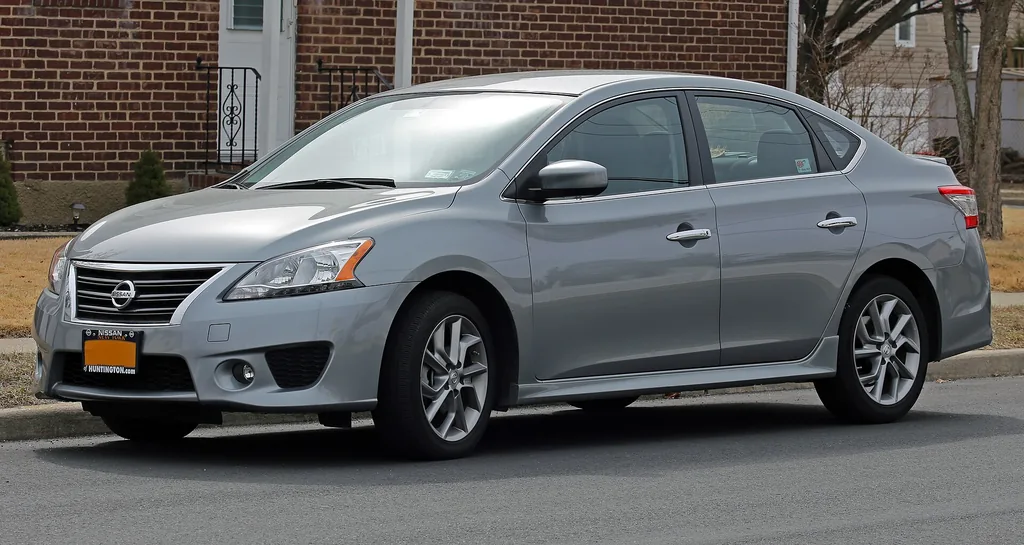
Owner reports in NHTSA’s database line up with that last point. A count of every NHTSA complaint filed for each Altima model year, pulled on October 21, 2026 and filtered for summaries containing the word “catalytic”, found that 241 of the 1,063 complaints filed for the 2002 Altima mention the catalytic converter, and 74 of the 883 complaints for the 2003 Altima do. No Altima model year from 2004 through 2019 had more than 18 such complaints.
Common Causes of P0420 on a Nissan
1. A worn or damaged catalytic converter
Converters lose efficiency with age and mileage. On 2002 Altima and Sentra 2.5-liter cars, recall 03V084000 documents a Nissan-specific failure: the pre-catalyst close to the engine could overheat and damage its own substrate.
2. Oxygen sensor faults
A faulty downstream oxygen sensor can make a healthy converter look bad. Nissan campaign P1A25, published as NTB22-006, has dealers check the rear oxygen sensor (HO2S2) voltage on California SULEV 2013-2016 Sentras: a reading below 0.13 V means the sensor circuit has a short to ground and must be repaired before anything else.
3. ECM software
On some Nissans the fix is software. Campaign P1A25 (NTB22-006) has dealers reprogram the ECM, if applicable, on California SULEV 2013-2016 Sentras, and Infiniti bulletin ITB13-053a reprograms the ECM on the 2011-2012 QX56 when needed. A dealer can check whether newer ECM software exists for a given VIN.
4. Misfires, oil burning and exhaust leaks
Anything that sends unburned fuel or oil into the exhaust shortens converter life. Misfire codes should be fixed first; our P0300 misfire guide covers that. An exhaust leak ahead of the rear sensor can also skew its reading and set P0420 on a converter that still works.
Nissan Bulletins, Recalls and Campaigns That Mention P0420
These are the Nissan and Infiniti documents found on NHTSA’s servers that tie directly to P0420 or to catalyst damage. Each applies only to the vehicles listed, and a dealer has to confirm eligibility by VIN.
| Document | Vehicles | What it does |
|---|---|---|
| NHTSA recall 03V084000 | 2002-2003 Altima and 2002 Sentra with the 2.5-liter engine (pre-catalyst part: 2002 Altima and Sentra) | Remove the exhaust hanger pin tip, fit heat shields, test the pre-catalyst and replace it if needed; replace the engine if pre-catalyst damage is found |
| Campaign P1A25 / NTB22-006 | 2013-2016 Sentra (B17), California SULEV only | Reprogram the ECM if applicable, inspect rear oxygen sensor voltage; P0420 is on the campaign’s applicable DTC list |
| Infiniti ITB13-053a | 2011-2012 Infiniti QX56 (Z62) | Reprogram the ECM if needed; for P0420, replace the Bank 1 exhaust manifold and three-way catalyst and the A/F sensor |
NTB22-006 also states that stored DTCs not on its applicable list are not covered. Run any Nissan VIN through our VIN decoder to confirm the exact model year and trim before you ask a dealer about campaign coverage.
How to Diagnose P0420 on a Nissan
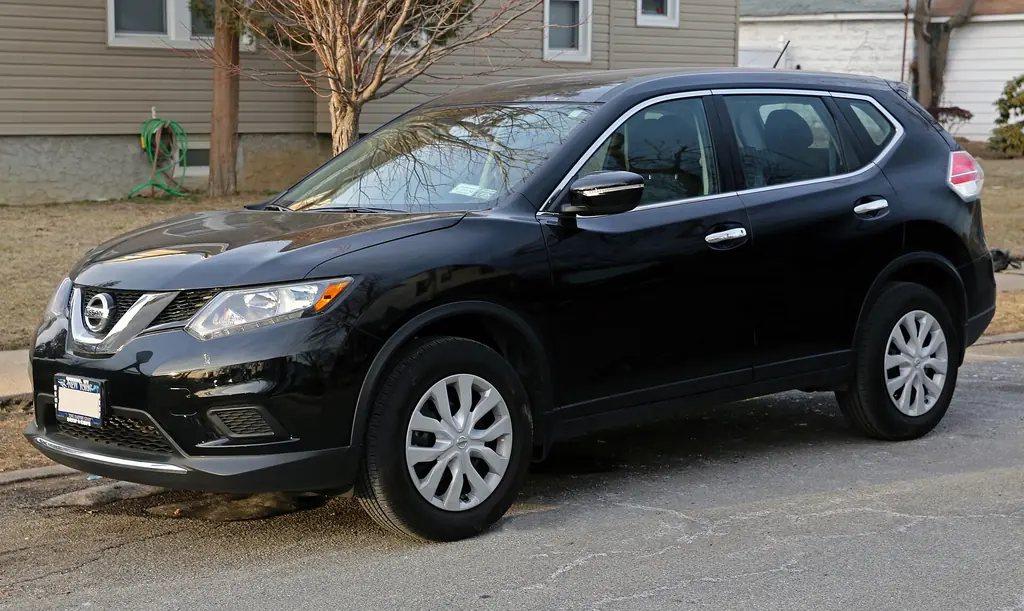
- Read all stored and pending codes. Fix misfire, fuel trim, oxygen sensor heater or air-fuel sensor codes first, because they can cause or mimic P0420.
- Ask a Nissan dealer to run the VIN for open recalls and campaigns, including 03V084000 and P1A25, and for any ECM software update.
- Watch the front air-fuel sensor and the rear oxygen sensor in live data at a warm, steady cruise. A rear sensor that switches as fast as the front one suggests a weak catalyst; a rear signal stuck very low suggests a sensor or wiring fault, the condition NTB22-006 checks for with its 0.13 V test.
- Inspect for exhaust leaks at the manifold, flex pipe and joints ahead of the rear sensor.
- On early QR25DE cars, check oil consumption and listen for a rattle from the pre-catalyst before ordering a new converter.
- After any repair, clear the code and complete a drive cycle so the catalyst readiness monitor runs again before an emissions test.
If the air-fuel sensor on the same bank is suspect, our P1148 Nissan code guide walks through testing it, and our P0335 Nissan guide covers the crankshaft sensor faults that can cause misfires.
P0420 Repair Cost on a Nissan
Costs swing widely depending on whether the fix is a sensor, software or the converter itself. An ECM reprogram or an oxygen sensor repair is a much smaller job than replacing a converter, and on cars such as the 2011-2012 QX56 the Infiniti bulletin calls for replacing the exhaust manifold and catalyst as one assembly. We have not found a published Nissan-specific price we could verify, so get a written quote that names the exact part and labor time.
Any repair performed under a recall, an emissions campaign or the federal emissions warranty should cost the owner nothing for covered parts, so check coverage before paying for a converter.
Emissions Warranty Coverage for Nissan Catalytic Converters
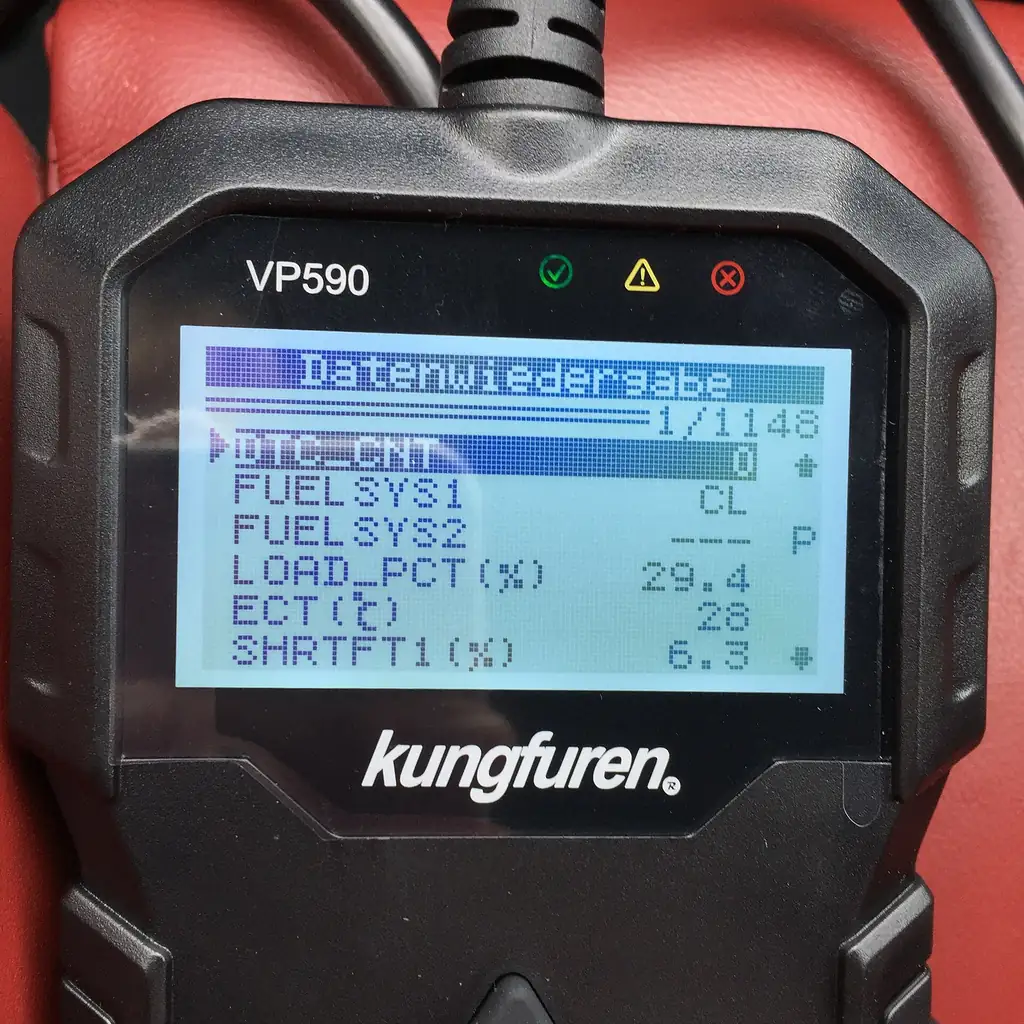
According to the EPA, the Clean Air Act requires two federal emissions warranties. The Design and Defect Warranty covers emission-related parts for 2 years or 24,000 miles, and the specified major emission control components for 8 years or 80,000 miles, whichever comes first. Those major components are only the catalytic converters, the electronic emissions control unit (ECU) and the onboard diagnostic device. Coverage begins on the date of sale to the original owner and applies to used vehicles too.
EPA also notes that the manufacturer can deny a claim if the failure came from improper use or maintenance rather than a defect. In California, CARB lists a 3 year/50,000 mile defects and performance warranty, a 7 year/70,000 mile warranty for high-cost emissions parts listed in the owner’s manual, and 15 years/150,000 miles for vehicles certified to PZEV (2001-2017) or TZEV (2018-2025) standards. Check your Nissan warranty booklet to see which applies.
Nissan Models and Engines Linked to P0420
| Model and years | Engine | Nissan-specific note |
|---|---|---|
| Altima 2002-2003, Sentra 2002 | 2.5-liter four (QR25DE) | Recall 03V084000; pre-catalyst overheating on 2002 cars |
| Sentra 2013-2016 (B17) | MRA8DE, California SULEV | Campaign P1A25 (NTB22-006); P0420 on applicable DTC list |
| Altima 2002-2020, Rogue 2008-2020, Sentra SE-R | QR25DE inline-four (per Wikipedia) | Single bank; P0420 only, never P0430 |
| Infiniti QX56 2011-2012 (Z62) | V8 | ITB13-053a; catalyst and A/F sensor replacement by bank |
Frequently Asked Questions About P0420 on a Nissan
What does P0420 mean on a Nissan?
Can I keep driving my Nissan with a P0420 code?
Does Nissan have a bulletin for P0420?
Is the catalytic converter on my Nissan still under warranty?
What is the difference between P0420 and P0430 on a Nissan?
How much does it cost to fix P0420 on a Nissan?
Data Sources and Verification
- NHTSA recall 03V084000 – 2002-2003 Altima and 2002 Sentra 2.5L exhaust hanger pin and pre-catalyst campaign
- Nissan NTB22-006 (campaign P1A25) – 2013-2016 Sentra SULEV ECM reprogram and oxygen sensor voltage inspection
- Infiniti ITB13-053a – 2011-2012 QX56 MIL on with DTC P0420 and/or P0430
- NHTSA complaints API – 2002 Nissan Altima (keyword search run October 21, 2026)
- EPA – Frequent questions on federal emission control warranties
- California Air Resources Board – California vehicle and emissions warranty periods
- Wikipedia – Nissan QR engine (QR25DE applications)

Morgan Reyes is the founder and editor-in-chief of NextCarReview, which Morgan launched in August 2024. A 2022 graduate of Columbia University, Morgan is based in New York and writes and edits the site’s reviews, comparisons and buying guides. Morgan does not road-test vehicles. Every article is built from published primary data: EPA FuelEconomy.gov ratings, NHTSA crash ratings, recalls and owner complaints, IIHS results, and manufacturer specifications and pricing, with each figure cited and checked before publication. Contact: admin@nextcarreview.com