In this article 10 sections
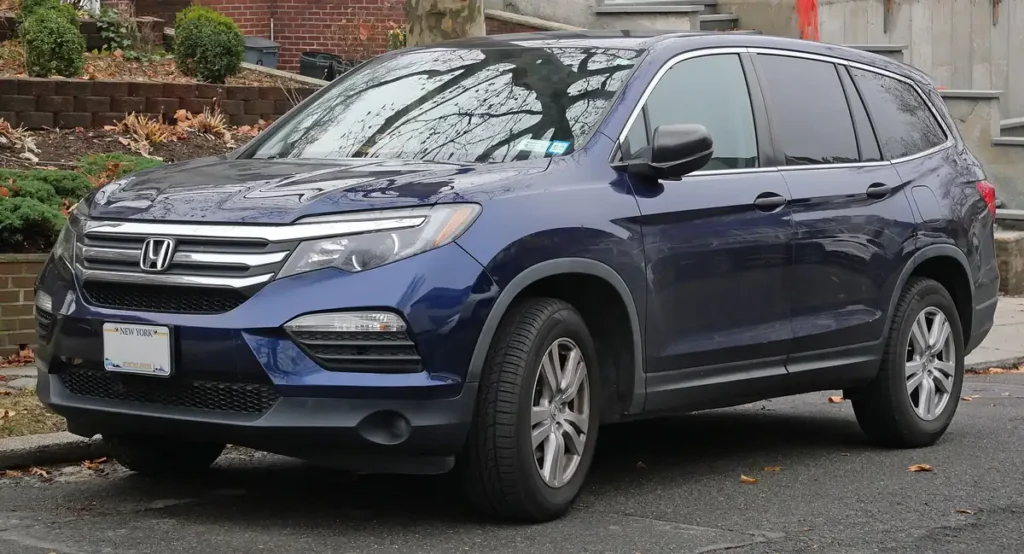
P0420 is a generic OBD-II code, but on a Honda it comes with a long paper trail. Honda has issued warranty extensions that treat the code as a fuel injector or software problem on 2016-2019 Pilot, 2017-2019 Ridgeline and 2018-2019 Odyssey models and the 2015-2016 Fit, an emissions recall for catalyst-monitor software on the 2017 Accord V6, and bulletins that replace converters outright. This guide pulls those records together.
Quick answer: P0420 on a Honda means the Bank 1 catalyst tested below its efficiency threshold; Honda’s V6 bulletins call Bank 1 the rear bank. Get a steady light checked soon; a blinking light signals a severe problem such as a misfire, so stop driving. Honda bulletins trace some cases to worn fuel injectors or PCM software, not the converter. AAA puts a Honda converter replacement at $1,000 to $2,200.
For how the catalyst monitor works on any car, see our general P0420 code guide; V6 Hondas can also set the Bank 2 version in our P0430 code guide. Everything below is specific to Honda.
What P0420 Means on a Honda
Honda’s bulletins define P0420 as “catalyst system efficiency below threshold.” For its V6 engines Honda also names the location: bulletin 20-100 lists P0420 as “rear bank catalyst system efficiency below threshold [bank 1]” and P0430 as the front bank, Bank 2, and bulletin 14-002 tells technicians to remove the rear (bank one) A/F sensor when P0420 is stored. On a Pilot, Ridgeline, Odyssey or V6 Accord, P0420 points at the rear-bank converter.
Four-cylinder models such as the Civic, CR-V, Fit and four-cylinder Accord have one bank, so they set P0420 only. In Honda’s bulletins, the converter closest to the engine is the warm-up three-way catalytic converter (WU-TWC); the sensor ahead of it is the A/F sensor, which bulletin 14-002 calls the primary A/F sensor, and bulletin 18-022 pairs it with a secondary heated oxygen sensor on the same converter. The engine computer compares those sensors and sets P0420 when it judges the converter is no longer cleaning the exhaust efficiently.
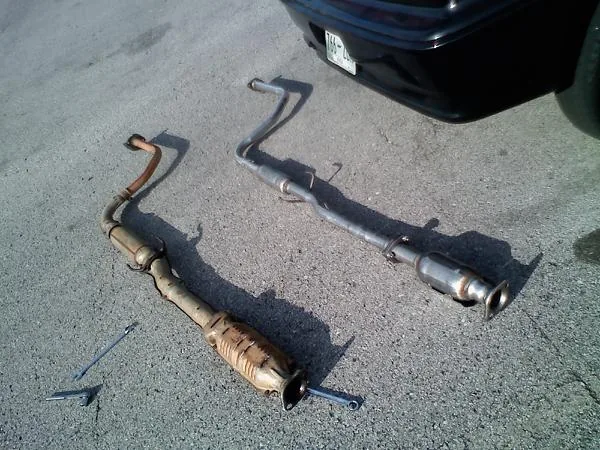
Can You Drive a Honda With P0420?
A steady light with P0420 alone usually leaves the car driving normally, but do not ignore it. Honda’s 2006 Pilot owner’s manual warns that driving with the malfunction indicator lamp on can damage the emission controls and engine, and that those repairs may not be covered by warranty. Honda’s 2021 owner letter for the Pilot, Ridgeline and Odyssey extension adds that a car with the light on may fail a state or local emissions inspection.
A blinking light is more serious. EPA’s guide What To Do With the Check Engine Light says it means a severe engine problem such as a misfire that should be addressed quickly, and Honda’s manual says the converter runs hot enough to set fire to high grass or dry leaves and that a misfiring engine should be diagnosed and repaired. The conservative move is to stop driving and have the car checked; misfires are covered in our P0300 guide.
Common Causes of P0420 on a Honda
1. Worn or clogged fuel injectors
Honda’s most recent P0420 bulletins center on injectors. Bulletins 20-100 and 21-010 say debris from the high-pressure pump or the injector machining process can wear or clog injectors on the 2016-2019 Pilot, 2017-2019 Ridgeline and 2018-2019 Odyssey. On the 2015-2016 Fit, bulletin 22-002 says incorrectly installed injectors can cause “catalyst deterioration misdetection.” The converter may be fine.
2. PCM software that misreads the sensors
Bulletin 20-100 says the PCM “may misinterpret sensor inputs as a deteriorated catalytic converter.” On the 2006-2007 Accord Hybrid, bulletins 18-022 and 18-023 describe a similar misreading of warm-up converter deterioration. NHTSA’s summary of bulletin 10-015 says the ECM/PCM on 2007-2008 Fits misinterprets engine idle conditions; the repair was a new converter plus a software update.
3. A damaged A/F sensor
Bulletin 14-002 covers certain 2010 Accord, Crosstour, Odyssey and Ridgeline and 2011 Pilot vehicles in set VIN ranges: the primary A/F sensor cap could fall off and bore a hole through the warm-up converter. P2243 or P2247 (A/F sensor 1 circuit high voltage) may appear alongside P0420.
4. Misfires, lean running or a worn converter
Bulletin 22-002 groups P0420 with misfire codes P0300-P0304 and with P0171 and P0172, so fix those first; our P0171 guide covers lean running. A worn converter is the right repair once injectors, sensors and software are ruled out.
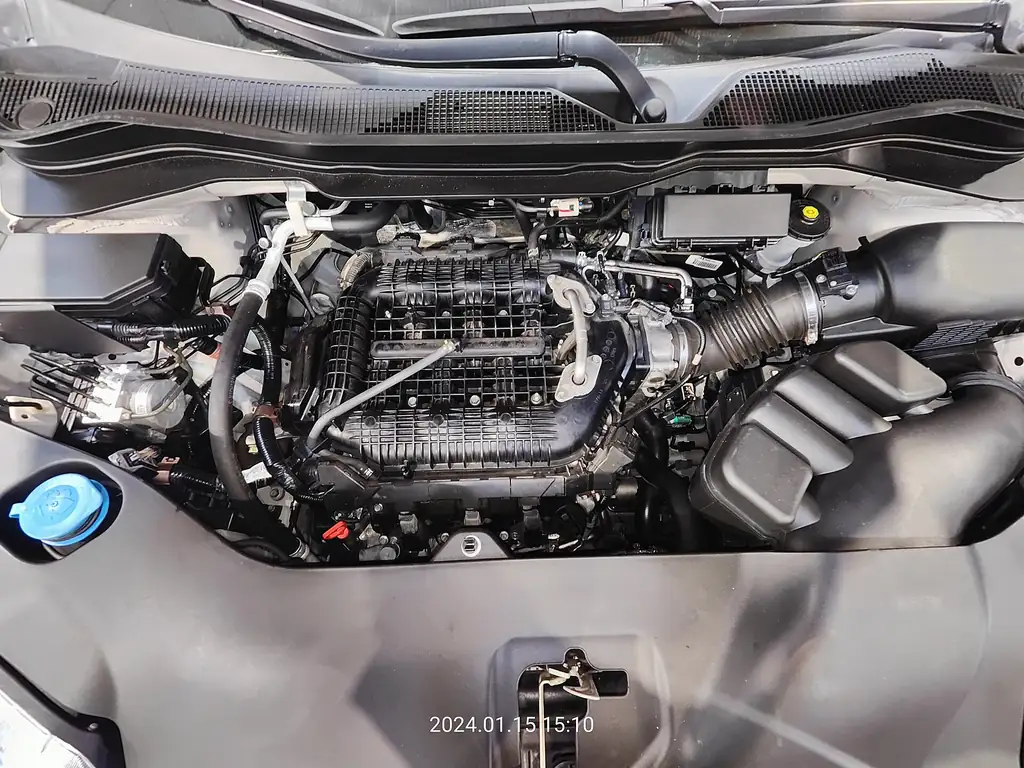
Honda Bulletins, Warranty Extensions and Recalls for P0420
These are the main Honda documents on NHTSA’s servers that name P0420 or the catalyst monitor. Each applies only to the vehicles listed, and a dealer confirms eligibility by VIN.
| Honda document | Vehicles | What it does |
|---|---|---|
| SB 20-100 (2021) | 2016-2017 Pilot, 2017 Ridgeline, 2018 Odyssey | Software update and cylinder A/F test, injectors if it fails; 10 years or 150,000 miles |
| SB 21-010 (2021) | 2017-2019 Pilot and Ridgeline, 2018-2019 Odyssey | Cylinder A/F test, then injectors; 10 years or 150,000 miles |
| SB 22-002 (2022) | 2015-2016 Fit | Injector warranty to 10 years or 150,000 miles; P0420 alone gets a cylinder A/F imbalance test |
| SB 17-004 emissions recall | 2017 Accord V6 | Catalyst-monitor software “not performing to specification”; software update |
| SB 18-022 / 18-023 (2018) | 2006-2007 Accord Hybrid | Replace front and rear warm-up converters, update software |
| SB 14-002 (2014) | 2010 Accord, Crosstour, Odyssey, Ridgeline; 2011 Pilot | Replace holed warm-up converter and A/F sensor; normal warranty |
Honda has also been collecting data. A November 2024 dealer message asked for parts from 2018-2024 Accord, 2021-2024 Civic and 2023-2024 CR-V 1.5L turbo models and the 2017 Fit with P0420 and no misfire or fuel trim codes, before any repair. The extensions run from the original purchase date, so many 2015-2017 vehicles are near or past the 10-year limit. Owners report mixed results: some 2017 Pilot owners told NHTSA the light returned after injector replacement, and some 2019 Odyssey owners said their VIN was not eligible.
How to Diagnose P0420 on a Honda
- Read every stored code. P0420 with P0300-P0306, P219A or P219B points toward injectors under Honda’s bulletins; P0420 with P2243 or P2247 on a 2010-2011 V6 in the 14-002 VIN ranges points toward the A/F sensor cap problem.
- Have a Honda dealer run the VIN for open campaigns and extensions, including the 2017 Accord V6 emissions recall, before any paid repair; Honda’s letters say covered repairs are free. Confirm the model year and engine first with our VIN decoder.
- On covered V6 and Fit models, ask for the cylinder A/F test, run with Honda’s HDS scan tool. Injectors are replaced if a cylinder fails; if all pass, 21-010 and 22-002 send the technician back to normal troubleshooting, while under 20-100 the software update completes the repair.
- Ask about PGM-FI software updates; bulletins 17-004, 18-022 and 20-100 all include one.
- On a V6, inspect the rear-bank (Bank 1) converter and A/F sensor. On the 2006-2007 Accord Hybrid, Honda’s converter procedure includes draining the transmission fluid and removing the right driveshaft and intermediate shaft.
- After a repair, let the readiness codes set before an emissions test. In Honda’s 2006 Pilot manual, the indicator lights for 20 seconds with the key ON; if it then blinks five times, they are not set yet.
For idle-speed faults on the same car, see our P0507 Honda guide.
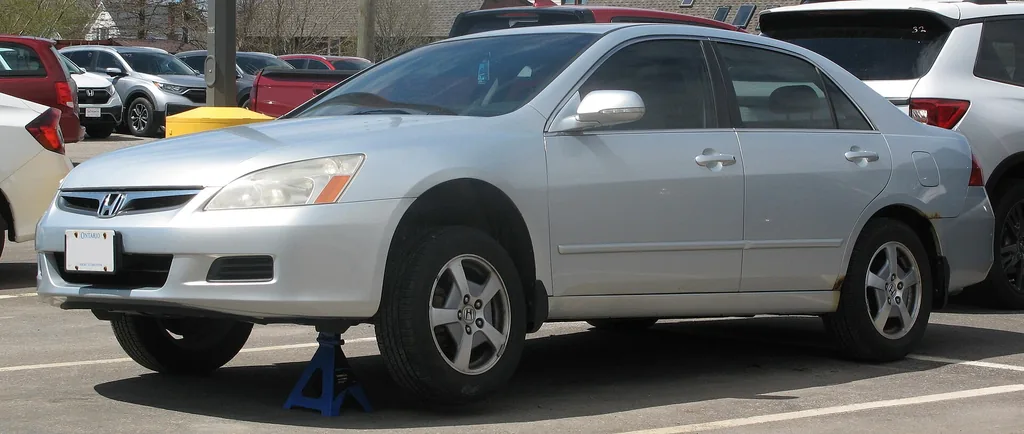
P0420 Repair Cost on a Honda
AAA estimates a Honda catalytic converter replacement at $1,000 to $2,200: $200 to $400 for an aftermarket converter or $900 to $2,000 for an OEM one, plus $100 to $200 in labor. AAA credits those Honda figures to Otter Auto Parts and Auto Interio, and notes that oxygen sensors often fail with the converter at roughly $300 each.
Honda’s warranty labor times show where the hours go: 2.9 hours to replace both warm-up converters on a 2006-2007 Accord Hybrid (18-022), 1.4 to 2.1 hours for a converter and A/F sensor under 14-002, and 2.2 to 2.6 hours for injectors on the V6 models under 20-100. Honda’s 2006 Pilot manual says a replacement converter must be an original Honda part or its equivalent; AAA says OEM converters cost 40 to 70 percent more than aftermarket ones.
Emissions Warranty Coverage: Federal Rules and California
According to the EPA, federal law covers the catalytic converters, the electronic emissions control unit and the onboard diagnostic computer for 8 years or 80,000 miles, whichever comes first. Coverage starts on the original sale date and applies to used vehicles too, but the manufacturer can deny a claim if improper use or maintenance caused the failure.
CARB lists a 3 year/50,000 mile defects warranty in California, 7 years/70,000 miles for high-cost emissions parts named in the owner’s manual, and 15 years/150,000 miles for PZEV (2001-2017) or TZEV (2018-2025) vehicles. Honda drew the same line on the Accord Hybrid: 18-022 expired December 31, 2018 in most states, while 18-023 gave cars in California, Connecticut, Maine, Massachusetts, New York and Vermont 17 years from purchase, capped at 200,000 miles after the first year. Honda’s 2017 Accord letter also told California owners the DMV would not renew registration until the emissions recall was done, and CARB allows only aftermarket converters with an exemption Executive Order for the vehicle; no used converter can be legally sold or installed there after July 10, 2008.
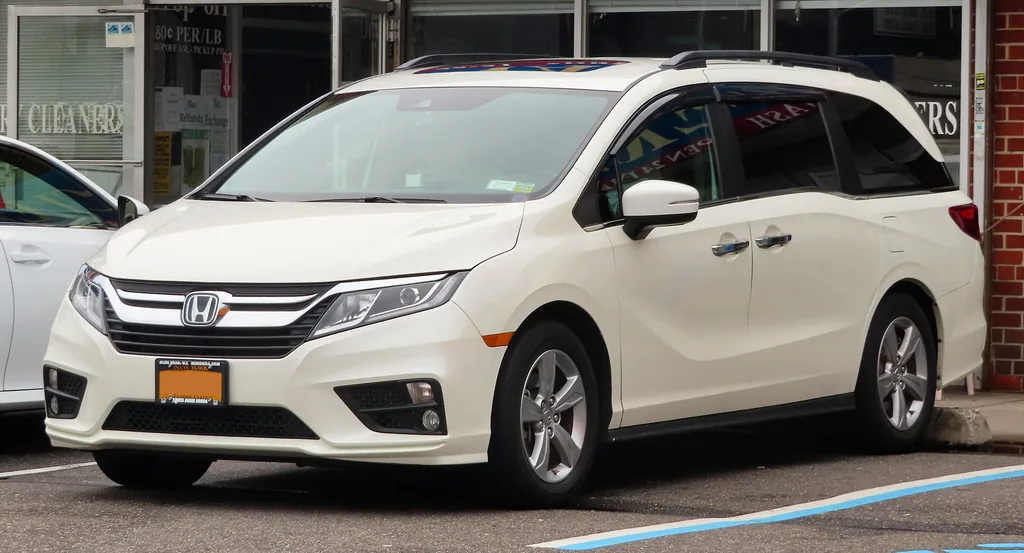
P0420 by Honda Model
A model missing below can still set P0420; it only means no Honda document naming the code turned up for it.
| Model | Years in Honda P0420 or catalyst-monitor records | What the record shows |
|---|---|---|
| Accord | 1998-1999; 2006-2007 Hybrid; 2010; 2017 V6; 2018-2024 1.5L | 03-073 (summary only); 18-022/18-023; 14-002 and a 2014 four-cylinder investigation; recall 17-004 (catalyst-monitor software); 2024 parts request |
| Civic | 1996-2005; 2021-2024 1.5L | Summary-only listings such as 05-027 and 05-028, an ECM update to prevent P0420; 2024 parts request |
| Element | 2003 | 03-031 (summary only): MIL on with P0420 |
| CR-V | 2010; 2023-2024 1.5L | Investigations only (2014 and 2024); no published fix found |
| Pilot | 2011; 2016-2019 | 14-002; 20-100 and 21-010 |
| Odyssey | 1999-2001; 2010; 2018-2019 | 03-073 (summary only); 14-002; 20-100 and 21-010 |
| Ridgeline | 2010; 2017-2019 | 14-002; 20-100 and 21-010 |
| Fit | 2007-2008; 2015-2016; 2017-2018 | 10-015; 22-002; 2023-2025 parts requests |
Wikipedia’s Honda J engine entry lists the J35Y6 V6 for the 2016-2022 Pilot, the 2017-on Ridgeline and the 2018-on North American Odyssey. In NHTSA data pulled October 21, 2026, 18 of the 1,716 complaints for the 2016 Pilot mention the catalyst or catalytic converter, and 5 cite P0420.
Frequently Asked Questions About P0420 on a Honda
What does P0420 mean on a Honda?
Is Bank 1 the front or rear on a Honda V6?
Can I keep driving my Honda with a P0420 code?
Does Honda have a warranty extension for P0420?
Is my Honda catalytic converter covered by the emissions warranty?
How much does it cost to fix P0420 on a Honda?
Data Sources and Verification
- Honda SB 20-100 (Feb. 2021): P0420/P0430, P030x, P219A/B warranty extension
- Honda SB 21-010 (Feb. 2021): warranty extension without software update
- Honda SB 22-002 (Feb. 2022): 2015-2016 Fit injector warranty extension
- Honda SB 17-004: 2017 Accord V6 catalyst monitor emissions recall
- Honda owner letter, March 2017: 2017 Accord emissions recall
- Honda SB 18-022: 2006-2007 Accord Hybrid P0420/P0430 extension
- Honda SB 18-023: same, CA, CT, ME, MA, NY and VT
- Honda SB 14-002 (Feb. 2014): A/F sensor cap, P0420 or P0430
- Honda owner letter, March 2021: 2016-2017 Pilot, 2017 Ridgeline and 2018 Odyssey extension
- Honda dealer message, Nov. 2024: P0420 parts request
- Honda 2006 Pilot owner’s manual: indicator lamp and readiness codes
- Honda 2006 Pilot owner’s manual: three way catalytic converter
- EPA: federal emission control warranties
- EPA420-F-00-041: What To Do With the Check Engine Light
- CARB: California vehicle and emissions warranty periods
- CARB: aftermarket catalytic converters
- AAA: How Much Does a Catalytic Converter Cost
- Wikipedia: Honda J engine
- NHTSA complaints API: 2016 Honda Pilot

Morgan Reyes is the founder and editor-in-chief of NextCarReview, which Morgan launched in August 2024. A 2022 graduate of Columbia University, Morgan is based in New York and writes and edits the site’s reviews, comparisons and buying guides. Morgan does not road-test vehicles. Every article is built from published primary data: EPA FuelEconomy.gov ratings, NHTSA crash ratings, recalls and owner complaints, IIHS results, and manufacturer specifications and pricing, with each figure cited and checked before publication. Contact: admin@nextcarreview.com