In this article 8 sections
The VSC light and the check engine light coming on at the same time is an alarming combination on a Toyota dashboard. It looks like two separate failures, but it is often one engine problem, and the stability control light is a side effect. Here is why Toyota links the two systems and how to track down the real cause.
Quick answer: On many Toyotas, the VSC light comes on with the check engine light because the engine computer has stored a fault, and Toyota’s fail-safe logic then shuts off Vehicle Stability Control and traction control. Fix the engine fault, such as a loose gas cap, EVAP leak, misfire or oxygen sensor, and the VSC light usually clears with it.
Why Toyota Turns Off VSC When the Engine Has a Fault
Toyota’s repair manuals spell this out under code C1201, “Engine Control System Malfunction.” The manual for the Venza (online copy) says that if a malfunction in the engine control system is detected, VSC and TRAC operation is prohibited by the fail-safe function, and that the fail-safe is cancelled once the engine signals return to normal. The 2015-2018 Tacoma manual (online copy) sets C1201 when a malfunction signal is received from the engine computer. An earlier manual for the 2003 Kluger, the name the Highlander carries in Australia and carried in Japan until 2007 (PDF copy), says the skid control computer prohibits TRAC and VSC when an engine trouble signal lasts 5 seconds or more with the engine running.
Our C1201 Toyota code guide covers that chassis code in depth. The key point: the C1201 or VSC warning is a messenger, and the diagnosis starts with the engine codes.
Which Lights You May See
Owners report different combinations depending on the model: VSC and check engine, sometimes with the slip indicator, TRAC or TRAC OFF, or a 4WD light. Toyota’s warning light guide explains that the TRAC OFF indicator shows traction control is turned off, and that a buzzer may sound with the slip indicator when VSC is operating. With the engine fault present, those systems are switched off by the fail-safe, not by the driver.
Common Causes Behind the Two Lights
Any engine fault that sets a code can trigger the fail-safe. Records from Toyota and from owners point to a few repeat causes:
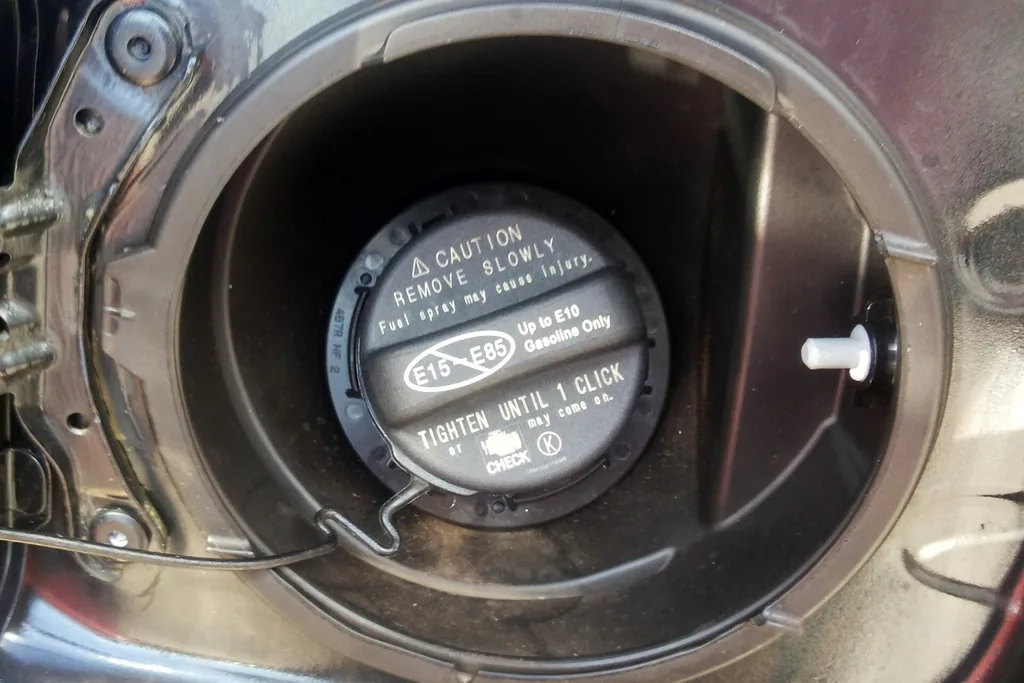
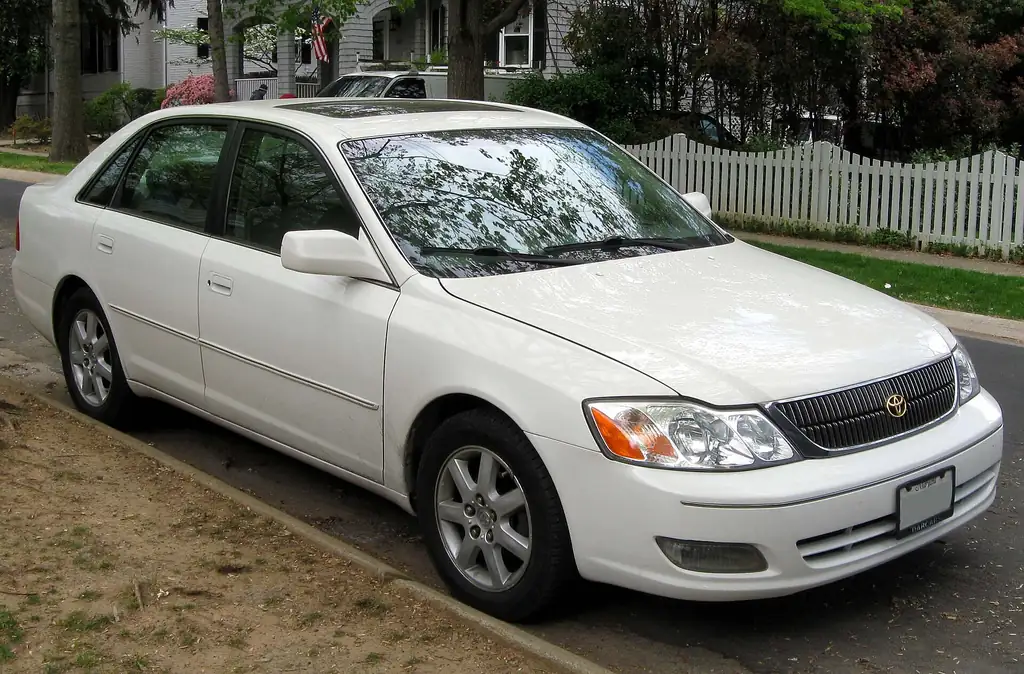
- Loose gas cap or EVAP leak. A Toyota bulletin for the 2000 Avalon (BR00500, NHTSA item 618298, listed in CarComplaints.com‘s index of NHTSA bulletins) describes VSC and VSC OFF lights on together with a check engine light for EVAP codes P0440, P0441 and P0446. FuelEconomy.gov, run by the Department of Energy and EPA, notes that a check engine light can be caused by something as minor as a loose gas cap. The cap on a 2012 Camry Hybrid, for example, is molded with “tighten until 1 click” (photo). Owners of 2007 and 2008 RAV4s also report the lights after EVAP charcoal canister damage, including one NHTSA complaint after driving through deep water. See our P0441 Toyota guide and P0455 guide.
- Misfires and ignition coils. In one NHTSA complaint, a 2006 RAV4 owner reported the check engine, VSC and slip lights plus a misfire; the dealer found misfire codes for cylinders 4 through 6 and C1201, and replaced the number 6 coil. Our P0300 guide covers misfire diagnosis.
- Oxygen sensors and fuel mixture. A 2010 Corolla owner told NHTSA (complaint) that a failed oxygen sensor brought the engine and VSC lights on. Lean-mixture codes such as P0171 are another engine fault the fail-safe responds to.
When the Fault Is on the Brake Side Instead
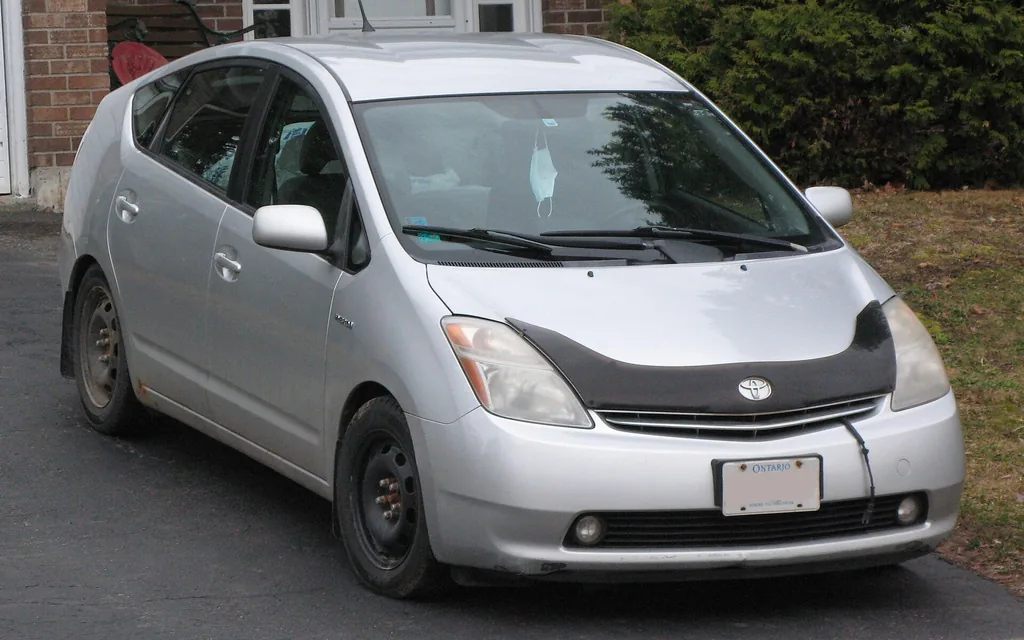
The link can also run the other way on Toyota hybrids. Toyota bulletins on NHTSA’s site describe some 2004-2009 Prius and 2007-2011 Camry Hybrid models showing the check engine light plus the ABS and VSC warning lights with code C1247 (stroke sensor malfunction) stored in the ABS/VSC computer. Toyota said the code could set from overly sensitive monitoring logic and called for replacing the skid control computer with updated logic where needed.
So if the ABS or brake warning light is on as well, the problem may be in the brake control system, and it needs a scan tool that reads ABS/VSC codes, not just engine codes.
Is It Safe to Drive?
With VSC and traction control shut off, the car still steers and brakes, but without the stability help those systems normally add. Leave extra margin on wet, icy or loose roads until it is fixed. If the check engine light is flashing, treat it as an active misfire and stop driving as soon as it is safe. If the brake or ABS warning light is also on, have the car inspected before relying on it.
How to Fix It, Step by Step
- Check the gas cap. Tighten it until it clicks and look for a cracked seal. The light will not go out instantly; it takes some driving for the monitor to rerun.
- Read the engine codes. Any shop can do it, and AutoZone offers free check engine light scans through its Fix Finder service.
- Fix the engine fault first. The Venza manual notes the VSC fail-safe cancels once engine signals are normal again, so the VSC light normally clears after the engine repair.
- If no engine code exists, the Tacoma manual tells technicians to use a simulation method to reproduce the fault, and the Kluger manual lists replacing the engine computer when C1201 sets with a normal engine code. That is dealer-level diagnosis.
- Check coverage. Our Toyota warranty guide explains what factory coverage includes.
Frequently Asked Questions About Toyota VSC and Check Engine Lights
Why are my VSC and check engine lights on at the same time?
Can a loose gas cap cause the VSC and check engine lights?
Will the VSC light go off by itself?
Is it safe to drive a Toyota with the VSC and check engine lights on?
Can I reset the VSC light myself?
Data Sources and Verification
- Toyota Venza repair manual (online copy) – Engine Control System Malfunction C1201/51
- Toyota Tacoma 2015-2018 repair manual (online copy) – Engine Control System Malfunction C1201
- Toyota Kluger repair manual RM1087E (online copy) – DTC C1201/51
- Toyota Owners – Warning lights guide
- Toyota T-SB-0174-12 Rev1 (NHTSA) – 2004-2009 Prius ABS/VSC DTC C1247
- Toyota T-SB-0040-14 (NHTSA) – 2007-2011 Camry HV ABS/VSC DTC C1247
- CarComplaints.com – 2000 Toyota Avalon bulletin index (BR00500, NHTSA item 618298)
- NHTSA complaints API – 2006 Toyota RAV4 (ODI 10448450)
- NHTSA complaints API – 2007 Toyota RAV4 (ODI 10234899)
- NHTSA complaints API – 2010 Toyota Corolla (ODI 10786707)
- NYSDEC – Motor Vehicle Inspection and Maintenance Programs

Morgan Reyes is the founder and editor-in-chief of NextCarReview, which Morgan launched in August 2024. A 2022 graduate of Columbia University, Morgan is based in New York and writes and edits the site’s reviews, comparisons and buying guides. Morgan does not road-test vehicles. Every article is built from published primary data: EPA FuelEconomy.gov ratings, NHTSA crash ratings, recalls and owner complaints, IIHS results, and manufacturer specifications and pricing, with each figure cited and checked before publication. Contact: admin@nextcarreview.com