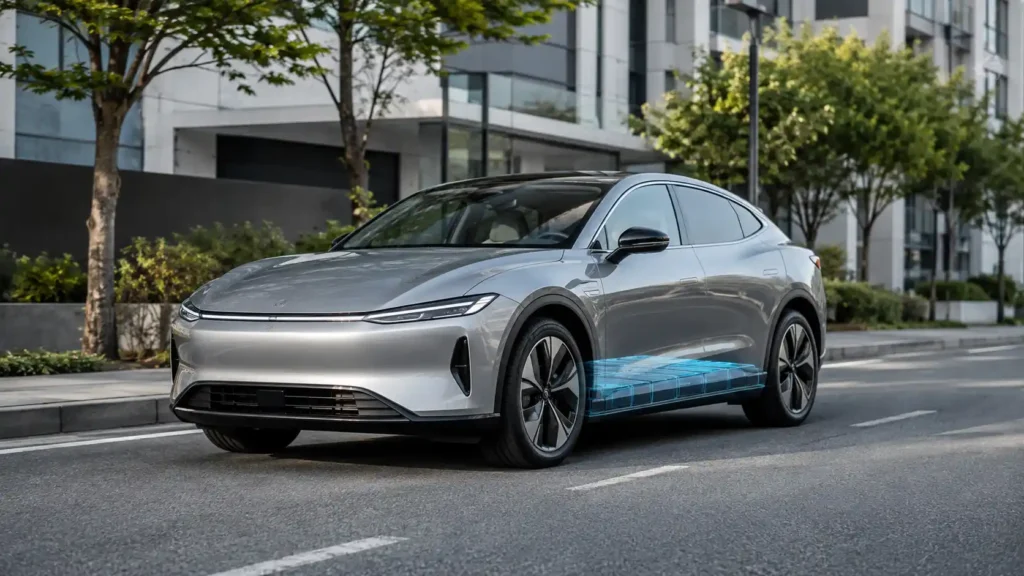
We answer the question that scares most EV shoppers. So how long do EV batteries last, and what happens if one dies? The short answer is calm, not scary. Real-world data shows packs that keep most of their capacity for many years. We cover lifespan, warranties, falling replacement costs, and simple habits that keep your battery strong for years.
Figures cross-checked against EPA, NHTSA, IIHS and manufacturer sources. See our sourcing policy.
Most EV shoppers fear one thing, so how long do EV batteries last before they fail and cost a fortune? We get it. The battery is the most costly part of any electric car. So a dead pack sounds like a big bill. That worry is fair.
But real driving data tells a calmer story. Most EV batteries outlast the cars they power. And Geotab’s data projects about 82% capacity left after eight years. The facts are on your side.
Modern lithium-ion packs are tough. Carmakers build them to handle years of daily charging. As a result, battery degradation creeps in slowly. So your EV battery health dips just a little each year. And then it flattens out.
So the real risk is not sudden death. It is slow fade. But even that fade stays small. Most drivers barely notice it.
In this guide, we lay out honest numbers. Firstly, we cover lifespan and warranty coverage. Secondly, we look at the true EV battery replacement cost 2026. In addition, we share easy habits that stretch every mile. So by the end, you should feel far calmer about going electric.
Battery longevity connects directly to how far your EV actually travels. For a full picture of how rated range compares to real-world highway numbers before we layer on the degradation question, our electric cars worse real world range guide covers every major EV on sale today. And if you are still choosing which EV to buy, our best electric and hybrid cars 2026 guide covers every strong option across the full price range.
How Long Do EV Batteries Last?
EV Battery Lifespan – Quick Technical Intelligence
Electric car battery lifespan shocks most first-time buyers, and the news is good. A DOE study suggests packs may last 12 to 15 years in moderate climates. So how long do EV batteries last in daily use? Usually much longer than the owner keeps the car.
How Long Do EV Batteries Last in Years and Miles
Carmakers design packs for the long haul. And the DOE estimate is 8 to 12 years even in severe climates. In distance terms, that means a lot of EV battery miles.
Most modern EVs should cover high mileage before the battery becomes a problem. Some high-mileage fleet vehicles have gone much further. So the pack often outlives the brakes and the tires.
What the Real-World Data Shows
Electric car battery lifespan looks strong once you check fleet reports. Big studies now track thousands of cars for many years. And the pattern stays steady.
Geotab’s 2026 study of 22,700 EVs found an average loss of about 2.3% of capacity per year. Frequent high-power fast charging doubled that rate, to about 3.0% versus 1.5%. So a five-year-old EV often keeps close to 90% of its capacity. That is a slow, small drop. In addition, battery state of health tools let you watch this number in the car. So you never have to guess.
What Causes Battery Degradation

EV battery degradation comes from a few clear causes, and heat leads the list. Every battery fades a little over time. But some habits speed up the slide. And others slow it right down.
Fast Charging and Heat
Heat is the main enemy of any lithium-ion cell. Fast charging pumps in lots of energy fast. And that pumps out lots of heat. So daily DC fast charging can raise the lithium battery degradation rate.
An odd road-trip splurge will not hurt much. But everyday fast charging adds up. Likewise, parking in blazing sun day after day stresses the pack.
State of Charge Habits
Charge habits matter more than most drivers think. Sitting at 100% for long spells strains the cells. And draining to 0% again and again hurts too.
So the sweet spot sits in the middle. Keep the pack between about 20% and 80% for daily use. And this one habit guards EV battery health for years.
EV Battery Warranties
Every EV battery warranty gives buyers a strong safety net. And the terms are kind. Carmakers back their packs because they trust them. So you rarely pay for a battery problem inside the covered window.
Typical 8-Year/100,000-Mile Coverage
Most brands offer 8 years or 100,000 miles of battery cover. And some go further. So these EV battery warranty years often beat the cover on any other car part.
Many warranties also promise a floor on capacity. But the rules vary by brand. If the pack drops below about 70% during the term, the maker steps in. So warranty coverage guards against fast, early fade.
What’s Covered vs Not
Coverage protects against defects and heavy capacity loss. But it does not cover crash damage or flood damage. And slow, normal fade above the promised floor usually falls outside a claim.
So read the fine print before you buy. Firstly, check the exact capacity floor. Secondly, confirm whether the warranty moves to the next owner. And keep your service records safe.
Replacement Cost in 2026
The ev battery replacement cost 2026 has dropped sharply, and the trend is speeding up. A pack swap once sounded scary. But prices now look far friendlier than the old horror stories.
Out-of-Warranty Pack Cost
An out of warranty battery cost depends on the car and the pack size. So small packs cost less to replace than big long-range ones. And many owners never face this bill at all. Most packs simply outlast the owner.
One famous worry is the Tesla battery replacement cost. But real quotes vary by model and by shop. Third-party rebuilders now beat dealer prices, and those prices keep sliding.
| EV Battery Type (2026) | Typical Lifespan | Common Warranty |
|---|---|---|
| LFP (entry / standard range) | Long; tolerates full charges | 8 yr / 100k mi |
| NMC (long range / premium) | 12-15 yrs in moderate climates (DOE est.) | 8 yr / 100k mi |
| Refurbished / third-party pack | Varies by supplier | Shop-backed |
Why Prices Are Falling
Battery prices keep sliding for simple reasons. Firstly, factories now build packs at a huge scale. So the cost per kilowatt-hour drops every year.
Better chemistry helps as well. And growing EV battery recycling feeds cheap metal back into new packs. As a result, replacement bills should keep falling all decade. So the fear fades every year.
LFP vs NMC, Chemistry and Longevity
Electric car battery lifespan shifts with the chemistry inside the pack. So the lfp vs nmc battery choice shapes how long a car lasts. Both are lithium-ion. But they age in different ways.
How Chemistry Affects Lifespan
LFP packs love a full charge, and they shrug off heat well. So you can charge them to 100% each day without much worry. But their trade-off is weaker range in very cold weather.
NMC packs hold more energy for longer range. But they prefer that 20% to 80% window. So drivers pick the chemistry that fits their climate and their daily miles.
Weight plays a part too. LFP packs weigh a bit more for the same range. But they cost less to build. So many budget EVs now use them.
For the best current value picks in each chemistry category, our best electric cars under $40,000 in 2026 guide covers which packs each affordable model uses and what that means for long-term ownership.
How to Extend Your EV Battery Life

Electric car battery lifespan grows a lot with a few smart habits. And none of them cost money. Meanwhile, they take almost no effort. So they soon turn into routine.
Charging Habits
Charge to about 80% for daily driving. But save the full 100% for long trips only. So lean on slow home charging most of the time. And treat fast charging as a road-trip tool. Small habits add up fast.
Climate and Storage Tips
Park in shade or a garage when you can. Extreme heat wears cells faster than almost anything else. So keep the car cool in summer. And if you store it for weeks, leave the pack near 50%.
Cold weather matters as well. A cold pack charges slower and shows less range. But the range comes back once it warms up. So do not panic when the numbers dip in winter.
The 2025 Hyundai Kona Electric is a strong example of a budget EV with solid thermal management that keeps battery health stable across both hot and cold climates. And our 2026 Nissan Leaf range guide covers how the updated Leaf’s LFP pack handles range and capacity retention across seasons.
Is Battery Worry Overblown?
Honestly, for most drivers, yes. So how long do EV batteries last next to the fear around them? Far longer than the panic suggests.
The battery usually outlasts the ownership period. And warranties cover the early years. Meanwhile, replacement costs keep dropping fast. So fold battery health into the total cost of ownership. Then the numbers look calm, not scary. The math is on your side.
Conclusion
So how long do EV batteries last in the real world? Most should run for many years, and DOE research suggests 12 to 15 years in moderate climates. And warranties shield the early years. Meanwhile, the ev battery replacement cost 2026 keeps falling. So treat your pack kindly, and it should serve you well for a long time.
Ready to pick your first electric car? Check our EV range guide and our full buying guide next, and drive away with total peace of mind.
Related guides: our EV and hybrid guide and Cheapest EV 2026.
Frequently Asked Questions About EV Battery Lifespan
How long do EV batteries last?
How much does an EV battery cost to replace?
What is the typical EV battery warranty?
What causes EV batteries to degrade?
How can I extend my EV battery life?
Are LFP batteries better for longevity?
⚠️ Professional Notice:
Battery lifespan, degradation rate, and replacement cost figures in this article are based on 2026 published fleet studies, and publicly available industry reports. Actual battery performance varies significantly by vehicle model, chemistry type, climate, charging habits, and individual use patterns. Battery replacement costs vary by model, pack size, dealer versus third-party repair, and regional labor rates.
Warranty terms and capacity guarantees vary by manufacturer and are subject to change. Always confirm your specific vehicle’s warranty terms with the manufacturer before purchase. This article does not constitute financial or mechanical advice. Consult your vehicle’s owner manual and a qualified service technician for model-specific battery guidance. NextCarReview.com does not receive compensation from any manufacturer, repair shop, or battery supplier in exchange for rankings or editorial coverage.
Data Sources and Verification
- Recurrent Auto EV battery degradation database – real-world battery state of health tracking across thousands of EVs, 2025 to 2026
- Bloomberg NEF battery price survey – lithium-ion pack cost per kWh trends, 2026
- OEM warranty documentation – manufacturer battery warranty terms for major EV brands, 2026 model year
- Fleet analysis – published mileage accumulation and capacity retention data across high-mileage EV fleets, August 2026
- US Department of Energy – Vehicle Technologies Office battery performance and cost research publications
- Third-party battery rebuilder pricing survey – aggregated pricing across US repair shops, August 2026
- Geotab: EV battery health study (2026)
- FuelEconomy.gov: EV technology and battery life

Morgan Reyes is the founder and editor-in-chief of NextCarReview, which Morgan launched in August 2024. A 2022 graduate of Columbia University, Morgan is based in New York and writes and edits the site’s reviews, comparisons and buying guides. Morgan does not road-test vehicles. Every article is built from published primary data: EPA FuelEconomy.gov ratings, NHTSA crash ratings, recalls and owner complaints, IIHS results, and manufacturer specifications and pricing, with each figure cited and checked before publication. Contact: admin@nextcarreview.com