
In this article 11 sections
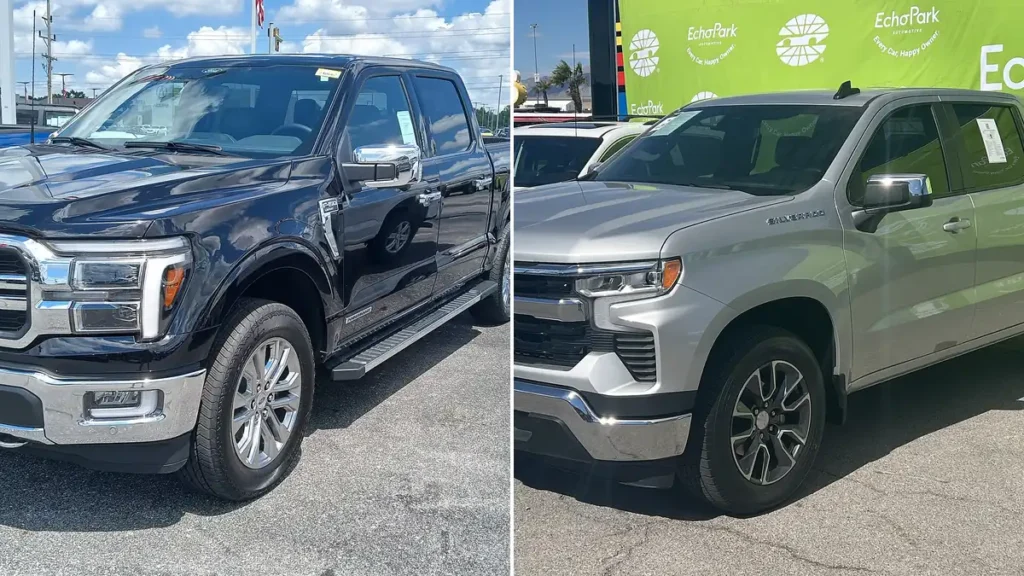
The 2026 Ford F-150 vs Chevrolet Silverado matchup is one of the biggest rivalries in the American new-car market. These two trucks have battled for full-size sales for decades, and 2026 keeps the fight close. The F-150 answers with a broader spread of power, a PowerBoost hybrid nobody else matches, and a slightly higher max tow rating. The Silverado answers back with a lower starting price and the only diesel here. Neither is a blowout winner. Your use case decides it.
Figures cross-checked against EPA, NHTSA, IIHS and manufacturer sources. See our sourcing policy.
Full-size trucks are the best-selling vehicles in America, and the F-150 and Silverado are the two names that matter most. Both carry over for 2026 after recent refreshes, with updated pricing. This guide lines up the real numbers, from manufacturer specs and EPA ratings, so you can see where each truck actually wins. Cross-shopping hybrid half-tons instead? See our F-150 Hybrid vs Ram 1500 comparison for that narrower matchup.
2026 Ford F-150 vs Chevrolet Silverado at a Glance
2026 F-150 vs Silverado – Quick Market Intelligence
Here is the short version. The Silverado starts cheaper and is the only truck here with a diesel. The F-150 counters with a stronger PowerBoost hybrid, a marginally higher tow rating, and better IIHS results on paper. Both offer three cab styles and three bed lengths, so day-to-day usability is close.
2026 Ford F-150 vs Chevrolet Silverado Verdict Table
| Spec (2026) | Ford F-150 | Chevrolet Silverado 1500 |
|---|---|---|
| Starting Price (before destination) | ~$39,330 (XL) | ~$36,900 (WT) |
| Base Engine | 2.7L EcoBoost V6, 325 hp / 400 lb-ft | 2.7L TurboMax I4, 310 hp / 430 lb-ft |
| Top Gas Engine | 3.5L EcoBoost V6, 400 hp / 500 lb-ft | 6.2L EcoTec3 V8, 420 hp / 460 lb-ft |
| Efficiency Engine | 3.5L PowerBoost Hybrid V6, 420 hp / 570 lb-ft | 3.0L Duramax Turbo-Diesel, 305 hp / 495 lb-ft |
| Max Towing | Up to 13,500 lbs | Up to 13,300 lbs |
| Max Payload | Up to 2,440 lbs | Up to 2,380 lbs |
| Best Combined MPG | ~23-24 (PowerBoost Hybrid) | 25 combined (Duramax 2WD) |
| Cab Styles | Regular, SuperCab, SuperCrew | Regular, Double, Crew |
| Bumper-to-Bumper Warranty | 3 yr / 36,000 mi | 3 yr / 36,000 mi |
| Powertrain Warranty | 5 yr / 60,000 mi | 5 yr / 60,000 mi |
Who Should Choose Which
Want the widest engine spread and the strongest hybrid on the market? The F-150 is your truck. Want a lower price and a genuine diesel option? The Silverado has you covered. The choice really does split along those lines, and we walk through every category below.
Price and Trim Lineup
Money talks first in any truck comparison. And here the Chevrolet holds the edge at the bottom of the range.
F-150 Trims (XL, XLT, Lariat, King Ranch, Platinum, Limited, Raptor)
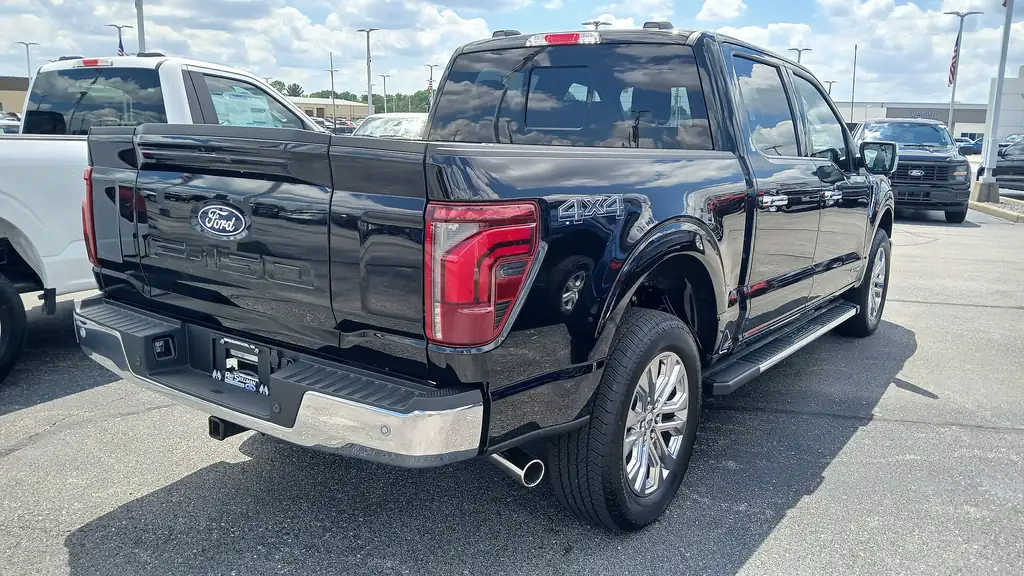
The F-150 opens with the work-focused XL, starting around $39,330 before destination for a 2.7L EcoBoost 4×2 regular cab. XLT adds comfort and tech, Lariat brings leather, and King Ranch and Platinum push into luxury-truck territory. Limited tops the mainstream range, while Raptor branches into a dedicated performance and off-road model with its own hardware.
Silverado Trims (WT, Custom, LT, RST, LTZ, High Country)
The Silverado starts with the Work Truck (WT) at around $36,900 before destination, undercutting the F-150 XL by roughly $2,400. Custom and LT add daily-driver comfort, RST leans sporty, and LTZ and High Country top the range. Chevrolet also keeps a ZR2 off-road variant alongside the mainstream lineup.
Best-Value Trim by Use Case
For a work truck on spreadsheet logic, the WT or XL both do the job cheaply. For a weekend tow rig, the XLT and LT hit the sweet spot without the King Ranch or High Country markup.
Engine Options, Towing, and Payload
This is the heart of any full-size truck comparison, and it is where the F-150 and Silverado genuinely differ in philosophy. Ford spreads four engines across the mainstream lineup. Chevrolet does the same, but swaps a diesel in where Ford does not offer one.
Ford F-150 Engine Lineup
The standard 2.7L EcoBoost V6 makes 325 horsepower and 400 lb-ft, and it is the volume engine across XL, STX, and XLT trims. Step up to the 5.0L V8 for 400 horsepower and 410 lb-ft, plus the V8 sound many buyers still want. The high-output 3.5L EcoBoost V6 tops the gas lineup at 400 horsepower and 500 lb-ft, and it is the engine behind the F-150’s best tow rating. The 3.5L PowerBoost full hybrid V6 makes 420 horsepower and 570 lb-ft, the strongest torque figure in the standard lineup, plus an onboard generator function many owners use as a jobsite power source. Performance-focused Raptor models add their own twin-turbo and supercharged engines above this mainstream range.
Chevrolet Silverado 1500 Engine Lineup
Chevrolet’s standard engine is the 2.7L TurboMax turbocharged four-cylinder, rated at 310 horsepower and 430 lb-ft, more low-end torque than Ford’s base V6. The 5.3L EcoTec3 V8 steps up to 355 horsepower and 383 lb-ft for buyers who want traditional V8 character. The 6.2L EcoTec3 V8 is the range-topping gas engine at 420 horsepower and 460 lb-ft. The 3.0L Duramax turbo-diesel inline-six, rated at 305 horsepower and 495 lb-ft, is the engine nobody on the Ford side can answer, and the fuel-economy leader of the entire matchup.
Towing Capacity Compared
Properly equipped, the F-150 tops out at up to 13,500 pounds of max towing with the 3.5L EcoBoost V6. The 5.0L V8 is rated up to 12,800 pounds, and the base 2.7L EcoBoost checks in at up to 8,400 pounds. GM quotes up to 13,300 pounds of max towing for the Silverado, with the TurboMax base engine handling up to 9,500 pounds in the right configuration. The F-150 holds a modest 200-pound edge at the very top, but both trucks are well matched once you are shopping a specific configuration rather than the brochure max.
Payload Capacity Compared
Ford quotes a max payload of 2,440 pounds for the F-150. The Silverado tops out at up to 2,380 pounds, with the TurboMax RWD configuration rated around 2,260 pounds and the heavier Duramax dropping to about 1,970 pounds in 2WD form. If payload matters more than towing, both trucks land in a similar band, and the specific cab, bed, and drivetrain combination matters more than the badge.
Cab Configurations and Bed Lengths
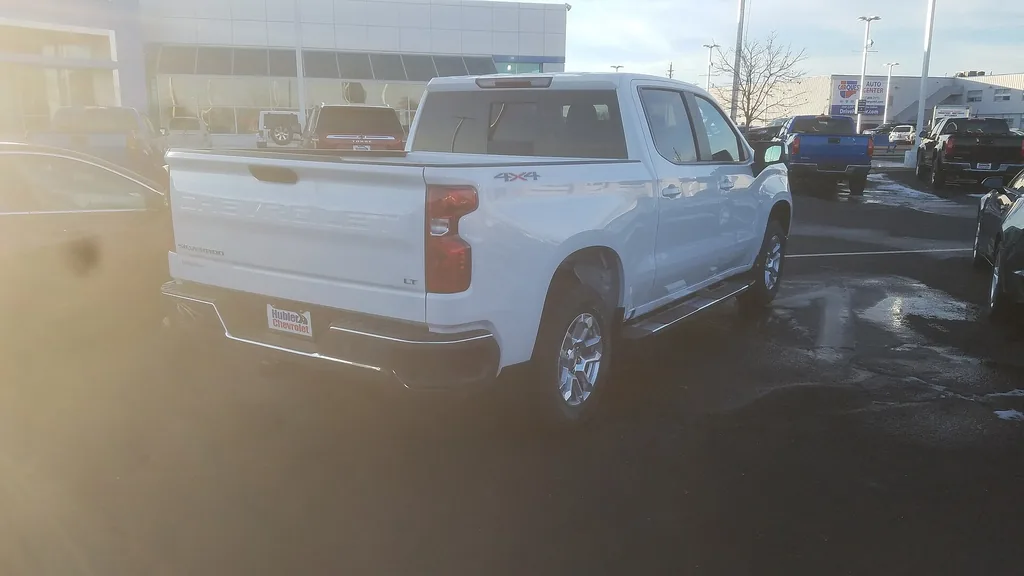
The F-150 offers Regular Cab, SuperCab, and SuperCrew styles, paired with 5.5-foot, 6.5-foot, and 8.0-foot beds. The Silverado offers Regular Cab, Double Cab, and Crew Cab, paired with Short (69.9 in), Standard (79.4 in), and Long (98.2 in) beds. Work-truck buyers lean toward a regular cab with a long bed; families gravitate to the shorter-bed crew configurations.
Fuel Economy
Neither of these trucks is going to win any efficiency awards outright, but the gap between engine choices within each lineup is bigger than the gap between brands.
EPA Ratings by Engine
Ford’s 2.7L EcoBoost is EPA-rated around 19 city / 25 highway / 21 combined in 4×2 form. The 5.0L V8 lands at roughly 16 city / 24 highway / 19 combined. The PowerBoost hybrid leads the Ford side at an EPA-estimated 23 city / 25 highway / 24 combined in 4×2 form, dropping slightly to about 23 combined in 4×4 trim.
On the Chevrolet side, the 5.3L V8 is EPA-rated around 16 city / 20 highway / 17 combined in 2WD form. The Duramax turbo-diesel is the standout number in this comparison, EPA-estimated at 23 city / 28 highway / 25 combined in 2WD form. The TurboMax four-cylinder is rated 18 city / 21 highway / 20 combined in 2WD form. Check fueleconomy.gov for your exact configuration before you buy.
Which Truck Actually Saves You More at the Pump
If fuel economy decides it for you, the Duramax Silverado wins outright. If you want a gas-only setup, the PowerBoost F-150 beats any V8 on either side. Expect real-world mileage to run a few mpg below EPA combined once you are loaded down or towing.
Interior, Tech, and Comfort
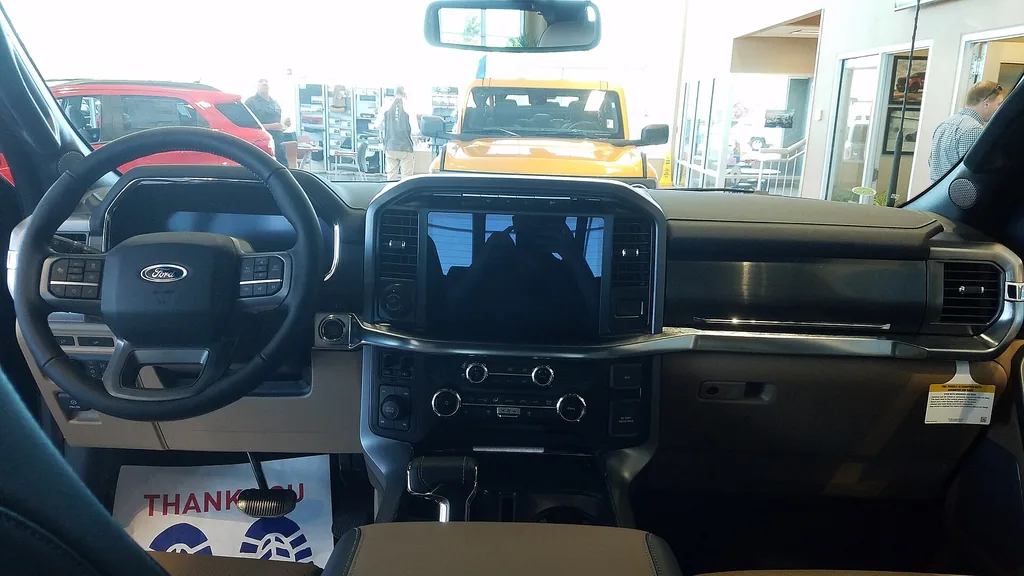
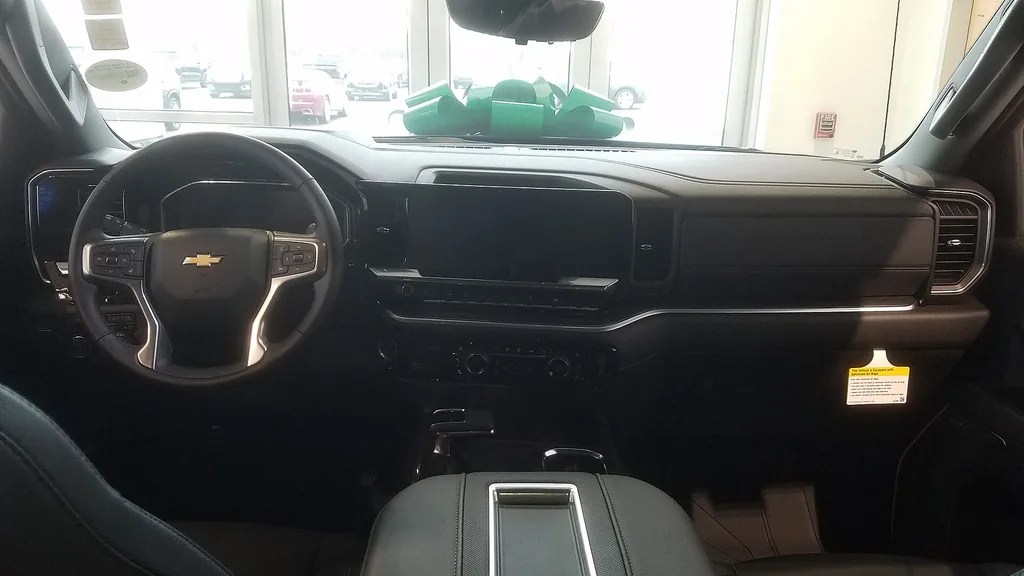
Both trucks lean hard into big center screens and driver-assist tech. Ford’s SYNC system and Chevrolet’s Google built-in infotainment stack support wireless Apple CarPlay and Android Auto on most trims. Higher trims add massaging seats, multi-zone climate control, and larger digital gauges. The F-150 cabin feels more truck-like even in luxury trims; upper Silverado trims lean closer to an SUV feel. Both offer genuinely spacious rear seats in SuperCrew or Crew Cab form.
Safety and Driver Assistance
This is where the two trucks separate more than buyers might expect, and it is worth reading closely before you decide.
IIHS Results
The F-150 SuperCrew earns good ratings in the small overlap front and updated side tests, and good or acceptable headlight ratings. It scores poor in the newer, tougher moderate overlap front test, driven by rear-passenger injury measures. Neither F-150 body style currently holds a 2026 IIHS Top Safety Pick award.
The Silverado 1500 Crew Cab scores acceptable in pedestrian front crash prevention and side impact, but marginal in small overlap front and poor in both moderate overlap front and headlights. Among full-size crew cabs tested for 2026, the Silverado currently sits toward the back of the pack on IIHS scoring.
NHTSA and Driver Assistance Tech
NHTSA gives the 2026 F-150 SuperCrew five stars overall. The Silverado 1500 crew cab gets five stars in RWD form and four stars with 4WD, so check nhtsa.gov for your cab and drivetrain. Both trucks offer forward collision warning, automatic emergency braking, and lane-keeping assistance as standard or near-standard, with adaptive cruise and hands-free highway driving available on higher trims.
The Honest Take
The F-150 currently has the stronger IIHS file, largely on small overlap, side and headlight scores. But the newer moderate overlap test is proving tough for full-size trucks generally, and neither has a clean sweep.
Reliability, Warranty, and Long-Term Cost
Both automakers back their full-size trucks with matching bumper-to-bumper and powertrain coverage.
Warranty Comparison
The F-150 carries a 3-year / 36,000-mile bumper-to-bumper warranty and a 5-year / 60,000-mile powertrain warranty; the PowerBoost hybrid’s electrical components get an extended 8-year / 100,000-mile warranty on top. The Silverado matches the base coverage with its own 3-year / 36,000-mile bumper-to-bumper and 5-year / 60,000-mile powertrain warranty.
Long-Term Cost Considerations
Both trucks have long production histories, deep parts availability, and strong resale value. Maintenance costs track closely once you match engine choice, since a V8 costs about the same to service under either badge. The Duramax carries the highest upfront premium here, but it often pays that back in fuel savings for high-mileage owners.
Verdict and Which Should You Buy
So which one wins the 2026 Ford F-150 vs Chevrolet Silverado fight? It genuinely depends on what you tow, how much you want to spend up front, and whether a diesel matters to you.
Buy the F-150 If…
Choose the F-150 if you want the widest engine spread, the strongest hybrid on the market, and a slightly higher max tow rating. It also currently posts the stronger IIHS file of the two. If you want the flexibility of a hybrid that still tows respectably, this is your truck.
Buy the Silverado If…
Choose the Silverado if a lower starting price matters, or if a diesel engine option is non-negotiable for your towing or highway mileage needs. The Duramax alone is a reason to cross-shop the Chevrolet, especially for buyers who put serious highway miles on a truck every year.
Final Word
Neither truck is a clear knockout in 2026. The Ford wins on max towing, hybrid efficiency, and current IIHS scores. The Chevrolet wins on starting price and is the only one here with a diesel. Match the truck to your use case, and confirm the exact tow rating, payload figure, and IIHS score for your configuration before you sign anything.
Frequently Asked Questions About the 2026 Ford F-150 vs Chevrolet Silverado
Which tows more, the F-150 or Silverado?
Which has better fuel economy?
Which is safer, the F-150 or Silverado?
Which is cheaper, the F-150 or Silverado?
Does the Silverado offer a diesel engine option?
How many engine choices does each truck offer?
New for 2027: see our 2027 GMC Sierra 1500 guide and the 2027 Sierra 1500 vs Silverado 1500 comparison for the next-generation trucks.
Related guides: explore more matchups and Toyota 4Runner vs Jeep Grand Cherokee: Full Off-Road SUV Comparison….
⚠️ Professional Notice:
All 2026 pricing figures in this article are based on manufacturer suggested retail prices and published market data as of September 2026. Real transaction prices vary by trim, dealer, geographic region, and available incentives. Confirm current pricing with your local dealer before any purchase decision.
Fuel economy figures reference EPA combined estimates where published; real-world mpg varies with driving style, terrain, load, and weather. Towing and payload figures are manufacturer-quoted maximums for specific configurations and will be lower on many trims; always confirm the tow rating and payload figure on the door-jamb sticker of the truck you are buying. Safety ratings reference IIHS published data for the 2026 model year and are subject to change; NHTSA overall star ratings vary by cab and drivetrain. NextCarReview.com does not receive compensation from any manufacturer or dealer in exchange for rankings or editorial coverage.
Data Sources and Verification
- OEM technical documentation – Ford Motor Company and General Motors (Chevrolet) official 2026 model year specifications, ford.com and chevrolet.com
- EPA fuel economy estimates – F-150 PowerBoost 2WD, Silverado Duramax 2WD, Silverado TurboMax 2WD, fueleconomy.gov
- IIHS and NHTSA safety ratings – IIHS 2026 F-150 crew cab, IIHS 2026 Silverado 1500 crew cab, NHTSA 2026 Silverado 1500 ratings
- Aggregated market pricing data – September 2026 dealer listing aggregation across US markets

Morgan Reyes is the founder and editor-in-chief of NextCarReview, which Morgan launched in August 2024. A 2022 graduate of Columbia University, Morgan is based in New York and writes and edits the site’s reviews, comparisons and buying guides. Morgan does not road-test vehicles. Every article is built from published primary data: EPA FuelEconomy.gov ratings, NHTSA crash ratings, recalls and owner complaints, IIHS results, and manufacturer specifications and pricing, with each figure cited and checked before publication. Contact: admin@nextcarreview.com


