In this article 10 sections
Four official sources cover most of a free VIN check: NHTSA’s VIN decoder (factory specs), NHTSA’s recall lookup (open safety recalls, past 15 years), NICB VINCheck (insurer theft and salvage reports, free with a daily search limit) and NMVTIS (state title brands, odometer and total-loss records, through approved providers for a small fee).
Start with our free VIN decoder to confirm the car matches the listing, then run the others on the same 17-character VIN.
Paste any 17-character VIN into the NextCarReview VIN decoder to see the year, make, model, engine and plant data that NHTSA’s vPIC database holds for it.
Sources: NHTSA’s recall lookup and vPIC API, NICB VINCheck, the Department of Justice’s NMVTIS consumer pages, TxDMV and the FTC. NHTSA’s web pages refused direct connections in October 2026, so their wording was confirmed through NHTSA’s indexed page text. NextCarReview does not sell vehicle history reports and does not rank paid report services; see our sourcing policy.
This is general information. Decoded details come from manufacturer submissions to NHTSA; always confirm a specific vehicle with its title, the manufacturer or a dealer.
Paid vehicle history reports are useful, but several official checks cost nothing and answer the most important questions: is this the car the seller says it is, does it have an open safety recall, and has an insurer reported it stolen or totaled? This hub explains each free source, what it shows and where it falls short, and links to the detailed guides in this series. Begin with our free VIN decoder.
Which Free VIN Checks Are Available?
| Source | Cost | What it shows | Main limits |
|---|---|---|---|
| NHTSA vPIC VIN decoder (and our decoder) | Free | Factory data from manufacturer filings: make, model, year, body, engine, plant | No history; specs only |
| NHTSA recall lookup | Free | Open (unrepaired) safety recalls from the past 15 calendar years | No completed, non-safety or very recent recalls; small manufacturers not included |
| NICB VINCheck | Free, with a daily search limit | Theft not recovered; salvage or flood reports from participating insurers | Participating insurers only; not a full history report |
| NMVTIS report | Fee set by approved providers | State title brands, latest odometer, insurer total-loss and salvage-yard reports | Possible false negatives; not every state record field |
| State DMV title record | Varies by state | Current title, brands and lienholder as the state records them | Process differs by state |
What Does NHTSA’s Free VIN Decoder Show?
NHTSA’s Product Information Catalog and Vehicle Listing (vPIC) decodes a VIN using the information manufacturers file under 49 CFR Part 565. It returns the vehicle’s make, model, model year, body class, engine and plant, and it is the same data behind the brand guides in this series (NHTSA vPIC decoder; vPIC API). Our VIN decoder uses this data in a simpler layout.
Decoding is the first check for a reason: if the decoded year, engine or body style doesn’t match the listing, everything else is moot. Our guide on how to read a VIN explains each of the 17 positions, and the brand guides cover Toyota, Ford, Chevrolet and Honda codes.
How Do You Check Recalls by VIN for Free?
Enter the VIN at nhtsa.gov/recalls. NHTSA describes the search as covering incomplete safety recalls and safety recalls conducted over the past 15 calendar years by major light-vehicle automakers, including motorcycle makers. It does not show completed recalls, non-safety campaigns, international vehicles, very recently announced recalls, or recalls by small manufacturers such as some ultra-luxury and specialty brands (NHTSA).
Recall repairs are generally free: under 49 U.S.C. 30120, the manufacturer must remedy a safety defect without charge, unless the vehicle was first sold more than 15 calendar years before the recall notice (5 years for tires). Dealers may not sell new vehicles with open recalls, but that rule does not cover used cars (49 U.S.C. 30120). Details are in our recall check guide.

What Does NICB VINCheck Show?
The National Insurance Crime Bureau’s VINCheck is free and shows whether a vehicle was reported as stolen and not recovered, or as a salvage or flood-damaged vehicle, by NICB’s participating member insurers. NICB limits the number of free searches per day and requires the full 17-character VIN (NICB). VINCheck covers only participating insurers’ theft, salvage and flood records, so a clean result is not a full vehicle history.
What Does an NMVTIS Report Add?
The National Motor Vehicle Title Information System, run under the Department of Justice, gathers data from state titling agencies, insurers, auto recyclers, and junk and salvage yards. A report shows the vehicle’s title brand history, its latest reported odometer reading, any insurer total-loss or salvage determination, and any report of transfer to a junk or salvage yard (NMVTIS).
NMVTIS reports come from approved data providers listed on the DOJ site, which says the order of its list implies no preference among them (NMVTIS providers); TxDMV says prices begin at a couple of dollars (TxDMV). NMVTIS states that about 87% of US vehicles are in the system and warns that a search may return a false negative until every required entity reports. Our salvage and flood title guide explains how brands differ by state.

Where Do State DMV Records Fit In?
Your state’s motor vehicle agency holds the official title record, including brands and liens, and NMVTIS notes that it does not contain every item a state keeps. Texas, for example, points buyers to an NMVTIS report and to checks for title brands such as salvage, rebuilt, junk and water damage before they buy (TxDMV). If any free or paid check raises a question, ask the seller for the title and compare it with the state’s record.
What Do Free Checks Not Cover?
None of the free sources gives a full accident, service or ownership history, and none reports mechanical condition. Commercial vehicle history reports cost money; Commercial vehicle history reports cost money and typically draw on more sources than the free tools. The FTC’s Buyers Guide, which dealers must post on used cars, tells shoppers to get a vehicle history report and to have the car inspected by an independent mechanic (FTC). Our accident history guide explains how to look for crash damage, and the window sticker guide covers rebuilding a car’s original equipment list.
What Is the Best Order for a Free VIN Check?
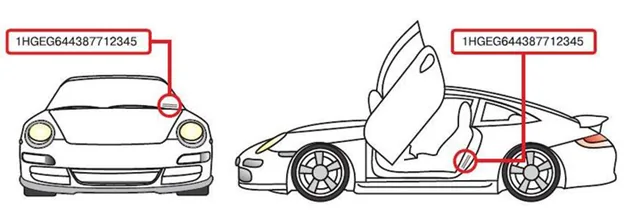
- Read the VIN on the dashboard and the door label; make sure they match the title.
- Decode it with our VIN decoder and compare year, engine and body with the listing.
- Check open recalls at NHTSA.
- Run NICB VINCheck for theft and insurer salvage reports.
- Buy an NMVTIS report from an approved provider for title brands and odometer history.
- Have an independent mechanic inspect the car before you pay.
Frequently Asked Questions
Is there a truly free VIN check?
Yes, for several pieces of the picture. NHTSA’s recall lookup and VIN decoder are free, and NICB’s VINCheck is free, with a daily search limit. A full title-brand history through NMVTIS comes from approved providers that charge a fee; TxDMV says prices begin at a couple of dollars.
What does a free VIN check show?
Each free source covers one area: NHTSA shows open safety recalls and decodes the vehicle’s factory specifications, and NICB VINCheck shows whether participating insurers reported the vehicle as stolen and not recovered or as salvage or flood damaged. None shows a full accident or service history.
Is NMVTIS free?
No. The Department of Justice lists approved NMVTIS data providers who sell reports to consumers. The DOJ site notes consumers cannot get NMVTIS reports from Carfax, DMVDesk or Experian, which supply NMVTIS data only to dealerships.
Can a free VIN check miss problems?
Yes. VINCheck covers only insurer reports, NMVTIS warns that a search can return a false negative until all required entities report, and NHTSA’s recall lookup does not show very recent recalls before all VINs are identified. Combine several checks with an independent inspection.
Do I need a VIN check if the seller has a history report?
It is worth running the free checks yourself on the VIN you read from the car, not the one on the paperwork. That confirms the report belongs to the vehicle and adds recall and theft data that a seller’s report may not include.
⚠️ Professional Notice:
Source descriptions reflect NHTSA, NICB, NMVTIS, TxDMV and FTC pages as of October 2026. Coverage figures are the sources’ own statements.
NextCarReview.com is not affiliated with NHTSA, NMVTIS, NICB or any vehicle history company and receives no compensation from them.
VIN & Vehicle History Guides
Decode any VIN free: NextCarReview VIN decoder. More in this series:
Data Sources and Verification

Morgan Reyes is the founder and editor-in-chief of NextCarReview, which Morgan launched in August 2024. A 2022 graduate of Columbia University, Morgan is based in New York and writes and edits the site’s reviews, comparisons and buying guides. Morgan does not road-test vehicles. Every article is built from published primary data: EPA FuelEconomy.gov ratings, NHTSA crash ratings, recalls and owner complaints, IIHS results, and manufacturer specifications and pricing, with each figure cited and checked before publication. Contact: admin@nextcarreview.com