In this article 9 sections
A new 2026 Toyota carries 36 months/36,000 miles of basic coverage, 60 months/60,000 miles of powertrain coverage, 60 months of unlimited-mile rust-through coverage, and on hybrids a 10-year/150,000-mile hybrid battery warranty. New 2026 and earlier models also get ToyotaCare scheduled maintenance for 2 years/25,000 miles; toyota.com lists ToyotaCare at 1 year/10,000 miles for 2027 models.
Toyota’s warranties transfer automatically, at no cost, to later owners. Its optional Vehicle Service Agreements come from Toyota Financial Services and must be compared against what the factory warranty already covers.
Coverage terms come from Toyota’s 2026 Camry Warranty & Maintenance Guide (Toyota Motor Sales, U.S.A.), the Toyota warranty page and Toyota’s ToyotaCare pages. Hybrid terms in the guide apply to all 2026 Toyota hybrids; check your model’s own guide. NextCarReview does not sell warranties or service contracts and has no affiliation with any manufacturer or warranty company; see our sourcing policy.
This is general information, not legal advice. Check your own warranty booklet: coverage can differ by model, model year, powertrain and state.
Toyota’s warranty terms are shorter on paper than some rivals’, but they come with two features that matter in practice: a long hybrid battery warranty and full transferability to later owners. Toyota prints a separate Warranty & Maintenance Guide for each model; the terms below come from the 2026 Camry guide, which uses the same New Vehicle Limited Warranty terms Toyota lists for its car lineup.
What Does the 2026 Toyota Warranty Cover?
| Coverage | Term (whichever comes first) | What it includes |
|---|---|---|
| Basic | 36 months / 36,000 miles | Any Toyota-supplied part with a defect in materials or workmanship; A/C recharge, alignment and balancing only 12 months / 12,000 miles |
| Powertrain | 60 months / 60,000 miles | Engine, transaxle/motor/generator, front-wheel-drive and other drive systems |
| Restraint systems | 60 months / 60,000 miles | Seatbelts and airbags (seatbelts 10 years in Kansas) |
| Corrosion perforation | 60 months / unlimited miles | Original body panels that rust through |
| Hybrid system (hybrids) | 8 years / 100,000 miles | Hybrid battery control module, hybrid control module, inverter with converter |
| Hybrid battery (hybrids) | 10 years / 150,000 miles | High-voltage hybrid battery |
| ToyotaCare maintenance | 2 years / 25,000 miles (model year 2026 and earlier); 1 year / 10,000 miles (2027) | Normal factory scheduled maintenance |
| Roadside assistance (ToyotaCare) | Included with ToyotaCare | 3 years / unlimited miles for Mirai and bZ models, per Toyota; confirm the term for other models |
Coverage begins on the vehicle’s in-service date: the first day it is delivered to a buyer, leased, or used as a company car or demonstrator. Covered repairs are made at no charge for parts and labor, and towing to the nearest Toyota dealer is covered when a warranted part fails and the vehicle cannot be driven (Toyota 2026 guide).
What Does Toyota’s Powertrain Warranty Cover?
The 60-month/60,000-mile powertrain coverage lists these components in the 2026 guide:
- Engine: cylinder block and head and all internal parts, timing gears, timing chain or belt and cover, flywheel, valve covers, oil pan, oil pump, engine mounts, turbocharger or supercharger housing and internal parts where equipped, engine control computer, water pump, fuel pump, seals and gaskets.
- Transaxle/motor/generator: case and all internal parts, transaxle mounts, seals and gaskets.
- Front-wheel-drive system: final drive housing and internal parts, axle shafts, drive shafts, constant velocity joints, front hub and bearings, seals and gaskets. All-wheel-drive and rear-drive models list their drive components in their own guides.
Five years is the industry’s common powertrain term, shorter than the 10-year coverage some brands give original owners. For buyers who keep cars a long time, that difference is the main reason to look at Toyota’s optional service agreements. See how this plays out against rivals in our RAV4 Hybrid vs CR-V Hybrid comparison.
How Long Is the Toyota Hybrid Battery Warranty?
Toyota says that starting with the 2020 model year, every Toyota hybrid battery warranty increased from 8 years or 100,000 miles to 10 years or 150,000 miles from the date of first use (Toyota). The 2026 guide confirms the Hybrid Battery Warranty at 10 years or 150,000 miles and a separate Hybrid System Warranty of 8 years or 100,000 miles for the hybrid battery control module (battery voltage sensor), hybrid control module (power management control module) and inverter with converter (Toyota 2026 guide).
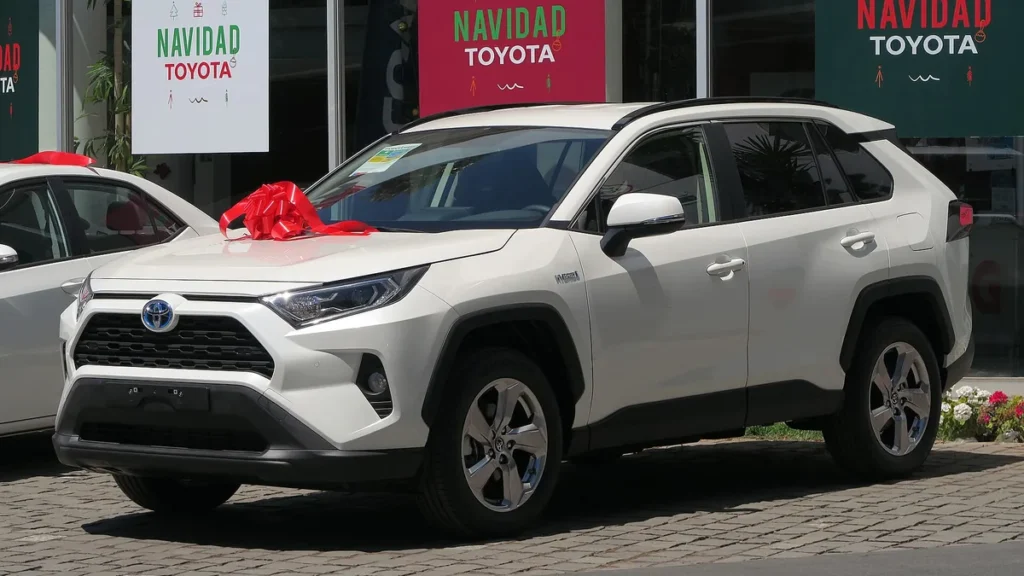
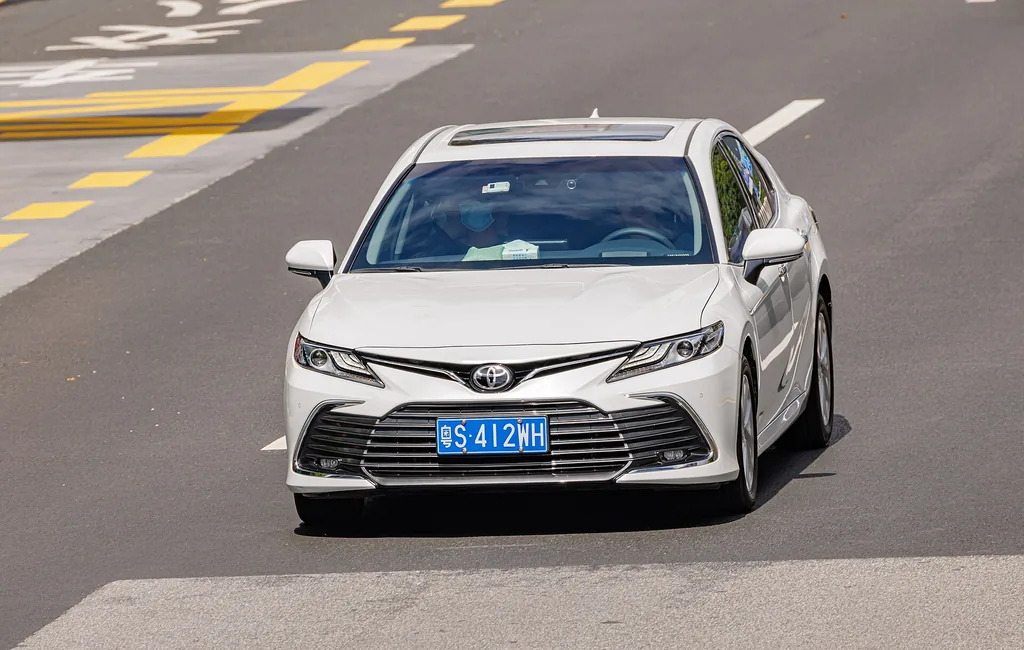
With the 2026 Camry sold only as a hybrid (see our 2026 Camry Hybrid review), and hybrids spread across the lineup (see our 2027 RAV4 preview), this is the coverage many Toyota buyers will rely on longest. Battery electric bZ models have their own guide and terms.
Separately, federal law requires every automaker to provide emissions warranties. The EPA explains that emission-related defects are covered for 2 years or 24,000 miles, that specified major emission control components (the catalytic converters, the electronic emissions control unit and the onboard diagnostic device) are covered for 8 years or 80,000 miles, and that these warranties apply to used vehicles as well (EPA). Vehicles certified to California rules can carry longer emissions coverage in California and the states that follow its program.
What Is Not Covered by the Toyota Warranty?
- Damage from fire, accidents or theft, abuse or negligence, misuse such as racing or overloading, improper repairs, and alteration or tampering, including non-Genuine accessories.
- Lack of or improper maintenance, including fluids and fuel other than those specified, and installation of parts that are not Toyota Genuine Parts.
- Environmental damage: airborne chemicals, tree sap, road debris and stone chips, rail dust, salt, hail, floods, wind storms and lightning; also water contamination.
- Damage from abuse or misuse at high performance driving events or off-road; wear or damage from competitive motorsports.
- Normal wear and tear, plus maintenance such as tune-ups, fluids and filters, spark plugs, wiper blades, brake pads and clutch linings.
- Vehicles with an altered odometer, and any vehicle ever branded salvage, total loss or similar (this exclusion does not apply to emissions warranties or open safety recalls).
- Tires, which have their own manufacturer warranties, and incidental costs such as lodging or lost pay.
Toyota warrants parts scheduled for replacement as required maintenance only until their first replacement. Keep maintenance records; the guide places proper maintenance among the owner’s responsibilities (Toyota 2026 guide).
Does the Toyota Warranty Transfer to a Second Owner?
Yes. The 2026 guide states that warranty coverage is automatically transferred at no cost to subsequent vehicle owners (Toyota 2026 guide). The clock does not restart: a used Toyota bought at 2 years and 30,000 miles has up to 6,000 miles (and 12 months) of basic coverage left and the remainder of the 60-month/60,000-mile powertrain term, while a hybrid keeps the rest of its 10-year/150,000-mile battery coverage.
Before buying a used Toyota, confirm the in-service date with a dealer, run the VIN through our free VIN decoder and check open recalls, and keep the service history together using our after-purchase checklist.

What Do ToyotaCare and Roadside Assistance Include?
ToyotaCare comes with the purchase or lease of every new Toyota and covers normal factory scheduled maintenance. Toyota’s ToyotaCare page lists the plan at 2 years or 25,000 miles, whichever comes first, for model years through 2026, and at 1 year or 10,000 miles for 2027 models (Mirai and bZ models excepted) (Toyota). Toyota says ToyotaCare also includes 24/7 roadside assistance. The same page gives a roadside term only for Mirai and bZ models (3 years, unlimited miles), and Toyota’s support article on ToyotaCare did not load when we checked, so confirm the roadside term and covered services for your model year with your dealer.
Some models get more. Toyota’s ToyotaCare page says new Mirai vehicles receive scheduled maintenance for 3 years or 35,000 miles, and new bZ, bZ Woodland and bZ4X vehicles get ToyotaCare for 2 years or 25,000 miles with 3 years of roadside assistance (Toyota). Toyota also sells longer prepaid maintenance, ToyotaCare Plus, through dealers.
Is a Toyota Extended Warranty (Vehicle Service Agreement) Worth It?
Toyota’s own extended coverage is sold by Toyota Financial Services as Vehicle Service Agreements in Platinum, Gold and Powertrain levels. According to Toyota Financial Services, a new Toyota is eligible for these agreements up to 3 years or 36,000 miles, coverage begins at the date of first use, deductibles are $0 or $100 per eligible repair visit (the $100 deductible is waived when the selling dealer does the repair), coverage can be transferred once at no cost to a private party, and you can cancel within 30 days for a full refund less a $50 processing fee where state law permits, with prorated refunds after that (Toyota Financial Services). Agreements also add roadside help, rental reimbursement and trip-interruption benefits. Prices are set at the dealer.
The value question is simple to frame. Toyota’s own warranty ends at 3 years/36,000 miles for most parts and 5 years/60,000 miles for the powertrain. If you plan to keep the car well beyond that, and a large unplanned repair would strain your budget, a manufacturer-backed agreement is the type to consider first. If you trade cars every few years, you would be paying for coverage that mostly overlaps the factory warranty.
Before buying any plan, the FTC suggests comparing the contract with the factory warranty you already have: when coverage starts, the deductible, which parts are excluded, whether repairs need pre-approval, and whether the plan can be transferred or cancelled (FTC). The CFPB notes that extended plans are optional add-ons whose price can be negotiated, and that you can cancel optional add-ons (CFPB). A plan backed by Toyota is honored through its dealer network; read the contract for where else repairs can be done.
Frequently Asked Questions
How long is the Toyota warranty on a new car?
Toyota’s 2026 Warranty & Maintenance Guide lists basic coverage of 36 months or 36,000 miles, powertrain coverage of 60 months or 60,000 miles, restraint system coverage of 60 months or 60,000 miles and corrosion perforation coverage of 60 months with unlimited miles.
How long is the Toyota hybrid battery warranty?
For hybrids from the 2020 model year on, Toyota covers the hybrid battery for 10 years or 150,000 miles from the in-service date. Other hybrid system components, such as the hybrid control module and inverter with converter, are covered for 8 years or 100,000 miles.
Does the Toyota warranty transfer to a new owner?
Yes. The 2026 guide says warranty coverage is automatically transferred at no cost to subsequent vehicle owners. Coverage still runs from the original in-service date and mileage.
What does ToyotaCare cover?
ToyotaCare comes with every new Toyota and covers normal factory scheduled maintenance plus 24/7 roadside assistance. Toyota lists the maintenance term as 2 years or 25,000 miles for model years through 2026 and 1 year or 10,000 miles for 2027 models, with different terms for Mirai and the battery electric bZ models.
Is a Toyota extended warranty worth it?
It depends on how long you keep the car and how much repair risk you can absorb. Toyota’s own plans are Vehicle Service Agreements from Toyota Financial Services, with $0 or $100 deductible options, one free transfer to a private buyer and a full refund less a $50 fee if cancelled within 30 days. Compare the contract with your factory coverage first.
⚠️ Professional Notice:
Terms shown are from Toyota’s 2026 Camry Warranty & Maintenance Guide (printed August 2025) and toyota.com pages as of October 2026. Trucks, all-wheel-drive models and battery electric vehicles list additional components in their own guides.
Warranty terms summarized here come from the manufacturer documents named in Data Sources. Your own vehicle’s warranty booklet controls. NextCarReview.com does not receive compensation from any manufacturer, dealer or service-contract company and does not rank third-party warranty companies.
Car Warranty Guides
More in this series:
Data Sources and Verification
- Toyota: 2026 Camry Warranty & Maintenance Guide (PDF)
- Toyota: Manuals and warranties (warranty coverage summary)
- Toyota: ToyotaCare and maintenance plans
- Toyota Financial Services: Vehicle Service Agreements
- EPA: Frequent questions on emission warranties
- FTC: Auto warranties and auto service contracts
- CFPB: Manufacturer’s warranty vs. extended warranty

Morgan Reyes is the founder and editor-in-chief of NextCarReview, which Morgan launched in August 2024. A 2022 graduate of Columbia University, Morgan is based in New York and writes and edits the site’s reviews, comparisons and buying guides. Morgan does not road-test vehicles. Every article is built from published primary data: EPA FuelEconomy.gov ratings, NHTSA crash ratings, recalls and owner complaints, IIHS results, and manufacturer specifications and pricing, with each figure cited and checked before publication. Contact: admin@nextcarreview.com