In this article 9 sections
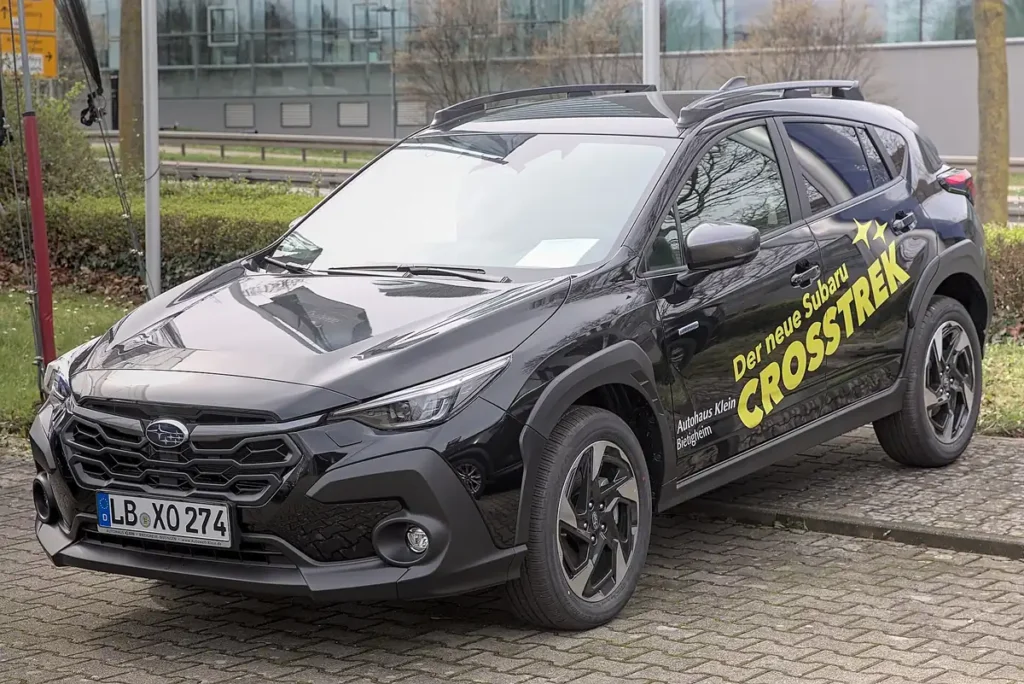
Subaru’s warranty includes a 3-year/36,000-mile New Vehicle Limited Warranty, a 5-year/60,000-mile powertrain warranty, a 5-year/unlimited-mile rust perforation warranty, a lifetime seat belt warranty and, unusually, 3-year/36,000-mile coverage for brake linings, clutch linings and wiper blades. Roadside Assistance runs for the 3-year/36,000-mile warranty term.
Coverage stays with the vehicle for every owner during the warranty period. Subaru’s own extended plan, Added Security, offers terms up to 8 years/120,000 miles or 10 years/100,000 miles.
Coverage terms come from Subaru of America’s Warranty & Maintenance Booklet (2025 model year, the most recent we found on Subaru’s public technical site), its battery electric booklet and subaru.com’s roadside and Added Security pages. Check your 2026 Subaru’s booklet for model-specific terms. NextCarReview does not sell warranties or service contracts and has no affiliation with any manufacturer or warranty company; see our sourcing policy.
This is general information, not legal advice. Check your own warranty booklet: coverage can differ by model, model year, powertrain and state.
Subaru’s coverage follows the common 3-year/5-year pattern, with two features most rivals do not offer: wear-item coverage for brake linings, clutch linings and wiper blades during the first 3 years, and a seat belt warranty for the life of the vehicle. Subaru posts its warranty booklets on its public technical-information site; the most recent gasoline booklet we found there is for the 2025 model year, and Subaru’s current owner pages show the same headline terms.
What Does the Subaru Warranty Cover?
| Coverage | Term (whichever comes first) | Notes |
|---|---|---|
| New Vehicle Limited (basic) | 3 years / 36,000 miles | Covers the entire vehicle, subject to exclusions |
| Wear items | 3 years / 36,000 miles | Brake pad/shoe linings, clutch linings, wiper blades |
| Powertrain | 5 years / 60,000 miles | Engine, transmission/transaxle, differential, axle shafts, propeller shaft, wheel bearings |
| Rust perforation | 5 years / unlimited miles | Original body sheet metal panels |
| Seat belts | Useful life of the vehicle | Belts and related components that fail to function |
| Adjustments | Once, within 3 years / 36,000 miles | One-time service adjustments |
| Federal emissions (major parts) | 8 years / 80,000 miles | Per booklet |
| EV battery and drive units (Solterra BEV booklet) | 8 years / 100,000 miles | 70% capacity retention |
| Roadside Assistance | 3 years / 36,000 miles | Free on model year 2000 and later |
| Scheduled maintenance | Not included | Owner’s responsibility; keep records |
Warranty coverage begins on the date the vehicle is delivered to the first retail purchaser, or the date it was first placed in demonstrator or company service. Defective parts are repaired or replaced with new or remanufactured parts at no charge, and Subaru pays to tow the vehicle to the nearest authorized retailer if a covered defect makes it undrivable (Subaru booklet).
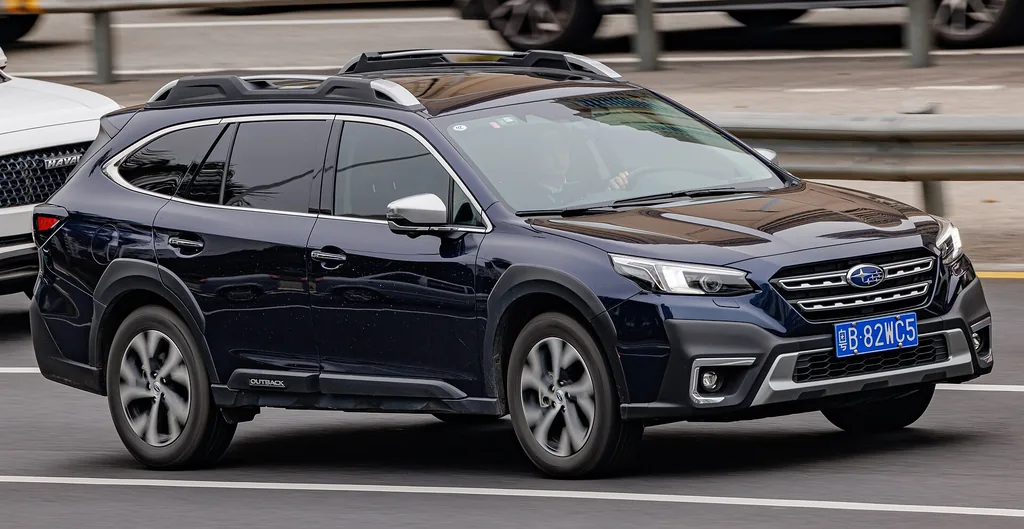
What Does Subaru’s Powertrain Warranty Cover?
- Engine: engine block and all internal parts, cylinder heads and valve trains, oil pump, oil pan, timing belts or gears and cover, water pump, flywheel, intake and exhaust manifolds, oil seals and gaskets.
- Transaxle/transmission and differential: case and internal parts, torque converter, electronic transmission control unit, seals and gaskets, axle shafts and constant velocity joints (except boots), propeller shaft and wheel bearings.
Note the boot exception: axle shaft or CV joint damage caused by broken, torn or split boots that let road grit in is not covered. Subaru’s all-wheel-drive lineup, from the Forester (see our 2025 Forester configurations guide) to the Outback (see our 2026 Outback review), relies on these components, so boot inspections at scheduled maintenance are worth doing.
What Is Not Covered by the Subaru Warranty?
- Parts covered by their own warranties, such as tires.
- Normal maintenance services, normal deterioration or fading of paint, soft trim and cosmetic items; software and firmware updates are treated as normal maintenance.
- Damage from objects striking the vehicle, road hazards, accidents, fire, neglect or abuse; damage caused by a non-covered part; competition or racing.
- Failures from not following the Owner’s Manual (for example, wrong fuel) or the recommended maintenance schedule.
- Environmental damage: airborne fallout, salt, water, flooding, hail, windstorm, lightning and extreme temperatures; finish damage from chemicals not approved by Subaru.
- Repairs at facilities other than authorized Subaru retailers, except emergency repairs when no retailer is open within 75 miles (reimbursed up to $500).
- Vehicles with an altered or unreadable VIN or altered odometer, vehicles declared a total loss or sold for salvage, and damage from commercial use unless waived in writing.
Subaru expects owners to keep proof that scheduled maintenance was done on time, either through the maintenance record in the booklet or receipts from any service facility (Subaru booklet).
Does the Subaru Warranty Transfer to a Second Owner?
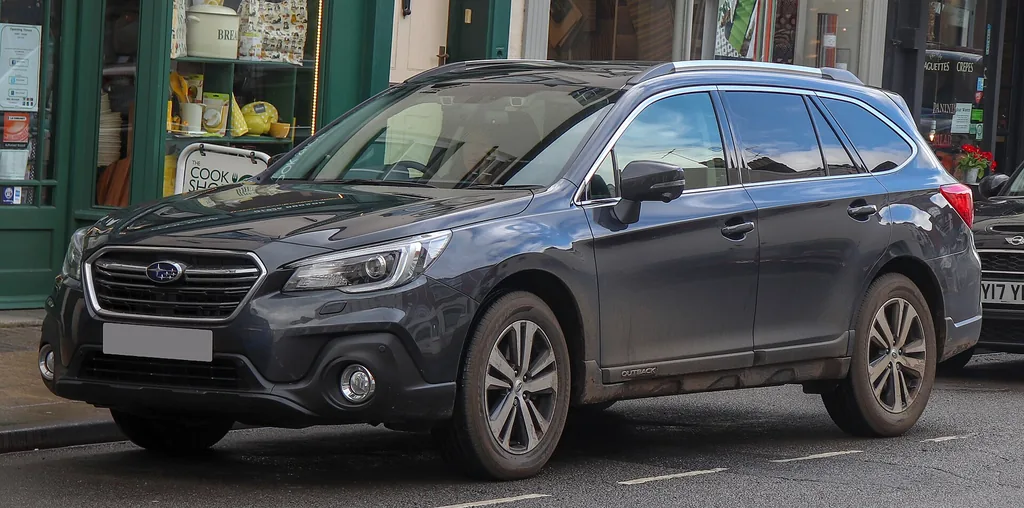
Yes. The booklet states that every owner of the vehicle during the warranty period is entitled to the benefits of the warranties, and asks a new owner to promptly send written notice of the ownership transfer to Subaru of America (Subaru booklet). Time and mileage still run from the original delivery date, so a three-year-old Subaru has little basic coverage left but may have up to two years of powertrain coverage.
Buying used? Confirm the original delivery date with a Subaru retailer, decode the VIN with our VIN decoder, send Subaru the ownership notice, and work through our used-car checklist.
What About Subaru Hybrid and EV Battery Coverage?
Subaru’s battery electric warranty booklet (published for the 2023 Solterra) covers the battery and electric drive units for 8 years or 100,000 miles, with retention of 70% or more of the original battery capacity over that period; gradual capacity loss is considered normal wear (Subaru BEV booklet). Newer Subaru EVs such as the Trailseeker (see our 2026 Trailseeker guide) come with their own booklets, and hybrid models carry a hybrid supplement; check the documents supplied with the vehicle for exact terms.
Separately, federal law requires every automaker to provide emissions warranties. The EPA explains that emission-related defects are covered for 2 years or 24,000 miles, that specified major emission control components (the catalytic converters, the electronic emissions control unit and the onboard diagnostic device) are covered for 8 years or 80,000 miles, and that these warranties apply to used vehicles as well (EPA). Vehicles certified to California rules can carry longer emissions coverage in California and the states that follow its program.

What Does Subaru Roadside Assistance Include?
Subaru says Roadside Assistance is free and standard on every Subaru from model year 2000 forward, with no forms to complete, and is available anytime during the 3-year/36,000-mile Subaru Limited Warranty. Services include towing to the nearest authorized Subaru retailer if you cannot safely drive, jump-starts, gasoline delivery, flat-tire changes and emergency lockout service (Subaru). Subaru does not include complimentary scheduled maintenance in the warranty booklet.
Is Subaru Added Security Worth It?
Added Security is Subaru’s own extended service agreement, which Subaru describes as backed by Subaru of America. Its top plan, Gold Plus, covers everything except a short list of maintenance items and body parts, including wear-and-tear items and technology such as EyeSight and DriverFocus, plus towing, rental car reimbursement and trip interruption benefits. Subaru lists plan options up to 8 years/120,000 miles and 10 years/100,000 miles, $0 or $100 deductibles charged only once per repair visit, repairs with genuine Subaru parts, transfer of remaining coverage to another private owner within 30 days of purchase, and cancellation with a prorated refund (Subaru Added Security). Subaru directs buyers to retailers for pricing.
Subaru owners often keep their cars a long time; buyers comparing generations, such as the 2027 Outback, may plan for 8 to 10 years of ownership. For that buyer, a manufacturer-backed plan that runs past the 5-year/60,000-mile powertrain term is the scenario where an extended plan is most likely to be used. Short-term owners mostly pay for overlap with the factory warranty.
Before buying any plan, the FTC suggests comparing the contract with the factory warranty you already have: when coverage starts, the deductible, which parts are excluded, whether repairs need pre-approval, and whether the plan can be transferred or cancelled (FTC). The CFPB notes that extended plans are optional add-ons whose price can be negotiated, and that you can cancel optional add-ons (CFPB). A plan backed by Subaru is honored through its dealer network; read the contract for where else repairs can be done.
Frequently Asked Questions
What is Subaru’s warranty on a new car?
Subaru’s Warranty & Maintenance Booklet lists a 3-year/36,000-mile New Vehicle Limited Warranty, a 5-year/60,000-mile Powertrain Limited Warranty, a 5-year unlimited-mile Rust Perforation Limited Warranty, a 3-year/36,000-mile wear item warranty for brake linings, clutch linings and wiper blades, and a seat belt warranty for the useful life of the vehicle.
Does the Subaru warranty transfer to the next owner?
Yes. The booklet says every owner of the vehicle during the warranty period is entitled to the benefits of the warranties, and asks a new owner to send Subaru of America written notice of the ownership transfer.
Does Subaru cover brake pads under warranty?
Subaru is unusual in covering some wear items: brake pad and shoe linings, clutch linings and wiper blades are covered for 3 years or 36,000 miles under the Wear Item Limited Warranty, according to Subaru’s warranty booklet.
How long is Subaru roadside assistance?
Subaru says Roadside Assistance is free and standard on every Subaru from model year 2000 forward and is available during the 3-year/36,000-mile Subaru Limited Warranty, covering towing, jump starts, fuel delivery, flat-tire changes and lockouts.
Is Subaru Added Security worth it?
Added Security is Subaru’s own extended service agreement. Subaru lists plan options up to 8 years/120,000 miles and 10 years/100,000 miles, $0 or $100 deductibles charged once per repair visit, transfer to a private owner within 30 days of purchase and prorated refunds on cancellation. Prices come from Subaru retailers. It is worth considering if you keep the car well past 5 years/60,000 miles.
⚠️ Professional Notice:
Terms are from Subaru’s Warranty & Maintenance Booklet for the 2025 model year (the latest gasoline booklet we found on Subaru’s public technical site in October 2026), Subaru’s 2023 BEV booklet and subaru.com. Your 2026 Subaru’s booklet controls.
Warranty terms summarized here come from the manufacturer documents named in Data Sources. Your own vehicle’s warranty booklet controls. NextCarReview.com does not receive compensation from any manufacturer, dealer or service-contract company and does not rank third-party warranty companies.
Car Warranty Guides
More in this series:
Data Sources and Verification
- Subaru of America: Warranty & Maintenance Booklet, 2025 model year (PDF)
- Subaru of America: Battery electric vehicle warranty booklet, 2023 model year (PDF)
- Subaru: Roadside Assistance
- Subaru: Added Security
- EPA: Frequent questions on emission warranties
- FTC: Auto warranties and auto service contracts
- CFPB: Manufacturer’s warranty vs. extended warranty

Morgan Reyes is the founder and editor-in-chief of NextCarReview, which Morgan launched in August 2024. A 2022 graduate of Columbia University, Morgan is based in New York and writes and edits the site’s reviews, comparisons and buying guides. Morgan does not road-test vehicles. Every article is built from published primary data: EPA FuelEconomy.gov ratings, NHTSA crash ratings, recalls and owner complaints, IIHS results, and manufacturer specifications and pricing, with each figure cited and checked before publication. Contact: admin@nextcarreview.com