In this article 10 sections
An extended car warranty is legally an auto service contract: an optional product, not part of the car’s price. The FTC says these contracts cost several hundred to several thousand dollars, and CFPB data on servicemember auto loans put the average warranty/service/maintenance plan at $2,983 (2018 to 2022; costs were similar for other borrowers).
It tends to make the most sense when you keep a car well past its factory coverage and could not absorb a large repair bill. It tends to be poor value when it overlaps a factory warranty you already have. It is optional for a loan, its price is negotiable, and the CFPB says you can cancel it.
Definitions and buyer checks come from the FTC and the CFPB; cost data from the CFPB auto finance data pilot; factory warranty terms from Toyota, Ford and Hyundai. NextCarReview does not sell insurance, lend money or test financial products; see our sourcing policy.
This is general information, not financial or legal advice; rules vary by state.
Federal regulators describe an extended warranty plainly: it is an optional contract that you can buy, decline, negotiate or cancel. Whether it is worth the money comes down to three numbers you can check yourself: what your factory warranty already covers, what the contract costs once deductibles and financing are included, and how long you plan to keep the car.
What Is an Extended Car Warranty, Legally Speaking?
The Federal Trade Commission draws a clear line. A warranty is a promise to fix certain defects or malfunctions for a set time after you buy the vehicle, and on a new car it comes with the purchase. An auto service contract, which is what most people call an extended warranty, is an optional contract sold by a vehicle manufacturer, a dealer or an independent company in which the seller agrees to perform or pay for certain repairs listed in the contract (FTC: Auto Warranties and Auto Service Contracts).
The Consumer Financial Protection Bureau adds that extended warranties are add-on products that cover mechanical and electrical failures not covered by the manufacturer’s warranty, and that they usually exclude routine maintenance such as oil changes and tires. It also separates out prepaid maintenance plans, which spread routine service costs over time and may require you to use the dealer’s service department (CFPB). Those are different products and should be priced separately.
What Does Your Factory Warranty Already Cover?
Before pricing any extended contract, check what the manufacturer already includes. Coverage is split into a broad "basic" or "bumper-to-bumper" warranty and a longer powertrain warranty for the engine, transmission and drive system. Terms vary by brand, as these official examples show:
| Coverage | Toyota | Ford | Hyundai |
|---|---|---|---|
| Basic / new vehicle limited | 36 months / 36,000 miles | 3 years / 36,000 miles | 5 years / 60,000 miles |
| Powertrain | 60 months / 60,000 miles | 5 years / 60,000 miles | 10 years / 100,000 miles (original owner only) |
| Corrosion / rust-through | 60 months / unlimited miles | 5 years / unlimited miles | See Hyundai warranty booklet |
| Source | Toyota support | Ford support | Hyundai USA |
Federal law adds another layer. Under the Clean Air Act, the EPA says manufacturers must cover emission-related defects for 2 years or 24,000 miles, and specified major emission components (catalytic converters, the emissions control computer and the onboard diagnostic device) for 8 years or 80,000 miles. These federal emission warranties also apply to used vehicles (EPA).
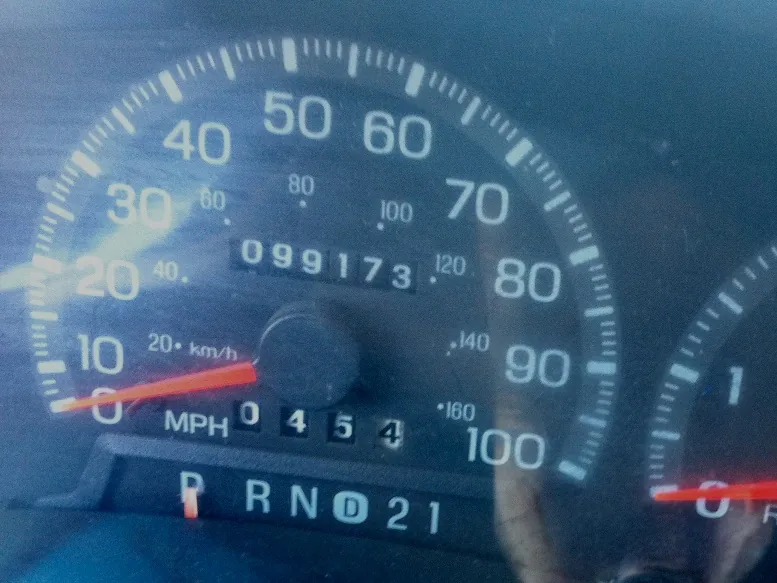
The practical point: on a new car with a 5-year powertrain warranty, an extended contract that starts on day one pays for overlap during years one through five. If you are shopping a used car, check the remaining factory coverage from the in-service date before you buy anything; our checklist for what to do after buying a used car covers the paperwork to gather.
Manufacturer, Dealer or Third-Party: How Do Service Contracts Differ?
The FTC tells buyers to find out who is actually behind the contract: the manufacturer, the dealer, or an independent administrator. That matters because the company that sold it is not always the company that pays claims.
| Question to ask | Why it matters (FTC/CFPB guidance) |
|---|---|
| Who backs the contract? | The FTC says to check the company’s reputation; contracts may come from the manufacturer, the dealer or an independent company. |
| Where can repairs be done? | Some plans require you to use the dealer for service rather than your chosen mechanic (CFPB). |
| Is pre-approval needed? | The FTC lists pre-authorization requirements as a key term to read. |
| Are used or remanufactured parts allowed? | The FTC flags this, along with any depreciation applied to parts. |
| Is there a deductible per visit or per repair? | The FTC notes deductibles may apply to each service. |
| Can it be transferred or cancelled? | The FTC lists transferability; the CFPB says optional add-ons can be cancelled. |
How Much Does an Extended Car Warranty Cost?
There is no federal list price. The FTC describes the range only broadly: service contracts cost from several hundred to several thousand dollars, and you may also pay a deductible each time you take the car in (FTC).
The best federal data point comes from the CFPB’s auto finance data pilot. In its January 2025 report on auto lending to servicemembers, the CFPB found that warranty, service and maintenance plans were the most common and the most expensive category of add-on product. Among servicemember loans that included an add-on, these plans averaged $2,983 from January 2018 to December 2022 (in December 2022 dollars), and the CFPB noted that average costs by category were similar for non-servicemember borrowers (CFPB report, PDF). The figure blends extended warranties with service and maintenance plans.
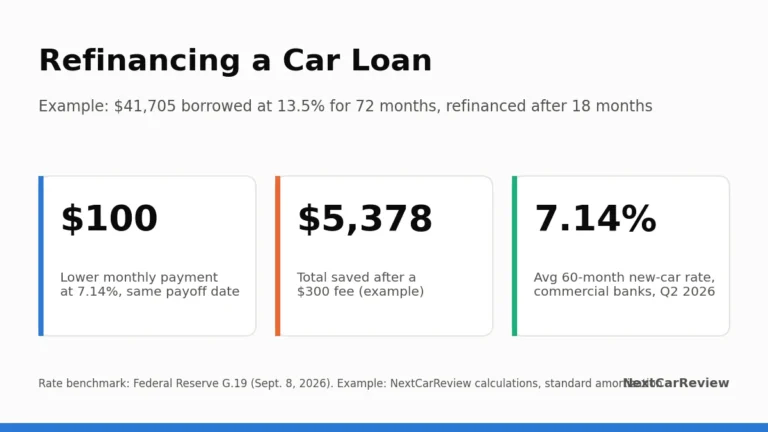
Financing changes the real price. If a $2,983 plan is rolled into a 60-month loan at 7.14% APR, the Federal Reserve’s Q2 2026 average for 60-month new-car loans at commercial banks (Fed G.19), it adds about $59 a month and roughly $573 in interest, for a total of about $3,556. You can test your own numbers in the NextCarReview auto loan calculator.
| Example | Amount |
|---|---|
| Plan price (CFPB pilot average) | $2,983 |
| Added to a 60-month loan at 7.14% APR | about $59.26 per month |
| Interest paid on the plan | about $573 |
| Total cost when financed | about $3,556 |
| Deductibles per visit | Extra, set by the contract |
When Is an Extended Warranty Worth It, and When Is It Not?
A service contract is a prepaid bet on future repair bills. The seller prices it to cover expected claims plus its own costs, so as a group buyers should expect to pay more than they collect. It can still make sense for an individual buyer when the downside of a large, unplanned repair is hard to absorb. These factors push the decision one way or the other:
| Leans toward buying | Leans toward skipping |
|---|---|
| You keep cars well past the factory powertrain term | You trade in before the factory warranty ends |
| A large repair bill would strain your savings or credit | You can self-insure by setting aside the plan price |
| The contract is manufacturer-backed and honored at any brand dealer | The administrator is unknown or the contract has heavy exclusions |
| You can pay for it without financing it | It would be rolled into a long loan at a high APR |
| Coverage starts when factory coverage ends, not on day one | It overlaps years of existing factory coverage |
An alternative is to put the plan’s price into a dedicated savings account. If the car stays reliable, you keep the money; if a repair comes up, you have cash on hand without a deductible or claim approval. If you are stretching to afford the car in the first place, compare total loan cost before adding anything: see our guide to average auto loan rates by credit score for current federal rate data.
What Should You Check in the Contract Before You Sign?
The FTC suggests comparing the service contract with the manufacturer’s warranty line by line. Read for these points:
- Start and end dates: whether coverage overlaps your factory warranty.
- Total cost: the price, the deductible per visit or per repair, and any cancellation fee.
- Covered parts: an exclusionary list (everything except named items) is easier to read than a short list of covered parts.
- Labor and parts terms: labor limits, use of remanufactured or used parts, and any depreciation applied to parts.
- Extras: towing and rental car limits.
- Claim process: who authorizes repairs and whether you need approval before work starts.
- Maintenance proof: what records you must keep to make a claim.
The CFPB adds two steps at the dealership: ask whether the loan includes charges for optional products before you sign, and remember the price can be negotiated. If a dealer says the product is required, the CFPB says to ask where the contract states that; if it does not, you cannot be required to buy it (CFPB). First-time buyers can find more paperwork tips in our guide to buying your first car.
How Do You Spot an Extended Warranty Scam Call?
The FTC warns about unsolicited calls and mailers with urgent wording such as "Motor Vehicle Notification" or "Final Warranty Notice." Warning signs include:
- Claiming to be from your dealer or the manufacturer when they are not.
- Pressure to give personal financial information or a down payment immediately.
- Contracts from companies that may go out of business before you need a repair.
- Coverage with so many limits that it is nearly worthless.
If you get one of these calls, hang up and contact your dealer or manufacturer directly using a number you look up yourself. The FTC asks consumers to report problems to their state attorney general and at ReportFraud.ftc.gov.
Can You Cancel an Extended Warranty and Get Money Back?
The CFPB says you have the right to cancel optional add-on products, which can reduce your costs (CFPB). The refund itself is set by the contract and by state law, so read the cancellation section for any fee and for how the unused portion is calculated. If the plan was financed, a refund usually goes to the lender to reduce your loan balance rather than to you. Ask for the cancellation in writing and keep a copy.
Frequently Asked Questions
Is an extended car warranty the same as a warranty?
Not legally. The FTC explains that a warranty comes with the purchase of a new vehicle, while an extended warranty is really an auto service contract: an optional product you pay extra for, sold by manufacturers, dealers or independent companies.
How much does an extended car warranty cost?
The FTC says service contract prices range from several hundred to several thousand dollars, and many charge a deductible per repair visit. In CFPB data on servicemember auto loans from 2018 to 2022, these plans averaged $2,983, and the CFPB found similar costs for other borrowers.
Do I have to buy an extended warranty to get a car loan?
Generally no. The CFPB says you cannot normally be required to buy an extended warranty to get an auto loan. If a dealer says it is required, ask to see where the contract says so.
Can I cancel an extended warranty after I buy it?
Usually yes. The CFPB says you have the right to cancel optional add-on products and reduce your costs. Refund amounts and any cancellation fee depend on the contract terms, so request the cancellation in writing and keep a copy.
Will using an independent mechanic void my factory warranty?
No. The FTC says it is illegal for a dealer to deny warranty coverage simply because routine maintenance or repairs were done by someone else. Keep receipts for oil changes and other maintenance in case a claim is questioned.
⚠️ Professional Notice:
Warranty terms shown are examples from manufacturer websites as of October 2026 and change by model year. Service contracts are regulated differently from state to state. Read the full contract, including the cancellation section, before you sign.
This is general information, not financial, insurance or legal advice. NextCarReview.com does not receive compensation from any lender, insurer, dealer or warranty company for editorial coverage, and does not rank or recommend specific companies.
Car Money Guides
More in this series:
Data Sources and Verification
- FTC: Auto Warranties and Auto Service Contracts
- CFPB: Manufacturer’s warranty vs. extended warranty or service contract
- CFPB: Am I required to purchase an extended warranty or GAP to get an auto loan?
- CFPB: Auto lending to servicemembers (January 2025, add-on product costs)
- Federal Reserve G.19 Consumer Credit (September 8, 2026 release)
- EPA: Frequent questions on vehicle emission warranties
- Toyota: Warranty coverage
- Ford: New Vehicle Limited Warranty
- Hyundai: America’s Best Warranty
- FTC: ReportFraud.ftc.gov

Morgan Reyes is the founder and editor-in-chief of NextCarReview, which Morgan launched in August 2024. A 2022 graduate of Columbia University, Morgan is based in New York and writes and edits the site’s reviews, comparisons and buying guides. Morgan does not road-test vehicles. Every article is built from published primary data: EPA FuelEconomy.gov ratings, NHTSA crash ratings, recalls and owner complaints, IIHS results, and manufacturer specifications and pricing, with each figure cited and checked before publication. Contact: admin@nextcarreview.com