In this article 11 sections
The 2027 Kia Telluride arrives with a full redesign and keeps everything that made the original a hit. We cover the new exterior, the upgraded powertrain options, the three-row interior, the cargo space, and the pricing. So if you are shopping for a large family SUV this year, read this before you test-drive anything else.
Figures cross-checked against EPA, NHTSA, IIHS and manufacturer sources. See our sourcing policy.
The Kia Telluride has been one of the most celebrated large family SUVs since it launched for the 2020 model year. It earned a loyal following by delivering premium interior quality, practical three-row packaging, and genuine value at every trim level. So the stakes for a full redesign are high.
The 2027 Kia Telluride rises to those stakes. Kia sharpened the exterior, upgraded the technology, and refined the powertrain lineup without abandoning the practicality and approachability that made the original so popular. The result is an SUV that feels like a meaningful step forward rather than a superficial refresh.
So here is our complete assessment.


2027 Kia Telluride at a Glance
2027 Kia Telluride – Quick Market Intelligence
The 2027 kia telluride specs represent an evolution of the platform rather than a ground-up reinvention. So buyers who loved the original will recognize everything that worked. And the upgrades address the areas where the previous generation left room to grow.
Key Specifications Table
| Spec | 2027 Kia Telluride |
|---|---|
| Starting MSRP | $39,190 (plus $1,545 destination) |
| Base Engine | 2.5L turbo four (274 hp, 311 lb-ft) |
| Hybrid Option | 2.5L turbo hybrid (329 hp), EX and up |
| Combined MPG (EPA) | 19-22 turbo, 31-35 hybrid |
| Max Towing | 5,000 lbs (hybrid 4,500) |
| Seating | 7 or 8 |
| Drivetrain | FWD or AWD |
| Transmission | 8-speed auto (hybrid 6-speed) |
| Cargo (behind 3rd row) | 22.3 cu ft (hybrid 21.3) |
| Max Cargo | 89.3 cu ft (hybrid 88.3) |
Who the 2027 Telluride Is Built For
Best large suv 2027 searches consistently land families with three or more children, carpool drivers, and buyers who want to avoid minivan ownership without sacrificing genuine passenger space. The Telluride has always threaded that needle better than most rivals, and the 2027 model maintains that strength while adding technology and refinement that push it closer to luxury territory.
If you are evaluating the Telluride against the Hyundai Palisade, our full comparison covers that sibling rivalry in detail. For the context of the Telluride’s long-term reliability history and one known issue owners should understand, our 2023 Kia Telluride transmission slipping guide is required reading before you sign anything.
Exterior Redesign
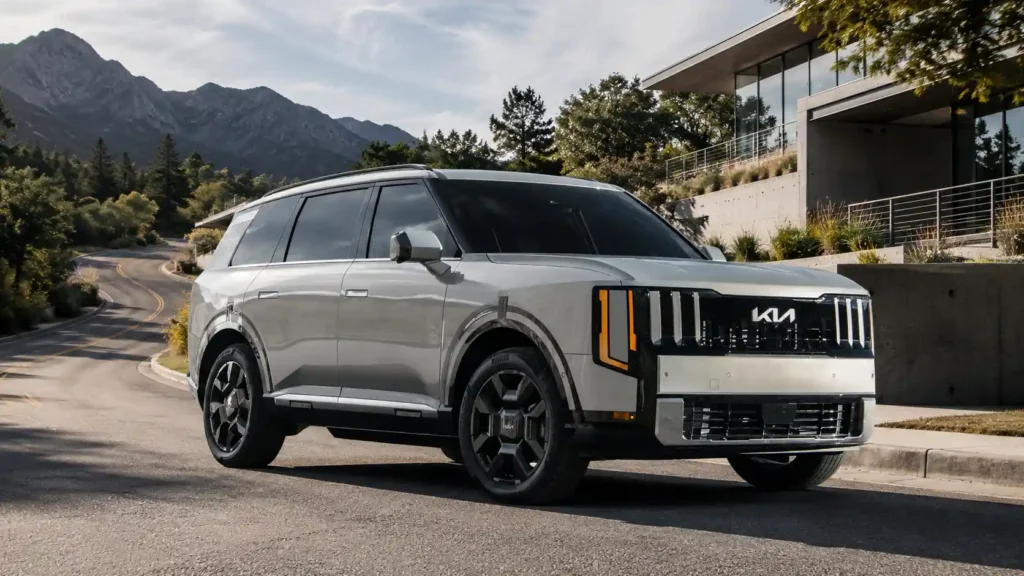
The 2027 kia telluride redesign takes the original’s confident proportions and updates them with sharper details and cleaner surfaces. Kia resisted the temptation to make dramatic stylistic changes that could alienate existing fans.
Front Fascia and Lighting
The front end adopts Kia’s latest design language with a wider, more horizontal light signature that runs across the full width of the hood line. Star Map daytime running lights appear on higher trims and create a distinctive nighttime look. The grille is taller and more textured than before, giving the front a more commanding presence without crossing into aggression.
Profile and Rear
The side profile retains the upright, planted stance that defines the Telluride character. Flush door handles appear on upper trims. The rear drops the slightly busy tail treatment of the previous generation in favor of full-width horizontal lighting that reads cleaner at distance. So the 2027 Telluride looks more premium from every angle without feeling like a different vehicle.

Powertrain and Performance
The 2027 kia telluride engine lineup swaps the old V6 for a 2.5L turbo four as the volume powertrain and adds a hybrid option for buyers who prioritize fuel economy. So there is now a clear answer for every buyer priority.

2.5L Turbo Base Engine
The turbocharged 2.5L four-cylinder produces 274 horsepower and 311 lb-ft of torque and pairs with an eight-speed automatic transmission. Kia says that is nearly 50 lb-ft more torque than the previous V6. EPA ratings are 19 to 22 mpg combined, depending on drivetrain and trim, which matters in family duty. Towing capacity reaches 5,000 lbs when properly equipped, sufficient for a small camper, a jet ski, or a full landscaping trailer.
Hybrid Powertrain Option
The hybrid system, available from the EX trim, pairs the 2.5L turbo with electric motors, a 1.65-kWh battery and a six-speed automatic. Combined output is 329 hp and 339 lb-ft, and the EPA rates it at 31 to 35 mpg combined. Towing drops to 4,500 lbs. So city and suburban drivers who cover heavy traffic miles benefit meaningfully from the hybrid option. Highway fuel economy improvements are more modest, as expected from any parallel hybrid architecture.
AWD System
Optional AWD on most trims and standard AWD on the X-Pro variant uses an electronically controlled coupling that can send torque to the rear axle automatically when slip is detected or proactively in specific terrain modes. The X-Pro adds a multi-terrain AWD mode, an electronic limited-slip differential, and Ground View Monitor. So the 2027 Telluride handles light off-pavement duty without breaking a sweat.
Interior and Cabin Quality
The 2027 kia telluride interior was already the strongest argument for buying the previous generation. The 2027 model raises the standard further with improved materials, larger screens, and more thoughtful ergonomics throughout all three rows.


Dashboard and Technology
An available dual 12.3-inch panoramic display runs the driver information cluster and infotainment system from a single curved unit. A 12-inch head-up display is offered on select trims. Wireless Apple CarPlay and Android Auto come standard from the LX base trim, and every trim gets a 12.3-inch touchscreen with navigation. Upper trims add more premium audio and comfort features.
First Row

Front seats on all trims are well-shaped with good lateral support and long-drive comfort. Heated and ventilated seats are offered as you climb the trim ladder, and Kia offers relaxation seats with leg rests. The driving position is elevated and commanding without feeling truck-like, which strikes exactly the right balance for buyers who want confidence without intimidation.
Second Row


The second row is available as captain’s chairs or a bench depending on trim and configuration. Legroom is generous on paper, and power captain’s chairs are available. Slide and recline adjustments are easy to operate and cover a wide range of positions. USB-C charging ports serve second-row passengers without requiring a reach to the front.
Third Row

The third row remains a strong point for adult comfort in a non-luxury SUV. The new body is longer, at 199.2 inches overall, with a 116.9-inch wheelbase. Dedicated climate vents and USB-C charging ports mean third-row occupants are not afterthoughts. Entry and exit require a normal step through a wide opening with the second row slid forward, and the process is easy for a three-row SUV.
Cargo Space


Behind the third row, cargo space measures 22.3 cubic feet (21.3 in the hybrid), sufficient for a full grocery run or a set of carry-on bags. Fold the third row and the space expands substantially. Fold everything flat and the Telluride approaches van-like capacity at 89.3 cubic feet (88.3 in the hybrid). A power liftgate is available on upper trims. The load floor sits at a practical height for most users. Under-floor storage in the cargo area provides a dedicated space for charging cables, a first aid kit, or valuables.
Safety
The 2027 Telluride carries Kia’s comprehensive safety suite as standard equipment across all trims. Forward collision avoidance with pedestrian, cyclist, and junction turning detection comes standard. Lane keeping assist, blind-spot collision warning, rear cross-traffic collision avoidance, and driver attention warning all operate without requiring an upgrade package. Kia counts 19 driver assistance systems, plus 10 airbags including a front-center airbag.
IIHS has named the 2027 Telluride a Top Safety Pick+ for vehicles built after June 2026. NHTSA had not posted star ratings at the time of this update, and it lists two 2027 recalls, both for seat belts. Check your VIN.
Trim Levels and Pricing
The 2027 kia telluride price starts at $39,190 for the LX FWD and climbs to $56,790 for the X-Pro SX-Prestige, plus $1,545 destination. Hybrids run from $46,490 to $57,590. The trim ladder runs LX, S, EX, SX, and SX-Prestige, with X-Line and X-Pro versions. Each step adds meaningful equipment rather than cosmetic changes, which has always been a Telluride strength.
The EX represents the value sweet spot for most buyers. It adds more technology and comfort features without the premium of the SX. The X-Pro targets buyers who want genuine trail capability with recovery equipment and an all-terrain tire package. The SX-Prestige delivers the most premium features and the fullest driver assistance stack.
To see how the Telluride fits into Kia’s broader 2025 lineup strategy, our 2025 Kia Sportage Hybrid review shows the mid-size sibling below it. For those interested in Kia’s minivan alternative, our 2025 Kia Carnival review covers the people-mover that shares this market segment. And our 2025 Kia EV3 review covers Kia’s growing electric lineup for buyers considering the EV route.
How It Compares
Against the Hyundai Palisade, the Telluride offers a slightly more rugged character and a lower base price. Against the Honda Pilot, the Telluride wins on interior quality and loses narrowly on third-row ease of access. Against the Toyota Highlander, the Telluride offers more standard equipment per dollar and a stronger standard powertrain. Against the Ford Explorer, the Telluride delivers better interior materials and a more pleasant overall cabin experience.
The Telluride’s strongest competitors remain within its own family. The Palisade targets similar buyers with a slightly more premium positioning. But for most families, the Telluride’s value equation, interior quality, and well-calibrated sizing make it the default first choice in the segment.
Verdict
The 2027 Kia Telluride ranks among the strongest large non-luxury family SUVs in America. It delivers strong interior quality, practical packaging, and a lot of standard equipment per dollar. The redesign addresses the areas where the previous generation left room to improve, and it does not disturb what was already working.
If you are buying for a family of five to eight passengers and you want a three-row SUV that is genuinely comfortable across all rows, the 2027 Telluride belongs at the top of your test-drive list. The hybrid powertrain option makes the value case even stronger for buyers who cover high annual mileage in mixed conditions.
Our recommendation is clear. Start with an EX test drive, consider the SX for the full technology suite, and add AWD if your climate or terrain warrants it. You will not be disappointed.
Related guides: more SUV reviews by size and 2012 Honda Odyssey Touring Review.
Frequently Asked Questions About the 2027 Kia Telluride
What is new on the 2027 Kia Telluride?
What is the starting price of the 2027 Telluride?
Does the 2027 Telluride offer a hybrid powertrain?
Is the third row comfortable for adults?
How much can the 2027 Telluride tow?
Which trim is the best value on the 2027 Telluride?
⚠️ Professional Notice:
All pricing figures in this article are based on Kia official MSRP data and aggregated pricing as of August 2026. Real transaction prices vary by trim, options, dealer, and geographic region. Confirm current pricing with your local dealer before any purchase decision. Fuel economy figures reference EPA estimates. Real-world mpg varies based on driving style, load, terrain, and weather conditions.
IIHS and NHTSA crash test results for the 2027 model year were incomplete at publication: IIHS has rated it, NHTSA has not yet. Verify the latest published safety ratings before purchase. Towing ratings are manufacturer-published figures and vary by configuration and towing package. NextCarReview.com does not receive compensation from any manufacturer or dealer in exchange for rankings or editorial coverage.
Data Sources and Verification
- Kia America press materials: 2027 Telluride pricing, 2027 Telluride HEV pricing and 2027 Telluride specifications
- EPA fuel economy estimates – 2027 Kia Telluride, fueleconomy.gov
- IIHS 2027 Telluride ratings and NHTSA 2027 Telluride recalls
- Competitor specification data – Hyundai Palisade, Honda Pilot, Toyota Highlander, Ford Explorer official 2027 documentation
- aggregated market pricing data – August 2026 dealer listing aggregation across US markets
2027 Models Guide Series
Every 2027 model in one place: 2027 New Cars guide.
More in this series:

Morgan Reyes is the founder and editor-in-chief of NextCarReview, which Morgan launched in August 2024. A 2022 graduate of Columbia University, Morgan is based in New York and writes and edits the site’s reviews, comparisons and buying guides. Morgan does not road-test vehicles. Every article is built from published primary data: EPA FuelEconomy.gov ratings, NHTSA crash ratings, recalls and owner complaints, IIHS results, and manufacturer specifications and pricing, with each figure cited and checked before publication. Contact: admin@nextcarreview.com