

In this article 11 sections
The 2026 Toyota Highlander vs Honda Pilot matchup is the classic three-row SUV showdown, and for 2026 both sides changed the game. Toyota bolted all-wheel drive onto every gas and hybrid trim. Honda kept its V6-only approach but spread it across six trims. Neither is a bad choice. But your priorities decide the winner fast.
Figures cross-checked against EPA, NHTSA, IIHS and manufacturer sources. See our sourcing policy.
Two of America’s most popular three-row SUVs, one decision. The Highlander has been a family-hauler mainstay for decades, and Toyota just made all-wheel drive standard across the board while keeping a hybrid option front and center. The Pilot counters with more third-row cargo space, a punchy V6, and a rugged TrailSport trim for buyers who want a little off-pavement swagger. If you’re cross-shopping the segment more broadly, our 2026 Toyota Grand Highlander review covers Toyota’s larger, more cargo-focused sibling to this Highlander. Here, we’re comparing the standard-size Highlander directly against the Pilot, spec for spec.
2026 Toyota Highlander vs Honda Pilot at a Glance
2026 Highlander vs Pilot – Quick Market Intelligence
Short version: the Pilot wins on cargo room behind the third row and on maximum cargo space. The Highlander wins on fuel economy, especially in hybrid form, and it starts with AWD standard on every trim. Towing is basically a wash at the top of each lineup. So the right pick depends on whether you value MPG or cargo volume more.
2026 Toyota Highlander vs Honda Pilot Verdict Table
| Spec (2026) | Toyota Highlander | Honda Pilot |
|---|---|---|
| Starting Price | $45,270 (gas) / $47,020 (Hybrid) | $42,195 |
| Engine | 2.4L turbo I4, 265 hp / 2.5L hybrid, 243 hp combined | 3.5L V6, 285 hp |
| Drivetrain | AWD standard, all trims | FWD standard on Sport and EX-L (AWD optional); AWD standard on other trims |
| Combined MPG | ~24 (gas) / ~35 (Hybrid) | 21-22 |
| Max Towing | 5,000 lb (gas) / 3,500 lb (Hybrid) | 5,000 lb (AWD) / 3,500 lb (FWD) |
| Cargo Behind 3rd Row | 16.0 cu ft | 18.6 cu ft (up to 21.8) |
| Cargo Behind 2nd Row | 48.4 cu ft | 48.5 cu ft (up to 60.1) |
| Seating Capacity | 7 or 8 | 7 or 8 |
| Basic Warranty | 3 yr / 36,000 mi | 3 yr / 36,000 mi |
Who Should Choose Which
Want the lowest running costs and don’t mind paying a bit more upfront? The Highlander Hybrid is the efficiency play. Need the biggest cargo hold and don’t need a hybrid? The Pilot is the space play, and it starts cheaper too. The 2026 Toyota Highlander vs Honda Pilot decision really does split along those two lines. We break down every category below.
Price and Trim Lineup
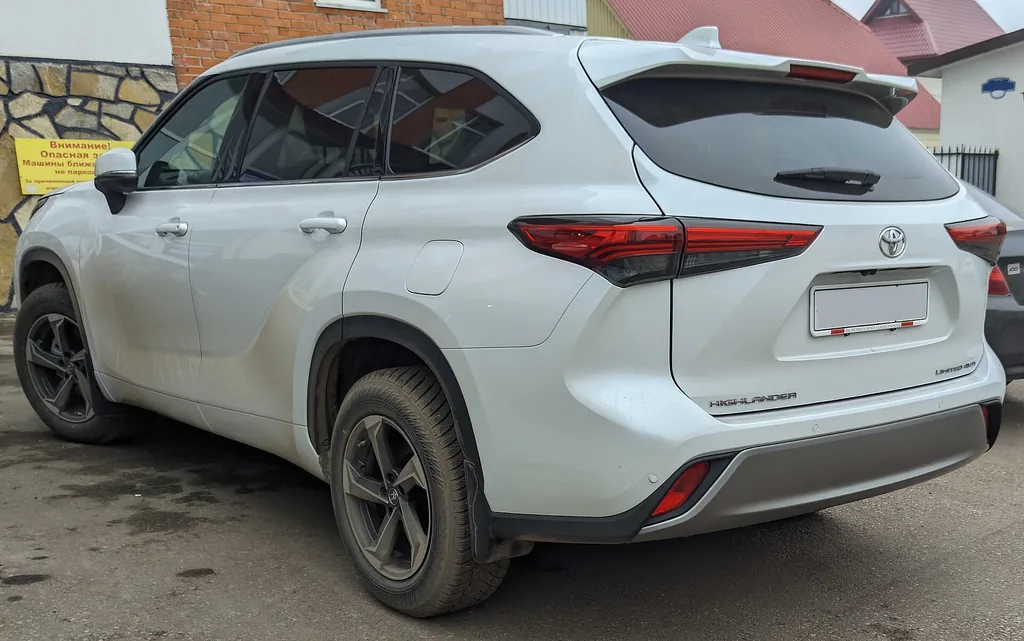
Money talks first. The Pilot opens lower, but the Highlander counters with more trims split across gas and hybrid power. Here’s how each ladder climbs.
Highlander Trims: XLE, XSE, Limited, Platinum (Gas and Hybrid)
For 2026, Toyota trimmed the lineup and made the XLE the new entry point, with AWD now standard across every gas and hybrid trim. Gas pricing runs from $45,270 for the XLE through $47,340 for the sportier XSE, $49,725 for the Limited, and $52,925 at the Platinum summit. Choose the Hybrid powertrain on the XLE, Limited, or Platinum and pricing runs about $1,750 higher at each step, starting at $47,020 for the XLE Hybrid. Toyota’s $1,450 delivery fee is extra.
Pilot Trims: Sport, EX-L, TrailSport, Touring, Elite, Black Edition
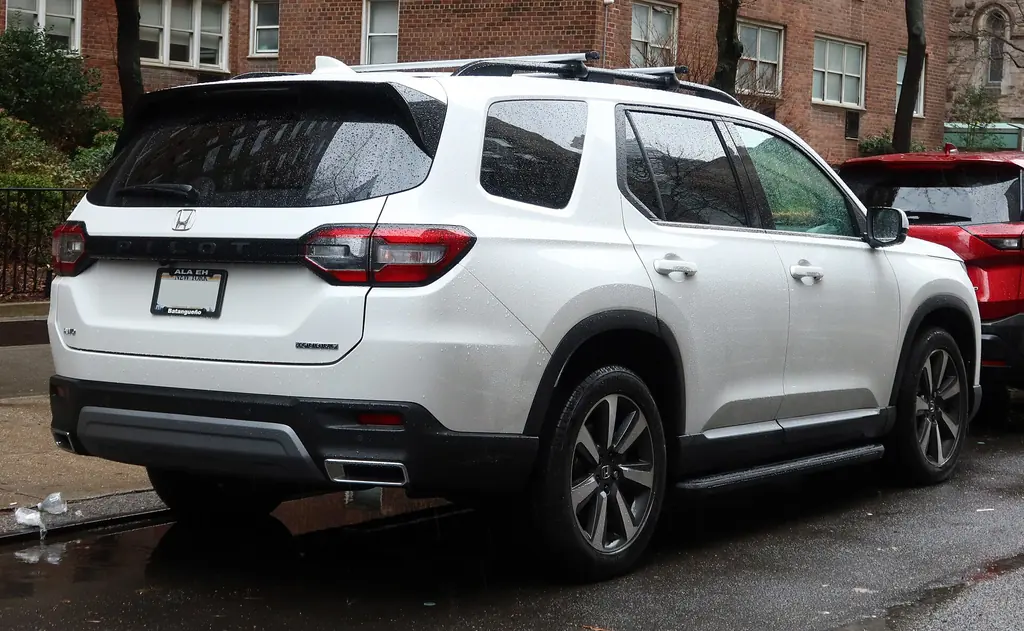
Honda spreads the Pilot across six trims. The Sport opens the range at $42,195, followed by the EX-L at $44,495 (AWD adds $2,100 to either). From there, the off-road-flavored TrailSport lands at $50,395, the Touring at $51,095, the Elite at $53,495, and the range-topping Black Edition tops out at $54,995. All Pilot pricing shown excludes the $1,495 destination charge.
If you’re also cross-shopping a three-row hybrid rival, see our Honda Pilot vs Kia Telluride Hybrid comparison for how the Pilot stacks up against that competitor.
Best-Value Trim by Use Case
On the Highlander side, the XLE gas trim is the value pick if you just want three rows and AWD without paying Limited-level money. If efficiency matters more than sticker price, the XLE Hybrid earns back some of its premium at the pump over time. On the Pilot side, the EX-L is the sweet spot: it adds leather and driver-assist extras over the Sport without jumping into TrailSport or Touring pricing.
Powertrain and Performance
Here’s where the two SUVs take genuinely different approaches. Toyota offers a choice between a turbocharged four-cylinder and a hybrid four-cylinder. Honda sticks with one proven V6 across the whole lineup.
Toyota’s Turbo Four and Hybrid Four
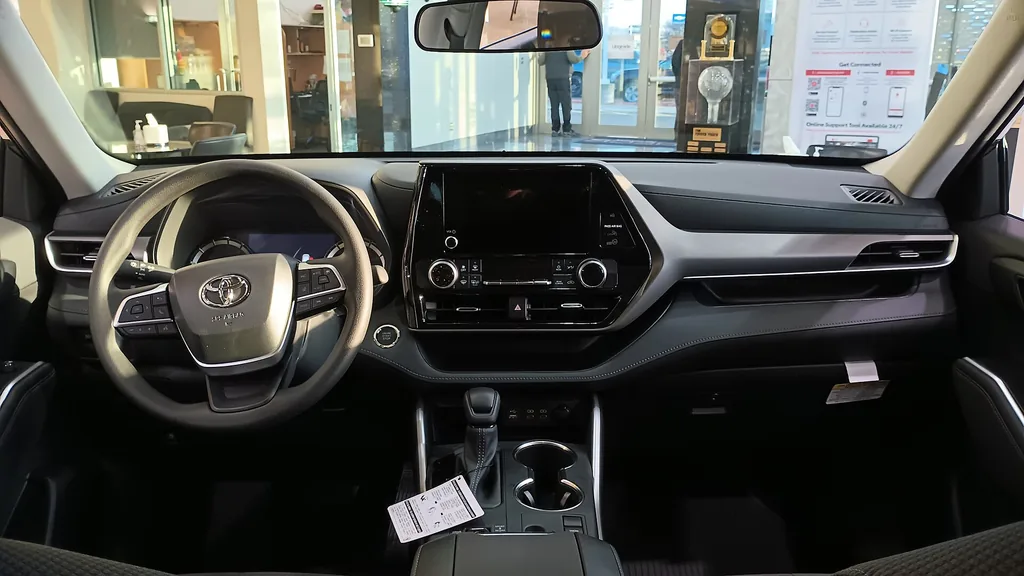
The gas Highlander uses a 2.4-liter turbocharged four-cylinder rated at 265 horsepower and 310 lb-ft of torque. The Hybrid pairs a 2.5-liter four-cylinder with electric motors for 243 horsepower combined, running through a continuously variable transmission. All-wheel drive is standard either way for 2026.
Honda’s 3.5-Liter V6
The Pilot runs a 3.5-liter V6 making 285 horsepower and 262 lb-ft of torque, paired with a 10-speed automatic. It’s the most horsepower in this comparison, and V6 fans will appreciate that Honda hasn’t downsized to a smaller turbo engine. Front-wheel drive is standard on the Sport and EX-L, with all-wheel drive optional; the TrailSport, Touring, Elite, and Black Edition come with all-wheel drive as standard.
Towing Capacity Compared
Towing is nearly a dead heat. The gas Highlander is rated up to 5,000 pounds, matching the AWD Pilot’s 5,000-pound max rating. Step down to the Highlander Hybrid or a front-drive Pilot, and both fall to around 3,500 pounds. So if towing a small trailer or boat matters, either SUV can do it in the right configuration.
Fuel Economy
This is the category with the widest gap in the whole comparison, and it isn’t close.
EPA Ratings Side by Side
The Highlander Hybrid is EPA-rated around 35 mpg combined. The gas Highlander comes in lower, around 24 mpg combined per EPA figures for the turbo four-cylinder. The Pilot, meanwhile, running only its V6, is EPA-rated at roughly 22 mpg combined with front-wheel drive and about 21 mpg combined with all-wheel drive; the TrailSport dips slightly lower still.
What That Means Over a Year of Driving
A 35-mpg Highlander Hybrid versus a 21-mpg Pilot AWD is a substantial real-world fuel-cost gap over 12,000 to 15,000 annual miles. Even the gas Highlander’s roughly 24 mpg combined beats the Pilot by a couple of mpg. So if minimizing fuel spend is a priority, Toyota has the clear advantage here, especially in Hybrid trim.
Interior, Tech, and Comfort
This is the segment’s whole reason for existing: room for people and their stuff. And here the Pilot pulls ahead in the numbers that matter most to families.
Third-Row and Cargo Space: The Real Differentiator
Cargo behind the third row is 16.0 cubic feet in the Highlander versus 18.6 cubic feet (up to 21.8) in the Pilot, a useful gap for anyone who regularly hauls strollers, sports gear, or groceries with all three rows in use. Fold the third row down and the two are nearly even: 48.4 cubic feet in the Highlander versus 48.5 cubic feet (up to 60.1) in the Pilot. Maximum cargo space favors the Pilot, at up to 113.7 cubic feet versus 84.3 for the Highlander.
Seating Configurations
Both SUVs can be configured to seat 7 or 8 depending on trim. The Highlander XLE and Limited come standard with 7 seats and offer an optional 8-passenger bench, while the XSE and Platinum seat 7 with captain’s chairs. The Pilot seats 8 on the Sport, EX-L, Touring, Elite, and Black Edition, while the TrailSport seats 7.
Tech and Infotainment
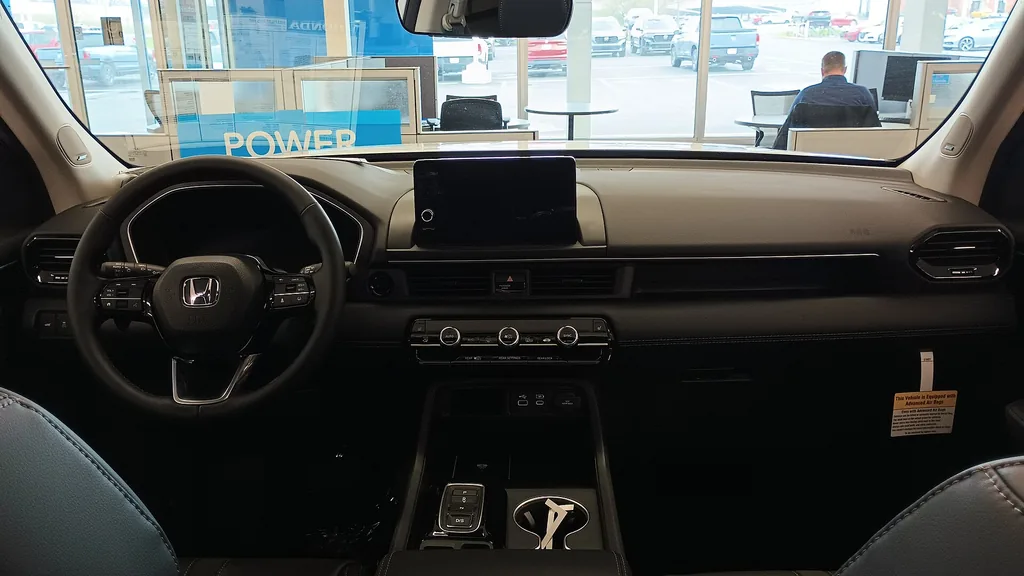
Both brands offer modern touchscreen infotainment with wireless Apple CarPlay and Android Auto across most of the lineup. Trim-for-trim tech feature availability varies, so shoppers focused on specific features like a head-up display, wireless charging, or premium audio should compare individual trim spec sheets on toyota.com and automobiles.honda.com before deciding.
Safety and Driver Assistance
Both the Highlander and Pilot come with a full suite of standard driver-assistance features and strong crash-test history.
Toyota Safety Sense
The Highlander comes standard with Toyota’s driver-assist suite, including features like adaptive cruise control, lane-departure assistance, and automatic emergency braking across the lineup.
Honda Sensing
The Pilot comes standard with Honda Sensing, Honda’s own bundle of adaptive cruise, lane-keeping assistance, and forward collision mitigation.
IIHS and NHTSA Ratings
Both the Highlander and Pilot earned 5-star overall ratings from NHTSA for the 2025 model year, and both have strong IIHS crash-test records. Ratings can vary by model year and specific trim, so confirm the current 2026 scores directly at iihs.org and nhtsa.gov before you buy.
Reliability, Warranty, and Long-Term Cost
Buying the SUV is the easy part. Living with it for years is where warranty coverage and brand reliability track record matter.
Warranty Coverage Compared
Both brands offer a 3-year/36,000-mile basic warranty and a 5-year/60,000-mile powertrain warranty. The Highlander Hybrid adds extra coverage on top: an 8-year/100,000-mile warranty on hybrid-specific components and a 10-year/150,000-mile warranty on the hybrid battery pack itself. The Pilot, having no hybrid option, doesn’t carry an equivalent battery warranty.
Long-Term Ownership Costs
Both Toyota and Honda have long-standing reputations for durability and strong resale value in this segment. The Highlander Hybrid’s better fuel economy and extended hybrid-component coverage can translate into lower running costs over a typical ownership period, while the Pilot’s simpler, single-powertrain V6 setup keeps maintenance straightforward with no hybrid components to service.
Verdict and Which Should You Buy
Based on the manufacturer specs and EPA, IIHS, and NHTSA data gathered here, the 2026 Toyota Highlander vs Honda Pilot decision comes down to whether cargo room or fuel economy matters more to your household.
Buy the Highlander If…
Choose the Highlander if fuel economy is a top priority, especially the Hybrid’s roughly 35 mpg combined rating. You’ll also get AWD standard on every trim and the option of extended hybrid-component and battery warranty coverage. It’s the pick for buyers who drive a lot of miles and want to spend less at the pump.
Buy the Pilot If…
Choose the Pilot if third-row and behind-second-row cargo space is what you need most, along with a lower starting price and a torquey V6 with no turbo lag. It’s the pick for families who regularly pack the SUV to the roofline, and for buyers who want the rugged TrailSport trim for light off-road duty.
Final Word
So where does the 2026 Toyota Highlander vs Honda Pilot race land? With a split decision that depends on what your family actually does with the vehicle. The Highlander, especially in Hybrid form, saves real money on fuel and comes standard with AWD. The Pilot answers back with more third-row and maximum cargo room, a lower starting price, and V6 towing muscle without needing the priciest trim.
Match the SUV to your driving habits. Long commutes and fuel costs on your mind? Lean Highlander Hybrid. Constantly hauling gear for a full house? Lean Pilot. Either way, confirm current pricing and trim availability with your local dealer, and cross-check the safety ratings for your specific trim at iihs.org and nhtsa.gov before you sign anything.
Related guides: our car comparison hub and 2026 Hyundai Palisade Hybrid vs Kia Telluride.
Frequently Asked Questions About the 2026 Toyota Highlander vs Honda Pilot
Which is bigger inside, the 2026 Toyota Highlander or Honda Pilot?
Is the Toyota Highlander Hybrid more fuel-efficient than the Honda Pilot?
Which has better towing capacity, the Highlander or Pilot?
What is the starting price difference between the 2026 Highlander and Pilot?
Which is safer, the Highlander or Pilot?
Do the Highlander and Pilot both seat 8 passengers?
⚠️ Professional Notice:
All 2026 pricing figures in this article are based on manufacturer suggested retail prices and published market data as of September 2026, and exclude destination charges. Real transaction prices vary by trim, dealer, geographic region, and available incentives. Confirm current pricing with your local dealer before any purchase decision.
Fuel economy figures reference EPA combined estimates. Real-world mpg varies based on driving style, terrain, load, and weather conditions. Towing figures are manufacturer-rated maximums and may vary by trim and configuration. Safety ratings reference IIHS and NHTSA published data for the 2026 model year and are subject to change as new testing is completed. NextCarReview.com does not receive compensation from any manufacturer or dealer in exchange for rankings or editorial coverage.
Data Sources and Verification
- Toyota Newsroom: 2026 Highlander specs, pricing and warranty; Honda: 2026 Pilot specifications; Honda: 2026 Pilot pricing and EPA ratings
- FuelEconomy.gov: 2026 Honda Pilot AWD and other 2026 EPA combined MPG ratings
- IIHS and NHTSA safety ratings – Insurance Institute for Highway Safety and National Highway Traffic Safety Administration, 2026 model year
- Aggregated market pricing data – September 2026 dealer and marketplace listing aggregation across US markets

Morgan Reyes is the founder and editor-in-chief of NextCarReview, which Morgan launched in August 2024. A 2022 graduate of Columbia University, Morgan is based in New York and writes and edits the site’s reviews, comparisons and buying guides. Morgan does not road-test vehicles. Every article is built from published primary data: EPA FuelEconomy.gov ratings, NHTSA crash ratings, recalls and owner complaints, IIHS results, and manufacturer specifications and pricing, with each figure cited and checked before publication. Contact: admin@nextcarreview.com


