In this article 11 sections
If your Toyota or Lexus scan tool shows C1201 and the dashboard has lit up the check engine light, the VSC light and the TRAC OFF or slip indicator all at once, the brakes and stability system are usually not the real problem. C1201 is a messenger code: the skid control ECU, the computer that runs the anti-lock brakes and Vehicle Stability Control, stores it because the engine computer (ECM) has reported a fault of its own. Find and fix that engine code, and C1201 normally goes with it.
Quick answer: On a Toyota or Lexus, C1201 means “Engine Control System Malfunction”: the ECM has stored its own trouble code, so the skid control ECU shuts off VSC and TRAC as a fail-safe. The car usually drives normally, but without stability control. Read the engine (P) codes first; a loose fuel cap, misfire or EVAP fault is a common trigger. A Camry diagnosis runs $122 to $179, per RepairPal.
What C1201 Means on a Toyota or Lexus
Toyota’s repair manuals name C1201 (shown as C1201/51 on older blink-code systems) “Engine Control System Malfunction” and file it under the ABS, TRAC and VSC diagnostics, not under engine diagnostics. The circuit description in the 2003 Kluger repair manual (the Kluger is the Highlander sold in Japan and Australia) is one sentence long: “If trouble occurs in the engine control system, the skid control ECU prohibits TRAC and VSC control.”
The reason is simple. Traction control and VSC work partly by asking the engine to cut torque when a wheel slips. If the ECM has flagged a fault, the brake computer can no longer trust that engine torque requests will be carried out, so it switches its own systems off and logs C1201 to explain why.
The exact setting condition differs by generation:
- 2003 Kluger (Highlander): engine speed of 500 rpm and a trouble signal from the engine control system lasting 5 seconds or more.
- 2004 Lexus GX470: per the GX470 repair manual (RM1058U), engine speed of 500 rpm or more plus an engine trouble signal, both for 5 seconds.
- Venza with the 1AR-FE or 2GR-FE engine: an engine control system malfunction signal lasting 5 seconds, according to the Venza service manual excerpt.
- 2015-2018 Tacoma: “A malfunction signal is received from the ECM,” per the Tacoma service manual excerpt.
In every one of these manuals the listed trouble area is the same: “Engine control system.” None of them points at the ABS actuator, the wheel speed sensors or the brake fluid.
Why the VSC, TRAC OFF and Check Engine Lights Come On Together
The light pattern is the clearest sign you are dealing with C1201 rather than a genuine brake fault. The check engine light comes on because the ECM has stored a P-code. The VSC warning and the TRAC OFF or slip indicator come on because the skid control ECU has disabled those systems in response. On Toyota’s owner warning-light guide, the TRAC OFF indicator “indicates that the vehicle has traction control turned off,” and the slip indicator is tied to VSC operation, so seeing them with the check engine light is consistent with a fail-safe shutdown.
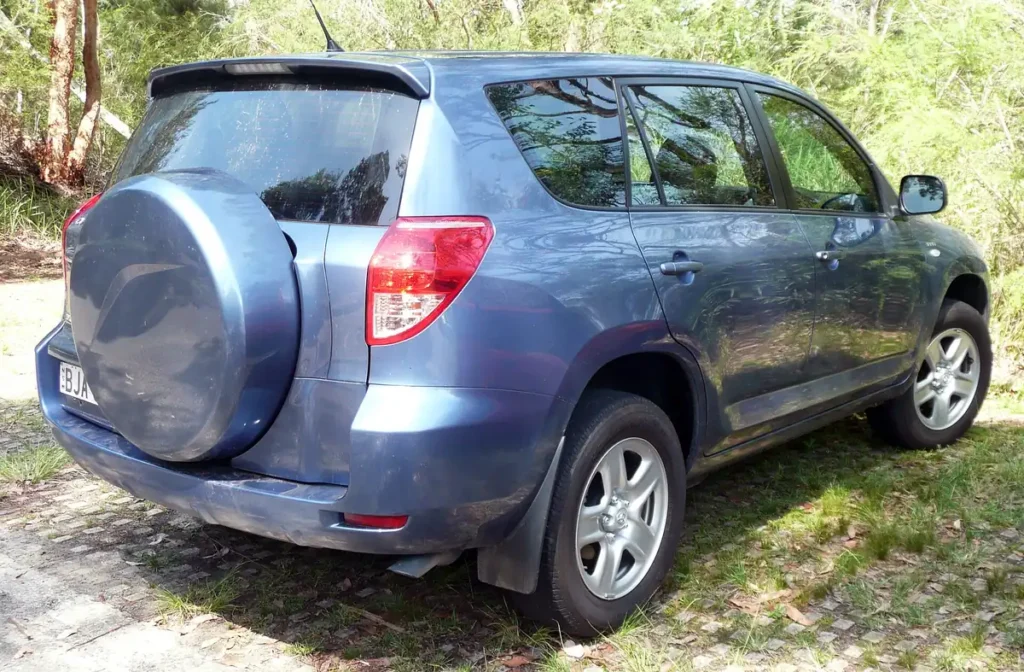
Owner complaints filed with NHTSA show the pattern. The owner of a 2006 RAV4 reported that “the check engine light, the VSC light and the slip warning light came on” together, and the dealer read P0304, P0305, P0306, P0356, P1578 and C1201, then recommended replacing the number 6 ignition coil (NHTSA complaint 10448450). A 2010 Corolla owner reported the VSC light flashing, the traction control warning on, the check engine light on and a C1201 code that would not clear (NHTSA complaint 11344125).
Can You Drive With a C1201 Code?
Usually yes, with care. C1201 itself does not disable the regular brakes; the Toyota manuals describe it as a block on TRAC and VSC control. What you lose is the electronic help that stops wheelspin and slides, so drive gently on wet, icy or gravel roads until the fault is fixed.
The real question is how serious the underlying engine code is. A loose fuel cap is harmless. A misfire, like the coil failure in the 2006 RAV4 complaint above, where the owner also felt the engine misfiring, can damage the catalytic converter if ignored; if the check engine light flashes, have the car checked before driving further. So the urgency of C1201 equals the urgency of whatever P-code sits behind it.
Most Common Engine Faults Behind C1201 on Toyotas
Because C1201 can follow almost any ECM fault, the cause list is really a list of the engine codes Toyota owners most often see alongside it.
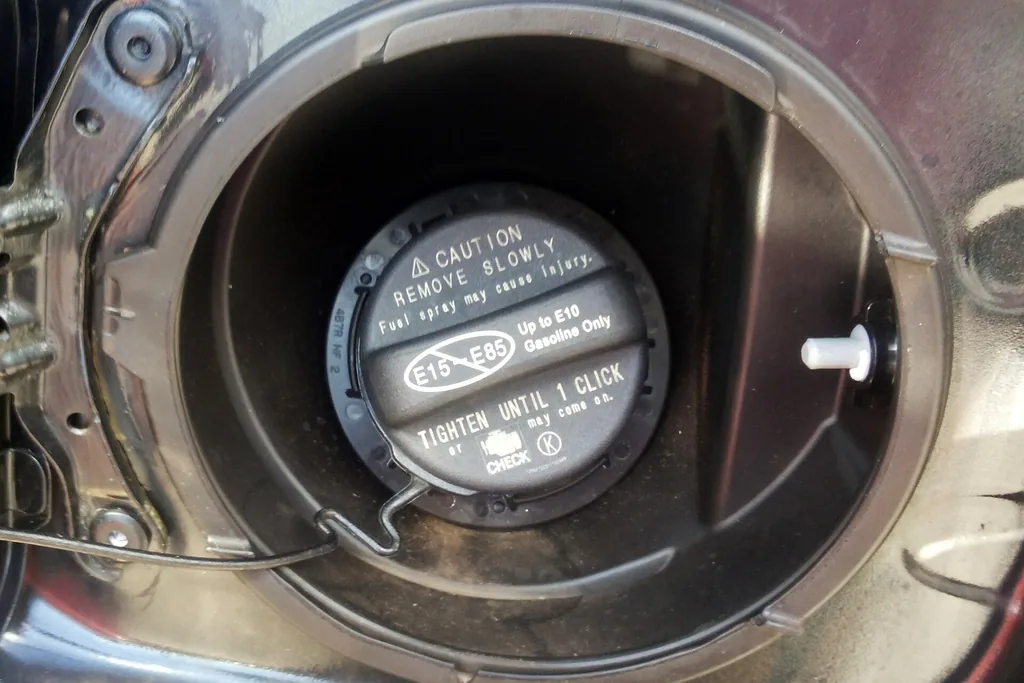
- Loose or worn fuel cap and EVAP leaks. Toyota fuel caps carry a molded warning to “Tighten until 1 click” or the check engine indicator may come on. An EVAP leak code such as P0455 or a purge-flow code such as P0441 then brings C1201 along with it. See our P0441 Toyota guide and P0455 code guide.
- Misfires and ignition coils. The 2006 RAV4 case pairs C1201 with cylinder-specific misfire codes and a failed coil. Our P0300 misfire guide covers that diagnosis.
- Catalyst and oxygen or air-fuel sensor codes. Any emissions fault that sets the check engine light can trigger the fail-safe; owners report C1201 alongside catalyst codes such as P0430 (example thread). Our P0420 code guide explains catalyst efficiency faults.
- A communication fault between ECM and skid control ECU. The 2015-2018 Tacoma VSC code chart lists C1203 “ECM Communication Circuit Malfunction” right next to C1201. If C1203 or a U0100 lost-communication code is stored too, look at wiring and the network first (see our U0100 code guide).
- The ECM itself. When C1201 is stored and the ECM shows no engine code at all, the 2003 Kluger manual and the Venza manual both end their flowcharts at “Replace ECM.” The newer Tacoma manual instead says to use the simulation method to reproduce the fault, which is a better first step before buying a computer.
Toyota and Lexus Models Documented With C1201
C1201 appears across Toyota’s VSC-equipped lineup. The table lists the vehicles where we found it in a Toyota or Lexus service document or an NHTSA complaint record. It is not a complete list; any Toyota or Lexus with VSC can log the code.
| Vehicle | Source | What the record shows |
|---|---|---|
| 2003 Toyota Kluger (Highlander) | Toyota repair manual RM1087E | 500 rpm, engine trouble signal 5 s or more; normal engine code leads to “Replace ECM” |
| 2004 Lexus GX470 | Lexus repair manual RM1058U | 500 rpm or more plus engine trouble signal for 5 s; repair circuit shown by engine code |
| Toyota Venza (1AR-FE, 2GR-FE) | Venza service manual excerpt | Fail-safe blocks VSC and TRAC; separate flow for each engine |
| 2015-2018 Toyota Tacoma | Tacoma service manual excerpt | Malfunction signal from ECM; listed with C1203 ECM communication code |
| 2006 Toyota RAV4 | NHTSA complaint 10448450 | C1201 with P0304, P0305, P0306, P0356, P1578; coil replacement recommended |
| 2010 Toyota Corolla | NHTSA complaint 11344125 | VSC, traction control and check engine lights with C1201 |

How to Diagnose C1201 Step by Step
Every Toyota and Lexus procedure we found opens by checking for engine trouble codes. The order below follows that logic.
- Use a scan tool that reads chassis codes. A basic code reader only shows P-codes. To see C1201 you need a tool that can open the ABS/VSC module, such as Toyota’s Techstream or an aftermarket scanner with Toyota chassis coverage.
- Record every engine code before clearing anything. The engine code is the actual fault. Write down C1201 and every P-code, plus any C1203 or U-codes.
- Check the fuel cap first if an EVAP code is present. Make sure the cap seals and clicks. Then follow the EVAP diagnosis for the specific code.
- Repair the engine fault the P-code points to. The GX470 manual says “Repair circuit indicated by output code”; the Tacoma manual sends you to the engine diagnostic trouble code chart.
- Clear the codes and road test. Toyota’s Venza manual notes that once normal engine signals return, the fail-safe is cancelled. Confirm the VSC and TRAC lights stay off over a few drives.
- If C1201 returns with no engine code, check for C1203 or U0100 and inspect the ECM-to-skid-control ECU wiring, then use the simulation method the Tacoma manual describes before considering ECM replacement.
Toyota TSBs, Recalls and Software Updates
We searched NHTSA’s manufacturer communications for a Toyota technical service bulletin built around C1201 and did not find one. That fits how the code works: Toyota bulletins target the root engine fault, not the stability-control message that follows it.
One bulletin is still relevant. If the engine code behind C1201 is covered by an ECM calibration update, the dealer applies it using Toyota’s flash procedure, T-SB-0012-13 (January 29, 2013), “Techstream ECU Flash Reprogramming Procedure.” It covers 2001-2014 models from the 4Runner, Camry, Corolla, Highlander, Prius, RAV4, Sienna, Tacoma, Tundra and Venza to the Yaris, and it replaced the older T-SB-0064-10. The bulletin says flash calibration updates for specific models are released as separate service bulletins, so the dealer has to match your VIN to the right one.
Before paying for diagnosis, run your VIN through NHTSA’s recall search (start with our VIN decoder to confirm the exact model year and engine) and ask the dealer to check for engine-related bulletins on your VIN.
How Much It Costs to Fix C1201
C1201 has no repair cost of its own; the bill depends entirely on the engine fault behind it. Typical scenarios:
- Diagnosis: RepairPal estimates $122 to $179 for a Toyota Camry check engine light diagnosis, before taxes and fees.
- Loose fuel cap: retightening it costs nothing; if the seal is damaged, a replacement cap is a small parts purchase.
- ECM replacement: only after testing rules out everything else, as the manuals’ “no engine code” branch shows. We found no attributable price, so we do not quote one.
Related Toyota and OBD-II Code Guides
Once you know which engine code sits behind C1201, go straight to its guide: P0441 on Toyota for EVAP purge flow, P0455 for a large EVAP leak, P0300 for misfires, P0420 for catalyst efficiency and U0100 for lost communication with the ECM.
Frequently Asked Questions About C1201 on a Toyota
What does C1201 mean on a Toyota?
Why are my VSC, TRAC OFF and check engine lights on at the same time?
Can a loose gas cap cause C1201?
Can I drive my Toyota with code C1201?
Will C1201 clear by itself after the engine is fixed?
Does C1201 mean my ABS module is bad?
Data Sources and Verification
- Toyota Kluger repair manual RM1087E, page 05-277 – DTC C1201/51 circuit description, detecting condition and inspection flow
- 2004 Lexus GX470 repair manual RM1058U, page 05-619 – C1201/51 detecting conditions and inspection procedure
- Toyota Venza service manual excerpt – C1201/51 fail-safe description, 1AR-FE and 2GR-FE inspection branches
- Toyota Tacoma (2015-2018) service manual excerpt and VSC DTC chart – C1201, C1203
- Toyota T-SB-0012-13, Techstream ECU Flash Reprogramming Procedure (via NHTSA)
- NHTSA complaints 10448450 (2006 RAV4) and 11344125 (2010 Corolla)
- Toyota owners warning-light guide – TRAC OFF and slip indicator meanings
- RepairPal cost estimator – Camry check engine light diagnosis

Morgan Reyes is the founder and editor-in-chief of NextCarReview, which Morgan launched in August 2024. A 2022 graduate of Columbia University, Morgan is based in New York and writes and edits the site’s reviews, comparisons and buying guides. Morgan does not road-test vehicles. Every article is built from published primary data: EPA FuelEconomy.gov ratings, NHTSA crash ratings, recalls and owner complaints, IIHS results, and manufacturer specifications and pricing, with each figure cited and checked before publication. Contact: admin@nextcarreview.com