
In this article 10 sections
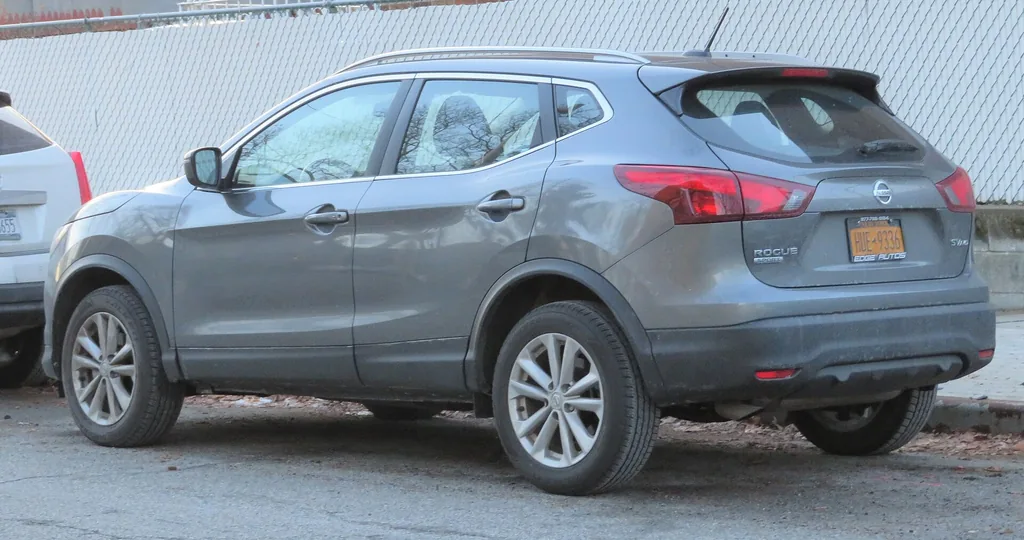
A P0300 code on a Nissan means the engine computer has counted misfires on more than one cylinder. The code itself is generic, but the paper trail is not: Nissan has published service bulletins for P0300 or misfires on the 2022-2023 Pathfinder, 2022 Frontier, 2017-2020 Rogue Sport and 2012 Versa Sedan, an older bulletin that pairs P0300 with blistered ignition coils on Altima, Maxima and Quest models, and a 2.5-liter intake manifold campaign.
Quick answer: P0300 on a Nissan means misfires were detected on more than one cylinder (Nissan calls it MULTI CYL MISFIRE). A flashing check engine light means catalyst-damaging misfire: stop driving as soon as it is safe. Worn spark plugs and weak coils are classic causes, and several recent Nissans have ECM-update bulletins for it. Costs range from a dealer reprogram to plugs, coils or engine work.
For how misfire monitoring works on any car, see our P0300 code guide. If your scanner also names a cylinder, our P0301 code guide covers single-cylinder misfires. Everything below is specific to Nissan.
What P0300 Means on a Nissan
Nissan bulletins label P0300 as “MULTI CYL MISFIRE” and list P0301 through P0306 as “CYL 1 MISFIRE” through “CYL 6 MISFIRE” (for example NTB22-069A). So P0300 does not name a cylinder. It says the misfires are spread across cylinders.
The rules for that split are in California’s OBD II regulation, 13 CCR 1968.2. It requires the system to identify the specific misfiring cylinder where it can do so without extra hardware, and to store a separate multiple-cylinder code when more than one cylinder misfires.
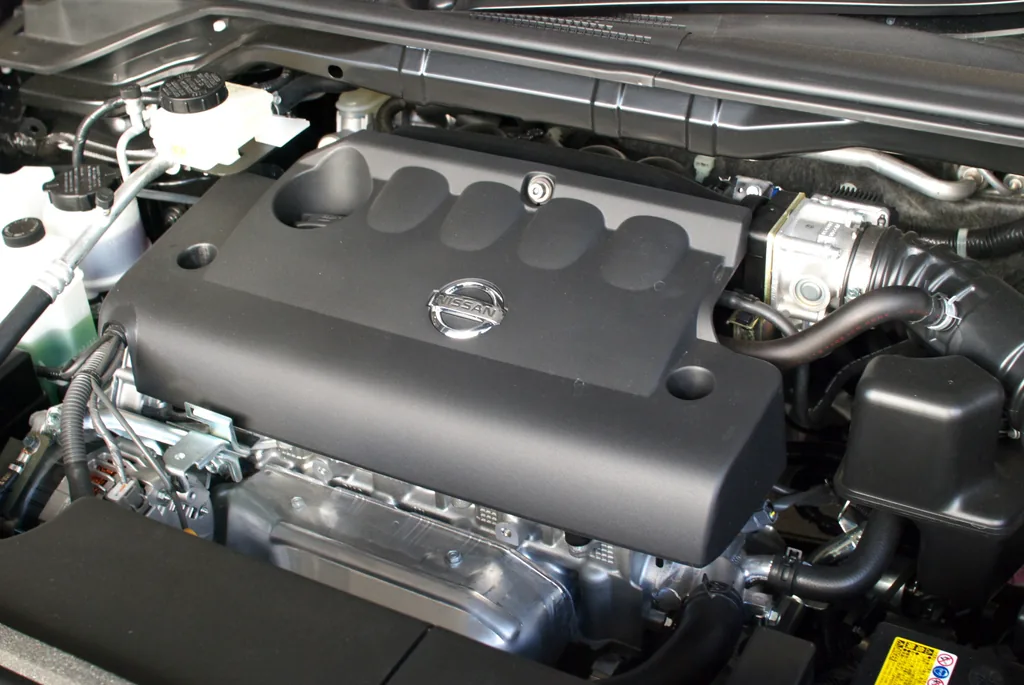
Engine layout decides which companion codes are possible. Four-cylinder Nissans such as the 2.5-liter QR25DE (Altima 2002-2020, Rogue 2008-2020, Frontier 2005-2019, per Wikipedia) can only add P0301-P0304. V6 models such as the VQ35DE in the Altima, Maxima and Quest, the direct-injected VQ35DD in the Pathfinder and the VQ38DD in the Frontier (Wikipedia) can add up to P0306.
Can You Drive a Nissan With P0300?
Under 13 CCR 1968.2, the check engine light must blink once per second while misfire severe enough to damage the catalyst is occurring. Nissan’s 2019 Altima owner’s manual says a blinking light means “An engine misfire has been detected which may damage the emission control system.” Its steps “To reduce or avoid emission control system damage” are: “do not drive at speeds above 45 mph (72 km/h),” “avoid hard acceleration or deceleration,” “avoid steep uphill grades” and “if possible, reduce the amount of cargo being hauled or towed.”
Treat a flashing light as a signal to stop: pull over as soon as it is safe, switch the engine off and have the vehicle inspected before driving further. Nissan’s limits reduce damage; they are not a reason to keep driving, and a tow is the cautious way to reach a shop. With a steady light, have the vehicle inspected soon. The manual cautions that “Continued vehicle operation without having the emission control system checked and repaired as necessary could lead to poor driveability, reduced fuel economy, and possible damage to the emission control system.”
Nissan P0300 and Misfire Bulletins by Model and Year
These Nissan documents come from NHTSA’s manufacturer communications database. Each applies only to the listed vehicles, and the recent ones require a matching ECM part number before reprogramming.
| Bulletin | Vehicles | Condition | Nissan’s fix |
|---|---|---|---|
| NTB23-079 | 2022-2023 Pathfinder (R53), VQ35DD | MIL on with P0300 | Reprogram the ECM (2022) or the ECM and TCM (2023), if applicable |
| NTB22-069A | 2022 Pathfinder (R53) | P0300-P0306 during a cold-start warm-up, no drivability concern | Reprogram the ECM, if applicable |
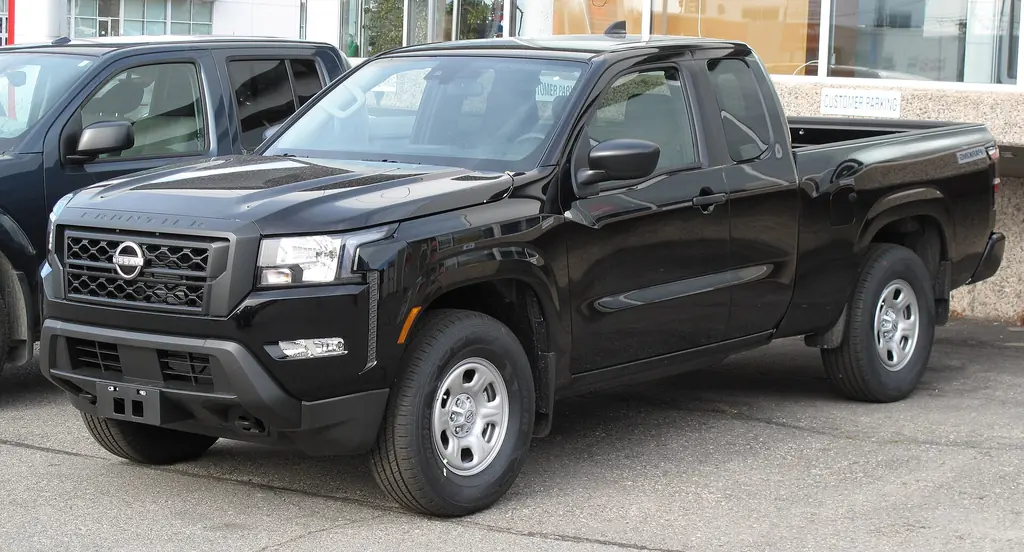
| NTB22-001 | 2022 Frontier (D41), VQ38DD | P0300 and/or P0301-P0306 stored only during a cold start | Reprogram the ECM if applicable, then replace the intake manifold |
| NTB17-113D | 2017-2020 Rogue Sport (J11) | After 2+ hours off: long crank, engine turns off, hesitation, rough idle or misfire during warm-up | Reprogram the ECM, if applicable |
| NTB12-096 | 2012 Versa Sedan (N17), CVT | MIL on with P0300-P0304 at cold idle, no drivability issues | Reprogram the ECM |
| NTB-10-056 | 2007-2010 Altima Hybrid | Over 15,000 miles with P0300-P0304; may include rough running or vibration on deceleration | NHTSA summary only; ask a dealer |
| 06075 | 2004-2006 Altima and Maxima, 2004-2007 Quest | P0300 stored and ignition coils blistered | NHTSA summary only |
| 04090 | 2004 Altima, Maxima and Quest; 2005 Altima | MIL on with P0300-P0306, P1273 or P1283 | NHTSA summary only |
Two patterns stand out: the recent fixes are mostly software, and the cold-start pattern repeats across the Pathfinder, Frontier, Versa and Rogue Sport.
Known P0300 Patterns by Nissan Engine
2.5-liter QR25DE: Altima, Sentra and Rogue
Nissan ran voluntary service campaign P5202 on 2004 Sentra 2.5 and 2004-2005 Altima 2.5 models because power valve screws in the intake manifold could loosen. Nissan said the MIL may come on and unstable idling or power loss may occur. The campaign expired on July 16, 2020, and Nissan says its parts are no longer available.
Owners of earlier cars report the same failure: of the 1,063 NHTSA complaints filed for the 2002 Altima (pulled October 21, 2026), 27 mention a misfire, and at least six blame power valve (butterfly) screws or plates that came loose inside the intake manifold. The 2002 Altima and Sentra 2.5 were also covered by recall 03V084000, which warns that pre-catalyst substrate particles entering the combustion chamber could score the cylinder walls and raise oil consumption. The recall lists fire as the possible consequence of the overheating pre-catalyst.
On specific 2018 Altima (L33) and Rogue (T32) 2.5 models, Nissan emission recall campaign PC716/PC717 covers a machining issue that could let oil past the valve guides into the combustion chamber. Dealers check the engine identification markings, inspect the suspect cylinders and spark plugs on engines from the affected lot, and may replace the engine. Separately, NTB18-018a (2013-2015 Altima; the bulletin does not name an engine) and NTB17-080a (2014-2016 Rogue) fix a rough idle lasting a few seconds after a cold start with an ECM reprogram where available, plus a new PCV valve on the Altima if the old one is orange. Neither bulletin lists a misfire code.
V6 engines: VQ35DE, VQ35DD and VQ38DD
The ignition coil bulletin 06075 covers the 2004-2006 Altima and Maxima and the 2004-2007 Quest, and the Maxima and Quest of those years used the VQ35DE (Wikipedia). The newer direct-injected VQ35DD and VQ38DD engines account for the Pathfinder and Frontier bulletins. VQ engines use timing chains, and Nissan bulletin 07042 (2004-2006 Altima, 2004-2007 Maxima and Quest, 2005-2007 Frontier, Pathfinder and Xterra) covers a buzzing or whining timing chain noise, not a misfire. If P0300 appears with crankshaft or camshaft sensor codes, work through our P0335 Nissan guide and P0340 Nissan guide first.
Smaller engines: MR20DD and HR16DE
The Rogue Sport uses the 2.0-liter MR20DD (Wikipedia) and is covered by NTB17-113D. The N17 Versa uses the 1.6-liter HR16DE (Wikipedia), and NTB12-096 notes that its misfire, if present, occurs during cold engine idle.
Most Common Causes of P0300 on a Nissan
Haynes lists worn spark plugs as the most common cause of P0300 on any car, followed by a weak ignition coil, contaminated fuel injectors, carbon build-up and low fuel pressure, with vacuum or exhaust leaks as rare causes. Nissan’s own records add make-specific suspects:
- Spark plugs past their interval: the 2019 Altima owner’s manual lists iridium-tipped plugs for replacement every 105,000 miles, or sooner if the gap exceeds 1.35 mm (PR25DD) or 1.25 mm (KR20DDET), and says not to clean or regap them.
- Ignition coils: bulletin 06075 pairs P0300 with blistered coils on 2004-2006 Altima and Maxima and 2004-2007 Quest models.
- ECM software: the Pathfinder, Frontier, Rogue Sport and Versa bulletins.
- Intake-side faults: the 2022 Frontier intake manifold and loose power valve screws on early QR25DE cars.
- Cylinder and oil problems: the 2018 QR25 campaign inspects cylinders and spark plugs for oil getting past the valve guides, and the 2002 pre-catalyst recall warns of scored cylinder walls.
How to Diagnose P0300 on a Nissan
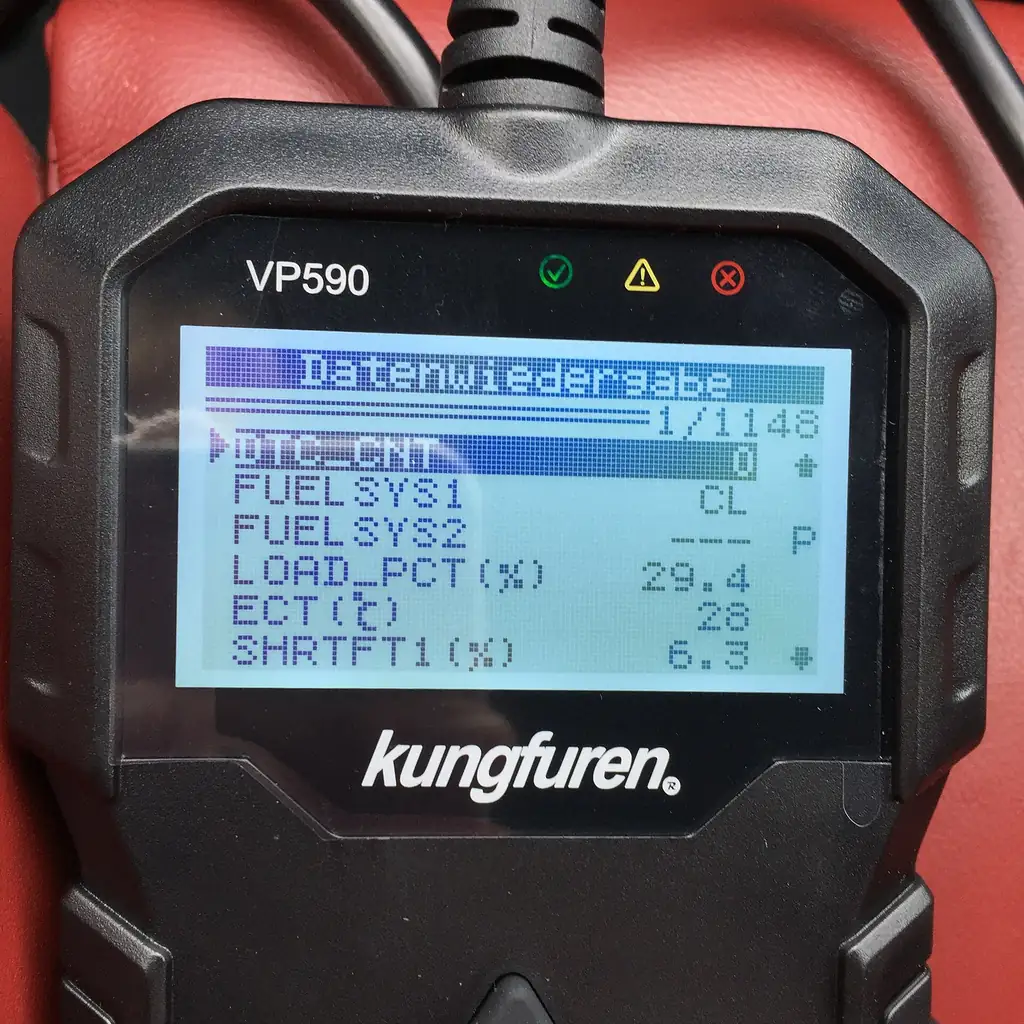
- Note whether the light is flashing or steady, and save every stored code and the freeze frame before clearing anything. A cylinder code (P0301-P0306) alongside P0300 shows where to look first.
- Note when it happens. The Pathfinder, Frontier, Versa and Rogue Sport bulletins all involve misfires at cold start or warm-up, so tell the dealer if that matches.
- Run the VIN through NHTSA’s recall lookup and ask a Nissan dealer to check open campaigns and bulletins. Bulletin eligibility depends on the current ECM part number, which the dealer reads with Nissan’s CONSULT tool.
- Compare spark plug mileage with the maintenance schedule in your owner’s manual, then inspect the plugs and coils.
- Look for intake leaks, and on early 2.5-liter Altima and Sentra models have the intake manifold power valves inspected.
- Check oil level and consumption, and ask whether the 2018 QR25 campaign or the 2002 pre-catalyst recall applies.
- After the ECM reprogram in the misfire bulletins above, Nissan calls for Throttle Valve Closed Position, Idle Air Volume Learning and Accelerator Closed Position procedures, with engine coolant at 158-212°F (70-100°C) for the idle air volume learn.
- If plugs, coils, fuel and leaks check out, the remaining suspects are mechanical; Haynes notes timing issues or a failed head gasket can set P0300.
What It Costs to Fix P0300 on a Nissan
The recent Nissan bulletins above include warranty claim coding, so ask whether your car is still covered before paying for a bulletin repair. No published, Nissan-specific P0300 repair price could be verified for this guide, so get a written quote that names the cause, the parts and the labor time.
If misfires have already hurt the catalytic converter, check emissions coverage. According to the EPA, the federal emissions warranty covers catalytic converters, the electronic emissions control unit (ECU) and the onboard diagnostic device for 8 years or 80,000 miles, whichever comes first, starting on the original sale date and applying to used vehicles too.
Recalls and Related Nissan Codes
None of the Nissan safety recalls in the NHTSA records reviewed for this guide (2002-2023 model years of the main Nissan cars, SUVs and trucks) mentions a misfire. Two related 2.5-liter Altima and Sentra recalls, 06V242000 and 07V527000, reprogrammed the ECM because a brief crankshaft position sensor signal interruption could stop the engine at low speed.
If a catalyst code follows the misfire, our P0420 code guide explains the converter side. If a lean code such as P0171 appears too, our P0171 code guide covers that diagnosis.
Frequently Asked Questions About P0300 on a Nissan
What does P0300 mean on a Nissan?
Can I drive my Nissan with a P0300 code?
Does Nissan have a bulletin for P0300?
Why does my Nissan set P0300 only on a cold start?
Can worn spark plugs cause P0300 on a Nissan?
Is a P0300 repair covered by warranty?
Data Sources and Verification
- Nissan NTB23-079
- Nissan NTB22-069A
- Nissan NTB22-001
- Nissan NTB17-113D
- Nissan NTB12-096
- NHTSA summary of Nissan NTB-10-056
- NHTSA summary of Nissan bulletin 06075
- NHTSA summary of Nissan bulletin 04090
- NHTSA summary of Nissan bulletin 07042
- Nissan campaign P5202 expiration notice
- Nissan emission recall campaign PC716/PC717
- Nissan NTB18-018a
- Nissan NTB17-080a
- NHTSA recall 03V084000
- NHTSA recall 06V242000
- NHTSA recall 07V527000
- NHTSA complaints, 2002 Nissan Altima (counted October 21, 2026)
- 13 CCR 1968.2 (California OBD II regulation)
- Nissan 2019 Altima Owner’s Manual
- EPA – federal emission warranty FAQ
- Haynes – Is code P0300 serious?
- Wikipedia – Nissan QR engine
- Wikipedia – Nissan VQ engine

Morgan Reyes is the founder and editor-in-chief of NextCarReview, which Morgan launched in August 2024. A 2022 graduate of Columbia University, Morgan is based in New York and writes and edits the site’s reviews, comparisons and buying guides. Morgan does not road-test vehicles. Every article is built from published primary data: EPA FuelEconomy.gov ratings, NHTSA crash ratings, recalls and owner complaints, IIHS results, and manufacturer specifications and pricing, with each figure cited and checked before publication. Contact: admin@nextcarreview.com