In this article 12 sections
A P0171 code on a Toyota means the engine computer has been adding extra fuel to bank 1 and has run out of room to correct it. Toyota’s own bulletins tie the code to fuel pumps that lose pressure, flex-fuel software, a Prius vacuum line that separates and a corroded Highlander computer connector.
Quick answer: P0171 means bank 1 is running lean: too much air or too little fuel. The engine may keep running, but stop driving if the check engine light flashes or it stalls. On listed 2014-2020 Toyotas, bulletin T-SB-0009-23 says to check fuel pressure and replace the fuel pump if it is low, possibly under warranty. Otherwise, check for intake and PCV leaks first.
For the generic version of this code, see our P0171 code guide. Ford owners can compare the P0171 Ford guide.
What Does P0171 Mean on a Toyota?
P0171 Toyota Code – Quick Diagnostic Intelligence
Toyota wording: “System Too Lean [Bank One]” (Toyota T-SB-0041-15).
Type: Generic OBD-II code, same meaning on every make (Identifix).
Partner code: P0174 is the same fault on bank 2 of a V-type engine; Toyota bulletins often list both.
First checks: freeze frame data, fuel trims, and any Toyota bulletin or recall for your VIN.
According to Identifix, bank 1 is the side of the engine with cylinder No. 1, and an inline engine normally has only one bank. The engine computer trims fuel using the upstream air-fuel ratio or oxygen sensor, and P0171 sets when it must add more fuel than its calibrated limit allows. That can mean a truly lean mixture or misleading data, so the code alone does not prove a sensor, the mass air flow (MAF) meter or the fuel pump has failed.
Toyota’s Air-Fuel Ratio Sensor: Read the Data Correctly
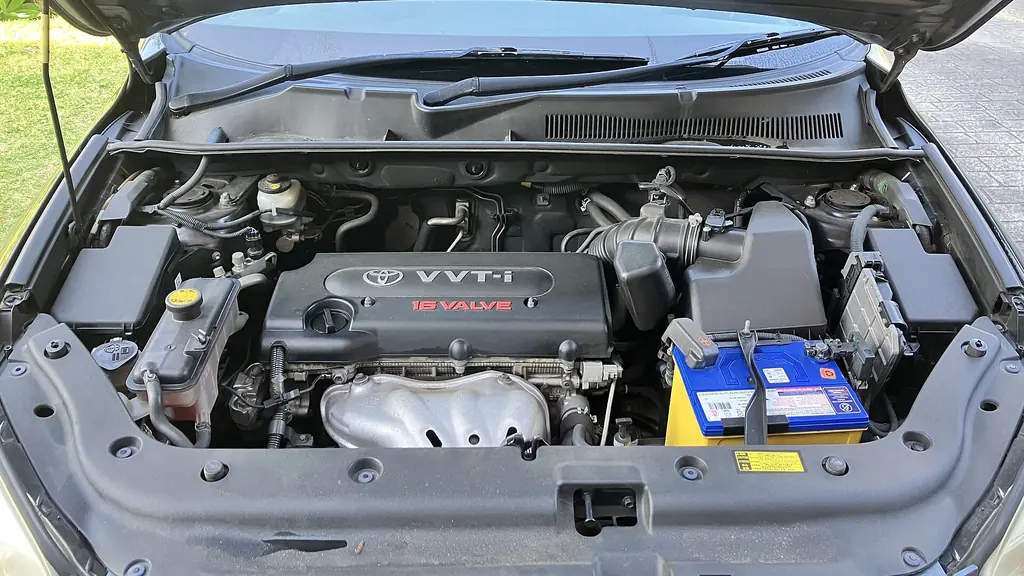
Many late-model Toyotas use a wide-range air-fuel ratio (A/F) sensor instead of a conventional oxygen sensor. A November 2009 Technicians Service Training newsletter (article courtesy of Wells Manufacturing) explains what that means for diagnosis:
- Wider range. A conventional oxygen sensor is accurate only near 14.7:1; the A/F sensor reads from 23:1 (lean) to 11:1 (rich).
- Higher means leaner. The Toyota sensor signals with current, which the computer converts to a voltage. On a scan tool that reads it, about 3.3 volts means 14.7:1, higher means lean and lower means rich, the opposite of a conventional oxygen sensor.
- Scaled or missing data. Some scan tools divide the value by 5, so 14.7:1 shows as 0.66 volt. Some generic OBD-II scanners show no A/F data at all, which can make a good sensor look faulty.
A lean A/F reading may simply be the sensor describing a real air or fuel problem. Identifix lists replacing the sensor because its data reports the condition as a common mistake. For a sensor-driven code on another make, our P1148 Nissan guide covers Nissan’s AFR sensor and closed-loop fueling.
Symptoms of P0171 on a Toyota
- A check engine light, which may be the only symptom, or rough idle, stalling, hesitation, misfires or pinging under load (Identifix).
- Hard starting or long cranking: Toyota bulletins T-SB-0009-23 and T-SB-0166-19 both describe a “hard start and/or MIL ON” condition.
- 2010-2013 Prius: an engine that fails to start (P0A0F), possibly with P3190 poor engine power and P0171 (T-SB-0041-15).
- 2014-2018 Highlander: drivability problems and low or no fuel pressure (T-SB-0072-19).
Common Causes of P0171 on Toyota Vehicles
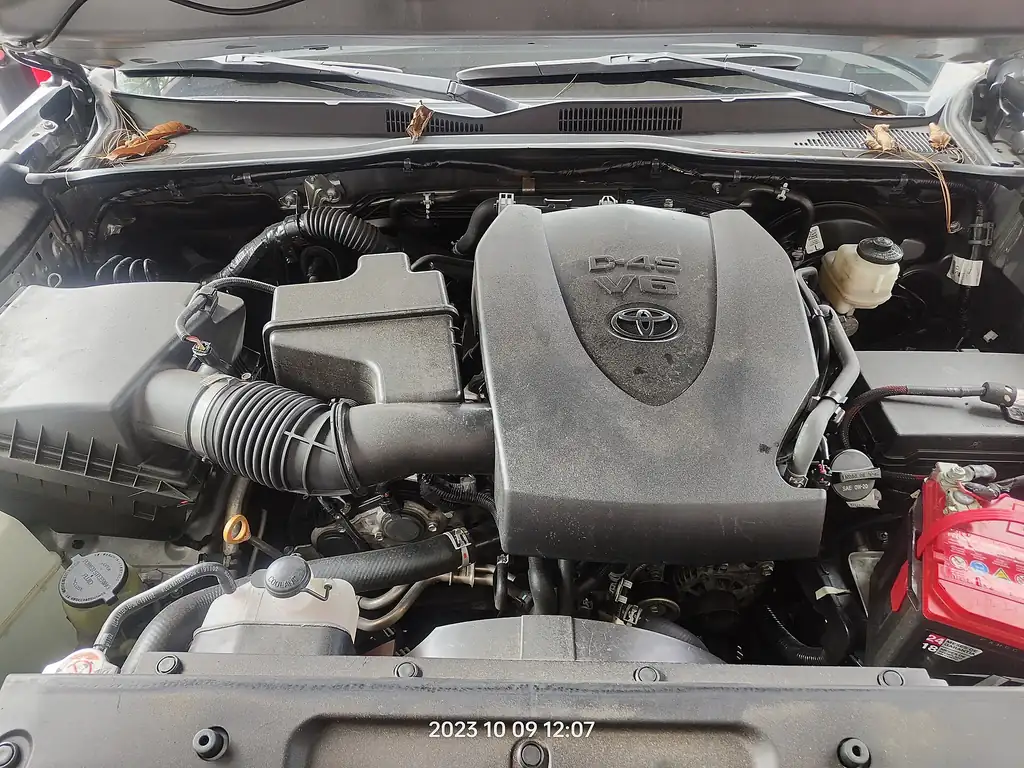
- Low fuel pressure. T-SB-0009-23 covers listed 2014-2020 models with positive fuel trims and low pressure on a gauge. Separately, Toyota recalled low-pressure fuel pumps under NHTSA 20V-012 and 20V-682 because a failed pump can stall the engine.
- Intake, vacuum and PCV leaks. Identifix lists a split intake boot, a leaking manifold gasket, a disconnected hose, a failed PCV part, a brake booster leak or a stuck-open purge valve. On 2010-2013 Prius, the purge VSV/PCV line can separate from the throttle body (T-SB-0041-15), and 2007 Camry owners report P0171 with a hissing brake pedal (NHTSA complaints).
- MAF problems. Contamination, a wrong replacement sensor or air bypassing the sensor can skew airflow data. Clean the element only if the manufacturer permits it, with an approved cleaner.
- Exhaust leaks ahead of the A/F sensor, which draw in outside air and make the mixture look lean.
- Software and wiring. Toyota’s fix for flex-fuel Tundra and Sequoia trucks includes an ECM reflash (T-SB-0166-19). On 2014-2018 Highlanders, water from poorly sealed aftermarket windshield deicer harnesses can corrode the A43 ECM connector (T-SB-0072-19).
Toyota Service Bulletins That Mention P0171
These four bulletins were opened from NHTSA’s site. Each applies only to the listed vehicles and conditions, so a dealer must confirm that your VIN qualifies.
| Bulletin | Vehicles | What Toyota describes | Repair |
|---|---|---|---|
| T-SB-0009-23 (Feb. 2023) | Listed 2014-2020 models, including Camry, Corolla, RAV4, Tacoma, 4Runner, Highlander, Sienna, Tundra, Sequoia | Hard start and/or MIL with P0171, P0174 or P0087; positive fuel trims; no-pressure condition | Replace the fuel pump if pressure is out of specification |
| T-SB-0166-19 Rev1 (Dec. 2019, rev. Jan. 2020) | 2009-2018 Sequoia, 2009-2019 Tundra, 3UR-FBE flex-fuel | Hard start and/or MIL with P0171, P0174, P0172, P0175 or P1604; negative trims, high alcohol estimate | Reflash ECM, replace fuel pump, reset fuel alcohol learning |
| T-SB-0072-19 (June 2019) | 2014-2018 Highlander (P0171 listed for non-hybrid models) | Drivability problems, low or no fuel pressure, codes including P0171 | Replace ECM, engine room main harness and windshield |
| T-SB-0041-15 (June 2015) | 2010-2013 Prius, 2012-2013 Prius v | P0A0F with P3190, P3191 and/or P0171 | Replace purge VSV, reprogram ECM |
NHTSA’s index also lists older Toyota bulletins without the documents. Bulletins from November 2005 describe a check engine light with P0171, P0174, P2195 or P2197 on 2005-2006 Tacoma, 4Runner, Tundra, Highlander, Camry and Camry Solara. October 2007 bulletins cover lean running in subfreezing temperatures on 2003-2008 Corolla and Matrix and 2000-2005 Celica.

How to Diagnose P0171 on a Toyota Step by Step
- Save the freeze frame and every code before clearing (Identifix). Note any P0174, P0087, P1604 or misfire codes, because Toyota’s bulletins are keyed to those combinations.
- Read fuel trims and A/F data. Compare trims at idle and at a steady higher speed. If positive trim is highest at idle and improves as airflow rises, look for a vacuum leak first.
- Check your VIN. Use our VIN decoder to confirm the year and engine, then check open recalls, including 20V-012 and 20V-682.
- Listed 2014-2020 model with a hard start or P0171: measure fuel pressure with a gauge. If it is within specification, T-SB-0009-23 does not apply.
- Flex-fuel Tundra or Sequoia: T-SB-0166-19 continues when fuel trims are -10% or lower, or the alcohol density estimate is 15% or higher on E0-E10 fuel, and the ECM lacks the latest calibration.
- 2010-2013 Prius: inspect the purge VSV/PCV line at the throttle body. 2014-2018 Highlander with an aftermarket windshield: check the A43 ECM connector for water.
- Everything else: smoke-test the intake, PCV and purge plumbing, inspect the duct after the MAF, compare MAF data with known-good values, check for exhaust leaks ahead of the A/F sensor, then test the sensor’s response.
- Confirm the repair: clear the code, complete the drive cycle and make sure P0171 does not return.
If an EVAP code shows up too, read our P0441 Toyota guide: a purge valve stuck open can also let unmetered air into the engine.
How Much Does It Cost to Fix P0171 on a Toyota?
The bill depends on the confirmed cause, from a loose hose to a fuel pump. Identifix notes there is no single repair price, and no independent Toyota-specific estimate could be verified for this page. Toyota’s documented coverage for the bulletin repairs:
| Repair | Coverage stated by Toyota or NHTSA | Source |
|---|---|---|
| Fuel pump, T-SB-0009-23 | Toyota Powertrain Warranty, 60 months or 60,000 miles; some California-certified vehicles 7 years or 70,000 miles | Toyota TSB |
| ECM reflash and pump, T-SB-0166-19 | Toyota Federal Emission Warranty, 96 months or 80,000 miles | Toyota TSB |
| Purge VSV and ECM, T-SB-0041-15 | California Emission Warranty, 180 months or 150,000 miles (California-spec Prius in listed states); otherwise 96 months or 80,000 miles | Toyota TSB |
| Highlander connector, T-SB-0072-19 | Not applicable to warranty | Toyota TSB |
| Fuel pump recall 20V-012 / 20V-682 | Free replacement at a Toyota dealer | NHTSA |
Bulletin coverage is limited to the condition described and counts from the in-service date. Outside these programs, get a written estimate once the cause is confirmed.
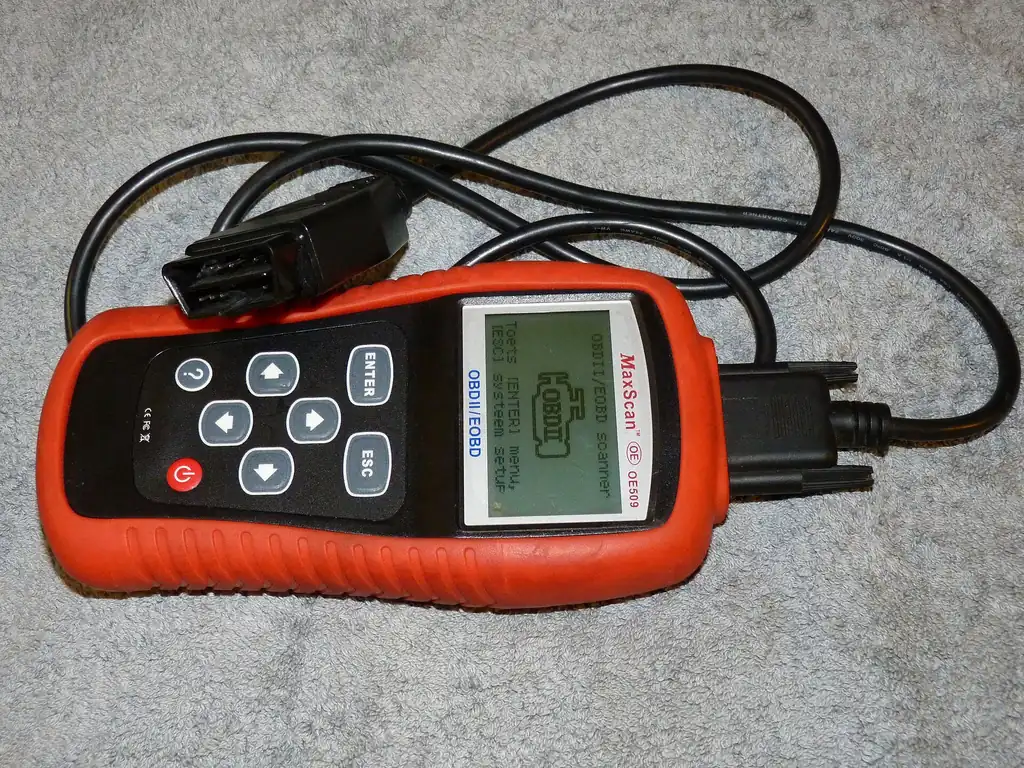
P0171 by Toyota Model
Only models tied to P0171 by a Toyota bulletin, NHTSA’s bulletin index or an NHTSA owner complaint are listed. Owner complaints are reports, not confirmed diagnoses.
| Model and years | What is documented | Source |
|---|---|---|
| Camry 2007 | Owners report P0171 with a hissing brake pedal; one dealer said the brake booster needed replacing | NHTSA 10481255, NHTSA 10609988 |
| Camry 2018-2020 | In T-SB-0009-23 (A25A-FKS, 2GR-FKS, Camry Hybrid) and recall 20V-682 | Toyota TSB, NHTSA |
| Corolla and Matrix 2003-2008 | 2007 bulletin: lean in subfreezing temperatures (summary only) | NHTSA index |
| Corolla 2018-2020 | In T-SB-0009-23 (2ZR-FE, M20-FKS); a 2018 owner reports P0171 with stalling | Toyota TSB, NHTSA 11653942 |
| RAV4 2019-2020 | In T-SB-0009-23 (A25A-FKS, RAV4 Hybrid); a 2019 owner reports P0171, P0505 and P117B with a surging idle | Toyota TSB, NHTSA 11667285 |
| Tacoma 2017-2020 | In T-SB-0009-23 (2GR-FKS, 2TR-FE); a 2019 owner reports P0171, hard starts and a stall, fuel pump diagnosed | Toyota TSB, NHTSA 11476896 |
| 4Runner 2014-2019 | In T-SB-0009-23 (1GR-FE) | Toyota TSB |
| Highlander 2014-2019 | T-SB-0072-19 (2014-2018); 2017-2019 in T-SB-0009-23; 2019 owners report P0171 and P0174 with a no-start or stalling | Toyota TSB, NHTSA 11526896, NHTSA 11722818 |
| Tundra 2009-2019, Sequoia 2009-2018 | Flex-fuel 3UR-FBE: T-SB-0166-19 | Toyota TSB |
| Prius 2010-2013, Prius v 2012-2013 | Purge VSV/PCV line separation: T-SB-0041-15 | Toyota TSB |
Can You Drive a Toyota With P0171?
Often the car keeps running, but get it diagnosed promptly. Identifix warns that a real lean condition can progress to hesitation, stalling, misfire and catalyst stress, and says to stop driving when safe if the check engine light flashes, the engine runs poorly or power drops. Misfire codes are covered in our P0300 code guide.
Stalling is the serious case. NHTSA’s summary for recall 20V-682 says a failed low-pressure fuel pump can stall the engine while driving, increasing the risk of a crash. If your Toyota stalls, check for open recalls before driving it further.
The Bottom Line
P0171 on a Toyota says bank 1 is lean, not which part failed. Save the freeze frame, read fuel trims and A/F data correctly, and check your VIN against Toyota’s bulletins first. If none applies, a smoke test for intake and PCV leaks is the logical next step.
Frequently Asked Questions About the P0171 Toyota Code
What does P0171 mean on a Toyota?
Is there a Toyota TSB for P0171?
Can a bad fuel pump cause P0171 on a Toyota?
Why does Toyota’s A/F sensor reading go up when the engine runs lean?
Will disconnecting the battery clear P0171 on a Toyota?
Professional Notice: This guide is desk research from Toyota service bulletins, NHTSA records and technical publications. Verify procedures against Toyota service information for your vehicle.
Data Sources and Verification
- Toyota T-SB-0009-23 – Fuel Pump (Loss of Fuel Pressure), 2014-2020 models
- Toyota T-SB-0166-19 Rev1 – Flex-fuel Tundra and Sequoia, P0171/P0174/P0172/P0175/P1604
- Toyota T-SB-0072-19 – 2014-2018 Highlander A43/A9 connector corrosion
- Toyota T-SB-0041-15 – 2010-2013 Prius purge VSV line separation
- NHTSA manufacturer communications index – Toyota bulletin summaries, 2005 and 2007
- NHTSA recall 20V-012 and 20V-682 – Toyota low-pressure fuel pump
- Technicians Service Training newsletter, November 2009 – wide range air/fuel ratio sensors
- Identifix P0171 guide – definition, causes, diagnosis and safety guidance
- NHTSA complaints database – owner complaints in the model table

Morgan Reyes is the founder and editor-in-chief of NextCarReview, which Morgan launched in August 2024. A 2022 graduate of Columbia University, Morgan is based in New York and writes and edits the site’s reviews, comparisons and buying guides. Morgan does not road-test vehicles. Every article is built from published primary data: EPA FuelEconomy.gov ratings, NHTSA crash ratings, recalls and owner complaints, IIHS results, and manufacturer specifications and pricing, with each figure cited and checked before publication. Contact: admin@nextcarreview.com