In this article 11 sections
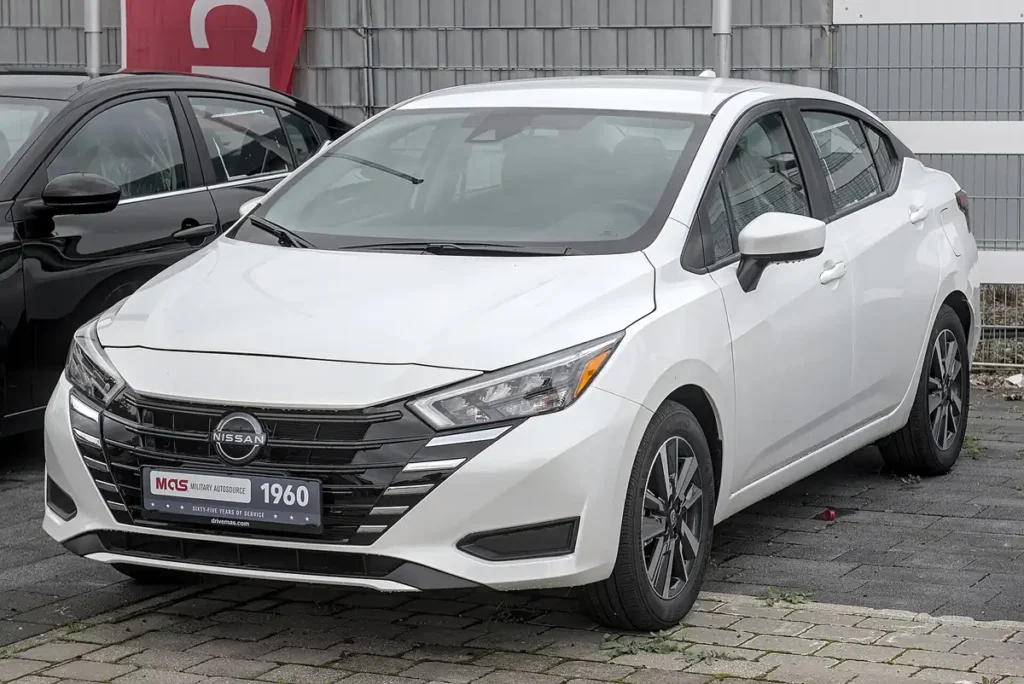
This 2025 Nissan Versa review covers trims (S, SV, SR), EPA mpg, safety, interior, pros and cons, and what to check when buying one. Nissan ended US Versa production in December 2025, according to a Nissan spokesperson quoted by Kelley Blue Book, so the 2025 is the final model year and is now mainly a used or leftover purchase.
For buyers who want a fuel-efficient, low-cost subcompact sedan, 2025 Nissan Versa reviews are mostly positive, with a few caveats.
It was one of the last new cars in the US priced under $20,000.
This article summarizes 2025 Nissan Versa reviews, compares the S, SV and SR trims, covers interior and mpg details, and compares it with alternatives.
Why the 2025 Nissan Versa Still Matters
The automotive landscape is shifting: many cheap sedans have been discontinued, and the Versa has now joined them: Nissan ended US production in December 2025, and there is no 2026 model.
Nissan priced the 2025 Versa from $17,390, one of the lowest MSRPs in America.
Consumer feedback is mostly positive on value and styling. Still, reviews often note the engine’s lack of punch and mixed ride comfort.
If your priority is maximizing features per dollar with excellent fuel economy, the 2025 Nissan Versa reviews suggest it remains one of the most compelling options in its class.
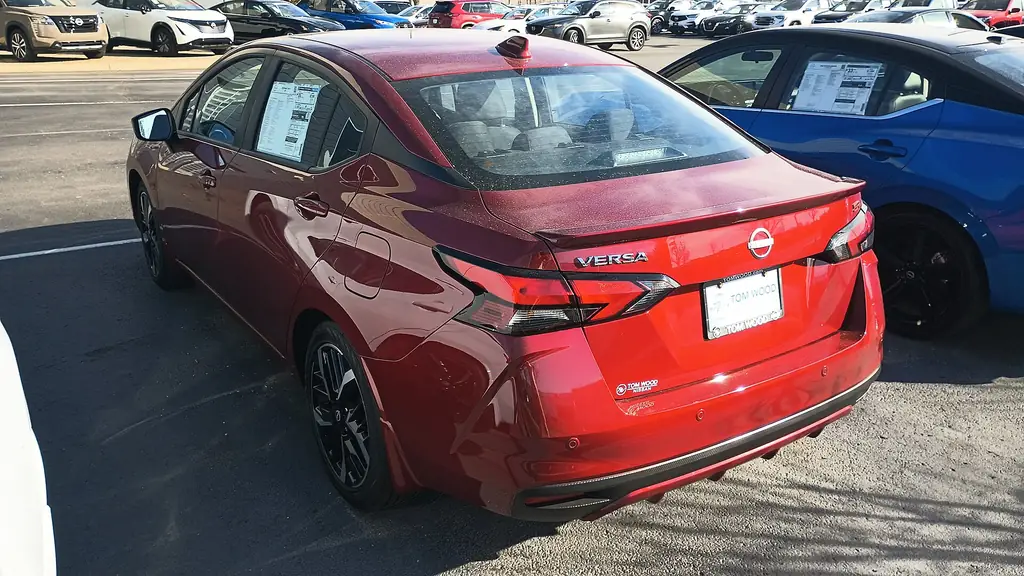
Key Specs & What They Mean (At-a-Glance)
| Spec | Value | Source / Notes |
| Engine | 1.6-L I4, 122 hp, 114 lb-ft | (MotorTrend) |
| Transmission options | 5-speed manual (base S), CVT (standard on SV/SR, optional on S) | (MotorTrend) |
| Fuel economy (city / highway / combined) | 27 / 35 / 30 mpg (manual) • 32 / 40 / 35 mpg (CVT) | (EPA FuelEconomy.gov) |
| Trunk / cargo space | 14.7–15.0 cu ft | (U.S. News Cars) |
| Safety / features | 5-star NHTSA overall (4-star frontal, 5-star side, 4-star rollover), standard automatic emergency braking; LED headlights standard 2025 | (U.S. News Cars) |
| Price range | $17,390 to $21,390 plus $1,245 destination | (Nissan) |
These specs underscore how 2025 Nissan Versa reviews consistently praise the balance of efficiency and features—but also flag the tradeoffs (slow acceleration, basic suspension).

Trim Breakdown: S, SV, SR — What You Get, What You Sacrifice
Let’s parse through the trim levels to understand how the 2025 Nissan Versa SV, 2025 Nissan Versa 1.6 SR, and base S differ in real life.
2025 Nissan Versa S (base)
- Comes with either a 5-speed manual or a CVT.
- Basic infotainment: 7-inch touchscreen, keyless entry.
- Safety suite includes automatic emergency braking, lane departure warning, high-beam assist.
- No frills: skip features like blind-spot monitoring, heated seats, or adaptive cruise control.
- Drawbacks: reviews note the ride is a bit firm over rough roads and noise seeps in on highways.
2025 Nissan Versa SV (mid)
- Standard CVT transmission.
- Adds Apple CarPlay / Android Auto, armrest, wireless charge (optional package), blind-spot and rear cross-traffic monitoring.
- Slight upgrades to interior trim, more comfort and connectivity.
- This trim hits the sweet spot for many buyers: more features without going full premium.
2025 Nissan Versa SR (top)
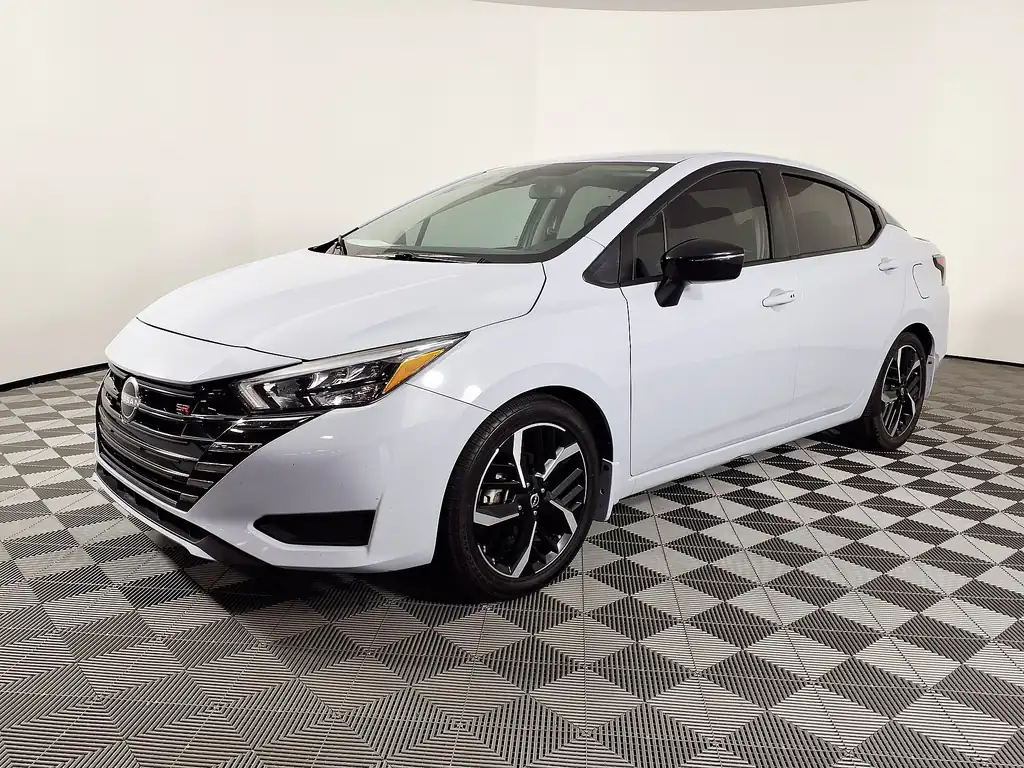
- Full suite: heated front seats, Intelligent Cruise Control, 17-inch alloy wheels, a leather-wrapped steering wheel and a larger 8-inch touchscreen.
- More refined interior touches (faux leather, contrast stitching), alloy wheels.
- Driver assistance and convenience fill out the experience.
If your budget allows it, reviewers often recommend skipping S and heading straight to the SV or SR to avoid regrets over missing features.
Performance & Driving Impressions
Power & Acceleration
The 2025 Nissan Versa reviews uniformly caution: don’t expect sporty performance. The 1.6-L naturally aspirated engine with 122 hp isn’t built for thrills.
Nissan does not publish an official 0–60 mph time, and the output is adequate for highway merging, not spirited driving.
The CVT smooths out power delivery and is more efficient; the manual gives a more connected feel but is rated 5 mpg lower combined.
Ride and Handling
Expect comfort for everyday commuting. The small size and tight turning radius make it agile in city traffic. Reviewers generally describe the handling as composed for urban driving. That said, on rough roads or at higher speeds, some reviewers note body roll and a bit of vibration.
Steering is accurate enough though not highly communicative (a bit numb). Noise insulation is decent, but highway wind and tire noise are noticeable in the base trims.
Fuel Economy & Running Costs
One of the 2025 Nissan Versa reviews’ strongest selling points is fuel savings.
- The 2025 Nissan Versa mpg rating: 32 city / 40 highway / 35 combined mpg for CVT models.
- The manual-equipped version yields 27 city / 35 highway / 30 combined mpg.
- On the EPA site, official combined mpg is pegged at 35 mpg.
- According to FuelEconomy.gov, the 2025 Versa CVT’s estimated annual fuel cost is about $1,900 ($2,250 for the manual), based on EPA assumptions for 15,000 miles a year.
These figures put the Versa ahead of many subcompact SUVs—if your driving profile includes a lot of highway miles, the CVT version becomes especially appealing.
Interior, Comfort & Usability
Layout & Material Feel
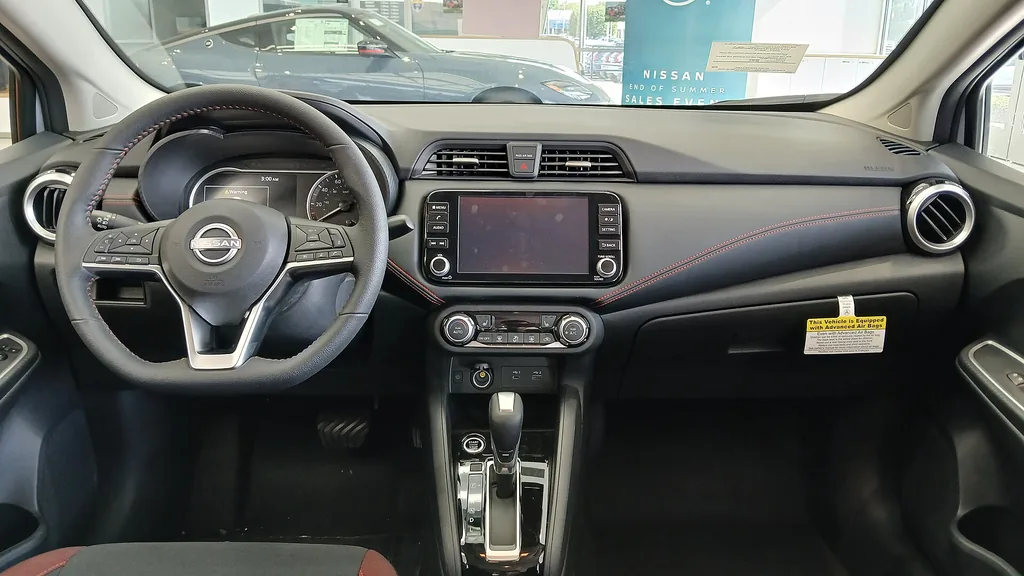
In many 2025 Nissan Versa reviews, the interior gets praise for being surprisingly refined for its price. Even in base trims, the layout is clean and functional, with intuitive controls.
Soft-touch surfaces are limited, and hard plastics remain in lower zones. But for this segment, that’s expected. Higher trims (SV, SR) bring upgraded cloth, faux-leather trim, and more upscale finishes.
Space & Practicality
- Front legroom is adequate; rear legroom is tighter but usable for two adults on short to moderate trips.
- Cargo capacity: 14.7 cu ft (S) and up to ~15 cu ft in upper trims.
- The rear seats fold 60/40 in SV and SR trims, giving flexibility for longer items.
- All trims get a touchscreen (7-inch, or 8-inch on the SR), and for 2025 the S and SV gained LED headlights. Higher trims add wireless charging, larger screens, connectivity.
If you’re frequently carrying cargo or longer items, the folding rear seats in SV and SR trims are a useful touch.
Pros & Cons: What Owners and Experts Say
Pros (Why it’s praised in 2025 Nissan Versa reviews)
- Exceptional value — one of the lowest-priced new cars with modern features.
- Competitive fuel economy in both city and highway.
- Comfortable and functional interior given the price.
- Solid safety and driver-assistance features even in base trims.
- Simplicity and reliability in design — fewer complex systems that can fail. Some owners praise that.
Cons (Where it draws criticism)
- Sluggish acceleration: reviewers consistently say the engine is underwhelming especially for highway overtakes.
- Noise and vibration: base trims are more exposed to road and wind noise.
- Outdated features in the base model: missing CarPlay/Android Auto unless bumped up, limited comfort extras.
- Manual transmission option is limited to the base S, and the Versa ended after the 2025 model year.
- Segment maturity: small sedans are less trendy; resale demand may lag SUVs.
What the 2025 Nissan Versa S with a Manual Transmission Offers (and Loses)
One of the more interesting options is the 2025 Nissan Versa S with a manual transmission. For purists, shifting your own gears brings intimacy and control. It also allows slightly better engagement at the cost of convenience.
The EPA and Nissan list a 5-speed manual on the 2025 Versa S, priced from $17,390. Nissan ended US Versa production in December 2025, and there is no 2026 Versa in the EPA listings, so manual cars will only become rarer.
If you find one, it gives an engaging entry-level experience. But the tradeoffs are lower comfort, slower highway performance, and eventual rarity.
In reviews, manual drivers tend to say: it’s charming, but not practical for highway cruising or heavy traffic. If your commute is largely city-based and you enjoy the mechanical feel, it could suit you—but don’t expect performance thrills.
How It Compares: Versa vs. Alternatives
When evaluating 2025 Nissan Versa reviews, it’s worth placing it side-by-side with alternatives.
- Subcompact SUVs / crossovers: Many shoppers move up to CUVs for ground clearance and style, but these often carry fuel penalties. Versa maintains efficiency and low cost.
- Used compact sedans (Toyota Corolla, Honda Civic): These offer better performance but at higher entry cost and possibly more maintenance.
- Electric/Hybrid options: Great for long-term operating savings, but higher upfront prices keep the Versa competitive for many buyers.
When you consider total cost of ownership (fuel, insurances, maintenance), the Versa often competes better than many “upscale” compacts.
Who Should (and Shouldn’t) Buy the 2025 Nissan Versa?
Best fit:
- First-time buyers, students, city commuters.
- Drivers want maximum features on a tight budget.
- Buyers with moderate speeds, mostly urban/suburban driving.
- Those who place higher value on fuel economy and reliability than performance.
Not a great fit:
- Drivers seeking sporty acceleration or performance.
- Those who frequently drive long highway segments or carry heavy loads.
- Buyers want premium trims with lots of luxury features.
- Anyone wanting the longest possible resale flexibility.
Pro Tips & Action Steps if You’re Considering One
- Test both transmissions if you can find them: Try the CVT variant—its smoothness often outweighs the manual’s “fun feel.”
- Go for SV or SR if budget allows: The extra features help with resale and daily satisfaction.
- Check sound insulation in person: If cabin noise bothers you, test on highway stretches.
- Factor in fuel costs: FuelEconomy.gov estimates about $1,900 a year in fuel for the CVT model.
- Watch the manual availability: With production over, manual cars are increasingly hard to find.
- Negotiate on leftover stock: Dealers with remaining new 2025 Versas may discount them.
Related guides: our sedan and compact car guide and 2024 Cadillac CT4-V Blackwing Review.
Buying a Used 2025 Nissan Versa? What to Check
With production over, most 2025 Versas are now bought used or as remaining new stock. Here is what to check.
NHTSA recalls
NHTSA lists no recall campaigns for the 2025 Nissan Versa. Still run the VIN at NHTSA before buying, since new campaigns can be added. NHTSA rates the 2025 Versa 5 stars overall.
What changed after 2025
Nothing: Nissan ended US Versa production in December 2025, and the EPA lists no 2026 Versa.
Practical checks
- Confirm the transmission: the CVT is rated 35 mpg combined and the manual 30.
- Check which trim it is, since the S lacks Apple CarPlay and Android Auto.
- Check how much factory warranty remains from the original in-service date.
Frequently Asked Questions
Is the 2025 Nissan Versa a reliable car?
What is the real 2025 Nissan Versa mpg in city driving?
Are the 2025 Nissan Versa SV and SR trims worth the extra cost?
Can I still get a 2025 Nissan Versa with a manual transmission?
How does the 2025 Nissan Versa compare to subcompact SUVs on cost per mile?
Does the 2025 Nissan Versa interior feel cheap?
Is the Nissan Versa discontinued?
What safety rating does the 2025 Nissan Versa have?
Final Thoughts
If your priorities are affordability, fuel efficiency and a no-nonsense daily ride, the 2025 Nissan Versa delivers that mix. It is the last Versa sold in the US, so it is now a used or leftover purchase.
The SV is the balanced choice, and the SR adds comfort features. Manual cars are rare and getting rarer.
Reviews describe it as a simple, economical commuter.
Specs, prices and safety ratings change between model years and trims. Verify them for the exact 2025 Nissan you are considering:
Sources
- Nissan: 2025 Versa pricing and features
- FuelEconomy.gov: 2025 Nissan Versa
- NHTSA 5-Star Safety Ratings: 2025 Nissan Versa
- Kelley Blue Book: Nissan statement on end of US Versa production

Morgan Reyes is the founder and editor-in-chief of NextCarReview, which Morgan launched in August 2024. A 2022 graduate of Columbia University, Morgan is based in New York and writes and edits the site’s reviews, comparisons and buying guides. Morgan does not road-test vehicles. Every article is built from published primary data: EPA FuelEconomy.gov ratings, NHTSA crash ratings, recalls and owner complaints, IIHS results, and manufacturer specifications and pricing, with each figure cited and checked before publication. Contact: admin@nextcarreview.com