In this article 12 sections
A P1604 code on a Toyota usually shows up after a morning when the engine cranked too long, needed several tries to start, or started and then nearly died. Here is what Toyota’s own logic watches for, which models have a factory bulletin, and what to check first.
Quick answer: P1604 is Toyota’s “Startability Malfunction” code. It sets when the engine cranks below 500 rpm too long, or starts and drops to 200 rpm within about two seconds. It records a hard start, not a failed part. A weak battery is a common trigger. On 2009-2019 flex-fuel Tundra and Sequoia, check Toyota bulletin T-SB-0166-19.
If you also have a lean or rich code, our P0171 code guide explains the fuel-trim side of the problem, and misfire codes are covered in our P0300 code guide.
What Does P1604 Mean on a Toyota?
P1604 Toyota Code – Quick Diagnostic Intelligence
Toyota definition: Startability Malfunction (Toyota T-SB-0166-19).
Type: Manufacturer-specific (P1) code, recorded by the engine control module (ECM).
What it records: an abnormally long crank, or a start followed by an immediate stall or stumble.
First things to check: freeze frame coolant temperature and battery voltage, then any other stored codes.
Toyota labels P1604 “Startability Malfunction” in its own service bulletins. The code was relatively new when MOTOR magazine covered it in July 2013, describing it as having been in service on Toyota engine control systems for only a few model years. As a P1 code, its meaning is set by Toyota, not by the generic OBD-II list.
P1604 does not name a part. The failed part has to be found from the conditions stored with the code and from any other codes set at the same time.
How the Toyota ECM Decides to Set P1604
According to MOTOR magazine, which quotes Toyota’s service manual, two separate situations can set P1604. Both depend on the start signal (STA), engine speed and coolant temperature.
Condition 1: Cranking Too Long
When you turn the key or press the start button, the ignition switch sends battery voltage to the ECM’s STA terminal, which tells the computer a start is being attempted. The ECM then expects the engine to pass 500 rpm within a set time for the current coolant temperature. The colder the engine, the more time it allows. MOTOR cites a Toyota chart showing that at roughly 28°F the engine should reach 500 rpm within 2 seconds. If it does not, P1604 is stored.
Condition 2: Start, Then Stall or Stumble
The second trigger is a start that does not hold. If the engine passes 500 rpm and then falls to 200 rpm or less within about 2 seconds after starting, the ECM stores P1604. This points to a start-and-stall or start-and-stumble problem rather than slow cranking, so the diagnosis is different.
Some Toyota trucks store P1605 alongside P1604. In an ALLDATA tech tip on a 2012 Sequoia with the 3UR-FBE flex-fuel V8, P1605 is described as “Engine Speed Dropped Below Set Speed”.
Symptoms of a P1604 Code
- Long cranking before the engine fires, often worst on cold starts.
- Several attempts needed to start the engine.
- The engine starts and then stalls or stumbles badly within a couple of seconds.
- A check engine light, though not in every reported case (see the FAQ below).
On flex-fuel Tundra and Sequoia trucks, Toyota’s bulletin describes a hard start and/or MIL ON condition that may come with lean or rich codes P0171, P0174, P0172 or P0175 (T-SB-0166-19).
Common Causes of P1604 on Toyota Vehicles
These causes are supported by Toyota’s bulletin, MOTOR’s analysis and documented cases:
- Weak battery or slow cranking. MOTOR says problems that reduce cranking speed are the likely causes of the first trigger condition. Its documented 2011 Yaris case came down to bitter cold, ten days without use and a weak battery (MOTOR).
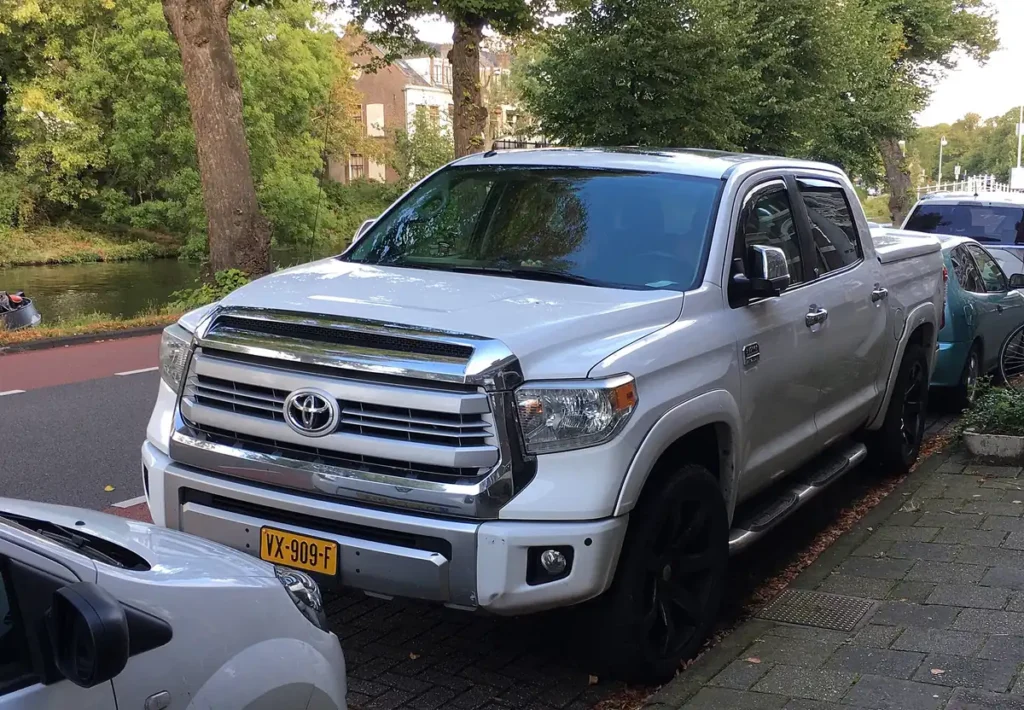
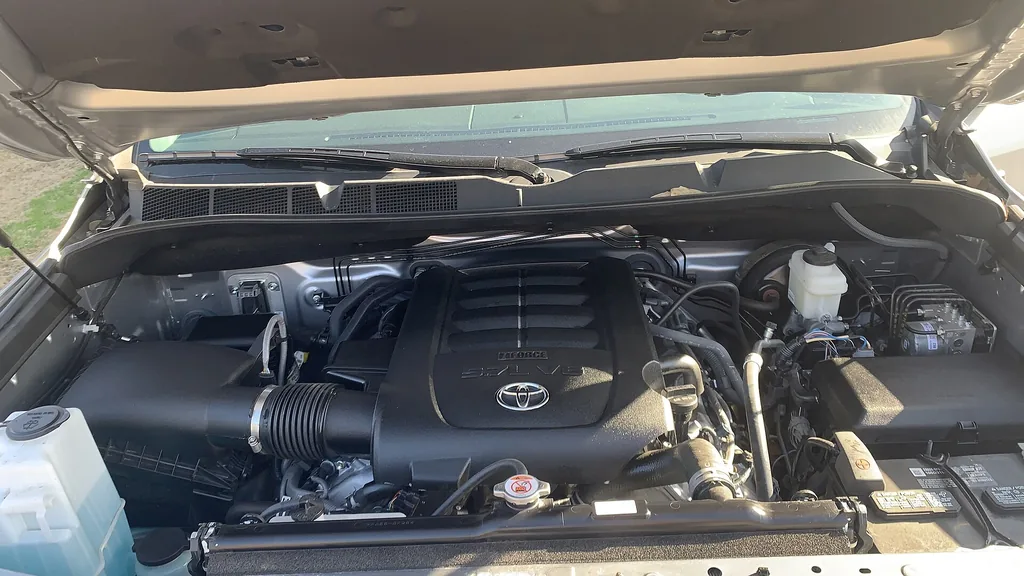
- Wrong fuel alcohol learning on flex-fuel V8s. On 2009-2019 Tundra and 2009-2018 Sequoia with the 3UR-FBE engine, Toyota links P1604 to negative fuel trims and an alcohol density estimate that is higher than the fuel really contains (T-SB-0166-19).
- Fuel delivery problems. Toyota’s fix for that bulletin includes replacing the fuel pump. Separately, Toyota recalled the low-pressure fuel pump on many 2014-2020 Toyota (and some 2013-2020 Lexus) models because it may fail and stall the engine (NHTSA 20V-012, 20V-682).
- Faults that set other codes. MOTOR notes that the causes of other stored codes often create the conditions that trigger P1604, so those codes come first.
- Engine computer faults (rare). Owners report dealers suspecting or replacing the ECM in a few cases, for example a 2011 Corolla (NHTSA complaint 10551666). Treat this as a last resort, not a first guess.
An immobilizer problem is a separate path. No Toyota source was found that links the immobilizer directly to P1604, so if the engine cranks but never fires, check the security indicator light and try a second key before chasing the code.
Toyota Bulletin T-SB-0166-19: Tundra and Sequoia Flex-Fuel Hard Start
The most important Toyota-specific document for this code is T-SB-0166-19 Rev1, dated December 6, 2019 (revised January 23, 2020) and published on NHTSA’s site. Its title is “Extended Crank and/or MIL ON With DTC P0171, P0174, P0172, P0175, P1604 (Flex-Fuel)”, and it supersedes the earlier bulletin T-SB-0058-13.
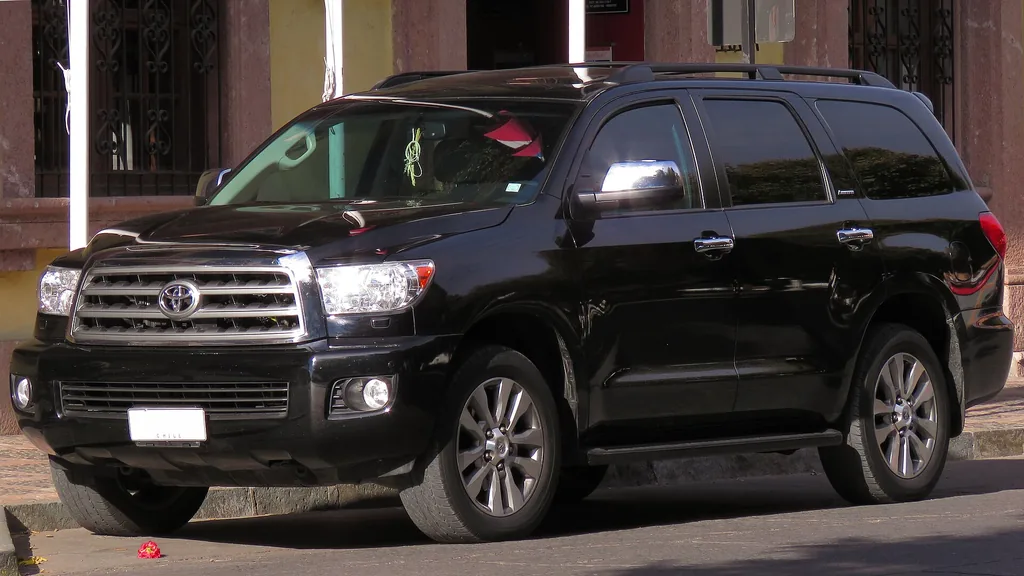
- Applies to: 2009-2018 Sequoia and 2009-2019 Tundra with the 3UR-FBE engine.
- What the dealer looks for: fuel trims of -10% or more negative, or, on E0-E10 fuel, an alcohol density estimate of 15% or higher in Techstream data.
- Repair: reflash the ECM with a new calibration, replace the fuel pump, reset the engine learning value and the fuel density learning value, then add 3 gallons of fuel.
- Warranty: covered under the Toyota Federal Emission Warranty for 96 months or 80,000 miles from the in-service date, limited to the condition described.
- Battery note: the bulletin says learned values cannot be reset by disconnecting the battery or pulling the EFI No. 1 and ETCS fuses.
An ALLDATA tech tip on a 2012 Sequoia 3UR-FBE shows the same pattern: long cranking on cold starts, an 85% alcohol content reading although the owner used regular fuel, and -27% long-term fuel trim. Resetting the alcohol content value and clearing the trims brought the trims back near 0%. Flex-fuel trucks are VIN-specific, so use our VIN decoder to confirm your engine and model year before you go to a dealer.
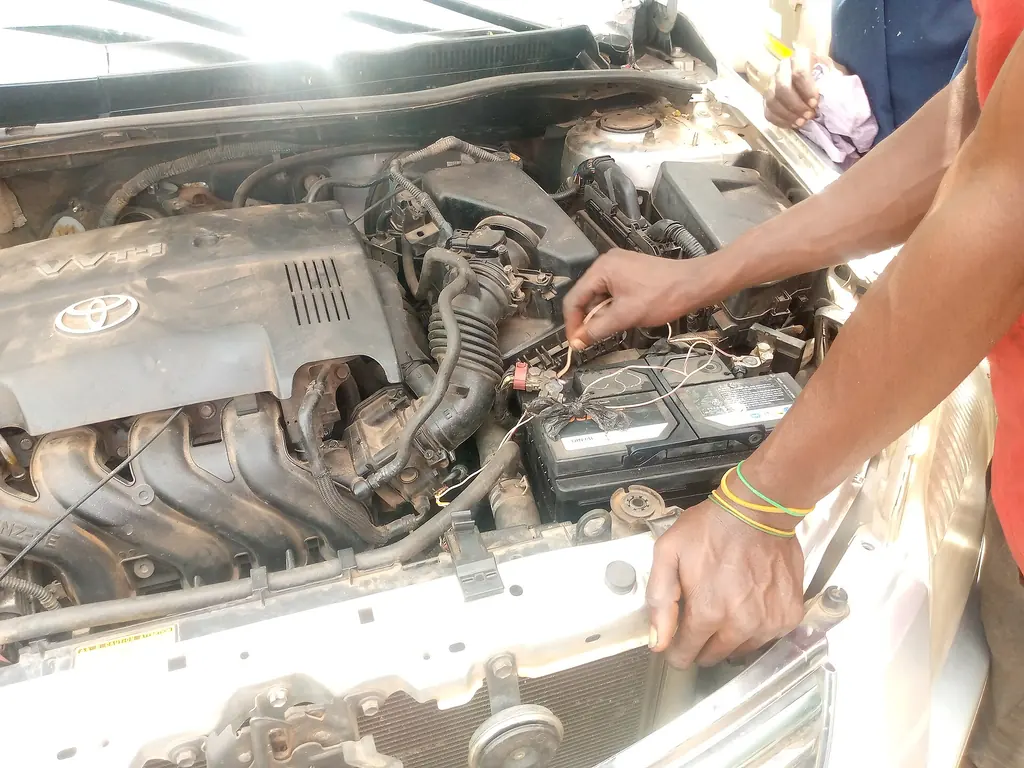
How to Diagnose P1604 Step by Step
- Save the freeze frame before clearing anything. MOTOR stresses recording it, especially coolant temperature and battery voltage. In the Yaris case the technician cleared the code first and the history was lost.
- Write down every other code. Toyota’s manual says to fix the causes of other codes first, or P1604 will probably come back.
- Test the battery and cranking system. Slow cranking is the classic cause of the first trigger condition.
- Decide which condition fits. A long crank points to battery, starting and fuel-prime problems. A start-then-stall points to fuel delivery, air or ignition faults right after start-up.
- On a 2009-2019 flex-fuel Tundra or Sequoia, check fuel trims and the alcohol density estimate against the T-SB-0166-19 limits and ask a dealer whether the latest ECM calibration is installed.
- Check open recalls by VIN at nhtsa.gov/recalls, including the fuel pump recalls 20V-012 and 20V-682.
- If P1604 was the only code, fix the basic cause, clear the code and confirm normal starts on the next cold mornings.
If an EVAP code shows up with P1604 after a fill-up, see our P0441 Toyota code guide before assuming the two are linked.
How Much Does It Cost to Fix P1604?
The bill depends on what caused the bad start. No independent repair-cost estimate could be verified for this page, so only the documented Toyota coverage is shown:
| Repair | Estimate | Source |
|---|---|---|
| T-SB-0166-19 repair on eligible Tundra/Sequoia | Covered within 96 months / 80,000 miles | Toyota bulletin |
| Fuel pump recall 20V-012 / 20V-682 | Free at a Toyota dealer | NHTSA |
Outside those programs, the cost is whatever the underlying repair costs (battery, starter, fuel pump or other fault), so get a written estimate after the cause is confirmed.
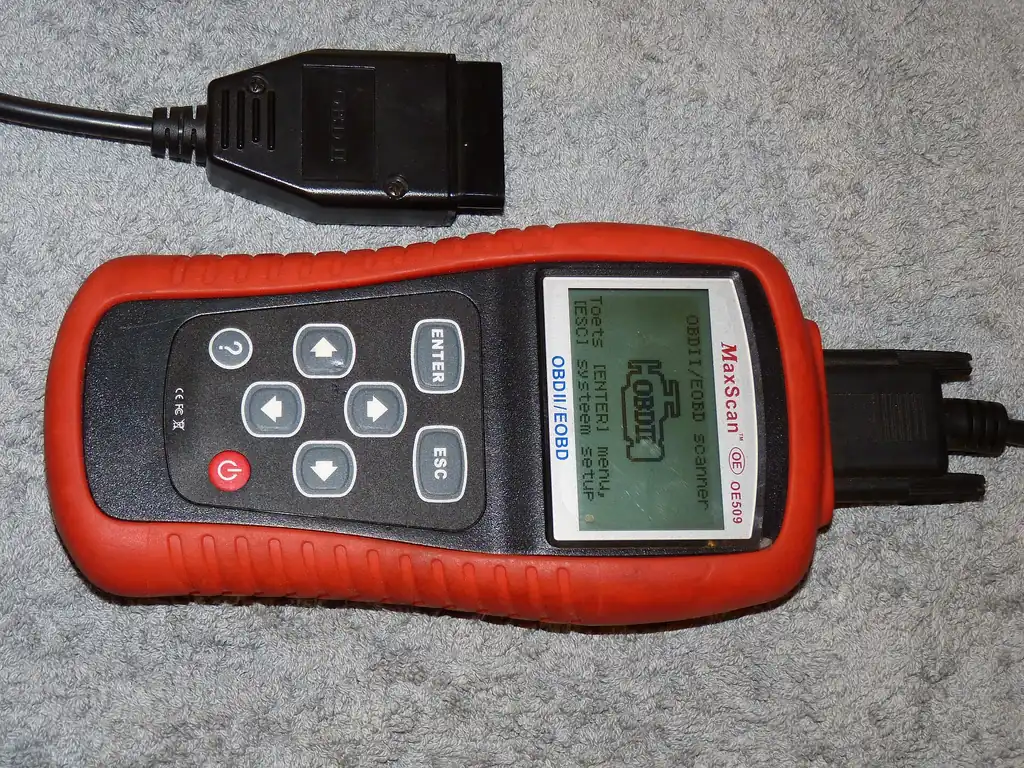
P1604 by Toyota Model
Only models tied to P1604 by a Toyota bulletin, a technical publication or an NHTSA complaint are listed. Owner complaints are reports, not confirmed diagnoses.
| Model and years | Engine | What is documented | Source |
|---|---|---|---|
| Tundra 2009-2019 | 3UR-FBE 5.7L V8 flex-fuel | Hard start and/or MIL with P1604; ECM reflash and fuel pump under T-SB-0166-19 | Toyota TSB |
| Sequoia 2009-2018 | 3UR-FBE 5.7L V8 flex-fuel | Same bulletin; 2012 case with P1604 and P1605, long cold cranking | Toyota TSB, ALLDATA |
| Yaris 2011 | Not stated | P1604 only code after cold, unused car with weak battery | MOTOR |
| Tundra 2013 | Not stated | Owner reports P1604 with secondary air codes P0418, P2445, P2441 | NHTSA 11362059 |
| Corolla 2013 | Not stated | Owner reports hot hard start, P1604, no warning lights | NHTSA 11602854 |
| Camry 2016 | Not stated | Owner reports P1604 with P2610 and B1507 | NHTSA 11023574 |
For 2012-2013 Sequoia and Tundra, Toyota issued bulletin T-SB-0024-13 for MIL ON with P0418 and/or P2445 (secondary air injection). It was made obsolete on April 30, 2013 and replaced by a Limited Service Campaign, so a dealer VIN check is the way to see whether that work applies to your truck.
Can You Drive With P1604?
If the engine now starts quickly and runs normally, the vehicle can usually be driven while you look for the cause, since the code is a record of a past event. The risk is the cause behind it.
Fuel pump failure is the serious case. NHTSA’s recall summary for 20V-682 says a failed low-pressure fuel pump can make the engine stall while driving, increasing the risk of a crash (NHTSA). If your Toyota stalls after starting or while driving, check open recalls before driving it further.
The Bottom Line
Start with the freeze frame and any other codes, test the battery and starting system, and on a 2009-2019 flex-fuel Tundra or Sequoia, ask a dealer about T-SB-0166-19. Working through another manufacturer-specific code? See our P1148 Nissan code guide.
Frequently Asked Questions About the P1604 Toyota Code
What does P1604 mean on a Toyota?
Is P1604 serious?
Can a weak battery cause P1604 on a Toyota?
Which Toyota models have a bulletin for P1604?
Does P1604 always turn on the check engine light?
Professional Notice: This guide is desk research from Toyota bulletins, technical publications and NHTSA records. Verify procedures against Toyota service information for your vehicle.
Data Sources and Verification
- Toyota T-SB-0166-19 Rev1 (NHTSA copy) – Extended Crank and/or MIL ON with P0171, P0174, P0172, P0175, P1604 (Flex-Fuel), 2009-2018 Sequoia and 2009-2019 Tundra 3UR-FBE
- MOTOR magazine, “Foreign Service”, July 2013 (Dan Marinucci) – Toyota P1604 set conditions and the 2011 Yaris case
- ALLDATA tech tip – 2012 Sequoia 3UR-FBE extended cranking with P1604 and P1605
- NHTSA recall 20V-012 – Toyota and Lexus low-pressure fuel pump
- NHTSA recall 20V-682 – expansion of 20V-012
- Toyota T-SB-0024-13 – 2012-2013 Sequoia and Tundra P0418/P2445, obsolete April 30, 2013
- NHTSA complaints database – owner complaints 11362059, 11602854, 11023574 and 10551666

Morgan Reyes is the founder and editor-in-chief of NextCarReview, which Morgan launched in August 2024. A 2022 graduate of Columbia University, Morgan is based in New York and writes and edits the site’s reviews, comparisons and buying guides. Morgan does not road-test vehicles. Every article is built from published primary data: EPA FuelEconomy.gov ratings, NHTSA crash ratings, recalls and owner complaints, IIHS results, and manufacturer specifications and pricing, with each figure cited and checked before publication. Contact: admin@nextcarreview.com