In this article 11 sections
The EV tax credit rules changed again – and this time, the shift is permanent. For years, buying an electric vehicle meant a possible $7,500 federal credit waiting at tax time. That credit is now gone. Most buyers shopping in 2026 are starting from a completely different set of rules.
The old $7,500 IRA purchase credit expired September 30, 2025. The same law, the One Big Beautiful Bill Act (OBBBA), created a separate deduction of up to $10,000 a year for car loan interest. It is not EV-specific: it covers any qualifying new, U.S.-assembled personal vehicle, gas or electric, for tax years 2025 through 2028, and you can claim it whether or not you itemize. New vehicles only, U.S. assembly required, no leases. This guide explains exactly who qualifies and what to do next.
Figures cross-checked against EPA, NHTSA, IIHS and manufacturer sources. See our sourcing policy.
The EV tax credit rules changed again – and this time, the shift is permanent. For years, buying an electric vehicle meant a possible $7,500 federal credit waiting at tax time. That credit is now gone. Most buyers shopping in 2026 are starting from a completely different set of rules.
We at NextCarReview.com dug into the official IRS guidance, Department of Energy data, and the full text of the new law. Here is everything you need to know, explained clearly and without legal jargon.

📌 EV Tax Credit Rules 2026 – Quick Market Intelligence
2026 EV Tax Benefit Comparison – Old IRA Credit vs New OBBBA Deduction
| Feature | Old IRA Credit (Expired) | New OBBBA Deduction (2026) |
|---|---|---|
| Maximum benefit | $7,500 one-time credit | Up to $10,000/year deduction |
| Applies to leases? | Yes (via dealer, commercial credit) | No |
| Applies to used vehicles? | Yes (up to $4,000) | No |
| Income limit (single) | $150,000 MAGI | Phase-out starts at $100,000 MAGI |
| Income limit (joint) | $300,000 MAGI | Phase-out starts at $200,000 MAGI |
| U.S. assembly required? | Yes (North American final assembly) | Yes (U.S. final assembly) |
| Repeats annually? | No | Yes (2025-2028) |
| Point-of-sale available? | Yes | No (claimed at tax time) |
| Analysis | Editorial Standard Verified ✔️ | Sources: IRS.gov OBBBA Guidance, U.S. Department of Energy – April 2026 | |
EV Tax Credit Rules for 2026: What Still Exists (October 2026 Update)
Short answer for 2026: there is no federal credit for buying or leasing a new or used EV acquired after September 30, 2025, and the home charger credit ended on June 30, 2026. The one federal benefit left is the car loan interest deduction, which also covers gas vehicles.
| Federal benefit | Status in October 2026 |
|---|---|
| New clean vehicle credit (up to $7,500) | Not available for vehicles acquired after Sept. 30, 2025 |
| Used clean vehicle credit (up to $4,000) | Not available for vehicles acquired after Sept. 30, 2025 |
| Commercial clean vehicle credit | Not available for vehicles acquired after Sept. 30, 2025 |
| Home charger credit (30%, up to $1,000) | Covered property placed in service through June 30, 2026 only |
| Car loan interest deduction (up to $10,000) | Tax years 2025 through 2028, new U.S.-assembled vehicles, not leases |
Sources: IRS pages for the new, previously-owned and commercial clean vehicle credits, the IRS 30C page, and the IRS Working Families Tax Cuts provisions page, checked October 2026.
Why the EV Tax Credit Rules Changed in 2025
The Inflation Reduction Act’s $7,500 EV purchase credit was ended by the One Big Beautiful Bill Act (OBBBA), signed into law on July 4, 2025. The IRA credit was a one-time, point-of-sale discount. The new OBBBA car loan benefit works very differently – it is a repeating annual interest deduction, and it applies to gas vehicles too.
According to the IRS, the clean vehicle tax credit is not available for vehicles acquired after September 30, 2025. After that date, the old EV tax credit rules closed permanently for new purchases.
This is not a small update. This is a complete restructuring of federal EV support.
What Replaced the $7,500 Credit
Effective for tax years 2025 through 2028, individuals may deduct interest paid on a loan used to purchase a qualified vehicle for personal use. The maximum annual deduction is $10,000. Lease payments do not qualify.
Instead of a one-time discount, you now deduct the interest on your car loan – up to $10,000 a year – from your taxable income. The benefit repeats every year for the life of your loan through 2028.
The IRS says the deduction is available to both itemizers and non-itemizers, so you can claim it even if you take the standard deduction. That matters because most Americans do not itemize. So this deduction is accessible to a wide group of middle-income buyers.
This deduction is claimed on the new Schedule 1-A and lowers taxable income, but it is not an above-the-line deduction, so it does not reduce your adjusted gross income (AGI). Itemizers and non-itemizers can both take it. For a single filer under the phase-out paying $8,000 in annual loan interest on a new U.S.-assembled vehicle, this deduction could reduce taxable income by up to $8,000 per year through 2028. Source: IRS.gov guidance and IR-2025-129 (December 31, 2025).
Who Qualifies Under the New EV Tax Credit Rules in 2026

Income Limits That Apply
The deduction phases out for taxpayers with modified adjusted gross income over $100,000 for single filers and $200,000 for joint filers.
Above the threshold, the $10,000 limit shrinks by $200 for each $1,000 of extra income. So the deduction disappears completely at $150,000 for single filers and $250,000 for joint filers.
U.S. Assembly Is Required
This is one of the most important rules. The vehicle must have its final assembly in the United States, which you can verify on the Monroney window sticker under “Final Assembly Point.” Used vehicles, business-use vehicles, and imports assembled outside the U.S. do not qualify.
Always check that sticker before you sign anything.
Your Loan Must Meet These Conditions
The loan must have originated after December 31, 2024, and must have been used to purchase a vehicle originally used by the taxpayer – meaning new vehicles only. If a qualifying vehicle loan is later refinanced, interest paid on the refinanced amount is generally still eligible for the deduction.
Not every vehicle on the market qualifies. Before signing any purchase agreement in 2026, check the Monroney window sticker for “Final Assembly Point.” You can also check the plant of manufacture by entering your VIN in the NHTSA VIN decoder: vpic.nhtsa.dot.gov/decoder. Vehicles assembled outside the United States – even by U.S. brands – do not qualify for the deduction. This single check can determine whether you receive thousands of dollars in annual savings or nothing at all.
Can You Still Claim the Old $7,500 EV Tax Credit?
Yes – but only in one specific situation. If you entered into a binding written purchase contract and made a qualifying payment on or before September 30, 2025, you may still claim the credit even if you took delivery of the vehicle in 2026.
The IRS confirmed this approach can extend eligibility into early 2026, as long as you obtain a time-of-sale report from your dealer documenting the original sale date.
If you did not lock in a purchase before that deadline, the old credit is no longer available to you.
To claim the old IRA credit in 2026, you need: (1) a binding written purchase contract signed on or before September 30, 2025, (2) a qualifying payment made by that date, and (3) a time-of-sale report from your dealer documenting the original sale date. If you have all three, consult a tax professional about filing. Source: IRS.gov Credits for New Clean Vehicles (2023+), April 2026.
State EV Incentives Are More Important Than Ever
With federal purchase credits gone, state programs carry more weight right now. California closed its Clean Vehicle Rebate Project in November 2023, and income-qualified buyers now use Clean Cars 4 All. Colorado’s 2026 state tax credit is far smaller than before: the base credit fell to $750, and the $3,250 maximum applies only to vehicles under $35,000 MSRP, per the Colorado Energy Office. New York’s Drive Clean Rebate offers up to $2,000 depending on range and price, and New Jersey’s Charge Up program goes up to $4,000 for income-qualified buyers when funding is open.
Check the U.S. Department of Energy’s Alternative Fuels database at afdc.energy.gov to find programs in your ZIP code. Your utility company may offer separate home charger rebates as well.
| State | Program | Maximum Benefit | Where to Verify |
|---|---|---|---|
| California | Clean Cars 4 All (CVRP closed Nov 2023) | Income-qualified; varies | arb.ca.gov |
| Colorado | State EV Tax Credit | $750 base; up to $3,250 for vehicles under $35,000 MSRP (2026) | colorado.gov |
| New York | Drive Clean Rebate | Up to $2,000 | driveelectricny.com |
| New Jersey | Charge Up NJ | Up to $4,000 (check funding) | chargeupnj.com |
| All States | DOE AFDC Database | Varies by ZIP | afdc.energy.gov |
Source: U.S. Department of Energy Alternative Fuels Data Center (AFDC), state program websites, April 2026. Confirm current program availability and eligibility directly with your state agency before purchase.
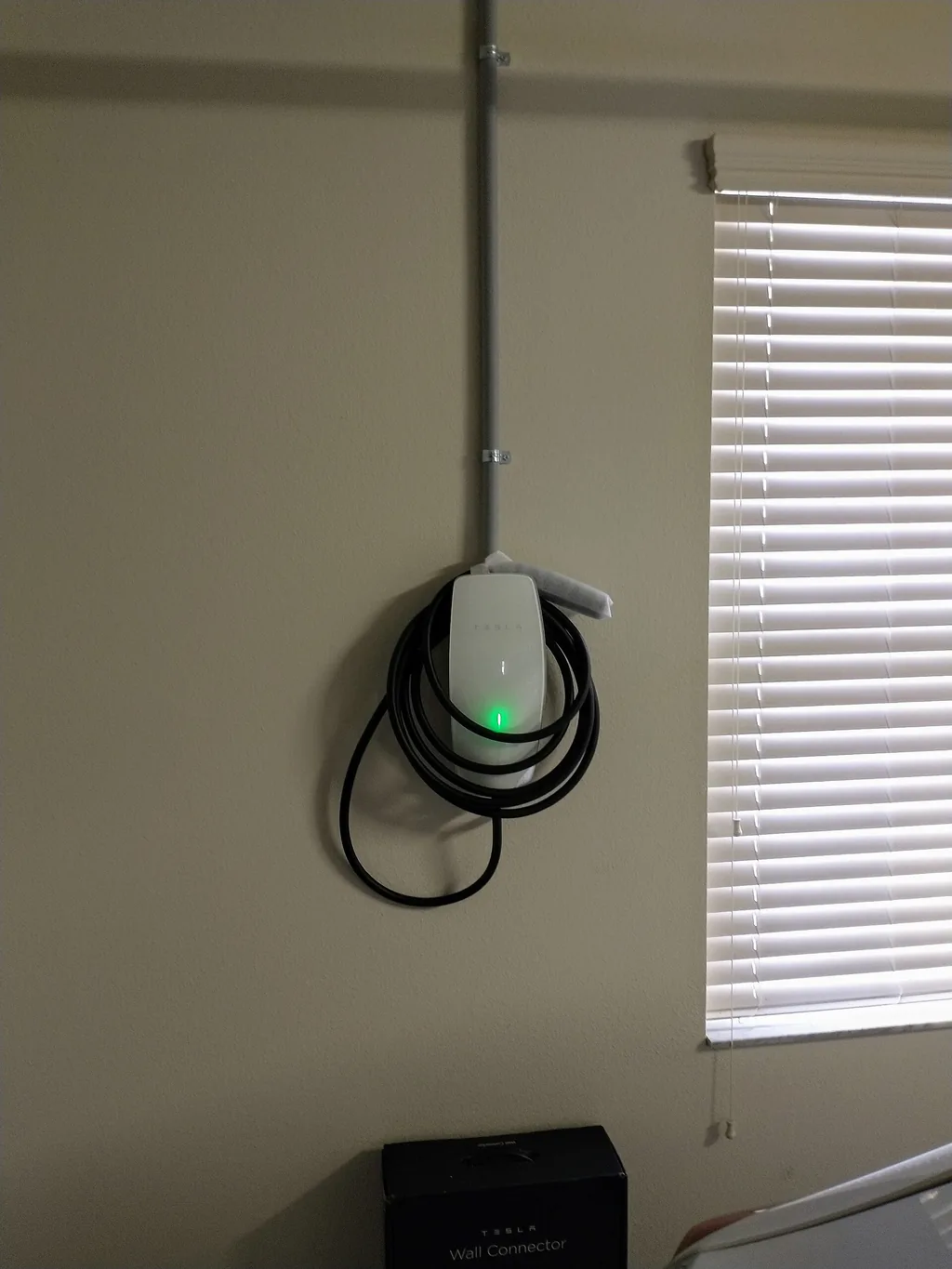
The Home Charger Credit – It Ended June 30, 2026
The federal home charger credit has now ended too. It covered 30% of equipment and installation costs, up to $1,000, but only for chargers placed in service by June 30, 2026, and only in eligible census tracts.
If your charger was placed in service on or before June 30, 2026, you can still claim it on that year’s return. Otherwise, check your utility for charger rebates.
The 30% home EV charger credit – up to $1,000 – does not apply to property placed in service after June 30, 2026. Chargers installed on or before that date, in an eligible census tract, can still be claimed on IRS Form 8911 for that tax year. For new installs, look for utility and state rebates instead. Source: IRS.gov.
Who Should Buy an EV in 2026

This benefit works best for buyers who:
- Have household income between $50,000 and $200,000 (joint filers)
- Are financing a new, U.S.-assembled vehicle, EV or otherwise, with a loan
- Live in states like California, Colorado, New Jersey, or Oregon
- Can use utility or state charger rebates for a home charger
This benefit probably will not help you if:
- You want to lease (deduction does not apply to lease payments)
- You prefer a used EV (only new vehicles qualify)
- Your income exceeds the phase-out limits
- Your preferred vehicle is assembled outside the United States
For more context on the EV and hybrid models that qualify under these new rules, our guides to active vehicle safety recalls in 2025 and 2026 and the Honda 2027 Civic reveal cover two of the most-discussed models currently on buyers’ shortlists.
The EV tax credit rules changed significantly, but real savings are still available for the right buyer. The new car loan interest deduction, up to $10,000 a year, lowers taxable income rather than tax owed, so for most buyers it is worth far less than the old $7,500 credit. However, the requirements are tighter – U.S. assembly only, new vehicles only, no leases, and income limits apply.
As a result, your homework before buying in 2026 comes down to three steps: check where your target vehicle is assembled, confirm your income is within the phase-out range, and look up your state’s EV rebate program. The rules changed – but the savings are still there for buyers who know where to look.
Verify assembly: vpic.nhtsa.dot.gov | IRS guidance: irs.gov/newsroom/one-big-beautiful-bill-provisions | State incentives: afdc.energy.gov
Frequently Asked Questions About EV Tax Credit Rules Changed in 2026
Is there still a federal EV tax credit in 2026?
Does the home EV charger credit still exist in 2026?
Are the EV tax credit rules changed permanently, or will they come back?
Does the new deduction apply to plug-in hybrids, or only fully electric vehicles?
Can I claim the deduction if I already took the standard deduction this year?
What documents do I need to claim the 2026 car loan interest deduction?
Does leasing an EV still save money in 2026 even after the EV tax credit rules changed?
Related guides: our electric vehicle hub and toyota hybrid battery: Maximising Performance & Longevity.
⚠️ Professional Notice:
This article is for informational purposes only and does not constitute tax, legal, or financial advice. All federal tax information is sourced from IRS.gov official guidance, IRS IR-2025-129, and the full text of the One Big Beautiful Bill Act (OBBBA) as of October 2026. State incentive information is sourced from the U.S. Department of Energy AFDC database and individual state program websites as of April 2026 – program availability and eligibility rules change frequently. Always consult a qualified tax professional for advice specific to your income, filing status, and vehicle purchase situation before making any financial decision. NextCarReview.com does not provide tax advice and does not receive compensation from any manufacturer, dealer, or government agency in exchange for coverage.
Data Sources and Verification
- IRS.gov – OBBBA Provisions (Individuals and Workers) – Primary IRS guidance on the new law
- IRS.gov – Credits for New Clean Vehicles (2023+) – Old IRA credit eligibility and expiry details
- IRS IR-2025-129 – Car Loan Interest Deduction Guidance – Treasury/IRS official deduction guidance
- U.S. DOE – New and Used Clean Vehicle Tax Credits – Department of Energy vehicle credit reference
- NHTSA VIN Decoder – plant of manufacture lookup; IRS 30C charger credit
- IRS.gov – OBBBA Full Provisions Hub – Complete law provisions reference

Morgan Reyes is the founder and editor-in-chief of NextCarReview, which Morgan launched in August 2024. A 2022 graduate of Columbia University, Morgan is based in New York and writes and edits the site’s reviews, comparisons and buying guides. Morgan does not road-test vehicles. Every article is built from published primary data: EPA FuelEconomy.gov ratings, NHTSA crash ratings, recalls and owner complaints, IIHS results, and manufacturer specifications and pricing, with each figure cited and checked before publication. Contact: admin@nextcarreview.com