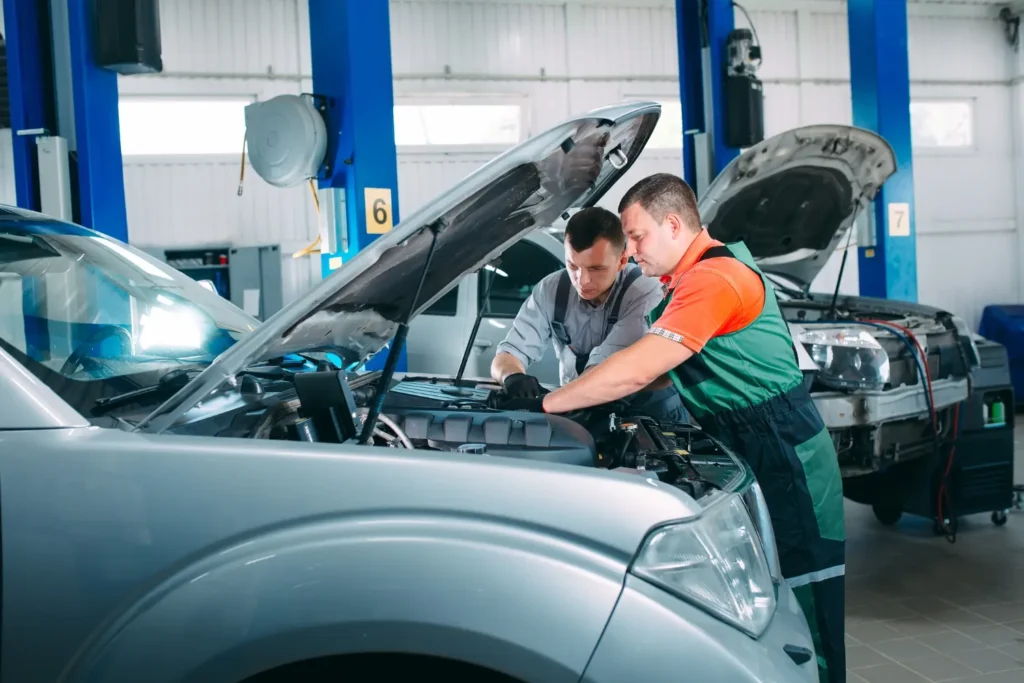
Understanding car care is easy. This guide breaks down all the types of car maintenance, from simple checks to big services. Learn what your car needs, why it needs it, and even how electric car care is different. We make vehicle maintenance simple.
Your car is a wonderful machine. It takes you to school, to work, or to see family. To keep it running safely, you need to know about the different types of car maintenance. But, like any machine, it needs care to stay safe and strong.
Quick answer: Car maintenance comes in three types: preventive (oil changes, tire rotations), corrective (fixing what breaks) and condition-based (service when the car’s monitor asks for it). AAA’s 2025 study puts maintenance, repair and tires for a new car at 11.04 cents per mile, about $1,656 a year at 15,000 miles. Electric cars cost the least.
Many people feel nervous about car care. However, it can be very simple. You just need to know what to do. This guide will show you the main types of car maintenance.
We will use simple words. In other words, this guide is easy for everyone to understand. Let us learn how to keep your car running smoothly for a long, long time.
What Is Car Maintenance? (And Why Is It So Important?)
First, what is vehicle maintenance? Think of it like a check-up at the doctor. You go to the doctor to stay healthy, not just when you are sick.
Similarly, car maintenance is a set of checks and fixes you do for your car. These checks keep it healthy. They stop small problems from becoming big, expensive problems.
Why Your Car Needs This Help
There are three big reasons to care for your car.
- Safety: Your car must be safe to drive. Maintenance helps with this. This means your brakes work when you press them. Your tires grip the road, even in rain. Your headlights shine brightly at night. Above all, safety is the number one reason for good car care.
- Saves Money: A small fix today can save you a lot of money tomorrow. For example, changing your oil is cheap. This simple step keeps your engine parts moving freely. But, if you never change it, the engine will break. Fixing a broken engine can cost thousands of dollars.
- Longer Life: A car that gets regular care will last for many more years. It will be more reliable. As a result, you will not have to worry about it breaking down on a cold morning. You get more value from your car and it stays a dependable partner.
The Main Types of Car Maintenance
There are a few different ways to think about car care. Let us break down the main types of car maintenance so you know what to expect.
We can put most car jobs into three groups.
1. Preventive Maintenance (Routine Car Upkeep)
This is the most important type of care. Preventive maintenance is the work you do before something breaks. You are preventing a problem.
This is your routine car upkeep. It includes all the small, regular jobs. Specifically, getting an oil change is preventive maintenance. You are not waiting for the engine to fail. You are giving it fresh oil to keep it healthy.
Likewise, rotating your tires is preventive. It makes all your tires wear down evenly. Other examples include checking your brake pads, replacing your air filter, and testing your battery. As a result, your tires last longer, and you save money. This is the best kind of car maintenance.
2. Corrective Maintenance (Fixing What’s Broken)
Sometimes, parts just wear out or break. This is normal. When you fix a broken part, it is called corrective maintenance.
For example, maybe your “Check Engine” light comes on. A mechanic finds that a sensor is broken. Replacing that sensor is corrective maintenance.
Other examples include replacing a flat tire or fixing a cracked windshield. You cannot always avoid this. However, good preventive care makes corrective maintenance less common. A well-cared-for car simply breaks down less often.
3. Condition-Based Maintenance (The “Smart” Way)
This type of maintenance is newer. Many modern cars have smart computers, often called oil-life monitors. These computers tell you when the car needs service.
Instead of changing your oil every 3,000 miles, the car watches how you drive. That is to say, it knows if you drive in heavy traffic or on long highway trips. The computer tracks this and calculates the oil’s real life.
The car’s computer will then tell you, “You need an oil change soon.” This is condition-based. It is based on the real condition of your car, not just a guess. This system helps you get service only when you truly need it.
A Simple Vehicle Maintenance Checklist
So, what type of maintenance does a car need on a regular basis? Here is a simple checklist. You can do some of these checks yourself!
Checks You Can Do at Home (Once a Month)
- Tires: Look at your tires. Do they look low? You can use a small tool, called a pressure gauge, to check the air. The correct air pressure is written on a sticker inside your driver’s door.
- Fluids: Check your oil level. You can also check your windshield washer fluid. In addition, you can see if your car has enough coolant (antifreeze).
- Lights: Ask a friend to help you. Turn on your headlights, high beams, and turn signals. Then, press the brake pedal. Ask your friend to walk around the car. Are all the lights working?
- Wiper Blades: Look at your wiper blades. Are they cracked or torn? If they leave streaks on your window, it is time for new ones.
Small Checks That Pay Back: Tires, Oil Grade and Records
Some monthly jobs save fuel as well as money. FuelEconomy.gov, run for the Department of Energy and EPA, gives these numbers:
| Check | What FuelEconomy.gov says |
| Tire pressure | Proper inflation improves gas mileage by 0.6% on average, up to 3% in some cases. Mileage drops about 0.2% for every 1 psi of under-inflation across all tires. |
| Where to find the pressure | The sticker in the driver’s door jamb or glove box, and the owner’s manual. Do not use the maximum pressure printed on the tire sidewall. |
| Motor oil grade | Using the maker’s recommended grade improves mileage 1% to 2%. 10W-30 in a 5W-30 engine can cost 1% to 2%. |
| Engine air filter | On fuel-injected, computer-controlled gasoline engines and diesels, a new filter does not improve fuel economy, but it can improve acceleration. |
| Check engine light | Have it inspected. It could be a loose gas cap or a more serious issue that raises fuel use and emissions. |
That air filter line matters for the services table above: on a modern car the payoff is acceleration, not mileage.
Keep paperwork too. The FTC says it is illegal for a dealer to deny your warranty coverage because routine maintenance or repairs were done by someone else, and it advises keeping records of oil changes, tire rotations, belt replacement, new brake pads and inspections. Those records show you maintained the car if you need warranty work.

Common Types of Car Maintenance Services
These are jobs your mechanic will do. They are part of your car service schedule. Your car’s owner’s manual tells you the exact schedule. But, here is a common guide.
Here is a table of common services.
| Service | Why It’s Done |
| Oil Change | Keeps your engine clean and running smoothly. |
| Tire Rotation | Helps your tires wear evenly so they last longer. |
| Engine Air Filter | Lets your engine breathe clean air. On a modern fuel-injected car it helps acceleration, not gas mileage. |
| Brake Check | For safety. Makes sure your brake pads are thick and can stop you. |
| Battery Check | Makes sure your car will start, especially in cold weather. |
| Cabin Air Filter | Cleans the air you breathe inside the car. |
| Brake Fluid Change | Old fluid can absorb water, which makes brakes less effective. |
| Coolant (Antifreeze) | Keeps your engine from getting too hot or too cold. |
This schedule is just a guide. Therefore, you must always read your car’s manual. It is the real rulebook for your car.
What Car Maintenance Costs Per Year
AAA’s 2025 Your Driving Costs study puts maintenance, repair and tires at 11.04 cents per mile, averaged over five years and 75,000 miles of owning a new car. That figure covers retail parts and labor for the routine maintenance the maker specifies, a comprehensive extended warranty, repairs to wear-and-tear items, and one set of replacement tires. Here is what it works out to (our arithmetic from AAA’s per-mile figure):
| Miles per year | Maintenance, repair and tires at 11.04 cents per mile |
| 10,000 | $1,104 a year |
| 15,000 | $1,656 a year |
| 20,000 | $2,208 a year |
Your own bill will differ with the car, the shop and the year of ownership. AAA says electric vehicles have the lowest maintenance, repair and tire costs of the categories it studied. The Department of Energy shows a similar gap on a narrower measure, scheduled maintenance only: 6.1 cents per mile for a battery-electric car against 10.1 cents for a conventional gasoline or diesel one, from Argonne National Laboratory’s 2021 total cost of ownership analysis.
What Type of Maintenance Does an Electric Car (EV) Need?
Electric cars (EVs) are very popular in 2025. Many people wonder if they need care. The answer is yes! But the types of car maintenance are different.
What Do EVs Not Need?
An EV does not have a gas engine. As a result, you will never need these services:
- No oil changes.
- No engine air filters.
- No spark plugs.
- No mufflers or exhaust pipes.
This is great news. It means an EV needs less routine car upkeep than a gas car.
So, What Maintenance Does an EV Need?
EVs still have many parts that need care.
- Tires: This is very important. EVs are heavy because of their large batteries. As a result, they can wear out tires faster than gas cars. You must check the tire pressure often and get regular tire rotations.
- Brakes: EVs use a special system called “regenerative braking.” This system helps slow the car down and charges the battery. Because of this, the regular brake pads do not work as hard, and the DOE says brake wear is significantly reduced. However, they still need to be checked for rust or wear.
- Battery Health: This is the “engine” of the EV. A mechanic will check the battery’s cooling system. This system is vital. It keeps the battery from getting too hot or too cold, which helps it last for many years.
- Cabin Air Filter: Just like a gas car, the cabin filter cleans the air you breathe. This still needs to be changed.
- Other Fluids: EVs still have brake fluid. They also have coolant for the battery and electronics. These fluids need to be checked.
To summarize, an electric car is simpler to maintain. But, it is not “zero maintenance.” You still need to follow a car service schedule to keep it safe.
EV Upkeep Details From the Department of Energy
The Alternative Fuels Data Center (AFDC), part of the Department of Energy, explains why electric cars cost less to maintain and what still needs attention.
- Fewer fluids: there is no engine oil to change.
- Brakes: brake wear is significantly reduced thanks to regenerative braking, so pads and rotors generally last longer than on conventional vehicles.
- Battery coolant: some battery systems use liquid coolant to hold safe temperatures, and these systems may require regular checks.
- Battery warranty: many manufacturers offer 8-year/100,000-mile warranties on EV batteries.
Before you buy or service an EV, ask the dealer or check the owner’s manual for three things: the battery warranty terms, whether the battery uses liquid coolant and how often it should be checked, and the recommended brake inspection interval. Tires still matter. Pressure and rotation are on your list for any vehicle.

Your Car Is Your Partner
Thinking about all the types of car maintenance can feel like a lot. But, you can do it.
Start with the easy things. Firstly, find your owner’s manual. Look at the service schedule. Secondly, try doing the simple monthly checks, like your tires and lights.
A little care goes a very long way. When you take care of your car, your car takes care of you. The bottom line, these small steps keep you safe, save you money, and make your car a happy, reliable partner for all your adventures.
FAQs
What are the types of car maintenance?
Preventive Maintenance: This is routine care you do before something breaks, like oil changes and tire rotations.
Corrective Maintenance: This is when you fix something that is already broken, like replacing a dead battery.
Condition-Based Maintenance: This is when your car’s smart computer tells you it’s time for a service.
What type of maintenance does a car need?
What type of maintenance does an electric car need?
What is the best type of aviation maintenance career?
Airframe & Powerplant (A&P) Mechanic: This is the most common career. You are certified to work on the plane’s body (airframe) and its engines (powerplant).
Avionics Technician: This is a specialist career. You work on the plane’s high-tech electronics, like radar, navigation, and communication systems. This is a great choice if you love technology.
Both are very good careers that are important for keeping people safe in the air.
Related guides: browse all trouble code guides and P0301 Code: Cylinder 1 Misfire, Every Cause, and 2026 Repair Cost G….
More Questions About Car Maintenance Costs
How much does car maintenance cost per year?
AAA’s 2025 study puts maintenance, repair and tires for a new car at 11.04 cents per mile. That is about $1,104 a year at 10,000 miles, $1,656 at 15,000 and $2,208 at 20,000. It includes an extended warranty and one set of tires.
Does skipping the dealer for routine service void my warranty?
No. The FTC says it is illegal for a dealer to deny warranty coverage because routine maintenance was done by someone else. Keep receipts and records of each service.
Does a new engine air filter improve gas mileage?
On modern fuel-injected gasoline engines and diesels, FuelEconomy.gov says it does not improve fuel economy, though it can improve acceleration. Older carbureted engines can see a gain of a few percent.
For official rules, ratings and consumer guidance on this topic, see:
Sources
- AAA: Your Driving Costs 2025
- DOE: battery-electric vehicles have lower scheduled maintenance costs (FOTW #1190)
- FuelEconomy.gov: keeping your vehicle in shape
- AFDC: maintenance and safety of all-electric vehicles
- FTC: auto warranties and auto service contracts

Morgan Reyes is the founder and editor-in-chief of NextCarReview, which Morgan launched in August 2024. A 2022 graduate of Columbia University, Morgan is based in New York and writes and edits the site’s reviews, comparisons and buying guides. Morgan does not road-test vehicles. Every article is built from published primary data: EPA FuelEconomy.gov ratings, NHTSA crash ratings, recalls and owner complaints, IIHS results, and manufacturer specifications and pricing, with each figure cited and checked before publication. Contact: admin@nextcarreview.com