In this article 15 sections
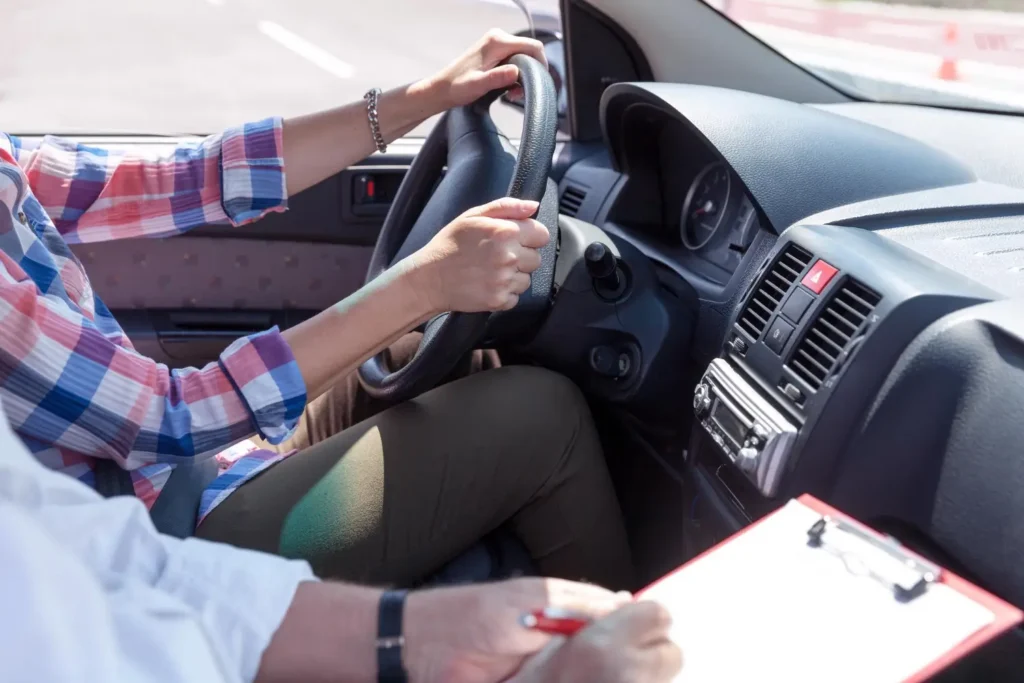
A useful test drive takes at least 20 to 30 minutes on a mix of city streets, highway and a parking lot. Bring your license (and proof of insurance if asked), check visibility, seat fit, brakes, steering, noise and the driver-assist and phone features you will actually use. For a used car, also look for warning lights and rough shifts, look up open recalls by VIN on NHTSA’s site, and pay for an independent inspection. This car test drive guide 2025 covers each step, red flags and online-buying risks.
Buying a car in 2025 is thrilling with new tech and designs. However, you need a plan to pick wisely. This car test drive guide 2025 walks you through every step.
Test drives show if a car suits your daily needs. They reveal comfort, performance, and hidden flaws. Therefore, this car test drive guide 2025 helps you avoid mistakes.
Also, new models have AI and safety features. Only driving tests their usability. So, follow this guide to make smart choices.
Why a Test Drive Is Essential in 2025
Cars in 2025 boast advanced tech like self-parking systems. You must test these for ease. For example, try voice controls to ensure they work smoothly.
Used cars vary in wear and tear. A drive uncovers issues like faulty brakes or odd noises. As a result, this car test drive guide 2025 stresses never skipping it.
Dealers have strict rules, while private sellers offer flexibility. However, both require your license and caution. Specifically, private sellers may ask for a deposit.
In 2025, electric vehicles (EVs) reached a record 10.5% of US new-vehicle sales in the third quarter, per Cox Automotive. Test their range under real conditions. Likewise, hybrids need checks for seamless mode switches.
Finally, skipping a test drive risks costly repairs. It is one of the simplest ways to avoid regret.
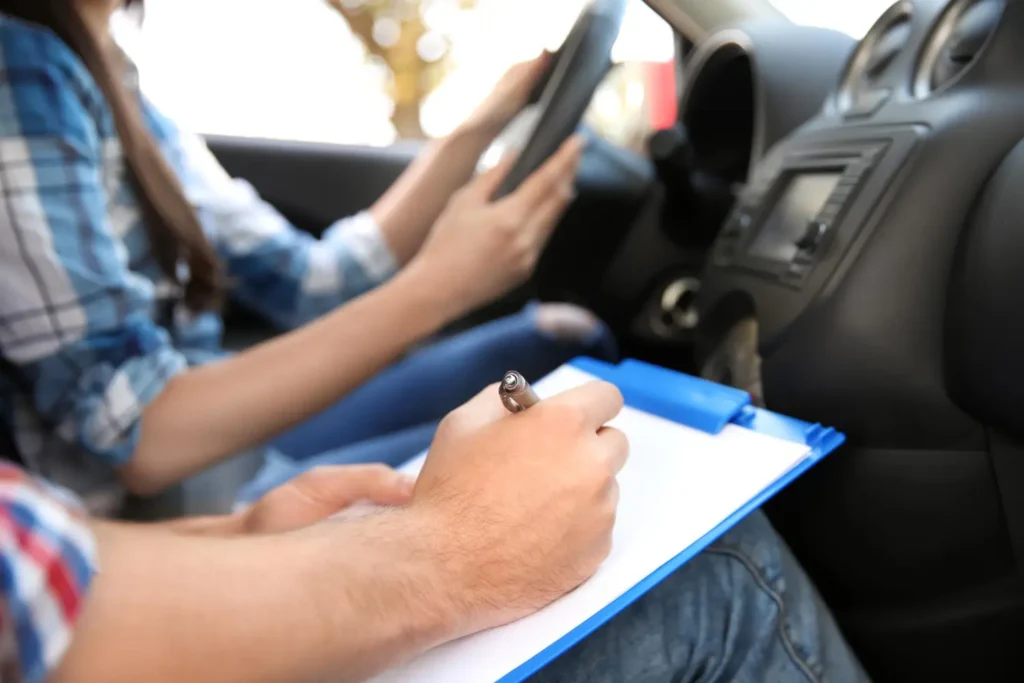
Preparing for Your Test Drive
Always bring your driver’s license to the dealership. Some may also request proof of insurance. This keeps your test drive legal and safe.
Schedule your visit on weekday mornings. Dealerships are less busy then. As a result, you get more attention from staff.
Research models online before going. Shortlist two or three cars to compare. For example, check reviews on 2025 features like digital dashboards.
Also, bring a notebook to jot down observations. A friend can help spot things you miss. This car test drive guide 2025 recommends staying organized.
In addition, wear comfortable shoes for driving. Charge your phone for navigation tests. These small steps make a big difference.
For rainy days, check forecasts. Wet roads test wipers and traction. For full prep, see How to Find the Perfect Car in 2025 (Step-by-Step).
Used-Car Paperwork to Check Before You Drive
For a used car, the paperwork is part of the test. The FTC says dealers must display a Buyers Guide in every used car they offer and give it to you after the sale. If the box next to “As Is – No Dealer Warranty” is checked, the dealer is not offering a warranty, so any promise made out loud, such as a dealer saying it will fix a noise, should be written on the Buyers Guide itself.
The FTC also says a vehicle history report is not a substitute for an independent inspection, and it recommends paying a mechanic to inspect a used car even if the dealer calls it certified and inspected. Spend ten minutes on this before you leave the lot:
- Read the Buyers Guide: warranty or “As Is”, and what the dealer says it covers.
- Match the VIN on the dash and door jamb to the title and the Buyers Guide.
- Run the VIN through NHTSA’s recall lookup and note any open recalls.
- Ask for service records and write down the odometer reading.
- Book an independent inspection and ask the seller in writing whether you can take the car to your mechanic.
If a seller refuses an independent inspection, that tells you something about the car. Walk away and keep shopping.
Test Drive Checklist: What to Look For in 2025
Start by inspecting the car’s exterior for dents or scratches. Then, sit inside to check seat comfort. Specifically, adjust seats to fit your height.
Next, test visibility in all directions. Mirrors should cover blind spots well. Also, start the engine and listen for unusual sounds.
Try the infotainment system thoroughly. Pair your phone and test navigation. In 2025, some cars also offer gesture or voice controls.
Now, drive to feel acceleration and power. For EVs, note smooth starts. Similarly, make a firm stop in a safe, empty area to test the brakes.
Steer through turns to check handling. Hit bumps to feel suspension quality. Then roll down windows to gauge road noise.
Check space for passengers and cargo. Fold seats to test storage. This car test drive guide 2025 emphasizes practicality.
Test safety features like lane assist and cameras. For EVs, monitor battery range displays. Likewise, hybrids need mode transition checks.
Used cars require extra attention. Watch for warning lights or rough gear shifts. Also, ensure AC blows cold air.
Here’s a detailed checklist:
| Category | What to Check | Why It Matters | 2025 Tips |
| Exterior/Interior | Paint even? Seats comfy? Clear views? | Ensures daily comfort. | Check new scratch-proof coatings. |
| Performance | Smooth acceleration? Quick brakes? Tight steering? | Tests safety and drive feel. | EVs offer instant torque—test it. |
| Comfort | Low noise? Smooth ride? Enough space? | Key for long trips. | Ventilated seats for hot days. |
| Tech/Safety | ADAS works? Screens fast? Range accurate? | Modern must-haves. | Try AI features like auto park. |
| Used-Specific | No odd noises? Smooth shifts? Lights off? | Avoids repair costs. | Check EV battery health. |
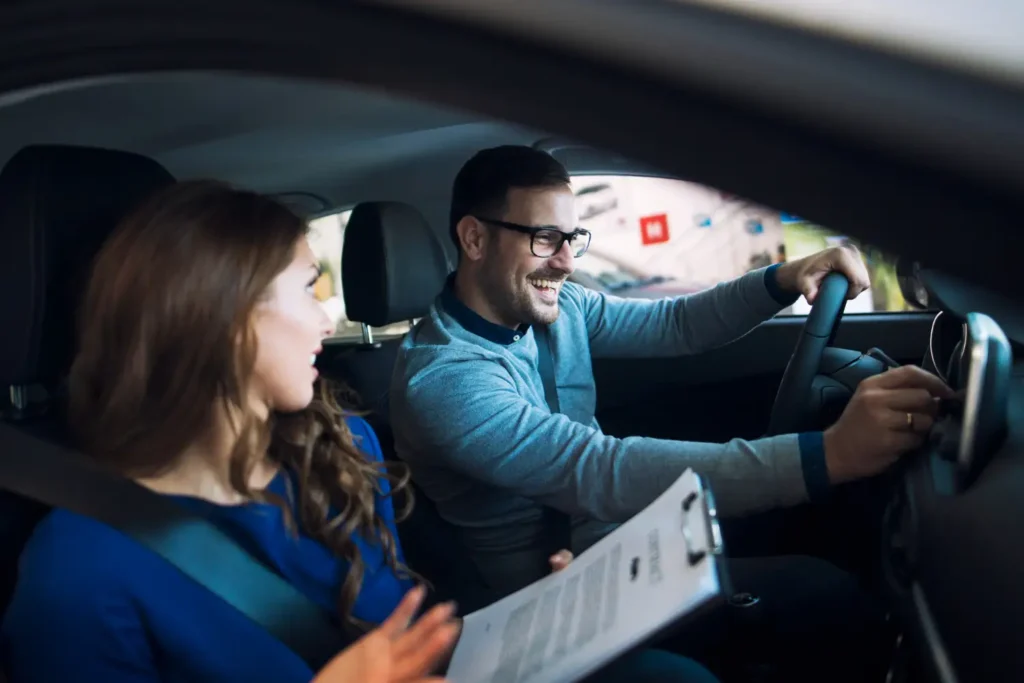
After driving, review your notes carefully. Compare cars to your needs.
Also, test parking sensors in tight spots. Also, try voice assistants for calls or music.
Driver-Assist Features: What to Check and What the Data Shows
You cannot safely trigger an emergency-braking system on a test drive, so use the drive to check what you can: the settings menu, the warnings, and how the alerts feel. The Insurance Institute for Highway Safety (IIHS) has measured what these systems do in real crashes, which helps you decide which ones matter most. The feature descriptions below follow NHTSA’s driver assistance pages.
| Feature | What it does (NHTSA) | Real-world result (IIHS) | What to check on the drive |
|---|---|---|---|
| Forward collision warning + automatic emergency braking | Warns you, then brakes if a collision is imminent | Cuts rear-end crashes by 50%; warning alone cuts them by 27% | Find the sensitivity setting and the alert sound |
| Pedestrian detection (AEB) | Brakes for people ahead | Cuts pedestrian crashes by 27% | Confirm the trim includes it |
| Blind spot detection | Alerts you to vehicles in adjacent lanes | Reduces lane-change crashes by 14% | Check the mirror light is visible in daylight |
| Lane departure warning / lane keeping | Alerts you, or steers you back, when you drift | Has reduced single-vehicle, sideswipe and head-on police-reported crashes | Check if the steering feels natural or intrusive |
If an alert annoys you enough to switch it off, it does you no good. Spend part of the drive judging whether you would leave each feature on, and check that the trim you can afford has the features you want.
Testing an EV or Hybrid: Range Claims and Cold Weather
The range on an EV window sticker is an EPA estimate for combined city and highway driving on a full charge, and the label also lists energy use in kWh per 100 miles and MPGe. Your own range will differ with weather, speed and climate use. FuelEconomy.gov, run by the EPA and the Department of Energy, gives the cold-weather effect at 20°F compared with 77°F:
| Vehicle type | Cold-weather effect at about 20°F |
|---|---|
| Gasoline car, city driving | Fuel economy roughly 15% lower (up to 24% on 3- to 4-mile trips) |
| Hybrid | Fuel economy about 30% to 34% lower |
| EV, with cabin heat | Range can drop by 41% |
| EV, without cabin heat | Range about 12% lower |
About two-thirds of the extra energy an EV uses in the cold goes to heating the cabin. In winter, ask to drive with the heater on and compare the trip computer to the label. In summer, run the air conditioning and note how fast the range estimate falls. Check that the charge port and cable match the chargers you will use, and ask the dealer what the battery warranty covers.
How Long Should You Test Drive a Car?
Aim for 20 to 30 minutes minimum. This gives enough time to feel the car. However, request more if you need it.
Drive on highways to test speed. City streets show stop-and-go handling. For example, practice parking in tight spots.
For EVs, check range predictions on mixed routes. Hybrids need fuel-mode switch tests. Therefore, plan diverse paths.
Dealers may limit routes, but push for real roads. Rainy conditions test traction and wipers. As a result, you get a fuller picture.
In addition, note fuel or battery usage. Many 2025 cars have apps for this. For hybrid details, see Best Plug-in Hybrid Cars of 2025.
Also, longer drives reveal comfort issues. So, don’t rush the process.
Can You Test Drive Alone in 2025?
Some dealerships allow solo test drives. Policies vary by dealer and brand, and many still send a salesperson along.
Always ask about solo drive policies upfront. Show your license first. Specifically, some dealers scan it for records.
Private sellers may allow longer solo drives. But they often request a deposit. Therefore, clarify terms before driving.
Follow all dealership test drive rules strictly. Safety remains the top priority. If denied a solo drive, try another dealer.
This car test drive guide 2025 urges you to get the dealer’s policy in writing. The FTC’s CARS Rule on dealer transparency was vacated by a federal court in January 2025.
In addition, solo drives let you focus better. No sales pitch distracts you.
Test Driving a Used Car – Red Flags to Watch For
Dashboard warning lights spell trouble. Engine or brake alerts need attention. For example, don’t ignore an ABS light.
Feel for rough gear shifts or side pulling. These signal transmission or alignment issues. As a result, repairs could be expensive.
Test brakes with firm stops. Delays mean danger. Similarly, watch for overheating signs like steam.
High-mileage cars risk more wear. But well-maintained ones can be fine. Always check service records.
Strange noises during turns suggest worn bearings. Leaks under the car hint at fluid problems. Also, fresh paint may hide crash damage.
This car test drive guide 2025 urges extra care with repossessed cars, whose upkeep history is often unknown. Likewise, rentals and demos may have wear.
Get a mechanic’s inspection always. It spots issues you miss.
Also, test all windows and locks. They should work smoothly.
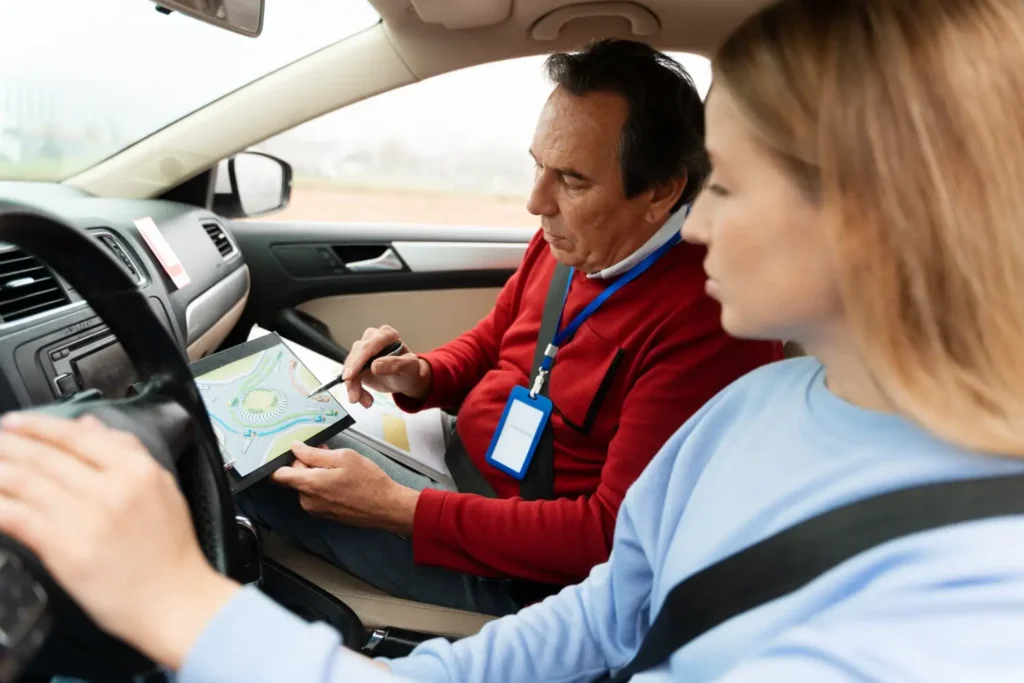
Should You Buy a Car Without a Test Drive?
Online car buying, like Carvana, grows in 2025. It’s convenient but risky. Specifically, you can’t feel the car’s fit.
Skipping drives leads to issues like poor comfort. Return policies help, often within seven days. However, they’re not foolproof.
Renting a car model first offers longer tests. Some dealers allow this. As a result, you gain confidence.
Avoid no-test buys unless a solid return window protects you. 2025’s tech-heavy cars need checks. Therefore, prioritize driving.
Virtual tours exist but miss real feel. This car test drive guide 2025 urges caution.
Also, read buyer reviews. They highlight real-world drive experiences.
Test Drive Etiquette – What Buyers Should Know in 2025
Don’t feel pressured to buy after a drive. Walk away if it feels wrong. For example, high-pressure sales are a red flag.
Only test drive with real buying intent. Joyrides waste everyone’s time. Instead, focus on serious options.
Ask for offer details post-drive. Compare prices calmly. Also, thank staff for their time.
Follow dealership rules, like no eating inside. Keep the car clean. In addition, report any pre-existing damage.
Ask for the full out-the-door price in writing, since the FTC’s CARS Rule was struck down in 2025. This car test drive guide 2025 emphasizes honesty.
Also, be polite but firm. Good manners build trust.
FAQs on Car Test Drives in 2025
Do I need to test drive before buying a used car?
Would you buy without a test drive?
How long should a test drive be?
Is it rude to test drive and not buy?
Do dealerships let you test drive alone?
Is it good to buy a test drive car (demo car)?
What new features to test in 2025?
More Test Drive Questions
Does a clean vehicle history report mean I can skip an inspection?
How much does cold weather cut EV range?
Which driver-assist features cut crashes the most?
Conclusion
Test drives are your best defense against bad car buys in 2025. They let you feel tech, comfort, and performance in practice. For example, new AI features shine only in real drives.
Used cars hide flaws that only driving reveals. This car test drive guide 2025 equips you with checklists and tips. Therefore, use them to stay organized.
Related guides: browse our car tools and Best Lease Deals 2025: SUVs, Sedans & EVs at Unbeatable Prices.
Compare models carefully. Notice noise, power, and space. Then trust your instincts—if it feels off, walk away.
For official rules, ratings and consumer guidance on this topic, see:
Sources
- Cox Automotive: Q4 2025 EV sales report
- Fifth Circuit vacates FTC CARS Rule (Ballard Spahr)
- NHTSA: check recalls by VIN
- FTC: Buying a used car from a dealer
- IIHS: advanced driver assistance
- NHTSA: driver assistance technologies
- FuelEconomy.gov: cold weather fuel economy and EV range
- FuelEconomy.gov: the EPA electric vehicle label

Morgan Reyes is the founder and editor-in-chief of NextCarReview, which Morgan launched in August 2024. A 2022 graduate of Columbia University, Morgan is based in New York and writes and edits the site’s reviews, comparisons and buying guides. Morgan does not road-test vehicles. Every article is built from published primary data: EPA FuelEconomy.gov ratings, NHTSA crash ratings, recalls and owner complaints, IIHS results, and manufacturer specifications and pricing, with each figure cited and checked before publication. Contact: admin@nextcarreview.com